“The four kittens were black, all black, and because their mother was a black cat and their father was a black cat, they ought to have been merely black kittens. But they were not.”
— Introducing the unique nature of the kittens.

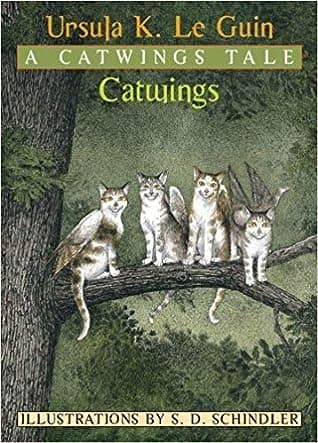
Ursula K. Le Guin (1988)
Genre
Fantasy / Children's / Young Adult
Reading Time
15 min
Key Themes
See below
Sign in to track this book
Four winged kittens abandon their dangerous city slum for the perilous unknowns of the countryside, seeking a place where their unique gift can be a blessing, not a burden.
Mrs. Jane Tabby, a resourceful but weary cat, gives birth to four unique kittens in a grimy city slum. To her surprise, these kittens—Harriet, James, Thelma, and Roger—are born with wings. She keeps their unusual characteristic a secret, fearing what humans might do if they discovered her flying children. The slum is a place of constant hunger and danger, with aggressive tomcats and scarce food. Mrs. Tabby diligently teaches her kittens to hunt and survive, while also stressing the importance of discretion regarding their wings. She knows their wings offer a chance at escape, but they must learn to use them wisely.
As the kittens grow, their wings develop strength. Under Mrs. Tabby's watchful eye, they begin to practice short, clumsy flights within the confines of their hidden den. She emphasizes that their wings are not just for fun but for survival and escape from the harsh city. Mrs. Tabby instills in them the importance of finding a safe place, far from human cruelty and urban dangers. She warns them about the dangers of the outside world, particularly the two-legged creatures who can be both kind and cruel. The kittens, though young, understand the seriousness of their situation and the need to find a better life.
Driven by hunger and the increasing dangers of the city, Mrs. Tabby gives her kittens the signal to leave. With a mix of fear and excitement, Harriet, James, Thelma, and Roger take to the sky for their first real flight. They soar above the grimy buildings and busy streets, leaving behind the only home they've ever known. The city, once a place of confinement, now lies beneath them, a patchwork of rooftops and distant sounds. Their journey is arduous, filled with the unfamiliar sensations of wind and vast open spaces. They fly through the night, guided by instinct and the shared hope for a safer future.
After a long and exhausting flight, the kittens descend into a beautiful, green countryside. The change is immediate and striking: fresh air, trees, and the absence of city noise. However, the countryside presents its own set of challenges. They are unfamiliar with hunting in this new environment and struggle to find food. The vastness of the fields and forests is overwhelming, and they feel a deep sense of loneliness and displacement. They quickly realize that simply escaping the city isn't enough; they must now learn to adapt to this new, wilder world, where dangers are different but equally present.
While exploring their new surroundings, the kittens have a terrifying encounter with an owl. The large bird of prey swoops down, seeing them as potential food. The kittens, especially the younger ones, are terrified. James, the most cautious and protective, tries to herd his siblings to safety. They use their agility and quick reflexes, honed by their city upbringing, to evade the owl's talons. This incident reminds them that the countryside, despite its beauty, has predators. It reinforces the need for them to stay together and remain vigilant in their new environment.
After several days of wandering and narrowly escaping dangers, the kittens find an old, deserted barn. It's a welcome sight, offering shelter from the elements and a sense of security they haven't felt since leaving their mother. The barn is dusty and quiet, but it provides a safe place to rest and regroup. They explore its nooks and crannies, finding it a suitable temporary home. This discovery marks a turning point, as they now have a base from which to explore and learn about their new world, rather than constantly being on the move.
From their vantage point in the barn, the kittens begin to observe an old woman who lives in a nearby farmhouse. They watch her daily routines, noticing her gentle nature as she tends to her garden and other animals. She leaves out milk for local cats, a detail that immediately interests them. The kittens are wary of humans due to Mrs. Tabby's warnings, but the old woman's kindness is evident. They cautiously consider whether this human might be different from the ones they knew in the city, and if her farm could offer the safety and sustenance they desperately need.
Driven by hunger and the sight of the old woman leaving out a bowl of milk, James, the most daring and often the leader, decides to take a risk. He cautiously approaches the farmhouse, his siblings watching anxiously from a distance. The old woman spots him and, instead of showing alarm, speaks to him in a soft, welcoming voice. She offers him food, and James, after a moment of hesitation, accepts. This first positive interaction with a human begins to lessen the kittens' ingrained fear and offers a glimmer of hope for their future.
Encouraged by James's successful encounter, Thelma, Harriet, and Roger slowly, one by one, also approach the old woman. She greets each of them with the same gentle kindness, never showing surprise or fear at their wings. The old woman, whose name is never given, is simply delighted to have them. She provides them with food, warmth, and a safe place to live inside her farmhouse. The kittens, for the first time in their lives, experience true security and belonging, finding the loving home their mother had wished for them.
Under the old woman's care, the catwings flourish. They enjoy the comforts of a warm home, regular meals, and affectionate attention. Their wings, once a secret and a means of escape, now become a source of joy and freedom. They fly freely around the farm, exploring the fields and woods, always returning to the safety and love of their adopted human. They learn to hunt effectively in the country, but never truly have to, as food is always provided. They have found a perfect balance: the independence of their wings and the security of a loving home.
Despite their happiness, a question lingers in the catwings' minds: are they the only ones? They wonder if there are other winged cats like them in the world. Driven by this curiosity and a desire for connection, they decide to embark on journeys beyond the farm, exploring further and further afield. Their goal is not to leave their home, but to discover if their unique existence is shared by others. This quest adds a new dimension to their lives, turning their freedom into a purposeful search for their own kind.
The Protagonist
Harriet transitions from a fearful, city-bound kitten to a confident, free-flying cat who finds security and purpose.
The Protagonist
James develops from a cautious but brave leader into a confident explorer, balancing his adventurous spirit with the security of a loving home.
The Protagonist
Thelma overcomes her initial timidity to embrace the freedom and security of her new life, finding courage in her family and home.
The Protagonist
Roger matures from a playful and somewhat naive kitten into a capable and happy winged cat, thriving in his new, safe environment.
The Supporting
Mrs. Tabby fulfills her purpose as a mother by ensuring her unique children find a safe and loving home, even if it means letting them go.
The Supporting
The Old Woman, already kind, finds companionship and joy in caring for the unique catwings, fulfilling her quiet life with their presence.
The Antagonist
The Owl serves as a temporary obstacle, demonstrating the kittens' resilience.
The main theme is the catwings' journey to find a safe and loving home where they can belong. Born in a dangerous city slum, they are forced to flee, enduring hunger, fear, and the unknown. Their search ends not just with shelter, but with a compassionate caregiver, the old woman, who accepts them unconditionally, wings and all. This theme shows the universal desire for security, acceptance, and a place where one can be oneself without fear of judgment, as seen when they finally settle into the old woman's farmhouse.
“They were free, they were safe, they were home. All that their mother had hoped for them.”
The catwings' wings symbolize freedom and escape, allowing them to leave the confines of the city and its dangers. However, the initial freedom of the countryside brings new challenges like hunger and predators (the owl). The kittens must learn to balance their desire for freedom and exploration with the need for security and sustenance. Their eventual home with the old woman offers the perfect mix: a safe base from which they can still fly and explore. This shows that true freedom often finds balance with security.
“Their wings were for flying away, not for staying still.”
The story explores the dual nature of humans. Mrs. Tabby warns her kittens of humans' potential cruelty, a fear rooted in her experiences in the city slum. This fear is a driving force behind their escape. However, the old woman represents the kind side of humanity: compassion and unconditional acceptance. Her willingness to take in the winged cats without fear or judgment completely contrasts with the dangers perceived in the city. This duality suggests that while humans can be a threat, they can also be a source of deep love and safety.
“Humans were dangerous. But this human was not.”
The catwings show remarkable adaptation and resilience throughout their journey. They must first adapt to their unique physical trait (wings) and learn to fly. Then, they must adapt to surviving in the harsh city, and later, to the completely different environment of the countryside. From evading city dangers to outsmarting an owl, and finally learning to trust a human, their journey shows their ability to overcome adversity and thrive in new circumstances. Their resilience is what allows them to survive the initial challenges and ultimately find their happy ending.
“They were city cats, but they were learning the ways of the country.”
The supernatural element of winged cats existing in a mostly realistic world.
The presence of winged cats in an otherwise realistic setting of city slums and rural farms is the primary element of magical realism. The wings are not explained scientifically but are simply accepted as a unique biological trait. This device allows for the fantastical premise that drives the plot – the kittens' ability to escape their dire circumstances – while grounding the story in relatable themes of survival and the search for home. The wings serve as both a source of wonder and a practical tool for the characters' journey.
The physical and emotional progression of the kittens from danger to safety.
The entire narrative is structured around the kittens' journey. It begins with their escape from the dangerous city, continues through their arduous flight and struggles in the unfamiliar countryside, and culminates in their arrival at the old woman's farm. This journey is not just a physical movement from one place to another, but also an emotional and psychological one, as the kittens grow, learn, and develop resilience, trust, and a sense of belonging. The journey provides a clear arc for character development and plot progression.
Giving human-like thoughts, feelings, and motivations to animal characters.
The catwings and their mother, Mrs. Tabby, are depicted with human-like thoughts, emotions, and complex motivations. They experience fear, hope, love, hunger, and a desire for a better life. While they retain their animal instincts (hunting, purring), their internal monologues and decision-making processes are highly anthropomorphic. This device allows the reader to empathize deeply with the characters, understand their struggles, and connect with the universal themes presented, making the story accessible and engaging for its target audience.
“The four kittens were black, all black, and because their mother was a black cat and their father was a black cat, they ought to have been merely black kittens. But they were not.”
— Introducing the unique nature of the kittens.
“They had wings. Little, delicate, furry wings, like bat wings, but covered with soft black fur.”
— Describing the unusual physical trait of the kittens.
“It was a wonderful thing, a terrible thing, to have wings.”
— Reflecting on the dual nature of their gift/curse.
“They knew they were different, and they knew their difference was a secret.”
— The kittens realizing their unique status and the need for secrecy.
“Up and up they flew, higher than the highest tree, higher than the highest house.”
— The kittens experiencing the joy and freedom of flight.
“There were too many dangers for small winged cats in the city.”
— Their mother's warning about the perils of their home environment.
“They had to find a safe place, a secret place, where no one would hurt them.”
— The kittens' primary motivation for leaving home.
“The world was bigger than they had thought, and emptier, and stranger.”
— The kittens' initial impression of the world outside their familiar alley.
“It was very hard to be brave when you were so small and the world was so large.”
— One of the kittens reflecting on their vulnerability during their journey.
“They had never seen a human being so close before. They were enormous and terrifying.”
— The kittens' first close encounter with humans.
“They were found by a kind lady, a gentle lady, who understood about cats.”
— Introducing the character who provides them a safe haven.
“She had a small house, with a garden, and a big, comfortable armchair.”
— Describing the peaceful new home they discover.
“And she never tried to clip their wings, or tie them down, or make them be ordinary.”
— Highlighting the acceptance they receive from their new guardian.
“For they were Catwings, and they knew how to fly.”
— A concluding statement affirming their identity and ability.
Ready to see how well you understood this book? Take our interactive quiz with 10 questions.
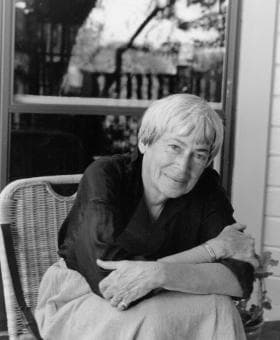
Ursula Kroeber Le Guin was an American author best known for her works of speculative fiction, including science fiction works set in her Hainish universe, and the Earthsea fantasy series. She was first published in 1959, and her literary career spanned nearly sixty years, producing more than twenty novels and over a hundred short stories, in addition to poetry, literary criticism, translations, and children's books. Frequently described as an author of science fiction, Le Guin has also been called a "major voice in American Letters". Le Guin said she would prefer to be known as an "American novelist".







