“The dead are not gone; they are just waiting.”
— A character reflects on the eerie atmosphere of the catacombs.

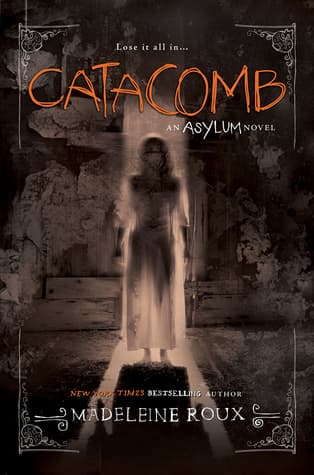
Madeleine Roux (2015)
Genre
Thriller / Fantasy / Mystery / Young Adult
Reading Time
350 min
Key Themes
See below
Sign in to track this book
On a post-graduation road trip to New Orleans, Dan, Abby, and Jordan find their past horrors aren't buried as deep as they thought when messages from the dead and a sinister group called the Bone Artists pull them into a deadly web of fate.
After graduating from high school, Dan Crawford, Abby Reston, and Jordan Reston decide to celebrate with a road trip to New Orleans to visit Jordan's Uncle Marcus. Dan is still haunted by the events at Brookline Asylum and the NHC, often seeing things and feeling uneasy. As they drive, strange things begin: they notice a suspicious black car seemingly following them, and Dan starts receiving eerie, fragmented text messages from an unknown sender. The messages contain cryptic phrases and images that suggest a connection to the past, specifically to events and people Dan thought were long gone, including someone who died during their last encounter with the Brookline mysteries. This unsettling start to their trip immediately puts Dan on edge, making him question if the horrors of Brookline are truly over or if they've merely followed him.
When they arrive in New Orleans, Dan, Abby, and Jordan are welcomed by Jordan's Uncle Marcus, an eccentric but knowledgeable man who lives in a house filled with historical artifacts. Marcus quickly realizes the group is in danger, having seen the same black car following them. He reveals a hidden history connecting the Brookline experiments and their own recent experiences to a group called the Bone Artists. These artists, Marcus explains, are a secret society dedicated to creating art from human remains, a practice linked to a 19th-century serial killer named Daniel Crawford — Dan's namesake and a figure whose crimes resemble some of the horrors they've witnessed. Marcus warns them that the Bone Artists are actively seeking them, believing Dan is important to their lineage.
The friends' stay at Uncle Marcus's house is violently interrupted when the Bone Artists attack. Masked assailants break into the house, clearly targeting Dan. Uncle Marcus, despite his age, helps the trio escape through a hidden passage. During the fight, they grab some of Marcus's research materials, including old photographs and documents about the Bone Artists and the historical Daniel Crawford. They narrowly escape into the streets of New Orleans, now fugitives and fully aware of the danger. The attack confirms Marcus's warnings and shows them that the Bone Artists are relentless and dangerous, pursuing them for reasons yet fully understood but connected to Dan.
As they hide in New Orleans, Dan, Abby, and Jordan look through the documents and photographs they salvaged from Uncle Marcus's house. They uncover disturbing information about the original Daniel Crawford, a brilliant but deranged man who was both a serial killer and a member of the Bone Artists in the 19th century. The Bone Artists, they learn, believe in a form of spiritual or genetic transference, using human remains and specific rituals to channel or resurrect the essence of past individuals. They realize that Dan's connection to the historical Daniel Crawford is not just a shared name but a deeper, possibly genetic, link that the Bone Artists intend to use. This revelation is horrifying for Dan, forcing him to confront the possibility that he is an heir to a dark legacy, a vessel for a monstrous past.
Through further research and clues, the group realizes that the Bone Artists operate from a hidden, elaborate network of catacombs beneath New Orleans. These catacombs are not just burial sites but the society's secret base, workshop, and ritualistic grounds. They understand that to escape the Bone Artists' pursuit and stop their plans, they must find and enter these catacombs. Uncle Marcus, who contacts them again, provides historical context and guidance, emphasizing the danger of the catacombs but also the need to confront the source of their torment. The friends begin to plan to find the entrance to this underground world, knowing it's a desperate gamble but their only way out.
While finding the catacombs, the group experiences a devastating betrayal. Someone they had come to trust, or at least rely on for information, turns out to be an informant for the Bone Artists. This betrayal leads to a confrontation where Dan is separated from Abby and Jordan and captured. The Bone Artists, led by a figure who seems to have a particular interest in Dan, take him away, presumably to their hidden lair. Abby and Jordan are distraught and desperate, realizing the full extent of the Bone Artists' reach and the immediate danger Dan is in. They now face the task of finding Dan and rescuing him from their enemy's domain.
Dan is taken deep into the New Orleans catacombs, a labyrinth adorned with human bones and macabre art. He is brought before the leadership of the Bone Artists, who reveal their full intentions: they believe Dan is the genetic and spiritual successor to the original Daniel Crawford, and they intend to complete a ritual to awaken or fully transfer the consciousness of the historical killer into him. Dan is subjected to psychological torment and rituals, forced to confront disturbing visions and fragmented memories that seem to belong to his namesake. He fights desperately against the influence, terrified of losing himself and becoming the monster they want him to be. The experience is disorienting and terrifying, blurring the lines between his own identity and the dark legacy he's inherited.
Determined to save Dan, Abby and Jordan, with the help and guidance of Uncle Marcus, plan to enter the catacombs. Marcus provides them with maps, knowledge of secret passages, and warnings about the Bone Artists' defenses. They navigate the underground world, encountering traps and guards. Their journey is dangerous, but their resolve to rescue Dan drives them forward. Abby's intelligence and Jordan's resourcefulness are tested as they go deeper into the lair, following clues and evading capture, all while racing against time to prevent the Bone Artists from completing their ritual on Dan.
Abby and Jordan finally find Dan within the deepest part of the catacombs, just as the Bone Artists are about to complete their ritual. A chaotic and violent confrontation happens. The friends fight desperately against the Bone Artists, using their wits and whatever they can find as weapons. During the struggle, Uncle Marcus makes a sacrifice, creating a diversion or disabling a key part of the ritual, allowing Dan to momentarily break free from the Bone Artists' control. The catacombs themselves begin to destabilize from the conflict, adding another layer of danger to their escape. The climax is intense, with the fate of Dan's identity and their lives at stake, forcing them to make difficult choices to survive.
With the catacombs collapsing around them and the Bone Artists' plans thwarted, Dan, Abby, and Jordan manage a harrowing escape. They emerge from the underground into the light of New Orleans, shaken but alive. The experience changes them, leaving them with the scars of their encounter with the Bone Artists and the dark legacy of Daniel Crawford. While the immediate threat is gone, the psychological impact remains, particularly for Dan, who must deal with the knowledge of his genetic connection to a monster. They begin to heal and try to move forward, understanding that while they survived, the world is far more complex and dangerous than they ever imagined. The future is uncertain, but they face it together, bound by their shared ordeal.
The Protagonist
Dan's arc involves a desperate fight to define his own identity against the dark legacy of his namesake, ultimately choosing to forge his own path despite his unsettling heritage.
The Supporting
Abby's arc demonstrates her unwavering loyalty and resourcefulness, growing more courageous as she fights to protect those she loves.
The Supporting
Jordan's arc shows his evolution from a humorous friend to a courageous and resourceful ally, stepping up in the face of extreme danger.
The Supporting
Marcus's arc culminates in a heroic sacrifice, solidifying his role as a protector and guardian of historical truth.
The Antagonist/Mentioned
Though deceased, his influence drives the plot, representing the ultimate darkness Dan must resist.
The Antagonist
The Bone Artists' arc involves their ultimate defeat and the disruption of their ritualistic practices.
The Supporting
Their arc is brief, serving as a catalyst for Dan's capture and highlighting the danger of the Bone Artists' influence.
A central theme is Dan's struggle to define his own identity in the face of a terrifying legacy. His namesake, the original Daniel Crawford, is a serial killer, and the Bone Artists believe Dan is meant to become his successor. Dan constantly battles the fear that he might inherit or succumb to this dark lineage, questioning if he is inherently evil or if he can forge his own path. This theme appears through his psychological torment in the catacombs, where he confronts visions and urges that are not his own, making him actively choose who he wants to be.
“"He was Daniel Crawford. But he wasn't *that* Daniel Crawford. He had to believe that."”
The novel shows how the past, both personal and historical, affects the present. Dan, Abby, and Jordan are constantly haunted by their experiences at Brookline Asylum, and their current ordeal in New Orleans is tied to a 19th-century secret society and a killer from that era. The Bone Artists' entire philosophy is built on the belief that the past can be literally resurrected or transferred. The crumbling catacombs, filled with ancient bones and rituals, are a physical example of a past that refuses to stay buried, demanding to be acknowledged and confronted.
“"Some things weren't meant to stay buried. Some things clawed their way back to the surface, no matter how deep you dug the grave."”
Amidst the horror and psychological torment, the bond between Dan, Abby, and Jordan is a source of hope. Their friendship is tested repeatedly, yet their loyalty to one another never wavers. Abby and Jordan risk their lives to rescue Dan from the catacombs, showing the strength of their connection. Their shared history at Brookline has created a strong bond, allowing them to face dangers together. This theme highlights the power of human connection as a defense against isolation and despair in the face of overwhelming evil.
“"They were in this together. Always. No matter how dark it got, they had each other."”
The book explores different aspects of evil, from the violence of the serial killer Daniel Crawford to the ritualistic evil of the Bone Artists. It questions whether evil is inherent (as the Bone Artists believe about Dan's lineage) or a choice. The psychological manipulation Dan endures forces him to confront the darkness within humanity and the potential for even brilliant minds to be corrupted. The Bone Artists' 'art' is a chilling example of how human creativity can be twisted into something macabre and destructive, blurring the lines between art and atrocity.
“"Evil wasn't always a monster under the bed. Sometimes, it was a whisper in your ear, a promise of power, a twisted kind of art."”
The physical and symbolic heart of the Bone Artists' sinister operations.
The catacombs beneath New Orleans serve as both the primary setting for the climax and a powerful symbol. Physically, they are the secret lair, workshop, and ritualistic grounds of the Bone Artists, a labyrinthine underground world made of human remains. Symbolically, they represent the buried past, the hidden darkness beneath a vibrant city, and the literal 'underworld' where life and death intertwine in grotesque ways. Their crumbling nature during the climax mirrors the eventual unraveling of the Bone Artists' plans.
Visual clues that reveal the hidden history and propel the investigation.
Throughout the narrative, found photographs and historical documents (journals, maps, sketches) are crucial plot devices. They act as tangible links to the past, providing visual evidence and cryptic clues about the original Daniel Crawford, the Bone Artists, and their rituals. These artifacts are not just exposition but actively drive the plot, leading the characters to new revelations, locations, and dangers. They also serve to blur the line between reality and the supernatural, making the historical horrors feel more immediate and real.
A core concept that links Dan to the historical killer and drives the antagonists' motives.
This device posits that certain traits, or even essences, can be passed down genetically, making Dan a 'successor' to the original Daniel Crawford. The Bone Artists believe in this concept, using it to justify their attempts to 'awaken' the killer within Dan. This creates immense internal conflict for Dan, forcing him to question his own nature and whether he is fated to repeat a monstrous past. It’s a psychological horror device that preys on fears of inherited sin and the loss of individual autonomy, making the threat deeply personal.
A recurring symbol of constant threat and the pervasive reach of the antagonists.
The mysterious black car that follows Dan, Abby, and Jordan from the start of their road trip is a classic suspense device. It represents the constant surveillance and unrelenting pursuit by the Bone Artists. It creates a pervasive sense of paranoia and danger, signaling that the friends are never truly safe or alone. The car's ambiguous nature at first builds mystery, then solidifies into a clear sign of the organized and powerful enemy they face, emphasizing the inescapable nature of their predicament.
“The dead are not gone; they are just waiting.”
— A character reflects on the eerie atmosphere of the catacombs.
“In the darkness, we find our true selves.”
— A moment of introspection during a tense underground exploration.
“Secrets buried deep have a way of clawing their way back up.”
— Warning about the hidden dangers in the catacombs.
“Trust is a fragile thing in a world of shadows.”
— A character doubts their companions in the mysterious setting.
“The past is a ghost that haunts every step we take.”
— Reflection on how history influences the present events.
“Courage isn't the absence of fear, but the will to move forward despite it.”
— Encouragement during a perilous moment in the catacombs.
“Some doors are better left unopened.”
— A cautionary remark about exploring forbidden areas.
“In the silence, the whispers of the dead grow louder.”
— Describing the unsettling quiet of the underground tunnels.
“The truth is often more terrifying than any monster.”
— A realization about the horrors uncovered in the mystery.
“We are all just stories in the end, waiting to be told.”
— A philosophical thought on life and legacy.
“Fear can be a prison, but curiosity is the key.”
— Motivation to continue exploring despite dangers.
“The catacombs don't just hold bones; they hold memories.”
— Observation on the historical and emotional weight of the place.
“Sometimes, the only way out is through.”
— Advice during a seemingly impossible situation.
“In the heart of darkness, light finds a way.”
— A hopeful note amidst the thriller's tension.
Ready to see how well you understood this book? Take our interactive quiz with 10 questions.

Biography coming soon.







