“The past is a foreign country; they do things differently there.”
— This is a famous opening line, setting a reflective tone about the past and its differences from the present.

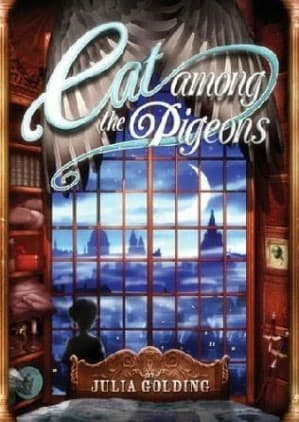
Julia Golding (2006)
Genre
Thriller / Mystery
Reading Time
458 min
Key Themes
See below
Sign in to track this book
To save her friend from slavery, the irrepressible Cat Royal dives into London's high society and its grimy underbelly, donning disguises and stirring up trouble to fight for justice.
The story opens with the Drury Lane community celebrating a successful performance. Their joy ends when Mr. Davies, Pedro's former slave master from Jamaica, appears with legal papers, claiming Pedro as his property. Pedro had been freed by his previous owner, but Davies says the man had no legal right to do so. Cat Royal, Quick, and other friends are angry and try to protect Pedro, but Davies's legal claim is strong. Pedro, fearing re-enslavement, hides, leaving Cat determined to find a way to secure his freedom permanently.
Believing Mr. Davies is involved in illegal activities that could discredit him, Cat makes a plan. With her friends' help, she cuts her hair short, dresses in boy's clothing, and becomes 'Kit,' a mischievous but intelligent boy. Her goal is to infiltrate the upper levels of society where Davies operates, specifically a prestigious boys' boarding school called St. Augustine's, where Davies's son, Edward, is a student. Cat hopes to find information or evidence that will expose Davies's true character and invalidate his claim on Pedro.
As 'Kit,' Cat struggles to adapt to St. Augustine's strict rules and social hierarchy. She quickly makes an enemy of a bully but also befriends a kind and intelligent boy named Bartholomew, who becomes her confidant and helper. Cat observes Edward Davies, finding him a shy and withdrawn boy, unlike his domineering father. Through her interactions and exploration of the school, 'Kit' starts to hear whispers and subtle clues suggesting that Mr. Davies might be involved in more than just legitimate business, hinting at smuggling operations.
Cat, still disguised as 'Kit,' overhears conversations and gathers information that points to Mr. Davies being deeply involved in a large-scale smuggling ring, using his connections and possibly the school's closeness to the docks. Realizing she needs help from those familiar with London's underworld, Cat contacts members of a street gang known as the 'Mudlarks,' led by a charismatic but dangerous boy named Silas. She offers them information in exchange for their help investigating Davies's illegal activities and finding proof.
To gain the Mudlarks' full trust and access their network, Cat fully joins their world. She scavenges with them, learns their secret codes and meeting places, and proves her bravery and resourcefulness. This experience contrasts sharply with her life at St. Augustine's, showing her the desperate poverty and harsh realities faced by many London children. Despite the dangers, Cat earns the respect of Silas and his gang, who begin to share their knowledge and resources, helping her track Davies's movements and uncover the routes of his smuggled goods.
As Cat makes progress, her old enemy, Billy 'Boil' Shepherd, reappears. Billy, always a problem for Cat, is also involved in the criminal underworld and quickly learns of 'Kit's' activities. He recognizes Cat despite her disguise, or at least suspects her true identity, and begins to follow her, trying to sabotage her efforts and exploit the situation for his own gain. His presence adds constant danger, forcing Cat to be even more cautious and clever to avoid being exposed or captured.
Working with Bartholomew's insights from St. Augustine's and the Mudlarks' street intelligence, Cat carefully puts together the puzzle of Davies's smuggling operation. They track suspicious movements of goods and follow leads that eventually bring them to a secluded warehouse near the docks. Cat, with some of the Mudlarks, infiltrates the warehouse, finding it filled with contraband goods, confirming her suspicions about Davies's illegal activities. This discovery provides the evidence she needs to expose him and free Pedro.
Armed with proof, Cat orchestrates a dramatic confrontation. She arranges for the authorities, along with Quick and other trusted friends, to raid the warehouse while Davies is present. With the evidence exposed, Davies cannot deny his involvement in the smuggling ring. His reputation is ruined, and his legal claim over Pedro is invalid. Pedro is finally, unequivocally free from the threat of re-enslavement. Cat reveals her true identity, surprising some and relieving her friends.
Following the warehouse raid, Mr. Davies is arrested and faces the consequences of his illegal activities. Pedro is officially recognized as a free man, no longer under threat. The Drury Lane community celebrates Pedro's permanent freedom. Cat, having successfully navigated the worlds of aristocratic boarding schools and London's street gangs, sheds her 'Kit' persona. She reflects on the complexities of justice, the sharp differences between social classes, and the true meaning of freedom, not just for Pedro, but for herself and her friends.
With his father's downfall, Edward Davies, who had been a quiet and somewhat oppressed figure, gets a chance at a new life. Cat, recognizing his goodness and his own suffering under his father's control, ensures he is not abandoned. She helps connect him with people who can offer him guidance and a fresh start, perhaps even a place within the theatrical world of Drury Lane, suggesting his potential to escape his family's past and forge his own path, free from his father's influence.
The Protagonist
Cat begins as a loyal friend determined to save Pedro and evolves by experiencing the harsh realities of different social classes, solidifying her commitment to justice.
The Supporting
Pedro starts the story under the looming threat of re-enslavement and ends it as a truly free man, finally secure in his liberty.
The Antagonist
Davies begins as an outwardly respectable but secretly corrupt figure and ends exposed and defeated, losing his reputation and freedom.
The Supporting
Quick remains a steadfast and reliable friend, his loyalty to Cat and Pedro unwavering throughout their ordeal.
The Antagonist
Billy remains a consistent antagonist, proving his cunning and persistence in his rivalry with Cat.
The Supporting
Bartholomew grows in confidence through his friendship with 'Kit', becoming an active participant in the plan to expose Davies.
The Supporting
Silas transitions from suspicious leader to a trusted ally, demonstrating the power of shared purpose across social divides.
The Supporting
Edward begins as a silent victim of his father's influence and ends with the opportunity for a new life, free from that oppressive shadow.
The main theme is Pedro's struggle for freedom and the fight against re-enslavement. This appears in the literal threat from Mr. Davies's claim and in the broader societal limits faced by various characters. Cat's disguise as 'Kit' is a temporary freedom from her own gendered expectations, while the Mudlarks represent a desperate fight for independence in poverty. The theme explores what it means to be truly free, both physically and from societal or personal oppression, as seen when Pedro finally escapes Davies's grasp and Edward is freed from his father's influence.
““Freedom is not a gift, but a prize fought for with every breath.””
The novel shows the contrast between London's social classes, as Cat moves between the aristocratic world of St. Augustine's and the poor streets of the Mudlarks. Mr. Davies's privilege, allowing him to legally claim Pedro and engage in smuggling, stands against the desperate lives of the street children and the vulnerability of someone like Pedro. Cat's ability to move between these worlds highlights the superficiality of class distinctions and exposes the injustices in the system. The book shows how wealth can corrupt and how poverty can force individuals into difficult choices, yet also how resilience and community can thrive in hardship.
““One world wore silk and powdered wigs; the other, rags and soot. But the hunger for justice knew no such divide.””
Cat's change into 'Kit' is a core part of the story, exploring themes of identity and the power of disguise. Her ability to convincingly portray a boy allows her access to worlds otherwise closed to her, highlighting the restrictive nature of gender roles at the time. The disguise is more than practical; it allows Cat to experience different parts of herself and observe society from a unique view. It also raises questions about who we are beneath our outward appearances, as seen in Edward Davies's true nature hidden beneath his father's shadow, and Cat's struggle to maintain her 'Kit' persona while staying true to herself.
““To be a boy was to be invisible, to be a girl was to be seen too much. The disguise was a cloak, not just for my body, but for my true self.””
The pursuit of justice for Pedro drives the entire story. Cat and her friends work outside the official legal system, which initially favors Mr. Davies, forcing them to seek a more moral form of justice. The story questions the morality of laws that permit enslavement and allow the wealthy to exploit others. Cat's actions, while sometimes close to illegal, are always driven by a strong ethical sense. The theme explores the idea that true justice sometimes requires unconventional methods and the courage to challenge established wrongs, ultimately succeeding over the legal but immoral claims of the antagonist.
““The law may speak for the powerful, but justice sings for the oppressed.””
Cat adopts the persona of 'Kit' to infiltrate forbidden spaces.
Cat's disguise as 'Kit' is the primary plot device, enabling her to access the boys' boarding school and the male-dominated street gangs, which would otherwise be impossible for a girl of her era. This device allows for comedic moments, tension as her identity is almost exposed, and deeper exploration of gender roles. It also provides Cat with a unique dual perspective, observing both the privileged and the impoverished worlds of London, which is crucial for her investigation and character development.
Pedro's re-enslavement threat is the central object of desire and motivation.
Pedro's threatened re-enslavement serves as the primary MacGuffin, the driving force behind Cat's entire mission. While Pedro himself is a character, his state of being (free or enslaved) is what propels the plot forward. It motivates Cat, unites her allies, and provides a clear goal for the narrative. The resolution of this threat marks the climax and the ultimate success of Cat's endeavors, giving the story its core purpose and emotional stakes.
The stark contrast between aristocratic and impoverished London settings.
The novel uses the juxtaposition of the opulent, structured world of St. Augustine's boarding school and the gritty, lawless environment of London's streets (home to the Mudlarks) to highlight themes of social class and inequality. Cat's movement between these two extremes, often within the same day, provides rich thematic depth and showcases her adaptability. This device allows the reader to experience the vast disparities of 18th-century London and underscores the complexity of the society Cat navigates.
Billy 'Boil' Shepherd reappears to complicate Cat's plans.
Billy 'Boil' Shepherd's re-emergence serves as a recurring antagonist device. His presence adds an element of personal vendetta and constant threat, beyond the primary conflict with Mr. Davies. He creates additional obstacles and suspense, as Cat must not only outwit Davies but also evade or outmaneuver Billy, who often recognizes her despite her disguises. This device ensures that Cat is never truly safe and raises the stakes by introducing a familiar, dangerous foe.
“The past is a foreign country; they do things differently there.”
— This is a famous opening line, setting a reflective tone about the past and its differences from the present.
“All that a man has is his past.”
— A character reflecting on the sum of one's experiences and memories as their true possession.
“You can’t go home again.”
— A poignant observation about the impossibility of truly returning to a past state or place.
“Memory is a way of holding onto the things you love, the things you are, the things you never want to lose.”
— A character's deep thought on the purpose and value of memory.
“The world had changed, and with it, he had changed too.”
— An internal monologue noting personal evolution alongside societal shifts.
“Sometimes the things we think we know best are the very things we know least.”
— A philosophical musing on the deceptive nature of familiarity and presumptions.
“There are some things that time cannot erase, no matter how hard it tries.”
— A statement about the enduring impact of certain events or feelings.
“Every secret has its season, and every season brings its own revelation.”
— A character's reflection on the inevitability of secrets coming to light.
“The weight of what was unsaid was often heavier than the words themselves.”
— An observation on the burden of unspoken truths and emotions.
“Life has a way of circling back, bringing old echoes to new shores.”
— A reflection on how past events or people often reappear in unexpected ways.
“We are all prisoners of our own making, bound by the choices we refuse to confront.”
— A character's somber realization about self-imposed limitations.
“The quiet moments often hold the loudest truths.”
— An insight into finding profound understanding in stillness and contemplation.
“To truly forget, one must first truly forgive.”
— A profound statement on the link between forgiveness and moving on from the past.
“Sometimes the greatest mysteries are not in what happened, but in why it happened.”
— A detective-like thought focusing on motivation rather than just the event itself.
Ready to see how well you understood this book? Take our interactive quiz with 10 questions.

Biography coming soon.







