“The trouble with being a good person is that you tend to think everyone else is too.”
— Abdullah reflects on his own trusting nature and the challenges it brings.

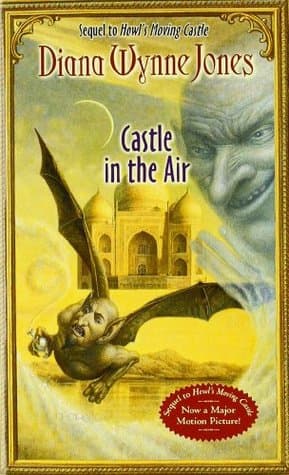
Diana Wynne Jones (1990)
Genre
Fantasy / Children's / Young Adult / Romance
Reading Time
298 min
Key Themes
See below
Sign in to track this book
A daydreaming carpet merchant's life takes a magical turn when his new flying rug whisks him to a princess in an enchanted garden, only for a wicked djinn to steal her away, sending him on a whimsical quest across the Sultanates to win her back.
Abdullah, a young and rather unsuccessful carpet seller in Zanzib, Rashpuht, spends his days happily daydreaming, often imagining himself as a prince. He lives a quiet life with his three aunts, who constantly complain about his lack of ambition. One day, an old man approaches Abdullah in the marketplace and insists on selling him a worn, ordinary-looking carpet for a very low price. Despite his doubts and the carpet's poor appearance, Abdullah feels he must buy it. He brings it home, not knowing its true nature, and puts it in his small, dusty shop.
That very night, as Abdullah sleeps on his new carpet, it suddenly flies, carrying him high above Zanzib. It takes him to a beautiful, enchanted garden with exotic plants and a palace. There, he meets a stunning young woman who says she is Princess Flower-in-the-Night, daughter of the Sultan of the North. They spend a magical evening together, falling deeply in love in the garden. Princess Flower-in-the-Night shares that a powerful djinn holds her captive in this garden, visiting her every morning. Abdullah, completely smitten, promises to return for her.
Abdullah returns to the enchanted garden the next night, eager to see Princess Flower-in-the-Night again. But his joy quickly turns to horror when a huge, terrifying djinn suddenly appears, snatches the princess, and vanishes with her. Abdullah is left alone and heartbroken, having seen her abduction. Overwhelmed by sadness and a feeling of helplessness, he vows to rescue her, even though he has no idea where the djinn took her or how he could face such a powerful being. He now understands the real danger his beloved is in.
Determined to find his princess, Abdullah flies north on his magic carpet toward Ingary, the land Princess Flower-in-the-Night mentioned. He has no specific destination but follows his gut. During his journey, he meets a gruff, armed soldier named Jamal, who has been separated from his group. Jamal, at first suspicious of Abdullah and his flying carpet, eventually agrees to travel with him, thinking Abdullah might be a spy or at least helpful. Jamal shares his own story of being a deserter and offers a more realistic view to Abdullah's romantic quest, though he remains doubtful of the princess and djinn story.
Their journey leads them to a strange, constantly moving castle in the sky. As they get closer, they find a small, black cat with an unusually smart look. To Abdullah's surprise, the cat begins to speak, revealing itself to be a very opinionated and somewhat cynical creature. The talking cat, which later says it is a royal cat from Ingary, warns them about the dangers of the castle, which seems unstable and often changes its location and inside layout. Despite the warnings, Abdullah, believing his princess might be inside, decides they must enter.
Inside the ever-shifting castle, Abdullah, Jamal, and the talking cat meet a Caliph who claims to be the rightful ruler of Ingary, currently in exile. This Caliph is a rather showy figure, constantly complaining about his fate and wanting attention from a royal audience. They also meet a large, shaggy dog named Midnight, who seems like a normal, if somewhat lazy, pet. However, the talking cat seems to have a special understanding with Midnight, hinting that the dog is smarter than he looks. The castle's layout is confusing, with doors leading to unexpected places and rooms appearing and disappearing.
Abdullah eventually confronts a powerful, but somewhat clumsy, genie inside the castle. This genie is responsible for the castle's constant changes and is holding several princesses captive, not just one. To Abdullah's dismay, he finds not only a Princess Flower-in-the-Night but also a Princess Violet-in-the-Dawn and others, all claiming to be his beloved. This causes great confusion and doubt for Abdullah, as he struggles to identify the true princess among the identical-looking captives. The genie, meanwhile, seems to be controlled by another, more powerful being.
Through various clues and the talking cat's insights, it turns out that the theatrical Caliph is actually the missing Wizard Suliman, a powerful sorcerer hiding his true identity. He planned the abduction of the princesses and the creation of the castle in the air as part of a complex scheme involving the King of Ingary and the royal family. Suliman's goal is to gain power and resolve an old magical debt or curse. The multiple princesses are a result of his magic, meant to confuse and distract. The talking cat and the dog Midnight also have bigger roles than first thought.
With help from Jamal, the talking cat, and the increasingly active dog Midnight, Abdullah begins to understand the truth. They realize that the princesses are all magically changed forms of one person, and the true Princess Flower-in-the-Night is the one whose personality shows through the magical disguise. It becomes clear that the wizard's magic is not perfect, and small hints can reveal the real person. Abdullah, using his memories of their enchanted evening, tries to tell which princess truly has the spirit of the woman he loves, a difficult task because of the wizard's powerful spells.
The group confronts Wizard Suliman, who, despite his powerful magic, is shown to be somewhat unskilled and prone to drama. A magical battle follows, with Abdullah's magic carpet, Jamal's unexpected courage, and the combined magic of the talking cat and dog playing important roles. It turns out that the talking cat is actually the powerful Witch of the Waste, and the dog Midnight is the King of Ingary, both under Suliman's spell. Their combined magical strength, once freed, is too much for Suliman, who is finally defeated, though not without causing much magical chaos in the castle.
With Wizard Suliman defeated, the magic on the princesses breaks, revealing the true Princess Flower-in-the-Night. She is indeed the Princess of Ingary, and her abduction was part of a larger plan to unite the kingdoms and fulfill a magical prophecy. The King of Ingary and the Witch of the Waste also return to their true forms. Abdullah, no longer a simple carpet merchant but a hero, is finally reunited with his beloved. Their love, tested by magic and deception, proves true. The story ends with a joyful wedding, where Abdullah, now recognized as a prince, marries Princess Flower-in-the-Night, uniting the kingdoms of Rashpuht and Ingary.
The Protagonist
Abdullah transforms from a passive dreamer into an active hero, discovering his courage and resourcefulness through his quest.
The Love Interest / Deuteragonist
She is initially a passive object of rescue but is revealed to be a strong, capable princess with an important destiny.
The Supporting
Jamal evolves from a cynical, self-interested deserter into a loyal friend and protector, finding purpose in Abdullah's quest.
The Supporting / Mentor
Her true identity and power are gradually revealed, shifting from a sarcastic observer to a key magical ally.
The Supporting
He is a passive, enchanted figure who is eventually restored to his true, powerful form, reclaiming his authority.
The Antagonist
His identity is revealed, and his complex, flawed magical scheme is ultimately thwarted, leading to his defeat.
The Mentioned / Minor Antagonist
Serves as an initial frightening obstacle, later revealed to be a pawn in a larger magical game.
The Mentioned
They remain static characters, representing the 'normal' life Abdullah departs from.
Abdullah's initial happiness comes from his rich inner world of daydreams, where he imagines himself as a prince. This theme shows how imagination, far from being a distraction, can be a strong force for shaping reality and driving ambition. His daydreams of heroism and romance directly inspire his quest to rescue Princess Flower-in-the-Night, proving that his internal world can lead to external action. The magical parts of the story, like the flying carpet and enchanted garden, blur the lines between his imagined world and the reality he experiences, suggesting that imagination can unlock real magic.
“For Abdullah was a daydreamer, and he was content with his life and his daydreams until, one day, a stranger sold him a magic carpet.”
The mystery of the multiple princesses makes Abdullah look past outward appearances to find the true Princess Flower-in-the-Night. This theme explores the idea that true love recognizes a person's core, not just their outside form. Abdullah's strong love and his memories of their first enchanted meeting are key to identifying his beloved among magical deception. It highlights a connection that goes beyond physical change and magical disguise, showing that true identity is in character and spirit, not just looks.
“He knew her. There was no mistaking her. It was the way she looked at him, the way her mouth curved.”
Many characters and objects in the story are not what they seem. The magic carpet looks old but is magical; the Caliph is Wizard Suliman; the talking cat is the Witch of the Waste; and the shaggy dog is the King of Ingary. Even the enchanted garden and the castle in the air change, defying stable reality. This theme explores how outward appearances can be misleading and how true nature is often hidden under layers of magic or disguise. It encourages the reader, and Abdullah, to look deeper and question what they see, revealing the hidden truths that drive the story.
“It was a very ordinary-looking carpet, rather old and worn. Abdullah was quite surprised when it flew.”
Magic in 'Castle in the Air' is powerful but often unpredictable, and even skilled wizards like Suliman can be somewhat clumsy. The story explores the chaotic and often funny side of magic, where spells can go wrong or have unexpected results, leading to transformations and changing realities. The plot is also driven by a prophecy about uniting kingdoms, suggesting a larger magical destiny. This theme shows magic as a force that shapes fate but is also subject to human (and non-human) will and even comedic error, making it both grand and personal.
“Magic is a tricky business. It never quite goes the way you expect.”
A tattered carpet that provides magical transportation and enables Abdullah's quest.
The magic carpet is the catalyst for Abdullah's adventure. Initially appearing as a mundane, worn item, its true magical nature is revealed when it spontaneously flies. It serves as Abdullah's primary mode of transport, allowing him to travel vast distances and reach the enchanted garden and later the castle in the air. Beyond its practical function, it symbolizes the sudden entry of magic into Abdullah's ordinary life and represents the power of unexpected opportunities and the fulfillment of his daydreams.
A beautiful, magically secluded garden where Abdullah first meets and falls in love with the princess.
The enchanted garden is the setting for Abdullah's initial romantic encounter with Princess Flower-in-the-Night. It is a place of ethereal beauty and magical seclusion, existing outside normal time and space, accessible only by magic. It serves as a symbol of pure, unadulterated love and idyllic romance, contrasting sharply with the dangers and deceptions that follow. The garden establishes the profound connection between Abdullah and the princess, making her subsequent abduction all the more devastating and fueling his determination.
A mysterious, constantly changing castle that serves as the primary setting for the second half of the story.
The castle in the air is a central plot device, a magical construct created by Wizard Suliman. Its constantly shifting rooms, unpredictable layouts, and changing locations create a sense of disorientation and challenge for Abdullah and his companions. It serves as a prison for the princesses and the enchanted King and Witch, and its instability reflects the chaotic nature of Suliman's magic. The castle's labyrinthine quality adds to the mystery and allows for various encounters and revelations as the characters navigate its magical complexities.
Spells that alter the appearance of characters, concealing their true identities.
This device is crucial to the plot's central mystery and the theme of appearance versus reality. Wizard Suliman's magic transforms the King of Ingary into a dog, the Witch of the Waste into a cat, and creates multiple identical princesses. These disguises serve to confuse the protagonists, conceal the true nature of the antagonists, and heighten the challenge of identifying the real Princess Flower-in-the-Night. The breaking of these spells is integral to the resolution, revealing hidden truths and restoring order.
“The trouble with being a good person is that you tend to think everyone else is too.”
— Abdullah reflects on his own trusting nature and the challenges it brings.
“It was impossible to tell where the sky ended and the sea began, because both were the same dazzling, impossible blue.”
— Abdullah's first impression of the magical floating castle.
“Being a hero wasn't about being strong or brave. It was about knowing what you wanted and going for it, even if it meant being a bit of a fool.”
— Abdullah's evolving understanding of heroism.
“He had always thought that if you were good, good things would happen to you. But life, he was finding, was not quite so straightforward.”
— Abdullah's disillusionment with simple cause-and-effect.
“There are some things in life you just have to believe, even if they don't make sense.”
— A philosophical observation about faith and magic.
“It's always the quiet ones you have to watch out for.”
— A common trope turned on its head in a magical context.
“He had wanted a princess, and he had found one, even if she was a little bit more complicated than he had imagined.”
— Abdullah's romantic ideals clashing with reality.
“Sometimes the most ordinary things are the most extraordinary, if you just know how to look.”
— A lesson about finding wonder in the mundane.
“Magic, he was discovering, was not always neat and tidy. Sometimes it was quite messy indeed.”
— Abdullah's experience with unpredictable magical forces.
“You can't always choose your adventures, but you can choose how you react to them.”
— Abdullah's realization about agency in the face of destiny.
“He felt as if he had stepped out of a story and into another, far more confusing one.”
— Abdullah's journey into a more complex narrative than he anticipated.
“Love, it seemed, was a much more powerful and complicated spell than any wizard could weave.”
— Abdullah's understanding of love's true magical nature.
“Even the greatest heroes start somewhere, usually with a great deal of confusion and a small amount of courage.”
— A comforting thought about the beginnings of heroic journeys.
“It was a strange feeling, to be both completely lost and completely found at the same time.”
— Abdullah's emotional state during a pivotal moment.
Ready to see how well you understood this book? Take our interactive quiz with 10 questions.
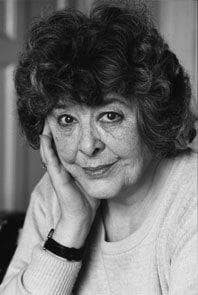
Diana Wynne Jones was a celebrated British author renowned for her witty and imaginative fantasy novels for children and young adults. Her most famous works include "Howl's Moving Castle," "Dark Lord of Derkholm," and "Chrestomanci" series. Jones's writing is characterized by its intricate plots, quirky characters, and clever use of magic, earning her critical acclaim and a dedicated readership.







