“I’m going to get you for this, you bastard.”
— Bond's internal thought after being tortured by Le Chiffre.

Ian Fleming (1953)
Genre
Thriller / Mystery
Reading Time
180 min
Key Themes
See below
Sign in to track this book
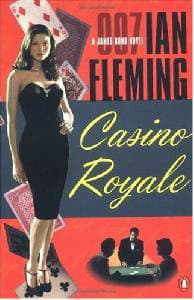
James Bond's first mission: bankrupting a Soviet operative in a high-stakes baccarat game. But a beautiful agent and a brutal betrayal threaten to end his career before it even begins.
James Bond, a 00-agent with the British Secret Service, gets a mission from M: bankrupt Le Chiffre, SMERSH's paymaster in France, at a high-stakes baccarat game at Casino Royale. Le Chiffre has embezzled 50 million francs of SMERSH funds and needs to win it back before his superiors execute him. M believes that if Le Chiffre is ruined, he will have to defect and share Soviet intelligence. Bond receives 10 million francs to play with, and his cover story is that he is a wealthy Jamaican planter. He meets René Mathis, head of the Deuxième Bureau, and Felix Leiter, a CIA agent, who are also part of the operation. Bond also meets Vesper Lynd, a Treasury agent supervising his funds.
Bond arrives at Royale-les-Eaux and meets his team. He is immediately struck by Vesper Lynd's beauty and mysterious manner. He finds her attractive but also suspects she is more complex than she seems. Mathis, the French intelligence chief, provides local support and information. Felix Leiter, from the CIA, offers extra resources, including more money if Bond needs it. The atmosphere is tense; everyone understands the pressure on Bond to win. Bond prepares for the game carefully, studying Le Chiffre's habits and mind, knowing the stakes involve national security and human lives, not just money.
Bond sits at the baccarat table, facing Le Chiffre. The game begins, and Bond quickly finds his rhythm, watching Le Chiffre's tells and playing style. Le Chiffre, a strange figure with a nervous tic, plays with desperate intensity. Bond initially wins a lot, putting Le Chiffre under great pressure. The tension in the casino is clear, with onlookers drawn to the high stakes. However, Le Chiffre, showing his cleverness, turns the game around, winning back much of what he lost and even exceeding Bond's starting capital. Bond finds himself in a bad spot, having lost a large part of the Secret Service's money.
As the baccarat game continues, Le Chiffre, using a risky strategy and some luck, significantly depletes Bond's funds. Bond, despite his skill, is outmaneuvered and almost bankrupt. The mission appears about to fail. In a key moment, Felix Leiter, seeing Bond's trouble, quietly approaches him. Leiter, acting for the CIA, offers Bond an additional 32 million francs to keep playing. This money is a lifeline, letting Bond re-enter the game and giving him another chance to complete his mission. The gesture strengthens the bond between the two agents.
With Leiter's money, Bond returns to the baccarat table, determined to win. He uses an aggressive, high-stakes strategy, betting huge amounts. The game becomes a battle of wills between Bond and Le Chiffre, each trying to outsmart the other. Bond, using his intuition and sharp observation, spots Le Chiffre's subtle tells and uses them. In a dramatic final hand, Bond places a huge bet and wins, completely bankrupting Le Chiffre. Relief washes over Bond's team, and the casino reacts with a mix of awe and disappointment from other gamblers. Le Chiffre, utterly defeated, is left with nothing.
After his win, Bond, feeling triumphant and tired, leaves the casino. As he drives away, two of Le Chiffre's Bulgarian henchmen ambush him. They try to kill him by putting a bomb under his car. Bond, thinking quickly and using his training, spots the device and barely escapes the explosion, getting only minor injuries. The incident is a sharp reminder of his job's deadly consequences and his enemies' ruthless nature. Vesper Lynd, who was with him, is shaken but unharmed, further showing the danger they are in.
After the assassination attempt, Bond and Vesper are led into a trap. Vesper is seemingly kidnapped, and Bond, rushing to help her, is also captured by Le Chiffre and his remaining thugs. They are taken to a secluded villa. Le Chiffre, desperate to get the money and information, tortures Bond. He uses a carpet beater to brutally beat Bond's genitals, trying to force him to reveal where the funds he won are. Bond, despite the extreme pain, stays calm and refuses to break, showing his amazing resilience and dedication to his mission.
Just as Le Chiffre's torture reaches its worst, a group of SMERSH agents bursts into the villa. They are not there to rescue Le Chiffre, but to execute him for embezzling their funds and failing to get them back. The SMERSH agent, a cold and professional operative, shoots Le Chiffre dead without hesitation. The agents then briefly think about killing Bond but decide not to, leaving him wounded but alive. Vesper, who was also held captive, is freed. This unexpected event saves Bond from certain death, but leaves him badly injured and traumatized.
Bond goes to a hospital to recover from his terrible injuries. Vesper Lynd stays with him, caring for him and offering comfort. While he recovers, Bond and Vesper become very close. Bond, who usually keeps an emotional distance, finds himself falling deeply in love with Vesper, imagining a future where he can leave the Secret Service and live a normal life with her. He proposes marriage, and she accepts, showing a deep emotional change for the usually detached agent. Their time together is peaceful, a sharp contrast to the violence and espionage of Bond's world.
As Bond recovers, he notices small inconsistencies in Vesper's behavior and story. He starts to suspect she is not who she claims to be. His suspicions are confirmed when he intercepts a coded message and learns that Vesper has been a double agent, working for the Soviets all along. She had been forced to work for SMERSH, who held her Polish lover hostage. Her role was to ensure Bond's failure or capture. The realization shatters Bond; he feels completely betrayed by the woman he loved and planned to marry. The emotional devastation is deep, tearing apart his new happiness.
Faced with Bond's discovery, Vesper Lynd, overcome by guilt, despair, and her impossible situation, chooses a tragic escape. She leaves a note confessing her double life and her love for Bond, explaining SMERSH's coercion. Bond finds her dead in her hotel room; she has taken her own life. Her suicide is a devastating blow to Bond, confirming her deception but also revealing her deep inner conflict and suffering. The event hardens Bond, reinforcing his cynical view of the world and the dangers of emotional attachment in his job.
Vesper Lynd's betrayal and death deeply affect James Bond. He calls his superiors, cold and detached, to report Vesper's true allegiance and her suicide. When asked what to do about her, Bond, in a moment of disillusionment and new ruthlessness, declares, 'The bitch is dead.' This iconic line shows Bond's complete emotional detachment and his transformation into the cold, hardened agent he will become. The experience solidifies his resolve to never again let personal feelings compromise his mission or leave him vulnerable. He embraces his role as a weapon, without sentimentality.
The Protagonist
Bond begins as a professional but somewhat detached agent, capable of love, but is ultimately hardened by betrayal and tragedy into a more cynical, emotionally invulnerable operative.
The Supporting/Love Interest/Antagonist
Vesper starts as a mysterious ally, evolves into Bond's beloved, then is revealed as a coerced betrayer, ending in tragic suicide.
The Antagonist
Le Chiffre begins as a powerful, desperate adversary, attempts to recover his losses and torture Bond, but ultimately meets a brutal end at the hands of SMERSH.
The Supporting
Leiter consistently supports Bond, reinforcing the idea of allied intelligence forces.
The Supporting
Mathis serves as a reliable and experienced local contact, offering consistent support to Bond's mission.
The Supporting/Mentioned
M remains a consistent figure of authority, setting the parameters of Bond's mission.
The Antagonist (collective)
SMERSH remains a constant, unseen, and brutal force, driving Le Chiffre's desperation and ultimately executing him.
The Mentioned
They serve as instruments of Le Chiffre's violence, disappearing after their failed attempts.
The novel explores the psychological cost of a life in espionage, particularly the need for and danger of emotional distance. Bond, initially a professional, develops real feelings for Vesper Lynd. This relationship, however, leads to his greatest pain and betrayal, forcing him to face how vulnerable love makes him in his line of work. The climax, where he coldly dismisses Vesper as 'the bitch,' shows his forced hardening and the high price of survival and effectiveness as a spy. This theme is key to understanding Bond's character development and the brutal realities of his job.
“Bond saw that he was a professional, a professional who enjoyed his work... He was aware of the dangers but was too experienced to let them affect his play. He was a man who lived without hope.”
Betrayal is a central theme, shown most strongly through Vesper Lynd's actions. Bond, who rarely trusts or loves, puts his complete faith in Vesper, only to find she is a double agent coerced by SMERSH. This betrayal shatters his emotional defenses and fundamentally changes his view of the world, making him cynical and wary of future attachments. The theme also includes Le Chiffre's betrayal of SMERSH, which leads to his downfall, showing that treachery has consequences for everyone involved, regardless of loyalty. The novel suggests that in espionage, trust is a dangerous luxury.
“He knew that one day he would have to pay. He didn't care. All he wanted was to be with her. To be with her always.”
While seemingly a clear conflict between Western and Soviet powers, the novel looks at the moral gray areas in the 'good vs. evil' fight. Bond, despite fighting for the 'good' side, does ruthless things, including sanctioned killing and severe violence. Le Chiffre, though evil, is driven by desperation and fear of his own superiors (SMERSH), blurring the lines of pure villainy. The methods used by both sides are often brutal and morally questionable. The story suggests that in the shadowy world of espionage, 'good' is often a matter of perspective, and heroes sometimes must act like villains to achieve their goals, leaving them morally compromised.
“He thought of his own profession. The world of espionage was a wilderness of mirrors, reflecting and distorting, where good and evil were often indistinguishable.”
The baccarat game is not just a plot device but a central symbol for Bond's life and the inherent risks of espionage. Gambling represents chance and the high stakes in his job, where success or failure can depend on a single card turn or a split-second decision. Bond's skill and intuition at the table reflect his ability as an agent, but he is also subject to luck, as when Le Chiffre first turns the tide. The theme highlights the precarious nature of Bond's existence, where calculated risks and sheer fortune often combine to decide his fate.
“Bond mistrusted luck. He was a professional. He knew that luck was simply the other side of the coin of skill.”
The novel explores how people create and present their identities, especially in a world of deception. Bond takes on the identity of a wealthy planter, while Vesper maintains a carefully built facade as a Treasury agent. Le Chiffre, despite his strange appearance, is a financial genius. The constant need for agents to use aliases and keep secrets blurs the lines between their true selves and their operational identities. Vesper's ultimate tragedy is the impossibility of reconciling her true feelings with her forced identity as a double agent, which leads to her downfall. The theme questions the authenticity of self in a world built on lies.
“He had accepted the role, and he played it with the detachment of an actor. It was a part he knew well. The part of James Bond.”
A high-stakes card game serving as the central arena for the conflict.
The baccarat game at Casino Royale is the primary plot device, serving as the literal and metaphorical battleground between Bond and Le Chiffre. It drives the initial narrative, providing the mechanism for Bond to bankrupt Le Chiffre and force his defection. Beyond its literal function, the game acts as a microcosm of espionage: a high-stakes contest of skill, intuition, psychology, and chance, with severe consequences for failure. It allows Fleming to showcase Bond's intelligence, nerve, and observational skills under pressure, while also building intense suspense and revealing character through gameplay.
A brutal interrogation sequence that reveals Bond's resilience and Le Chiffre's cruelty.
The torture scene, where Le Chiffre brutally beats Bond's genitals with a carpet beater, is a shocking and pivotal plot device. It serves multiple functions: it escalates the stakes dramatically, demonstrating Le Chiffre's extreme desperation and sadism. More importantly, it highlights Bond's extraordinary physical and mental resilience, his refusal to break under unimaginable pain, solidifying his status as a hardened, unyielding agent. The scene also provides a moment of unexpected salvation through SMERSH's intervention, adding a layer of ironic justice and emphasizing the ruthless nature of all parties involved in the espionage world.
The revelation of Vesper as a double agent, a major turning point for Bond's character.
Vesper Lynd's betrayal is the most significant plot device for Bond's character development. Her initial role as a love interest lulls both Bond and the reader into a false sense of security, making the eventual revelation of her being a double agent all the more impactful. This betrayal shatters Bond's emotional detachment, forcing him to experience deep love and then profound heartbreak. It serves to harden him into the cynical, emotionally guarded agent he becomes in subsequent novels, shaping his iconic 'womanizer' persona as a defense mechanism against future vulnerability. Her suicide seals this transformation.
Bond's official authorization to commit murder in the line of duty.
Bond's '00' status, granting him a license to kill, is a foundational plot device that establishes his unique position within the Secret Service. It immediately signals his lethality and the gravity of his profession. While not explicitly used for a kill in the main plot of Casino Royale, its presence defines Bond's character from the outset, explaining his cold efficiency and willingness to use violence. It sets the tone for his ruthlessness and separates him from conventional agents, allowing for the moral ambiguities explored throughout the narrative without questioning his authority to act as he does.
“I’m going to get you for this, you bastard.”
— Bond's internal thought after being tortured by Le Chiffre.
“A dry martini, 'Mr. Bond.' He looked at me. 'One moment. Three measures of Gordon's, one of vodka, half a measure of Kina Lillet. Shake it very well until it's ice-cold, then add a large thin slice of lemon peel. Got it?'”
— Bond ordering his signature drink, which would later be named the 'Vesper'.
“The secret of a successful game of chemin-de-fer, or for that matter of any gambling game, is not to play too long.”
— Bond's philosophy on gambling, reflecting his discipline.
“Surround yourself with human beings, my dear, you shouldn't be so afraid of them.”
— Vesper Lynd's advice to Bond, hinting at her own struggles.
“He knew that he was now in the presence of a man of great brain and great cruelty, and he was excited by the danger.”
— Bond's assessment of Le Chiffre during their first encounter.
“Bond reflected that good Americans were fine people and that most of them seemed to come from Texas.”
— Bond's internal thought about Felix Leiter.
“Live and let die, my dear. That’s my motto.”
— Le Chiffre speaking to Bond after the torture, revealing his nihilistic view.
“He had discovered that there was a secret of life – the game, the challenge, the excitement of it.”
— Bond's realization about his own motivations and love for his work.
“The scent and the feel of her was a sweet drug to him.”
— Bond's intense attraction to Vesper Lynd.
“He had no right to be a hero, no right to get involved in the personal lives of others.”
— Bond's internal struggle with the emotional toll of his job.
“I can resist everything except temptation.”
— A playful comment by Vesper Lynd to Bond.
“The world was full of people who were content to exist, to let life come and go without ever truly living it.”
— Bond's reflection on his own life compared to others.
“He knew that he would never be free of the memory of her, or of the pain.”
— Bond's realization after Vesper's death and betrayal.
“Bond felt nothing. He was numb with shock and anger.”
— Bond's immediate reaction to Vesper's death.
Ready to see how well you understood this book? Take our interactive quiz with 10 questions.
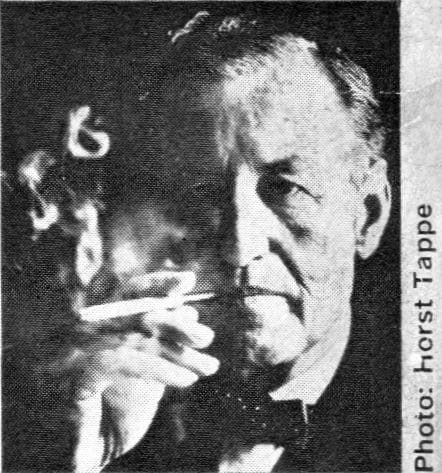
Ian Lancaster Fleming was a British writer, best known for his postwar James Bond series of spy novels. Fleming came from a wealthy family connected to the merchant bank Robert Fleming & Co., and his father was the Member of Parliament (MP) for Henley from 1910 until his death on the Western Front in 1917. Educated at Eton, Sandhurst, and, briefly, the universities of Munich and Geneva, Fleming moved through several jobs before he started writing.







