“What we remember from childhood we remember forever — permanent ghosts, stamped, inked, imprinted, eternally seen.”
— Reflection on memory and trauma from the past.

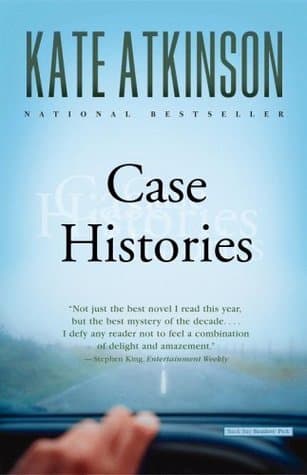
Kate Atkinson (2004)
Genre
Thriller / Mystery
Reading Time
450 min
Key Themes
See below
Sign in to track this book
Thirty years after a little girl vanishes, an office worker is brutally murdered, and a new mother commits a grisly act of rage, private investigator Jackson Brodie unearths the shocking, interwoven truths behind these seemingly disparate Cambridge tragedies.
In 1970, five-year-old Olivia Caster-Chambers disappears from her family's garden in Suffolk while her sisters, Amelia and Julia, play nearby. The family, including parents Graham and Binky, and governess Miss MacDonald, are distraught. Olivia is never found. The incident breaks the family; Graham withdraws, Binky drinks and later dies by suicide, and the sisters carry deep emotional scars. Thirty years later, Amelia, a successful lawyer, still feels the weight of her sister's disappearance. She hires private investigator Jackson Brodie, prompted by her sister Julia, who thinks she saw Olivia recently.
In 1994, young office worker Laura Wyre is murdered in her father's office in Cambridge. Her father, a solicitor named Philip Wyre, finds her body. The police investigation, led by Inspector Marcus, focuses on a recent ex-boyfriend, but no one is convicted. Laura's older sister, Joanna, a doctor, feels deep guilt and unresolved grief. Years later, Joanna, still troubled by her sister's unsolved murder, contacts Jackson Brodie after seeing his advertisement. She wants answers, believing there is more to Laura's death than a random attack, especially after a former colleague, Neil Hunter, died by suicide.
In 1979, Michelle Axford, a young mother overwhelmed by her demanding baby, Adam, and her controlling husband, Patrick, breaks. In a fit of desperation, she kills both her baby and her husband with an axe in their home. Michelle then flees, leaving the bodies undiscovered for days. The gruesome scene is found, and Michelle is the main suspect. She is caught but found mentally unfit for trial and institutionalized. Decades later, Michelle is released and tries to rebuild her life. She works at a local library and tries to stay unnoticed, but the past continues to affect her and those around her.
Jackson Brodie, a former police inspector, is now a private investigator in Cambridge. He recently divorced his wife, Josie, and struggles with the emotional fallout, including limited time with his son, Nathan. Jackson is also haunted by his own sister Niamh's unsolved murder years ago, which makes him understand his clients' pain. He takes Amelia Caster-Chambers's case, interested in Olivia's decades-old disappearance. Soon after, Joanna Wyre asks him about her sister Laura's murder. Jackson starts looking into the past, sifting through old police reports, interviewing surviving witnesses, and putting together fractured memories.
Jackson's investigation into Olivia's disappearance shows a troubled family. He interviews Miss MacDonald, the former governess, who is now elderly. Miss MacDonald hints at Graham Caster-Chambers's controlling nature and his obsession with his children. Jackson also learns about the family's financial problems despite their aristocratic image. He finds out that Olivia was not Graham's biological child, but the result of an affair Binky had with an American soldier. This adds a new layer of motive and secrecy to the family's history, suggesting Graham might have wanted Olivia gone, or at least to hide her true parentage.
Jackson's investigation into Laura Wyre's murder looks at her life at the solicitor's office. He interviews former colleagues, including Neil Hunter, who later died by suicide. He learns that Laura was having an affair with a married colleague, John Jones, and that other female employees, especially Shirley, who was secretly in love with John, felt jealousy and resentment towards her. Jackson discovers that Laura was pregnant and had an abortion shortly before her death. This new information suggests a more complex motive than a random attack, implicating someone close to Laura who might have felt betrayed or threatened by her secrets.
Jackson's investigation into the Caster-Chambers case leads him to the area where the Axford family lived. He learns about the horrific axe murders committed by Michelle Axford. Michelle, now working in a library, tries to avoid anyone who might recognize her past. Jackson eventually meets Michelle, and the details of her crime slowly come out. He learns about her severe postpartum depression, her husband Patrick's dismissive attitude, and the desperate situation that led her to commit the murders. This case, though seemingly separate, shows the destructive power of desperation and the lasting effect of unresolved trauma.
Jackson finds a link between the Caster-Chambers and Wyre cases: Philip Wyre, Laura's father, was the solicitor who handled the Caster-Chambers's affairs around the time Olivia disappeared. He also learns that Philip Wyre had an affair with Binky Caster-Chambers, making him Olivia's biological father. This explains Binky's sadness and Graham's resentment. It also suggests that Laura Wyre might have found out this secret, possibly leading to her murder. The connection between the two families shows a web of infidelity, secrets, and betrayal that spans decades and directly links the two cases.
Through his investigation, Jackson uncovers the truth about Olivia's disappearance. He discovers that Graham Caster-Chambers, angry about his wife's affair and Olivia's true father, arranged Olivia's disappearance, making it look like an abduction. He then gave Olivia to an acquaintance, a woman named Shirley, to be raised elsewhere. Shirley, the same Shirley who worked with Laura Wyre, was having an affair with Philip Wyre. This shows a chilling conspiracy and the extent of Graham's cruelty. Olivia, now an adult, lives under a different name, unaware of her true parents until Jackson's investigation reveals it.
Jackson puts together the final pieces of Laura Wyre's murder. He discovers that Shirley, the same woman who raised Olivia and had an affair with Philip Wyre, also killed Laura. Shirley, driven by jealousy and the fear that Laura would expose her affair with Philip and the truth about Olivia's parentage, murdered Laura in the office. The motive was not random but deeply personal, mixed with the secrets of both families. Jackson presents his findings, bringing some closure to Joanna Wyre and exposing the long-hidden truths that connected the tragic events.
With the Caster-Chambers and Wyre cases mostly solved, Jackson thinks about grief, secrets, and the lasting effects of the past. He finds satisfaction in bringing answers to his clients, even if the truths are painful. While these cases provide some emotional release, his own sister Niamh's murder remains unsolved, a constant ache that drives his work. The experience deepens his understanding of people and family relationships. He continues to navigate his personal life, working for a better relationship with his son and moving forward, ready for the next case.
The Protagonist
Jackson grapples with his personal grief and divorce while using his investigative skills to untangle three complex cases, finding a degree of professional fulfillment even as his own past remains unresolved.
The Supporting
Amelia moves from a state of repressed grief and uncertainty to confronting the shocking truth about her sister's disappearance, finding a difficult but necessary closure.
The Supporting
Julia's initial fragmented memories and mental distress are slowly validated as Jackson uncovers the truth, offering her a form of peace.
The Supporting
Joanna's long-held grief and guilt are finally addressed as Jackson uncovers the truth about Laura's killer, offering her a path toward healing.
The Supporting
Michelle's attempts to live a normal life are constantly threatened by her past, which eventually resurfaces.
The Supporting
Philip's long-buried secrets are exposed, revealing his pivotal role in the tragic events of both the Caster-Chambers and Wyre families.
The Antagonist
Shirley's hidden life of secrets and manipulation is gradually exposed, revealing her as the perpetrator of one of the central crimes.
The Supporting
Olivia's true identity and the circumstances of her disappearance are revealed, bringing a shocking conclusion to a decades-old mystery.
The Mentioned
Binky's past actions and secrets are gradually revealed, explaining the underlying tensions and events within her family.
The Antagonist
Graham's decades-long deception is finally uncovered, revealing his culpability in Olivia's disappearance.
The novel shows how unresolved grief and trauma, especially from childhood, can shape lives for decades. Amelia and Julia Caster-Chambers are permanently marked by Olivia's disappearance, living with a pervasive sense of loss and unanswered questions. Joanna Wyre's life is similarly defined by her sister Laura's murder, leading to deep guilt and a relentless search for justice. Jackson Brodie himself is moved by his own sister's unsolved murder. The lasting psychological effects of these past events show how trauma does not just fade but actively influences present-day actions and relationships, demanding resolution.
“Grief was a house that had no doors or windows, a place where you could never get out.”
At the core of all three cases are family secrets and deceptions. The Caster-Chambers family is built on the lie of Olivia's paternity and Graham's planned removal of her. Philip Wyre's affairs and his role as Olivia's biological father are carefully hidden, directly contributing to Laura's murder. Michelle Axford's horrific act is a secret she desperately tries to bury. The novel shows how these hidden truths, often kept to protect reputation or avoid scandal, fester and ultimately cause more devastation than the truth itself. Uncovering these secrets is central to Jackson's investigation and the eventual, though painful, resolution for the characters.
“Secrets were like weeds, always finding their way to the surface, no matter how deeply you buried them.”
The story emphasizes that memory is often subjective and unreliable, especially when colored by trauma and time. Jackson Brodie often hears conflicting accounts, forgotten details, and deliberate evasions. Julia Caster-Chambers's fragmented memories are key to her sister's case, yet they are also affected by her mental state. Witnesses' recollections are often incomplete or biased, forcing Jackson to piece together the truth from different fragments. This theme shows how hard it is to accurately reconstruct past events and how personal stories can differ, making the investigator's role one of not just finding facts, but interpreting the nuances of human experience.
“Memory was a capricious thing, unreliable and prone to embellishment.”
The characters in 'Case Histories' all want some form of justice or closure, but their reasons vary. Amelia and Joanna mainly want answers and to understand 'why.' Jackson Brodie, while driven by a professional sense of justice, also seeks personal closure for his own sister's death. The novel explores the difference between these desires and pure vengeance, suggesting that true closure often comes from understanding and acceptance rather than retribution. The resolutions, while bringing truth, are rarely fully satisfying or easy, showing the lasting pain of loss even when the person responsible is found.
“Closure, he thought, was a word invented by people who had never experienced true grief.”
A main theme is how seemingly separate lives and tragedies are unexpectedly and deeply connected. The three 'case histories' initially seem unrelated, yet Jackson Brodie uncovers a complex web of relationships, affairs, and coincidences that link them all. Shirley, Philip Wyre, and the Caster-Chambers family are all intertwined through various levels of involvement and victimhood. This theme suggests that individual actions have effects far beyond their immediate impact, creating a picture of human experience where no event truly exists alone. It shows that fate and chance play big roles in shaping destinies.
“It was as if the universe had a dark, mischievous sense of humor, weaving disparate threads into a single, tragic tapestry.”
Narrative shifts between characters to reveal layered truths.
The novel employs multiple third-person perspectives, allowing the reader access to the thoughts and experiences of Jackson Brodie, Amelia, Julia, Joanna, and even Michelle Axford. This technique builds a rich, multifaceted understanding of the emotional landscape and the complexities of each case. By shifting perspectives, Atkinson reveals how different characters interpret the same events and how their individual traumas shape their realities, creating dramatic irony and slowly unveiling the intricate connections between their stories. This device deepens the mystery by presenting a fragmented view of the truth, mirroring Jackson's own investigative process.
Interweaving past and present to gradually reveal decades-old secrets.
The narrative skillfully interweaves past events (the original disappearances and murders) with Jackson Brodie's present-day investigation. Flashbacks to 1970, 1979, and 1994 are not presented chronologically but are strategically placed to reveal crucial pieces of information as Jackson's investigation progresses. This dual timeline creates suspense and allows the reader to experience the gradual uncovering of secrets alongside the protagonist, highlighting the long-lasting impact of these historical events on the present-day characters and their unresolved grief. It also emphasizes that the past is never truly 'past' but continues to resonate.
Characters' subjective and flawed recollections drive the mystery.
While not a single unreliable narrator, the novel extensively uses the unreliability of memory as a plot device. Characters like Julia Caster-Chambers have fragmented and potentially distorted recollections, while others have deliberately suppressed or altered memories. This forces both Jackson and the reader to question what is true, what is remembered, and what is fabricated. This device underscores the theme of the elusiveness of truth and makes the process of solving the mysteries more complex, as Jackson must sift through layers of subjective experience to find objective facts. It creates a sense of psychological depth and realism.
Seemingly random connections drive the plot towards a unified resolution.
The plot heavily relies on a series of seemingly improbable coincidences that ultimately connect the three disparate cases. The fact that Philip Wyre was Binky Caster-Chambers's lover, Olivia's biological father, and Shirley's employer (and lover), and that Shirley was Olivia's adoptive mother and Laura's killer, stretches the bounds of plausibility. However, this device is used to create a richly interconnected narrative, emphasizing the theme of interconnectedness and suggesting a kind of fateful, almost predestined, unfolding of events. It allows Atkinson to bring all the threads together into a single, cohesive, albeit complex, resolution.
Quotes from classical literature provide thematic depth and foreshadowing.
Kate Atkinson frequently uses epigraphs at the beginning of chapters and incorporates literary allusions throughout the text, often drawing from classical Greek tragedies or Shakespeare. These allusions provide thematic depth, foreshadow events, and highlight the timeless nature of the human dilemmas explored in the novel—grief, betrayal, fate, and the search for meaning. They elevate the murder mystery beyond a simple whodunit, grounding it in broader literary traditions and offering additional layers of interpretation for the reader, enriching the emotional and intellectual experience of the story.
“What we remember from childhood we remember forever — permanent ghosts, stamped, inked, imprinted, eternally seen.”
— Reflection on memory and trauma from the past.
“The past is a foreign country; they do things differently there.”
— A line often referenced in the novel, contemplating how time changes perspective.
“The dead are never exactly that. They're always with us, in one way or another.”
— Jackson Brodie's thoughts on how past deaths influence the present.
“Life is a series of accidents, really. A string of random events that sometimes add up to something.”
— Jackson Brodie musing on fate and coincidence in his investigations.
“We're all just trying to make sense of the chaos.”
— A character reflecting on the messy nature of human lives.
“The truth is rarely pure and never simple.”
— Commentary on the complexity of uncovering facts in mysteries.
“Sometimes the smallest detail can change everything.”
— Highlighting the importance of minor clues in solving cases.
“Grief is a private thing. It doesn't show itself to strangers.”
— Observation on how people internalize loss.
“We are all detectives in our own lives, trying to piece together the story.”
— A metaphor for how people seek understanding in personal histories.
“The world is full of lost things, and lost people.”
— Jackson Brodie's perspective on the many unresolved cases and lives.
“Hope is a dangerous thing. It can keep you going or break you completely.”
— Reflection on the dual nature of hope in desperate situations.
“Every family has its secrets. Some are just better at hiding them.”
— Comment on the hidden dynamics within families explored in the cases.
“You can't change the past, but you can learn to live with it.”
— A theme of acceptance and moving forward from trauma.
Ready to see how well you understood this book? Take our interactive quiz with 10 questions.
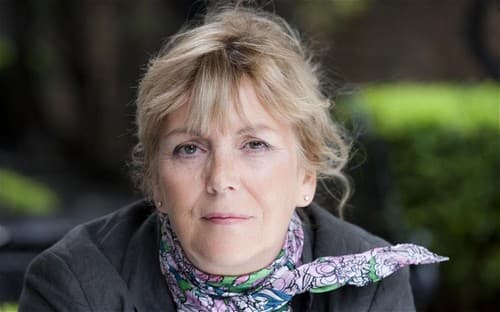
Biography coming soon.







