“The mind is not a democracy. It is a dictatorship, and I am its dictator.”
— Willi Borden, a powerful psychic vampire, asserts his control over others.


Dan Simmons (1989)
Genre
Thriller / Fantasy / Historical Fiction / Science Fiction
Reading Time
1473 min
Key Themes
See below
Sign in to track this book
A Holocaust survivor hunts a secret society of psychic manipulators who feed on human violence and orchestrate history's darkest atrocities, leading to a confrontation that will decide the fate of mankind.
In 1942, during the Holocaust, Saul Laski is a prisoner in the Chelmno extermination camp. As he faces death, he has a terrifying encounter with an unseen entity that manipulates human minds. This 'feeding' process, which he later calls a 'mind-rape,' gives him a temporary surge of will and mental clarity, letting him escape the camp. He sees a Nazi officer, Major von Borch, being controlled by this entity. This traumatic event gives Saul a lasting understanding of a hidden evil in the world: a secret society of 'feeders' who cause human violence and suffering for their own needs. This starts his lifelong quest for revenge and understanding.
Decades later, in the late 1980s, a series of unrelated, strange murders happen in various cities. Victims commit horrific acts of violence, often against loved ones, with no clear reason or memory of the event. Homicide detective Alistair Macleod investigates a particularly gruesome case in Philadelphia where a man murders his family. At the same time, Dr. Melinda Lowell, a psychiatrist, treats a patient, Robert Burke, who confesses to a similar, unprovoked murder during a dissociative state. Both investigators begin to suspect a pattern beyond normal crime, hinting at a manipulative force, connecting these different incidents across the country.
Saul Laski, now an old man haunted by his past, has spent his life hunting the 'feeders' – the psychic vampires who manipulate humans. Through decades of research, he has identified three of the most powerful: Melanie Fuller, a cruel socialite; Richard Essex, a ruthless businessman; and Major von Borch (now known as Julian Bicos), the same Nazi officer Saul met in Chelmno. These three are preparing for their annual 'reunion,' a ritual where they discuss their orchestrated violence and plan future 'games.' Saul, using his unique mental abilities, goes to their gathering, planning to confront them.
At the reunion, held in a secluded estate, Melanie, Essex, and Bicos enjoy their 'games' – telling stories of when they forced people to commit terrible acts. They discuss their methods, their preferred 'flavors' of fear and suffering, and their plans for future large-scale manipulations, including causing race riots and political assassinations. Saul, having expected their meeting, makes his presence known, shocking the feeders who thought him dead or unimportant. This confrontation is not a physical attack but a mental one, as Saul uses his psychic defenses and offensive abilities to challenge their power, showing that he understands them and has come to stop them.
Melinda Lowell's patient, Robert Burke, gives important details under hypnosis, describing an outside force compelling him. Alistair Macleod finds a pattern in the victims' backgrounds and a strange, almost hypnotic influence reported by witnesses. Their separate investigations lead them to realize they are dealing with something beyond normal human pathology. They eventually connect through shared information and realize that the people committing these seemingly random acts of violence are not acting freely. They begin to understand manipulators exist, though the full scope of the 'feeders' remains unclear to them.
Angry at Saul's interference, the feeders use their powers to strike back. They try to manipulate Saul's few remaining friends and allies, including his former lover, the psychic medium Natalie. Saul, however, has spent years building a small, discreet network of people who are either immune to the feeders' influence or have developing psychic abilities. These allies, though skeptical at first, become important as Saul deals with the feeders' attempts to isolate and destroy him. This includes befriending Dr. Lowell and Detective Macleod, whom he subtly guides toward the truth.
Through a series of planned encounters and revelations, Saul Laski contacts Melinda Lowell and Alistair Macleod. At first, both are skeptical of Saul's claims about psychic vampires, but the evidence from their cases, along with Saul's insights and subtle demonstrations of his own abilities, convinces them. Saul explains the 'feeders,' their history, and their methods of 'mind-rape' and 'carrion comfort.' They form an uneasy but determined alliance, combining Saul's knowledge and psychic power with Melinda's psychological understanding and Alistair's investigative skills to track and confront the manipulators.
The combined team begins to hunt Melanie, Essex, and Bicos. They use their resources to find the feeders' various identities, financial networks, and current locations. The hunt is dangerous, as the feeders know they are being pursued and constantly try to manipulate and kill their pursuers. Several close calls and near-fatal encounters happen, showing the feeders' power and ruthlessness. Saul, Melinda, and Alistair learn to trust each other completely, developing ways to counter the feeders' psychic attacks and protect themselves from being 'used' as tools of violence.
The climax involves a series of confrontations where the team manages to isolate and fight each feeder. Essex is eventually cornered and defeated, but it takes significant effort. Melanie, clever and powerful, is especially challenging, leading to a brutal psychic and physical struggle. Bicos, the oldest and perhaps most evil, presents the ultimate test. The battle is costly, with some of Saul's allies making the ultimate sacrifice. During these confrontations, the extent of the feeders' ancient origins and their role in historical atrocities, including the Holocaust, becomes clear.
After the defeat of Melanie, Essex, and Bicos, Saul, Melinda, and Alistair process the horrific events. While they have eliminated three major threats, they understand that the 'feeders' are part of a larger, ancient species, and others may still exist. Saul, having achieved his lifelong revenge, finds some peace but also great weariness. Melinda and Alistair, changed by their experiences, commit to staying watchful. The novel ends with the understanding that while a battle has been won, the human capacity for violence that the feeders use will always remain, suggesting that the fight against such evil is ongoing.
The Protagonist
From a traumatized Holocaust survivor driven by revenge, Saul evolves into a formidable psychic warrior who ultimately finds a measure of peace after confronting his tormentors.
The Supporting
Melinda transforms from a skeptical psychiatrist into a believer and active participant in the fight against supernatural evil, expanding her understanding of the human psyche.
The Supporting
Alistair's worldview is shattered and rebuilt as he moves from conventional policing to confronting supernatural evil, finding love and purpose in the process.
The Antagonist
A static character who remains a pure embodiment of evil, Melanie's arc is one of escalating confrontation leading to her eventual defeat.
The Antagonist
Essex's arc is one of overconfidence in his power, leading to his downfall when confronted by Saul and his allies.
The Antagonist
Bicos represents a primal, unchanging evil that is ultimately challenged and defeated by Saul, bringing closure to Saul's decades-long quest.
The Supporting
Natalie moves from a somewhat detached observer to an active, albeit vulnerable, participant in the fight, reaffirming her bond with Saul.
The Mentioned
Burke's arc is one of unwitting victimhood and a catalyst for Melinda's journey of discovery.
The Supporting
Tommy's arc is one of awakening to his abilities and being guided by Saul, hinting at a future role in the ongoing struggle.
The novel explores the origins and continuation of evil, asking if it is part of humanity or an outside influence. The 'feeders' are an ancient, parasitic force that preys on human suffering, but the book also shows humanity's own capacity for cruelty, which the feeders only make worse. Scenes like Saul's experience in Chelmno or the 'mind-rape' murders show how easily humans can be pushed to commit atrocities, blurring the line between outside manipulation and internal depravity. This theme suggests that while the feeders are a clear evil, the potential for violence is in all of us.
“''Carrion comfort.' The words echoed in Saul's mind, a phrase from a Hopkins poem he'd read, describing the grim sustenance drawn from despair. But this was more literal, more vile. They fed on us. On our pain. On our terror. They were the carrion eaters of the human soul.”
Saul Laski's life is defined by the trauma of the Holocaust and his encounter with a 'feeder' in Chelmno. His quest is driven by a deep desire for revenge, not just for himself, but for all the victims of the feeders throughout history. The novel looks at how memory, especially of horrific events, can be both a burden and a strong motivator. Saul's decades-long pursuit shows the lasting impact of trauma and the complex nature of seeking justice, ultimately questioning whether revenge truly brings peace or just continues a cycle of violence.
“He had survived Chelmno, not by chance, but by a sudden, inexplicable surge of will, a mental shield that had allowed him to see the true face of the evil that stalked the camps. And in that moment, a promise had been forged in the crucible of his pain: he would hunt them.”
A main theme is identity and how fragile free will is when faced with the feeders' powers. The 'mind-rape' directly attacks a person's independence, forcing them to act against their own nature and desires. Characters like Robert Burke lose control, becoming puppets. The fight against the feeders is a fight for self-possession and the right to one's own mind. Saul's psychic development is a journey of strengthening his mental defenses and asserting his will against outside manipulation, showing the battle for true self-control.
“To be 'used' was to have your mind, your very soul, violated. To be made to do things unspeakable, things you would never conceive. And then to be left with the memory, or worse, no memory at all, just the empty space where your will had been.”
Unlike the feeders who thrive on isolation and fear, the novel stresses the strength found in human connection, trust, and empathy. Saul, Melinda, and Alistair's alliance is built on these ideas, letting them overcome their individual limits and face a seemingly unbeatable enemy. Melinda's empathy as a psychiatrist, Alistair's commitment to justice, and Saul's protective instincts for his allies show how compassion and mutual support are important weapons against an evil that seeks to divide. The book suggests that real human bonds are the best defense against psychic manipulation.
“He needed allies. Not just physical strength, but minds that could understand, spirits that could believe. He needed the warmth of human connection to fight the cold, predatory hunger of the feeders.”
Carrion Comfort includes a hidden history, suggesting that the 'feeders' have been influencing human events, especially mass violence, for thousands of years. From ancient Roman games to the Holocaust and modern terrorism, their subtle manipulation has shaped conflicts and atrocities. This theme reinterprets history through a supernatural lens, implying that many of humanity's darkest moments were not only due to human failing but were orchestrated for the feeders' sustenance. It forces a re-evaluation of historical stories and the unseen forces that might be at play.
“They were the architects of mass hysteria, the whispers in the ears of tyrants, the unseen hands guiding the blades of assassins. History, as humanity knew it, was merely a shadow play for their amusement and their hunger.”
The psychic ability of the 'feeders' to control and feed on human emotions
This is the central plot device. The 'mind-rape' is the specific psychic ability of the 'feeders' to completely subjugate a human's will, forcing them to perform actions, often violent and self-destructive, against their own conscious desires. 'Carrion comfort' refers to the psychic sustenance the feeders derive from the intense fear, pain, and despair generated by these acts. This device drives the entire plot, explaining the bizarre murders, motivating Saul's quest, and defining the nature of the antagonists. It's a terrifying violation of free will that makes the feeders so insidious and powerful.
Interweaving Saul's past experiences with the present-day investigation
The narrative frequently shifts between Saul Laski's traumatic past in Chelmno during World War II and the present-day investigation by Melinda Lowell and Alistair Macleod, as well as Saul's own ongoing hunt. These flashbacks are crucial for establishing Saul's motivation, revealing the origins of the 'feeders,' and slowly unveiling the full scope of their ancient evil. The dual timeline effectively builds suspense, provides historical context for the feeders' activities, and connects the personal horror of the Holocaust to contemporary acts of violence, demonstrating the timeless nature of the threat.
Saul's self-developed mental powers as a counter to the feeders
While the feeders possess inherent psychic abilities, Saul Laski develops his own unique set of mental powers, honed over decades. These include mental shielding, heightened awareness, and even a limited form of telepathy or empathic projection. This device allows Saul to directly combat the feeders on their own terms, providing a protagonist who isn't merely a victim but an active, formidable opponent. His journey of self-training and the gradual revelation of his powers are key to his character arc and the eventual confrontation with the antagonists.
The annual gathering of the powerful feeders to recount their 'games'
The annual 'reunion' of Melanie Fuller, Richard Essex, and Julian Bicos serves as a significant plot device. It provides a focal point for Saul's initial infiltration and confrontation. More importantly, it allows the narrative to explicitly detail the feeders' methods, their shared history, and their individual 'flavors' of cruelty through their boasts and plans. This ritualistic gathering not only advances the plot by bringing the antagonists together but also serves to fully reveal the horrifying extent of their power and depravity to the reader.
“The mind is not a democracy. It is a dictatorship, and I am its dictator.”
— Willi Borden, a powerful psychic vampire, asserts his control over others.
“We are the carrion comfort of despair.”
— Reflecting on the title and the dark nature of the psychic vampires' existence.
“The game is the thing. The hunt is everything.”
— Melanie Fuller, another psychic vampire, describes her obsession with manipulating and hunting humans.
“History is written by the survivors, but it is made by the monsters.”
— Commentary on how the psychic vampires have secretly influenced historical events.
“Fear is the mind-killer, but control is the soul-killer.”
— A character reflects on the moral cost of psychic domination.
“We do not feed on blood, but on the essence of will.”
— Explaining the nature of psychic vampires who drain mental energy rather than physical blood.
“In the end, we are all just puppets on strings, some of us just have longer ones.”
— A metaphor for how the psychic vampires manipulate people from afar.
“The past is a ghost that haunts the present, and we are its architects.”
— Reflecting on how the characters' actions have long-lasting consequences across time.
“To live forever is to watch everything you love turn to dust.”
— A lament on the loneliness and burden of immortality experienced by the psychic vampires.
“Power corrupts, but absolute power corrupts absolutely into something inhuman.”
— Describing the transformation of psychic vampires as they gain more control over others.
“The hunt is not for the weak; it is a dance of death and domination.”
— Emphasizing the brutal and predatory nature of the psychic vampires' games.
“We are the shadows behind the throne, the whisper in the ear of history.”
— Highlighting the secret influence psychic vampires wield over world events.
“To control another's mind is to steal their soul, piece by piece.”
— A moral observation on the devastating effects of psychic vampirism on victims.
“In this game, there are no winners, only survivors and the consumed.”
— A grim summary of the endless conflict among psychic vampires and their prey.
Ready to see how well you understood this book? Take our interactive quiz with 10 questions.
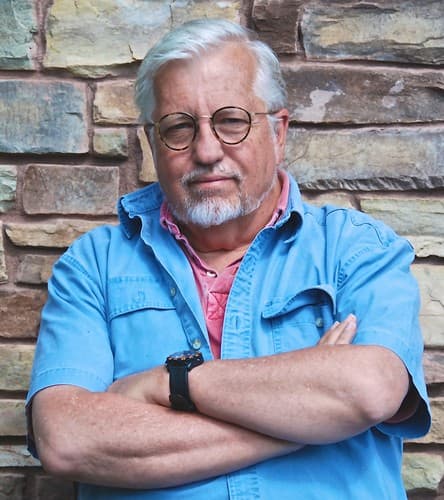
Dan Simmons is an American science fiction and horror writer. He is the author of the Hyperion Cantos and the Ilium/Olympos cycles, among other works which span the science fiction, horror, and fantasy genres, sometimes within a single novel. Simmons's genre-intermingling Song of Kali (1985) won the World Fantasy Award. He also writes mysteries and thrillers, some of which feature the continuing character Joe Kurtz.







