“Sin, young man, is when you treat people as things. Including yourself. That's what sin is.”
— Granny Weatherwax defines sin to the young priest Mightily Oats.

Terry Pratchett (1998)
Genre
Fantasy
Reading Time
300 min
Key Themes
See below
Sign in to track this book
When modern, sun-loving vampires with a penchant for bad fashion decide to permanently crash King Verence's castle, a bumbling priest and the formidable Lancre witches must put aside their differences to prevent an elegant, bloodthirsty takeover.
King Verence II of Lancre, embracing new ideas, invites the Magpyr family, modern vampires from Uberwald, to his newborn daughter Esmeralda's naming ceremony. He wants to improve relations with other kingdoms and show Lancre's open-mindedness, despite his wife Queen Magrat's unease about the Magpyrs' true intentions. The Lancre witches, particularly Granny Weatherwax, Nanny Ogg, and Agnes Nitt, also feel uneasy about this decision, recognizing the danger of inviting such powerful, ancient creatures, even if these vampires claim to be 'modern' and reformed.
The Magpyr family—Count Magpyr, Countess Magpyr, and their children Vlad and Lacrimosa—arrive at Lancre Castle. They are not typical vampires; they drink wine, eat garlic, and are seemingly unaffected by sunlight, presenting themselves as sophisticated and modern. However, their politeness barely hides a predatory nature and an intention to take over Lancre. They begin to charm the Lancre people, especially the younger generation, with their appealing new customs and promises of a 'better' life, slowly eroding traditional beliefs and values.
Granny Weatherwax and Nanny Ogg, along with the newest witch, Agnes Nitt (who houses the persona of Perdita), watch the Magpyrs with growing suspicion. They realize that the vampires' 'modernity' is simply a more subtle form of control. The Magpyrs are not afraid of traditional anti-vampire measures because they have moved past them, instead preying on people's minds and wills. Granny Weatherwax begins to feel the weight of a growing magical battle, recognizing that the Magpyrs' power comes from their ability to manipulate perception and belief, rather than brute force.
Father Mightily Oats, a young Omnian priest, arrives in Lancre to bless the new princess. He is a troubled man, constantly questioning his faith and feeling inadequate. He carries with him a heavy 'God of the Gaps'—a conceptual representation of his fragmented beliefs. He is initially confused by the witches' practical magic and the Magpyrs' seemingly kind nature. However, as he sees the Magpyrs' subtle manipulation and the witches' struggle, he begins to understand faith not as rigid rules, but as the power of belief itself.
Agnes Nitt, feeling overlooked, finds herself drawn to the Magpyrs' sophisticated charm, especially Vlad. The vampires subtly try to convert her, promising her beauty and power, preying on her inner doubts and the 'Perdita' persona. This shows the Magpyrs' main weapon: psychological manipulation and the erosion of self-worth. Agnes, with Perdita's help, fights against their influence, representing how common people are vulnerable to the vampires' 'modern' seduction, which aims to turn them into willing servants rather than traditional victims.
Granny Weatherwax, realizing that traditional magic and physical fighting are ineffective against the 'modern' Magpyrs, begins to understand their true weakness: they are still sustained by belief, though a different kind. They fear not garlic or crosses, but the loss of their own self-image and others' belief in their power. She plans to undermine their confidence and make them doubt themselves, a form of psychological warfare. This involves using the power of Lancre's deep traditions and the witches' own strong self-belief.
While Granny Weatherwax focuses on undermining the Magpyrs' mental game, Nanny Ogg and the Lancre villagers use their own resistance: stubborn common sense and practical earthiness. They refuse to be impressed by the vampires' airs and graces, continuing their daily routines and staying skeptical. This collective indifference and refusal to be intimidated slowly reduces the Magpyrs' sense of superiority, as they find their sophisticated manipulations less effective against people who are simply too busy living their lives to be bothered.
During Princess Esmeralda's naming ceremony, the Magpyrs move to fully convert the royal family and take control of Lancre. They plan to 'claim' the princess, securing their hold. This leads to a direct confrontation between the witches (Granny Weatherwax, Nanny Ogg, and Agnes/Perdita), Father Oats, and the Magpyr family. The situation escalates as the Magpyrs show their full, terrifying power, but also their underlying fragility when faced with genuine, steady belief and the force of human will and common sense.
In the final confrontation, Father Mightily Oats, seeing the Magpyrs' true evil and inspired by the witches' resolve, finally loses his doubts. He realizes that true faith is not about rigid rules or external signs, but about belief in something good and the courage to act on it. He uses his newfound, heartfelt conviction, not as a weapon, but as a shield and inner strength, which proves genuinely painful and disruptive to the Magpyrs, who thrive on cynicism and control, making them vulnerable.
Granny Weatherwax, Nanny Ogg, and Agnes Nitt (fully embracing Perdita's strength) use their combined power, not through spells, but through an overwhelming projection of their own self-belief and the land's belief. They make the Magpyrs believe in the very things they claim to be immune to—garlic, sunlight, crosses—by sheer force of will and the power of their reputation. The vampires, who get their strength from controlling others' beliefs, are overwhelmed when their own beliefs are turned against them, causing them to falter and be defeated.
Overwhelmed by the witches' steady belief and Father Oats's genuine faith, the Magpyrs are defeated. They are not destroyed in a conventional way but are made to believe in their own weaknesses, causing them to flee Lancre in disarray, their sophisticated facade broken. The kingdom is saved from their takeover, and life in Lancre slowly returns to its strange normalcy. The experience changes the characters: Verence is a little wiser, Magrat is more assertive, Father Oats finds his faith, and Agnes Nitt embraces her full identity.
The Protagonist
Granny initially struggles against the Magpyrs' 'modern' vampirism but adapts her understanding of power, realizing belief itself is the ultimate weapon.
The Protagonist
Nanny Ogg's unwavering practicality and common sense prove to be a powerful, often overlooked, defense against the Magpyrs' sophisticated manipulations.
The Protagonist
Agnes learns to integrate her two personas, embracing her own strength and unique identity rather than succumbing to the Magpyrs' allure or her own insecurities.
The Protagonist
Father Oats transforms from a doubting, dogmatic priest into someone who understands faith as the power of personal belief and courage, finding his true spiritual conviction.
The Antagonist
Count Magpyr's belief in his own 'modern' invincibility is shattered when confronted by the raw, unwavering belief of the witches and Father Oats.
The Supporting
Verence learns the hard lesson that progress must be tempered with wisdom and an understanding of inherent dangers, becoming a slightly less naive ruler.
The Supporting
Magrat grows into a more confident and assertive queen, finding her voice and standing up for her family and kingdom against her husband's naivety and the vampiric threat.
The Supporting
Vlad's confidence in his psychological prowess is shaken when Agnes ultimately resists his charm and manipulation, proving his methods are not infallible.
The Supporting
Lacrimosa's detached, analytical approach to control is challenged when the emotional and spiritual forces of Lancre prove resistant to her logic.
This theme is central to the novel. The Magpyrs are 'modern' vampires because they have learned to manipulate belief, making people believe in their invincibility and their own weaknesses. However, the witches and Father Oats defeat them by turning this power against them. Granny Weatherwax's 'headology' is the art of manipulating belief, and the climax shows the witches projecting such a strong belief in traditional vampire weaknesses that the Magpyrs themselves begin to believe it. Father Oats finds true faith not in rules, but in his own genuine belief in good, proving that steady personal conviction is the ultimate shield and weapon. The book argues that what people believe, about themselves and the world, is very powerful.
“"Belief is a tool. And it is a weapon. It is a sword and a shield, and a spear and a net. It is a mirror and a lens. It is a hammer and a nail, and it is the building itself. And it is the emptiness that allows the building to be built."”
The Magpyrs represent a 'modern' form of evil, sophisticated and subtle, contrasting sharply with Lancre's traditional, though quirky, way of life. They scorn traditional vampire weaknesses and seek to 'update' Lancre, but their modernity is merely a more effective form of control. The novel explores the tension between accepting progress and preserving valuable traditions. While King Verence is eager for modernity, the witches and the common folk of Lancre show that traditional common sense, community, and an understanding of human nature are often more resilient and effective than superficial 'progress.' The Magpyrs' attempts to 'civilize' Lancre fail because they underestimate the deep roots of its culture and the strength found in its unconventional traditions.
“"The thing about tradition is, if you don't know where you're going, it's a good idea to know where you've come from."”
Agnes Nitt's struggle with her inner persona, Perdita X. Dream, is a key exploration of identity. Agnes feels inadequate and wishes to be someone else, making her vulnerable to the Magpyrs' promises of transformation. Her journey is about learning to integrate her different selves and accept her true, powerful identity, rather than hiding behind an idealized image. This theme is mirrored in Father Oats's struggle to reconcile his priestly role with his personal doubts, and even in the Magpyrs' carefully constructed 'modern' identities which hide their true, predatory nature. The novel suggests that true strength comes from accepting and embracing one's authentic self, flaws and all.
“"You are you. You are your own, and you are beautiful. You are not a copy of anything."”
The novel redefines evil, moving beyond typical monsters to a more subtle, psychological form. The Magpyrs are not afraid of crosses or garlic; they are afraid of losing control and being disbelieved. Their evil is in their desire to control minds, erode free will, and turn people into willing servants rather than mere victims. This 'modern' evil is harder to fight with traditional methods, forcing the protagonists to adapt. It shows how evil can appear as sophistication or progress, preying on insecurity and the desire for something 'better.' The book argues that true evil is the suppression of individual will and the manipulation of belief.
“"They don't want to drink your blood, they want to drink your life."”
The pragmatic use of psychology and reputation as magic.
Headology is Granny Weatherwax's primary 'magic,' a form of practical psychology where belief, reputation, and suggestion are used to achieve magical effects. It's about knowing people's minds, understanding their expectations, and making them believe what you want them to believe. Against the Magpyrs, who also manipulate belief, headology becomes the ultimate weapon. Granny uses her formidable reputation and the power of collective belief to make the vampires believe in their own weaknesses, effectively turning their own psychological warfare against them.
A metaphorical representation of Father Oats's fragmented faith.
Father Mightily Oats carries a metaphorical 'God of the Gaps' – a conceptual entity that represents his fragmented, intellectualized faith, filling only the areas where scientific or logical explanations are lacking. This device illustrates his struggle with dogma versus genuine spiritual conviction. As the story progresses, he learns to shed this 'God of the Gaps' and embrace a more holistic, heartfelt belief, demonstrating that true faith is not about filling voids but about an unwavering personal commitment and courage, which proves to be a powerful force against the Magpyrs.
A manifestation of Agnes's idealized self and insecurity.
Perdita X. Dream is the name Agnes Nitt gives to her inner, idealized persona – a confident, beautiful, and assertive woman. This device externalizes Agnes's internal conflict between her self-consciousness and her hidden strength. The Magpyrs attempt to exploit this division, but ultimately, Agnes learns to integrate Perdita's strengths into her own identity, becoming a more complete and powerful individual. It highlights the theme of self-acceptance and the danger of letting external perceptions dictate one's self-worth.
A deceptive facade of sophistication hiding ancient evil.
The Magpyrs' 'modernity' is a crucial plot device. By presenting themselves as evolved vampires who drink wine, eat garlic, and are unaffected by sunlight, they disarm their victims and defy traditional expectations. This allows them to infiltrate Lancre without immediate suspicion, making their insidious takeover more effective. Their modernity is a sophisticated mask for their true nature, which is still predatory and controlling, but now operates through psychological manipulation rather than brute force. This forces the protagonists to adapt their strategies, as traditional anti-vampire measures are useless.
“Sin, young man, is when you treat people as things. Including yourself. That's what sin is.”
— Granny Weatherwax defines sin to the young priest Mightily Oats.
“The Monks of Cool, whose very name was a contradiction in terms, were an ancient order.”
— Narration introducing the Monks of Cool.
“You can't go around telling people they're going to die. Where's the fun in that?”
— Death reflects on his role and the nature of mortality.
“Vampires don't exist. They're like werewolves or the tooth fairy. Or love.”
— Vlad, a vampire, muses on the popular perception of his kind.
“She had a face that could stop a clock, and a personality to match.”
— A description of one of the characters, likely a witch.
“It was a truth universally acknowledged that a man in possession of a good fortune must be in want of a wife.”
— A playful twist on a famous opening line, referring to a vampire's needs.
“There was a lot to be said for the old ways. And a lot to be said against them, too.”
— A general reflection on tradition versus change.
“The future was a dark, uncharted country, and the only way to get through it was to make your own light.”
— A moment of contemplation on facing the unknown.
“It was a strange thing, but the more you tried to ignore something, the more it seemed to demand your attention.”
— A character's observation on the nature of persistence.
“Sometimes it was better to be a human being, with all the messiness that entailed, than to be a perfect machine.”
— A reflection on the value of humanity over sterile perfection.
“Granny Weatherwax did not approve of women doing magic for money. It was like selling a part of yourself.”
— Granny Weatherwax's strong views on the ethics of magic.
“He didn't want to be a hero. He just wanted to go home and have a nice cup of tea.”
— A character's simple desire amidst complex events.
“The world was full of people who were so busy being themselves that they didn't have time to be anyone else.”
— An observation on individuality and self-absorption.
Ready to see how well you understood this book? Take our interactive quiz with 10 questions.
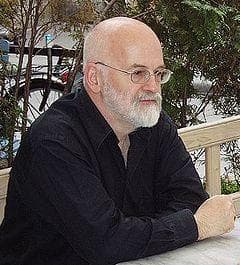
Sir Terence David John Pratchett was an English humorist, satirist, and author of fantasy novels, especially comical works. He is best known for his Discworld series of 41 novels.







