“I have been in love with no one, and never shall, unless it should be with you.”
— Carmilla declares her affection to Laura, early in their relationship.

J. Sheridan Le Fanu, Sheridan Le Fanu (1871)
Genre
Fantasy
Reading Time
108 min
Key Themes
See below
Sign in to track this book
A lonely young woman in a secluded Styrian castle finds her life, and perhaps her very soul, taken by the mysterious Countess Carmilla, whose nightly habits and chilling secrets hint at a monstrous, immortal hunger.
Laura, a young English woman, lives a secluded life with her father, an English ex-military man, in a remote castle in Styria. Her only companions are governesses and tutors. She recounts a strange childhood dream where a beautiful woman entered her room and bit her chest. One day, a carriage accident occurs near their castle, involving a noblewoman and her beautiful, seemingly unconscious daughter, Carmilla. The mother, claiming urgent business, entrusts Carmilla to Laura's father for three months. Laura is immediately drawn to Carmilla's beauty and melancholic charm, despite an unsettling familiarity and a feeling that they have met before. Carmilla's arrival brings a strange, intense intimacy to Laura's otherwise lonely life.
Carmilla quickly becomes Laura's closest companion, but her behavior is increasingly peculiar. She sleeps late into the day, is often lethargic, and dislikes chapel services and any discussion of death or religion. She refuses to answer questions about her past or family, claiming poor memory. Carmilla expresses an intense, almost overwhelming affection for Laura, frequently embracing her, kissing her passionately, and whispering declarations of love that Laura finds both captivating and disturbing. This affection is tinged with a possessiveness that makes Laura uneasy, especially when Carmilla's expressions of love sometimes feel like a threat, accompanied by a strange, cold sensation. Laura also notices Carmilla's odd habit of locking her door from the inside at night.
As Carmilla stays, Laura's health declines. She experiences extreme fatigue, weakness, and a general sense of malaise. She also starts having terrifying nightmares almost every night. In these dreams, a large, black, cat-like creature or a shadowy female figure appears at her bedside, sometimes seeming to press down on her chest, leaving her breathless and drained. She often wakes up feeling exhausted, as if she hasn't slept at all, and notices two small, almost imperceptible puncture marks on her neck. Despite her father's concern and the doctor's inability to diagnose her condition, Laura doesn't immediately connect her deteriorating health to Carmilla, though she feels a growing unease about her strange friend.
While Laura and her father are taking a drive, they encounter a funeral procession for a young woman from a nearby village who died under mysterious circumstances, exhibiting symptoms similar to Laura's. The villagers attribute these deaths to a 'vampire.' Laura's father, a rational man, dismisses such superstitions but agrees to investigate further. He recalls a story he read about a noble family, the Karnsteins, whose members were rumored to be involved in vampirism. He shows Laura an old painting of a Karnstein ancestor, Millarca, who bears an uncanny resemblance to Carmilla. This revelation deeply disturbs Laura, as the name 'Millarca' is an anagram of 'Carmilla' and also 'Mircalla,' another name associated with the Karnstein family.
General Spielsdorf, an old friend of Laura's father, unexpectedly arrives at the castle. He is distraught and grief-stricken, having just buried his beloved niece, Bertha Rheinfelt. He recounts a harrowing tale of Bertha's decline and death. Bertha had befriended a young woman named Millarca, who had suddenly appeared in their lives under mysterious circumstances. Millarca displayed peculiar habits, similar to Carmilla's, and Bertha's health rapidly deteriorated, accompanied by nightmares and weakness. The General's suspicions were confirmed when he discovered puncture marks on Bertha's neck. He describes how Millarca vanished the night Bertha died, leading him to believe she was a vampire. The General's description of Millarca perfectly matches Carmilla, causing Laura and her father to realize the horrifying truth.
Realizing the grave danger, Laura's father and General Spielsdorf combine their knowledge and resources. They are joined by Baron Vordenburg, a scholar of vampirism and descendant of a family tasked with eradicating the Karnstein vampires. Baron Vordenburg brings ancient texts and detailed knowledge of the Karnstein family's history and the specific rituals for destroying a vampire. He explains that the vampire, in this case, a female, would likely be found in her ancestral crypt. Together, the three men travel to the ruined Karnstein chapel and mausoleum. Following the Baron's instructions, they locate the tomb of Mircalla Karnstein, which is marked with a specific crest and appears to be the true resting place of Carmilla.
At the Karnstein crypt, the men proceed with the ritual for destroying a vampire. They open the coffin of the Countess Mircalla Karnstein, and inside, they find Carmilla's body, remarkably well-preserved. Her eyes are open and glistening, her skin is still fresh and supple, and there is a faint smile on her lips, with a trickle of fresh blood on her chin. Baron Vordenburg confirms that she is indeed the vampire. According to ancient custom, a stake is driven through her heart, and her head is then severed. Her body is subsequently burned, and the ashes are scattered. This gruesome act brings an end to Carmilla's vampiric existence and the terror she inflicted upon the young women of the region, including Laura.
Though freed from Carmilla's influence and the physical drain, Laura is left deeply scarred by the experience. The vivid memories of Carmilla's intense affection, her strange beauty, and the horror of her true nature haunt Laura. She often reflects on the paradox of her feelings for Carmilla—the initial fascination and strange love mixed with the growing fear and revulsion. The events leave her with a sense of unease and a lingering psychological trauma that continues to affect her long after Carmilla's destruction. She recounts her story with a tone of melancholy and a sense of having been irrevocably changed by her encounter with the supernatural.
The Protagonist
From a naive, isolated girl, Laura becomes a victim of vampirism, experiencing both the allure and horror of the supernatural, ultimately surviving but remaining psychologically scarred.
The Antagonist
Carmilla remains static in her vampiric nature throughout the story, her ancient evil eventually uncovered and destroyed.
The Supporting
From a skeptical rationalist, he becomes a determined avenger, leading the charge against the supernatural threat to his daughter.
The Supporting
Driven by personal tragedy, he transforms into a relentless hunter, seeking justice for his niece.
The Supporting
He serves as the knowledgeable guide, fulfilling his ancestral duty to combat the Karnstein vampire.
The Mentioned
Her unseen decline and death serve as a tragic parallel to Laura's experience, providing the catalyst for the General's intervention.
The Supporting
She remains a static, concerned but ultimately helpless figure in the face of the supernatural.
The Supporting
She remains a static, concerned but ultimately helpless figure.
The novella explores themes of forbidden desire, particularly homoerotic longing, through Carmilla's intense and often aggressive affection for Laura. Carmilla's 'love' is depicted as both alluring and terrifying, mirroring societal anxieties surrounding non-normative sexuality in the Victorian era. The physical intimacy between the two women, described with languid embraces and passionate kisses, transgresses conventional boundaries. Laura's conflicted feelings—her attraction mingled with fear and revulsion—reflect the internal struggle with desires deemed unacceptable. The vampirism itself can be seen as a metaphor for a consuming, illicit passion that drains the victim's life force.
“''You are mine, you shall be mine, and you and I are one for ever.''”
The story blends Carmilla's seductive charm with the horrific reality of her vampiric nature. Laura is initially captivated by Carmilla's beauty, mystery, and intense affection, showing the dangerous allure of the unknown and forbidden. However, this allure quickly gives way to terror as Laura's health deteriorates and she realizes the sinister truth. The supernatural is presented not merely as an external threat but as something that can insidiously infiltrate and corrupt the domestic, safe sphere, turning intimacy into a form of predation. The gradual revelation of Carmilla's true identity builds suspense and shows the hidden dangers beneath a beautiful facade.
“''I was conscious of a love growing into adoration, and also of an increasing terror; for, though my dearest Carmilla was so amiable, yet I felt in her presence, sometimes, a strange chill and a faintness, such as one feels in a churchyard or near a corpse.''”
Laura's secluded life in a remote Styrian castle makes her particularly vulnerable to Carmilla's predation. Her lack of companionship, apart from her father and governesses, creates an emotional void that Carmilla expertly fills. This isolation prevents early intervention and allows the vampire to establish a deep, controlling influence. The story emphasizes how a sheltered existence, while seemingly protective, can also make one susceptible to hidden dangers. The recurring theme of young women being isolated and preyed upon highlights societal concerns about female vulnerability and the dangers lurking beyond the domestic sphere, particularly for those without strong familial or social networks.
“''I was then an only child, and my father's devotion and love, which, as I grew up, became my only comfort, was then my sole resource.''”
Carmilla's use of various anagrams (Millarca, Mircalla) to conceal her ancient identity as Countess Karnstein is a central element of deception. This constant shifting of names and personas shows the vampire's ability to infiltrate and mislead. Laura's recurring feeling of having known Carmilla before, coupled with the revelation of the Karnstein portrait, blurs the lines between past and present, dream and reality. The theme explores how identity can be fluid and deceptive, especially when confronting an ancient evil that has mastered the art of disguise. It also touches upon the idea of inherited trauma or memory, as Laura feels a strange connection to the vampire's past.
“''Her name, she said, was Carmilla. She was the daughter of a countess who had met with an accident close to our castle.''”
Provides an intimate, subjective, and increasingly unreliable perspective.
The story is told entirely from Laura's perspective, allowing readers to experience her initial fascination, growing unease, and eventual horror firsthand. This subjective viewpoint creates a sense of intimacy and psychological depth, but also limits the information available, building suspense as Laura slowly pieces together the truth. Her traumatic experience shapes the narrative's melancholic tone, and her memories, sometimes dreamlike, contribute to the story's Gothic atmosphere and psychological complexity. The reader is privy to her internal conflict between attraction and fear.
Foreshadows danger and blurs the line between reality and the supernatural.
Laura's recurring dreams and nightmares, particularly her childhood vision of a beautiful woman biting her and her later dreams of a shadowy figure at her bedside, serve as crucial plot devices. They foreshadow Carmilla's true nature and the vampiric attacks before Laura consciously understands them. These sequences blur the line between the psychological and the supernatural, making Laura question her sanity and contributing to the story's unsettling atmosphere. They also provide a symbolic representation of the subtle, insidious nature of the vampire's predation, which often occurs while the victim is asleep.
Provides historical context and reveals Carmilla's true, ancient identity.
The revelation of the Karnstein family history, particularly the stories of vampirism associated with them, and the discovery of the portrait of Mircalla Karnstein, are critical to unraveling Carmilla's mystery. The portrait's uncanny resemblance to Carmilla, combined with the anagrammatic names, serves as irrefutable proof of her ancient vampiric identity. This device grounds the supernatural threat in a historical lineage, adding depth to the lore and providing the necessary clues for Laura's father and General Spielsdorf to identify and ultimately destroy the vampire.
Enhances vulnerability, suspense, and the Gothic atmosphere.
The remote Styrian castle where Laura lives creates a sense of isolation and vulnerability. Far from urban centers and societal norms, it becomes an ideal stage for the supernatural to unfold without immediate detection or intervention. The castle's age, with its 'lonely forests' and 'ruined chapel,' contributes significantly to the Gothic atmosphere, evoking a sense of decay, mystery, and hidden secrets. This setting amplifies Laura's dependence on her father and her susceptibility to Carmilla's influence, intensifying the suspense as the threat becomes increasingly internalized within her seemingly safe home.
“I have been in love with no one, and never shall, unless it should be with you.”
— Carmilla declares her affection to Laura, early in their relationship.
“You are mine, you shall be mine, you and I are one for ever.”
— Carmilla asserts her possessive and eternal connection to Laura.
“In the rapture of my enormous humiliation I live in your warm life, and you shall die—die, sweetly die—into mine.”
— Carmilla describes the vampiric exchange of life and death to Laura.
“I cannot help it; as I draw near to you, you, in your turn, will draw near to others, and learn the rapture of that cruelty, which yet is love.”
— Carmilla explains the predatory nature of her affection.
“I live in your warm life, and you shall die—die, sweetly die—into mine.”
— A repeated motif emphasizing the vampiric life-death cycle.
“The vampire is prone to be fascinated with an engrossing vehemence, resembling the passion of love, by particular persons.”
— Narration describing the vampire's obsessive attachments.
“She used to place her pretty arms about my neck, draw me to her, and laying her cheek to mine, murmur with her lips near my ear...”
— Laura recounts Carmilla's intimate and seductive behavior.
“It was like the ardor of a lover; it embarrassed me; it was hateful and yet overpowering.”
— Laura describes her conflicted feelings towards Carmilla's advances.
“In these mysterious moods I did not like her. I experienced a strange tumultuous excitement that was pleasurable, ever and anon, mingled with a vague sense of fear and disgust.”
— Laura reflects on her complex emotional response to Carmilla.
“The grave of the countess was opened; and the body was found in as perfect a state as the day when it was buried.”
— The discovery of Carmilla's undisturbed corpse, revealing her true nature.
“How wonderful it is to be loved by her!”
— A character's remark on the allure of the vampire's affection.
“Her habits were odd. She would sometimes sit for hours together, with her pretty arms folded, and her eyes fixed upon the floor.”
— Description of Carmilla's mysterious and melancholic behavior.
“I saw Carmilla standing, near the foot of my bed, in her white nightdress, bathed, from her chin to her feet, in one great stain of blood.”
— A haunting vision of Carmilla after a vampiric attack.
Ready to see how well you understood this book? Take our interactive quiz with 10 questions.
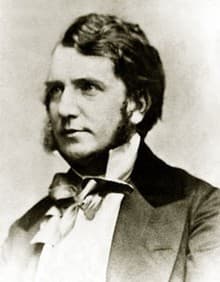
Biography coming soon.
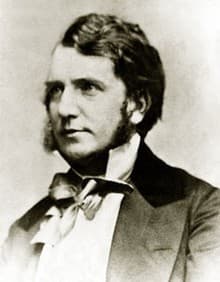
Joseph Thomas Sheridan Le Fanu was an Irish writer of Gothic tales, mystery novels, and horror fiction. He was a leading ghost story writer of his time, central to the development of the genre in the Victorian era. M. R. James described Le Fanu as "absolutely in the first rank as a writer of ghost stories". Three of his best-known works are the locked-room mystery Uncle Silas, the lesbian vampire novella Carmilla, and the historical novel The House by the Churchyard.







