“The greatest trick the devil ever pulled was convincing the world he didn't exist.”
— Robin's internal thought, referencing a classic line, as she considers the elusive nature of the killer.

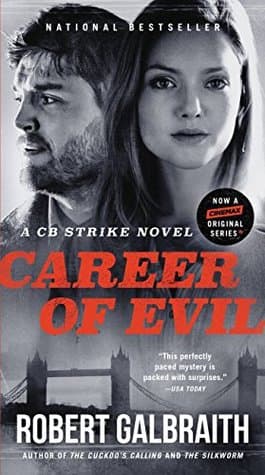
Robert Galbraith (2015)
Genre
Thriller / Mystery
Reading Time
10-12 hours
Key Themes
See below
Sign in to track this book
A severed leg sent through the mail starts private investigators Cormoran Strike and Robin Ellacott on a search for a killer from Strike's past before more body parts, and lives, are lost.
The novel begins with Robin Ellacott receiving a chilling package at the Strike Detective Agency – a severed human leg, addressed to her. Horrified, she immediately contacts Cormoran Strike. Strike, though shocked, quickly narrows down the potential senders to four men from his troubled past, all with a history of violence and a grudge against him: Terrence “Digger” Malley, a gangster Strike helped put away; Noel Brockbank, an ex-soldier with PTSD and a history of violence; Donald Laing, a former military colleague with a dark side; and Shanker, a childhood friend who became a criminal. Strike believes the person is trying to frame him and terrorize Robin, and he keeps his suspicions from the police, who quickly focus on Brockbank.
The leg deeply traumatizes Robin, affecting her relationship with her fiancé, Matthew Cunliffe, who dislikes her work and wants her to quit. Despite Matthew's disapproval and her own fear, Robin is determined to help Strike; she sees it as a test of her commitment to the agency. Strike, meanwhile, begins his own investigation into his four suspects. He visits Malley's old haunts, looks into Brockbank's recent activities, tries to locate Laing, and considers Shanker's current whereabouts. His main goal is to protect Robin and prevent more attacks, while also dealing with the official police inquiry led by Detective Inspector Wardle, who thinks Brockbank is the killer.
The case becomes much more serious when a young woman named Kelsey, a former girlfriend of Brockbank and someone Strike knew, disappears. Kelsey had called Strike earlier, frightened, believing Brockbank was following her. Her disappearance, along with the severed leg, strengthens the police's belief that Brockbank is the killer. Strike, however, remains unconvinced by the police's focus, believing the person is more clever and framing Brockbank. The police start to view Strike with suspicion, seeing him as uncooperative and possibly hindering the investigation because he pursues his own leads and is reluctant to fully share his history with the suspects.
Strike and Robin look deeper into Noel Brockbank's past, focusing on his military service and the psychological trauma he experienced. They learn about his difficult return to civilian life and his unpredictable behavior. Their investigation shows them that Brockbank and Donald Laing, another of Strike's suspects, served together in Afghanistan. This connection is important, as Laing is known for a particularly dark and sadistic personality. Robin, despite her fear, helps a lot, using her research skills to find details about the men's time in the military and their shared experiences, which often involved violent incidents and psychological manipulation.
As the investigation continues, Robin takes on a more active and dangerous role. She uses her acting skills to go undercover, entering various groups and places connected to the suspects, including a support group for veterans where Brockbank attended. During her undercover assignments, she meets unsettling individuals and gathers important information, often putting herself in risky situations without Strike nearby. Her bravery is clear, but her experiences also add to her growing psychological burden, further straining her relationship with Matthew, who is increasingly worried by the risks she takes.
The killer attacks again, sending another gruesome package, this time containing a woman's breast. This new act of terror, directly linked to Strike's past, increases his personal distress. He re-examines his own history, especially his relationships and conflicts with the four suspects, looking for any detail or offense that could have caused such extreme hatred. The realization that the killer is targeting him through Robin, and seems to enjoy the psychological torture, strengthens his resolve to catch the person, even as he struggles with guilt and responsibility for putting Robin in danger.
Through careful investigation, including interviews with former military colleagues and analysis of the gruesome packages, Strike and Robin begin to build a strong case against Donald Laing. They uncover Laing's history of extreme sadism, misogyny, and manipulation, especially towards women. His past actions, including a brutal assault that led to his discharge, show a clear picture of a man capable of the current terrible acts. They learn that Laing had a twisted obsession with Strike, from perceived offenses and a desire for revenge from their shared military service, where Strike had challenged Laing's authority and disturbed his comfort zone.
Strike and Robin finally uncover the full truth about Kelsey's disappearance. She was not a random victim but was specifically targeted by Laing as part of his plan to torment Strike. Laing, having carefully planned his revenge, had manipulated events to frame Brockbank while also terrorizing Robin and Strike. The motive is a deep, pathological hatred for Strike, from a past military incident where Strike had intervened in Laing's abuse of power and exposed his depravity, leading to Laing's dishonorable discharge. Laing wanted to destroy everything Strike cared about, including his reputation and his assistant.
The climax shows Robin, acting on an important piece of information, confronting Donald Laing alone. She tracks him to a remote, derelict building, where a brutal and terrifying struggle happens. Laing, a strong and ruthless opponent, severely injures Robin. She fights for her life, showing great courage and resourcefulness, using her training from Strike to defend herself. Just as Laing is about to deliver a fatal blow, Strike arrives, having figured out Robin's location. A violent fight between the two men follows, with Strike finally subduing Laing, saving Robin's life, but leaving her severely wounded and deeply traumatized.
Donald Laing is arrested and charged, ending the terror. Robin is hospitalized with severe injuries, both physical and psychological. The experience ends her engagement to Matthew, who cannot cope with her career choice and the trauma she has endured. The experience, however, strongly strengthens the bond between Robin and Strike. Strike acknowledges Robin's important help and her bravery, seeing her as a true partner. The case, though horrific, solidifies Robin's commitment to detective work and marks a turning point in her professional and personal relationship with Strike, moving beyond just assistant and boss.
The Protagonist
Strike confronts his past demons and a killer seeking revenge, solidifying his professional and personal trust in Robin as a full partner.
The Protagonist/Supporting
Robin transforms from assistant to a fully-fledged, brave detective, severing ties with her old life and cementing her partnership with Strike.
The Supporting/Antagonist
Matthew's lack of support and understanding of Robin's career and trauma leads to the dissolution of their engagement.
The Antagonist
Laing's meticulous plan for revenge against Strike is executed with brutal precision, culminating in his capture.
The Supporting/Suspect
Brockbank is wrongly accused and suffers further due to the killer's machinations, highlighting the plight of traumatized veterans.
The Supporting/Suspect
Malley is investigated as a potential suspect but is ultimately cleared, serving as a red herring.
The Supporting/Suspect
Shanker is investigated as a suspect, but ultimately proves not to be the killer, and provides limited assistance to Strike.
The Supporting
Wardle's initial certainty about Brockbank is slowly eroded as Strike's investigation uncovers the true killer.
The Mentioned/Victim
Kelsey's disappearance and eventual fate serve as a key element in the killer's frame-up and overall plan.
The novel explores the psychological and physical scars from trauma, especially military service and violent crime. Strike's prosthetic leg and PTSD remind him of his past, while Noel Brockbank's severe PTSD shows the devastating impact of war. Robin's trauma from receiving the severed leg and her violent fight with Laing shows the lasting psychological toll on victims. The book illustrates how trauma appears in different ways, from Brockbank's delusions to Robin's nightmares, and how it shapes characters' decisions and relationships, often isolating them from those who have not experienced similar horrors.
““The wound was not a scar, but a constant, living thing, a whisper of pain in the background of his every thought.””
Robin's journey in 'Career of Evil' is an exploration of identity. Faced with the horror of the case, she confronts her true desires and abilities. Her growing skill and bravery as a detective challenge her ideas about herself and her future, especially compared to the life Matthew wants for her. She embraces the dangerous world of private investigation, leaving her more conventional self behind. Strike also confronts aspects of his identity tied to his military past and his complicated family, acknowledging the darker parts of his history that shaped him and made him a target.
““She was learning to be a detective, and it was a more profound education than she could ever have imagined.””
The central mystery looks into human evil, shown by Donald Laing. His actions are not just criminal but come from a pathological desire for revenge, fueled by sadism and misogyny. The novel explores how perceived offenses and a twisted sense of grievance can turn into extreme violence and careful planning. Laing's torment of Strike and Robin shows the personal and psychological sides of evil, beyond simple criminal intent. The story suggests that some evil is not just an act but a part of a person's character, rooted in deep psychological disturbance.
““Some evil was just that: evil. Not born of circumstance, but of a twisted, malevolent heart.””
The changing dynamic between Strike and Robin is a main theme. The extreme pressure of the case makes them rely on each other, deepening their professional and personal bond. Robin's loyalty and bravery, despite her fear, earns Strike's trust and respect. This mutual reliance strengthens their partnership, changing Robin from an assistant into an essential co-investigator. The contrast with Robin's failing relationship with Matthew highlights the strength and unique nature of her connection with Strike, built on shared danger and professional respect rather than conventional romance.
““He knew, with a certainty that transcended mere professional respect, that he would trust her with his life.””
The novel addresses misogyny and the brutalization of women. The nature of the severed body parts, the targeting of Robin, and the killer's history of violence against women are central to the plot. Donald Laing's character shows extreme misogyny, seeing women as objects to control, abuse, and mutilate. The story highlights the vulnerability of women to such violence and the psychological terror it causes. It also subtly critiques societal attitudes that can allow or overlook such behavior, especially in environments like the military, where power imbalances can be exploited.
““It was not just hate, but a specific, chilling contempt for the female form.””
Four initial suspects distract from the true killer, building suspense.
From the outset, Strike identifies four men from his past who could be responsible for the severed leg. Terrence Malley, Noel Brockbank, Donald Laing, and Shanker all have valid reasons to hate Strike and a history of violence. This device effectively creates multiple lines of inquiry, keeping both the characters and the reader guessing. The police's immediate focus on Brockbank further misdirects, allowing the true killer, Donald Laing, to operate in the shadows for a significant portion of the narrative. This technique builds suspense and allows for a deeper exploration of Strike's complex past relationships.
The killer's actions are designed to inflict maximum psychological distress on Strike and Robin.
The killer's method extends beyond physical violence to a deliberate campaign of psychological torment. The severed leg is sent to Robin, not Strike, to maximize his guilt and fear for her safety. Subsequent gruesome packages and the framing of Brockbank are all calculated to terrorize Robin and destabilize Strike. This device elevates the stakes beyond a simple murder mystery, turning it into a deeply personal and psychologically intense cat-and-mouse game. It highlights the killer's sadistic nature and forces Strike to confront his own vulnerabilities and his protective instincts towards Robin.
Robin's undercover work provides crucial information and highlights her developing detective skills.
Robin's decision to go undercover into various groups and locations connected to the suspects is a key plot device. It allows her to gather information that Strike, as a well-known figure, could not. This technique not only advances the plot by uncovering vital clues but also serves as a crucial element in Robin's character development. It showcases her bravery, resourcefulness, and natural aptitude for detective work, proving her worth to Strike and to herself. It also significantly raises the personal stakes for Robin, placing her in direct danger and contributing to her trauma.
The personal lives of Strike and Robin are deeply intertwined with the professional investigation.
The novel skillfully intertwines the personal struggles of Strike and Robin with the professional demands of the case. Robin's engagement to Matthew crumbles under the pressure of her dangerous work and the trauma she endures, while Strike's past relationships and grudges directly inform the killer's motives. This device ensures that the stakes are always high, not just for solving the crime but for the characters' personal happiness and future. The emotional resonance of their personal lives amplifies the tension of the investigation, making the outcome feel more impactful and the characters more relatable.
Strike's prosthetic leg symbolizes his past trauma and resilience.
Strike's prosthetic leg, a result of his military service, functions as a powerful symbol throughout the novel. It is a constant physical manifestation of his past trauma and the sacrifices he has made. More than just a physical limitation, it represents his resilience, his ability to overcome adversity, and his unique perspective shaped by his experiences. The killer's choice to send a severed leg to Robin is a direct, twisted mirroring of Strike's own wound, making the crime deeply personal and symbolic of the killer's desire to metaphorically 'cripple' Strike by attacking what he cares about.
“The greatest trick the devil ever pulled was convincing the world he didn't exist.”
— Robin's internal thought, referencing a classic line, as she considers the elusive nature of the killer.
“But the truth was, she was not just a sidekick. She was a partner.”
— Robin's growing realization of her value and role in the agency.
“There was a particular kind of terror in knowing someone was watching you, knew you, but you didn't know them.”
— Strik's reflection on the victim's likely fear and the nature of stalking.
“You can't choose your family, but you can choose your friends. And sometimes, your friends become your family.”
— A thought from Strike as he considers his relationship with Robin and his estranged relatives.
“The past was never really past. It just lay in wait, ready to ambush you when you least expected it.”
— Strike's contemplation of how old cases and personal histories resurface.
“It was amazing how much trouble a person could get into simply by trying to do the right thing.”
— Robin's exasperation after a well-intentioned action leads to complications.
“Some monsters were born, some were made, and some just grew, like weeds, in the cracks of society.”
— Strike's musing on the origins of the killer's depravity.
“The world was full of people who thought they knew what was best for you, even when they knew nothing about you.”
— Robin's frustration with her fiancé Matthew's controlling tendencies.
“He knew, with a certainty that chilled him, that this was not the end. It was just the beginning.”
— Strike's ominous feeling after a key event, hinting at future danger.
“The truth was often messy, inconvenient, and rarely what anyone wanted it to be.”
— Strike's cynical view on the reality of investigations and human nature.
“Sometimes the most dangerous people were the ones who seemed the most ordinary.”
— A recurring theme in the book as the detectives consider the killer's unassuming facade.
“Grief, he had learned, was not a single emotion, but a whole landscape of them, shifting and unpredictable.”
— Strike reflecting on his own past losses and the emotional state of the victims' families.
“The greatest battles were often fought not with fists or weapons, but in the mind.”
— Strike's internal struggle with his past and the psychological warfare of the case.
Ready to see how well you understood this book? Take our interactive quiz with 10 questions.

Biography coming soon.







