“The most important thing to remember about a murderer is that he is a human being. Not a monster, not a fiend, but a human being.”
— Spoken by Hercule Poirot, reflecting on the nature of criminals.

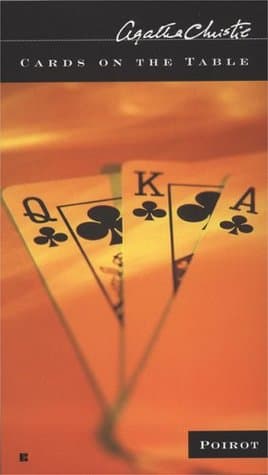
Agatha Christie (1936)
Genre
Thriller / Mystery
Reading Time
324 min
Key Themes
See below
Sign in to track this book
Four bridge players, each with a secret past, become the prime suspects when their eccentric host, who boasted of murder as an art, is found dead in plain sight during a seemingly innocent game.
Mr. Shaitana, a rich and unusual collector, hosts a dinner party for eight guests. The group includes four people he believes are 'successful murderers' and four well-known detectives: Hercule Poirot, Colonel Race, Superintendent Battle, and Ariadne Oliver. During the evening, Shaitana talks about his 'collection' of murderers to the detectives, hinting at their past wrongdoings. He then sets up a bridge game, putting the four suspected murderers in one room and the four detectives in another. This arrangement is meant to be a social experiment, letting Shaitana watch how both groups react, especially the 'murderers' under the unspoken gaze of the 'detectives'.
As the evening continues, with both bridge games going on, Shaitana stands by the fireplace in the room with the four suspected murderers: Dr. Roberts, Mrs. Lorrimer, Major Despard, and Anne Meredith. After some time, when the bridge games end, the guests find Shaitana's body. He has been stabbed with a stiletto, which is still in his chest. The shocking part is that Shaitana was in a room with only the four suspects, all of whom were focused on their bridge game, seemingly unable to commit the act without being seen by the others at their table. The room was well-lit, and the other table of detectives was in a separate room, making it seem impossible to identify the killer immediately.
Hercule Poirot recognizes the unusual nature of a murder committed in such a closed and observed setting, so he immediately takes charge of the investigation. Colonel Race, Superintendent Battle, and Ariadne Oliver assist him. They agree that one of the four bridge players—Dr. Roberts, Mrs. Lorrimer, Major Despard, or Anne Meredith—must be the killer. Poirot decides to solve the case by looking into the psychological histories and past secrets of each suspect, rather than relying on the few traditional forensic clues. He believes the motive and opportunity will become clear once their prior 'successful' murders, as Shaitana suggested, are revealed. Each detective investigates a different suspect.
Poirot and Superintendent Battle begin their investigation into Dr. Roberts. They find that Roberts, a respected doctor, had an elderly, rich patient who died suddenly under suspicious circumstances. The man had an incurable illness, and his death was officially called natural, but there were rumors of an overdose of a sedative. Poirot suspects Roberts might have given a fatal dose, either out of a misguided sense of kindness or for money, as the patient had left a large sum to a charity Roberts was involved with. This past event fits with Shaitana's claim that Roberts was a 'successful murderer'.
Ariadne Oliver investigates Mrs. Lorrimer, a quiet and elegant woman. Mrs. Lorrimer eventually tells Poirot that she murdered her husband many years ago, poisoning him with arsenic. She says it was an act of desperation because he was abusive. Her confession, however, is delivered with a strange calm and lack of detail that makes Poirot suspicious. He wonders if she is confessing to protect someone else or if her confession is a planned move to mislead the investigation. The timing and way she admits it are too convenient, leading Poirot to look closer at the circumstances of her husband's death and her current relationships.
Colonel Race focuses on Major Despard, a well-known explorer. Race uncovers an event from Despard's past during an expedition in the Amazon jungle, where a fellow explorer was shot and killed. Despard claimed it was an accident, a hunting rifle misfiring. However, there were whispers that Despard, perhaps fearing the other explorer would expose some illegal activity or claim a valuable discovery, deliberately caused the 'accident.' The remote location and lack of witnesses made it impossible to prove otherwise. This matches Shaitana's description of Despard as a murderer who escaped justice, adding suspicion to the current case.
Superintendent Battle investigates Anne Meredith, the youngest and seemingly most innocent of the suspects. They discover that Anne had been living as a companion to an elderly, rich woman who died suddenly, leaving Anne a large inheritance. The death was attributed to an accidental overdose of sleeping medicine. However, Battle finds evidence that Anne had a history of money problems and a tendency for petty theft. This pattern, along with the convenient inheritance, suggests Anne might have deliberately caused the overdose or withheld necessary medication to secure her financial future. Her seemingly delicate manner hides a possible ruthlessness, making her a strong suspect.
As the investigation becomes more intense, Mrs. Lorrimer is found dead, having been poisoned. This complicates the case, as she had already confessed to her husband's murder. Shortly after, Anne Meredith tries to kill herself by poisoning but is saved. In a later interview, Anne confesses to murdering both Shaitana and Mrs. Lorrimer. She claims she killed Shaitana in a panic and Mrs. Lorrimer to silence her because Mrs. Lorrimer knew of her past wrongdoings. However, Poirot finds inconsistencies in her confession, especially about the details of Shaitana's murder, leading him to believe she is either being forced or protecting someone else.
Poirot rejects Anne's confession and carefully reconstructs the bridge game, focusing on the seating, the scoring, and the specific hands played. He realizes that the murder could only have been committed by someone who had a moment of distraction or opportunity during the game. He pays close attention to the scoring pads and small details of the evening. Poirot understands that the killer must have manipulated the situation, perhaps by subtly changing the score or creating a diversion, to ensure the other players at their table were looking away at the crucial moment. This careful reconstruction reveals the killer's clever way of creating an alibi in plain sight.
Poirot finally reveals Dr. Roberts as the murderer of Mr. Shaitana and Mrs. Lorrimer. Roberts, a skilled card player, had subtly changed the bridge scorepad during the game. He had deliberately miscounted a trick or score, causing a brief moment of confusion and distraction among the other three players at his table (Mrs. Lorrimer, Major Despard, and Anne Meredith) as they checked the score. In that precise, quick moment when all eyes were on the scorepad, Roberts quickly stabbed Shaitana with the stiletto he had hidden. He then murdered Mrs. Lorrimer because she had realized his guilt and was about to expose him. Anne Meredith's confession was Roberts's desperate attempt to frame her, knowing her past made her a believable suspect. Poirot's careful analysis of the bridge scores and the psychology of the game proved Roberts's guilt, ending the complex case.
The Protagonist
Poirot reinforces his deductive method, proving that even seemingly impossible crimes can be solved through psychological insight and attention to detail.
The Victim/Catalyst
His life ends abruptly, serving as a cautionary tale about playing dangerous games with human lives.
The Antagonist/Murderer
From a seemingly innocent suspect, he is exposed as a ruthless, calculating killer.
The Suspect/Victim
From a confessed past murderer, she becomes a victim, her integrity ultimately validated by her attempt to expose the true killer.
The Suspect
He is cleared of suspicion in the Shaitana case, his integrity affirmed, and finds love.
The Suspect/Red Herring
From a nervous, manipulated suspect, she finds strength and a path to redemption after being cleared.
The Supporting
He provides steady support, his expertise complementing Poirot's unique methods, and helps to uncover Despard's past.
The Supporting
He provides essential police procedure and investigation skills, focusing on Anne Meredith's past, reinforcing the team's collaborative success.
The Supporting
She contributes her unique, often intuitive, perspective to the investigation, proving the value of diverse approaches.
The novel explores the idea of justice, especially for 'successful murderers' who have avoided legal consequences. Shaitana's reason for the party is to expose these individuals, even if just for his own entertainment. Poirot deals with the concept of these unpunished crimes affecting the present. The investigation looks into the suspects' past 'murders', showing how past actions, even if not legally proven, continue to shape their lives and interactions, eventually leading to a new murder to cover the old ones.
“''There are murderers who are still at large... who have been successful... who have never been found out.''”
Poirot clearly states that this case will be solved through understanding people rather than traditional forensic evidence, which is scarce. The murder happens in plain sight, making the 'how' less about physical evidence and more about understanding human behavior, motive, and what people notice. Poirot and his team carefully analyze the personalities, pasts, and reactions of the suspects, believing the truth lies in their minds and actions. The bridge game itself becomes a psychological battleground, where the killer's method relies on using human attention and distraction.
“''This is a case, my friends, that will be solved not by the finding of fingerprints, nor by the discovery of a weapon, but by the study of the human heart and mind.''”
Mr. Shaitana believes he is in control, setting up a clever social experiment. However, his attempt to play God results in his own death, showing that control is an illusion when dealing with dangerous people. The murder itself is a lesson in perception: it happens in a well-lit room with four witnesses, yet no one sees it. This shows how easily human perception can be tricked by distraction, expectation, and the seemingly harmless details of a social game like bridge. The killer expertly uses this to create an alibi that is openly visible.
“''The most dangerous game of all is to play with human lives.''”
Many of the characters, especially Dr. Roberts and Mrs. Lorrimer, present themselves as respectable and normal to the world. Dr. Roberts is a well-regarded doctor, and Mrs. Lorrimer is an elegant socialite. Yet, underneath these appearances lie dark secrets and past crimes. The novel explores how people maintain these facades and the lengths they will go to protect them. The murder of Shaitana, and later Mrs. Lorrimer, are direct results of the killer's desperate efforts to keep their true nature from being exposed.
“''It is always the quiet ones, is it not? The ones who seem so respectable.''”
A murder committed in a seemingly impossible setting, challenging conventional detection.
While not a literal locked room, the murder of Mr. Shaitana presents the characteristics of one. He is killed in a room with only four other people, all of whom are engrossed in a bridge game and ostensibly facing away from him or otherwise occupied. The impossibility isn't physical but perceptual. This device forces Poirot to look beyond physical evidence and focus on the psychological dynamics, timing, and subtle manipulations of attention to uncover how the killer created an 'invisible' moment for the crime.
Misleading clues and false suspects designed to divert the investigation.
The novel is rich with red herrings. Each of the four suspected murderers has a plausible past 'successful' murder, making them all strong initial candidates. Mrs. Lorrimer's confession to her husband's murder, and later Anne Meredith's false confession to both murders, are significant red herrings designed to mislead Poirot and the other detectives. These diversions force the investigators to constantly question assumptions and delve deeper into the true motives and methods, rather than accepting convenient explanations.
A central element that provides the setting, alibi, and crucial clues for the murder.
The bridge game is more than just a backdrop; it is integral to the murder's execution and detection. The specific seating arrangements, the concentration required by the players, and especially the scoring process become the key to understanding how the killer created a moment of distraction. Poirot's meticulous reconstruction of the game, down to the scorepad entries, is what ultimately exposes the murderer. It serves as both the perfect alibi and the undoing of the killer.
Four detectives each focus on one primary suspect, combining their findings.
Instead of a single detective, Poirot orchestrates a team effort where each of the four detectives (Poirot, Race, Battle, Oliver) takes primary responsibility for investigating one of the four suspects. This device allows for a comprehensive and multi-faceted approach to uncovering the pasts and personalities of each individual. The pooling of their distinct findings and perspectives helps to build a complete picture, revealing connections and contradictions that a solo investigation might miss, ultimately contributing to the final solution.
“The most important thing to remember about a murderer is that he is a human being. Not a monster, not a fiend, but a human being.”
— Spoken by Hercule Poirot, reflecting on the nature of criminals.
“I do not approve of murder. But when a man is a bore, it is a great temptation.”
— A darkly humorous observation made by Mrs. Lorrimer during the investigation.
“If you want to know what a man is really like, take a good look at how he treats his inferiors, not his equals.”
— Colonel Race offers a piece of wisdom regarding character assessment.
“There are some people who are naturally born to be victims. They invite trouble.”
— Superintendent Battle's cynical view on certain personalities.
“It is the small things, the insignificant things, that often give the game away.”
— Hercule Poirot emphasizing his method of meticulous detail observation.
“Everyone has a secret. Some are just better at keeping them than others.”
— A general reflection on human privacy and hidden lives.
“The truth, my friend, is often far stranger than fiction.”
— Poirot commenting on the bizarre nature of the case.
“One does not commit murder in the hope of getting caught.”
— A logical statement by one of the investigators, highlighting the murderer's intent.
“The human mind is a very curious thing. It plays tricks on us, makes us see what we want to see.”
— Poirot discussing the unreliability of eyewitness testimony.
“It is not always the obvious suspect who is the guilty one.”
— A common theme in Christie's work, reiterated during the investigation.
“A game of bridge is a very revealing thing. It shows you the true character of a person.”
— Mr. Shaitana's initial premise, setting the stage for the murders.
“There is no such thing as a perfect crime. Only imperfect detection.”
— A statement reflecting the detective's confidence in uncovering the truth.
“Fear can make people do very foolish things.”
— An observation on the motivations behind some of the characters' actions.
“The greatest enemy of truth is very often not the lie, but the myth, the persistent, persuasive, and unrealistic myth.”
— A philosophical point made by Poirot on preconceived notions.
“It is not the face but the expressions that make a woman beautiful.”
— A more personal observation from one of the characters, not directly related to the murder.
Ready to see how well you understood this book? Take our interactive quiz with 10 questions.
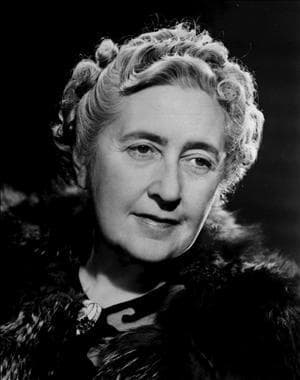
Dame Agatha Mary Clarissa Christie, Lady Mallowan, was an English writer known for her 66 detective novels and 14 short story collections, particularly those revolving around fictional detectives Hercule Poirot and Miss Marple. She also wrote the world's longest-running play, the murder mystery The Mousetrap, which has been performed in the West End since 1952. A writer during the "Golden Age of Detective Fiction", Christie has been called the "Queen of Crime". She also wrote six novels under the pseudonym Mary Westmacott. In 1971, she was made a Dame (DBE) by Queen Elizabeth II for her contributions to literature. Guinness World Records lists Christie as the best-selling fiction writer of all time, her novels having sold more than two billion copies.







