“Every person has the power to change their fate if they are brave enough to fight for what they desire more than anything.”
— Scarlett reflects on the nature of fate and choice in the magical game.

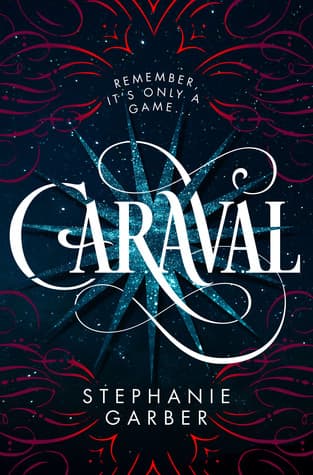
Stephanie Garber (2017)
Genre
Fantasy / Mystery / Young Adult / Romance
Reading Time
9-10 hours
Key Themes
See below
Sign in to track this book
A sheltered girl enters a dangerous game, where the line between performance and reality blurs, to find her kidnapped sister within the magical spectacle of Caraval.
Scarlett Dragna and her younger sister, Donatella (Tella), live under their father, Governor Dragna, on the island of Trisda. For years, Scarlett has written to Legend, the master of Caraval, asking for invitations. Scarlett's dreams seem crushed by her father's plan for her to marry a Count, but then three Caraval invitations arrive. Tella, wanting adventure and to escape their father, plans their escape from Trisda with a sailor named Julian. They hide on Julian's ship, leaving their old life and the arranged marriage, which Scarlett is nervous about.
Julian takes Scarlett and Tella to a cove near Caraval island. A carriage arrives, and Tella, acting on impulse, gets in, thinking it is her way into the game. The carriage door shuts, and Legend appears, saying Tella is the prize of this year's Caraval. Scarlett is horrified as the carriage leaves with her sister. Julian, who promised to protect them, says he is an actor in Caraval and the game has begun. Scarlett is left alone, dealing with her sister's disappearance and Caraval's confusing rules.
Scarlett enters the Caraval grounds, a bewildering world where everything seems both real and fake, to find Tella. She learns Caraval is a game of clues and performances, where players must tell truth from illusion. She gets her first clues, which are unclear and hint at Tella's location. Julian, despite Scarlett's mistrust, helps her, warning her that nothing in Caraval is real and she should not get too involved in its magic. Scarlett starts to collect Caraval 'scrip' (money) and puts together initial hints about her sister, which often involve other Caraval players and actors.
Scarlett's search takes her through many stalls and encounters with other Caraval players. She finds that Tella left clues, often riddles or marked items. One clue leads Scarlett to a dress shop where she must choose a gown, but the cost is a memory. She gives up a memory of her mother, a sacrifice that shows Caraval's magical and often costly nature. This experience shows Scarlett that the game requires personal stakes and that every choice has a consequence, blurring the lines between reality and performance.
As Scarlett gets deeper into the game, her relationship with Julian becomes more complex. Despite her initial mistrust and his constant reminders that he is an actor, they form a connection. They kiss, which confuses Scarlett, as she struggles to understand her feelings for him and her knowledge that he is part of the performance. This moment increases the emotional stakes of Caraval for Scarlett, making her question the reality of the game and her own emotions, wondering if she is falling for an illusion or a real person.
Following clues, Scarlett and Julian get into the Emperor's room, a grand chamber in Caraval. Inside, Scarlett finds a hidden space with a journal and personal items belonging to Legend. She learns about his tragic past, including his sister's death, which seems to be why Caraval was created. This discovery shows Legend in a more sympathetic, though still mysterious, way. It also gives a clue about Tella's location, suggesting Legend's past is connected to the game.
Scarlett's trust in Julian is broken when she finds out he is Legend's brother. This is a betrayal, making Scarlett question every interaction and feeling she had with him. She feels used, believing his closeness was part of Legend's plan. This discovery makes Scarlett despair, as the one person she relied on is involved in the game tormenting her. The line between game and reality blurs further, making Scarlett feel alone.
The game ends with a discovery: Scarlett finds Tella's lifeless body, seemingly murdered. This shatters Scarlett's calm, as the game's illusion seems to give way to a devastating reality. Believing her sister is dead, Scarlett is overwhelmed with grief and anger, convinced Caraval has become cruel. This is an emotional peak for Scarlett, forcing her to face the game's stakes and the loss of the person she loves most. She feels a deep sense of failure and despair.
Devastated, Scarlett confronts Legend, wanting to make him pay for Tella's death. But Legend reveals the final twist: Tella is not dead. Her 'death' was the last illusion of Caraval, meant to get a strong emotional reaction from Scarlett and the audience. He explains that Tella herself planned her 'kidnapping' and 'death' as part of a deal with Legend to help Scarlett escape their father and experience Caraval. The entire game was to save Scarlett, not to harm Tella. This changes Scarlett's understanding of everything she experienced.
With the truth known, Caraval ends. Tella is alive, and the sisters are reunited. Scarlett deals with the emotional shock of believing her sister was dead and then finding her alive, and the complexities of Julian's role and her feelings for him. She understands that while Caraval is a game, the emotions and lessons she learned were real. Scarlett forgives Julian, understanding his loyalty to his brother and Caraval's rules. The sisters leave Caraval, changed by their experience, with Scarlett no longer tied to her arranged marriage and Tella having freed her sister.
The Protagonist
Scarlett transforms from a fearful, overly cautious girl into a brave, decisive woman who learns to trust her instincts and embrace the unknown.
The Supporting
Tella's character arc is more subtle, revealing her underlying selflessness and cunning despite her outwardly reckless demeanor.
The Love Interest/Supporting
Julian's arc involves revealing his true identity and demonstrating his genuine care for Scarlett despite his initial deceptive role.
The Antagonist/Mastermind
Legend's arc involves his gradual unveiling as a complex character with a tragic past, rather than a purely villainous figure.
The Antagonist
He remains a static character, serving as the oppressive force the sisters are trying to escape.
The Supporting
Aiko's arc is limited to her role within the Caraval game, serving as a guide and an embodiment of Caraval's magic.
The Supporting
Dante's arc is limited to his role as an antagonist within the Caraval game, designed to challenge Scarlett.
The Mentioned
The Count's role is primarily as a plot device to motivate Scarlett, and he remains unseen and unchanged.
This is the main theme of Caraval, always making Scarlett and the reader question what is real and what is part of the game. From the magical, changing streets to the actors' deceptive roles, nothing is as it seems. Scarlett's journey is about finding the truth, especially about Julian's feelings and Tella's 'kidnapping' and 'death.' The book shows that even the most upsetting events were part of an illusion, making Scarlett rethink her ideas about the world and people.
“Whatever you've heard about Caraval, it doesn't compare to the reality. It's more than just a game or a performance. It's the closest you'll ever find to magic in this world.”
The bond between Scarlett and Tella is the emotional center of the story. Scarlett's main reason for entering Caraval is to save her sister, showing great courage. Tella, in turn, plans her own 'kidnapping' and 'death' as a sacrifice to free Scarlett from their abusive father and the arranged marriage. Their love drives the plot, showing how far they will go for each other, even with deception and heartbreak. This theme emphasizes the protective nature of family love.
“Every person has the power to change their fate if they are brave enough to fight for what they desire more than anything. Scarlett, I think you're finally ready to fight.”
The book starts with Scarlett and Tella under their father's rule, showing a lack of freedom. Caraval is an escape from this reality, offering a world where rules change and people can reinvent themselves. Both sisters seek freedom — Scarlett from her arranged marriage and her father's control, and Tella from the restrictive life on Trisda. The journey through Caraval, despite its dangers, is a path to liberation, letting them break free from their past and create their own futures.
“You may have to give up a memory, or a secret, or a dream. But if you're willing to pay the price, Caraval will make all your other dreams come true.”
Scarlett's journey has many questions about trust. She struggles to trust Julian, who always reminds her he is an actor, and her trust is tested by his hidden identity and loyalty to Legend. Caraval's premise, where everyone is an actor and nothing is real, makes it hard for Scarlett to tell genuine intentions from performance. The revelation that Tella planned her 'kidnapping' is an act of both love and betrayal, making Scarlett rethink her understanding of loyalty and deceit.
“Welcome, welcome to Caraval! The grandest show on land or by sea. Inside you'll experience more than you ever imagined. You'll find what's real or a dream. Or perhaps you'll lose yourself completely.”
The entire game of Caraval serves as a metaphor for life's illusions and challenges.
The Caraval game itself functions as an extended metaphor for the complexities of life, love, and self-discovery. Its shifting realities, deceptive characters, and emotional stakes reflect the challenges of navigating a world where appearances can be deceiving, and one must constantly discern truth from illusion. Scarlett's experiences within the game—her fears, her burgeoning love, her betrayals, and her ultimate triumph—mirror a coming-of-age journey, where she learns to trust her instincts and embrace uncertainty. The game's lessons extend beyond its fantastical setting, offering insights into human nature and the power of perception.
The narrative perspective and world itself are designed to mislead and challenge the reader's assumptions.
The entire world of Caraval acts as an unreliable narrator, constantly blurring the lines between what is real and what is merely part of the performance. Scarlett, as the protagonist, experiences this firsthand, and her perceptions become the reader's. Objects change, characters have hidden motives, and even death is revealed to be an illusion. This device keeps both Scarlett and the reader on edge, questioning every piece of information and every interaction, making the final twists all the more impactful. It forces a constant re-evaluation of previous events and emotional responses.
The overarching search for Tella is a game, but individual clues and challenges are mini-games.
Caraval employs a 'game within a game' structure, where the primary objective (finding Tella) is broken down into numerous smaller challenges, riddles, and interactions. Each clue leads to another, often requiring Scarlett to make choices, sacrifice something, or engage with other Caraval players. This structure keeps the plot dynamic and engaging, providing a clear progression while allowing for episodic adventures. It also reinforces the immersive nature of Caraval, as Scarlett must actively participate in these smaller games to advance in the larger quest.
Colors and garments often signify character traits, emotions, or hidden meanings.
Throughout Caraval, colors and specific items of clothing carry symbolic weight. Scarlett's initial preference for practical, muted colors reflects her cautious nature, while the vibrant, changing dresses she wears in Caraval signify her transformation and immersion into the magical world. Tella's more flamboyant style speaks to her adventurous spirit. The use of specific colors, like red for passion or danger, and the way characters' attire changes or is described, often hints at their true roles, emotions, or the illusions at play, adding a subtle layer of meaning to the narrative.
“Every person has the power to change their fate if they are brave enough to fight for what they desire more than anything.”
— Scarlett reflects on the nature of fate and choice in the magical game.
“Welcome, welcome to Caraval! The grandest show on land or by sea. Inside you’ll experience more wonders than most people see in a lifetime.”
— Legend's opening announcement to participants of the magical game.
“Remember, it’s only a game.”
— A recurring warning about the blurred lines between reality and illusion in Caraval.
“I’m not going to tell you how to live your life, but I will tell you that you’re a fool if you don’t fight for what you want.”
— Julian advises Scarlett on taking risks for her dreams.
“Some things are worth pursuit regardless of the cost.”
— Scarlett contemplates the sacrifices made during the game.
“The stars listen to those who listen to them.”
— A mystical saying about fate and guidance in the world of Caraval.
“You don’t have to be fearless, just don’t let fear stop you.”
— Scarlett encourages herself to face challenges despite her fears.
“In Caraval, nothing is quite as it seems.”
— A description of the deceptive and magical nature of the game.
“Love is a risk, but it’s one worth taking.”
— Scarlett reflects on her growing feelings amidst the chaos.
“Sometimes the only way to move forward is to revisit the things in your past that were holding you back.”
— Scarlett learns about confronting past traumas to progress.
“Magic is a trick, but that doesn’t make it any less real.”
— A philosophical insight into the nature of Caraval's enchantments.
“The greatest magic is not in the illusions, but in the truth they reveal.”
— Scarlett realizes the deeper purpose behind Caraval's games.
“You can’t trust anyone in Caraval, not even yourself.”
— A cautionary note about the psychological twists of the game.
“Hope is a powerful thing. Some say it’s a different breed of magic altogether.”
— Scarlett muses on the strength of hope in dire situations.
Ready to see how well you understood this book? Take our interactive quiz with 10 questions.

Biography coming soon.







