“The worst part of it all was that I got to be the one who had to tell the story.”
— Celaya reflects on her role as the family storyteller and the burden it carries.

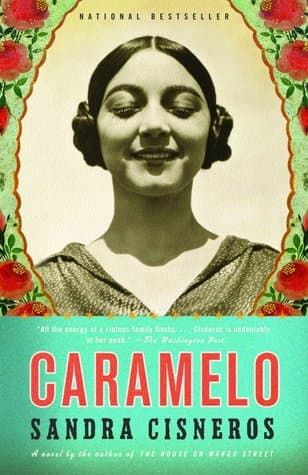
Sandra Cisneros (2002)
Genre
Literary Fiction / Historical Fiction
Reading Time
1000 min
Key Themes
See below
Sign in to track this book
Lala, a young girl, explores her family's history from Chicago to Mexico City, uncovering how storytelling, identity, truth, and love intertwine, like the cherished 'caramelo' rebozo passed down through generations.
Every summer, the large Reyes family, including Lala, her six older brothers, her parents, and many aunts and uncles, travels from Chicago to Mexico City. They go to the home of the 'Little Grandfather' and the 'Awful Grandmother' (Soledad). Lala, the youngest and only girl, often feels overlooked among her brothers and the adults' arguments. During these long drives, she starts to notice and absorb the family's stories, especially those about her grandmother Soledad, whom Lala sees as harsh. The trip itself is full of American roadside stops, car problems, and a clear cultural change as they cross into Mexico, setting the scene for Lala's growth and her exploration of her heritage.
When they arrive in Mexico City, the Reyes family settles into the busy, multi-generational home of Little Grandfather and Awful Grandmother Soledad. Lala is curious about the family's history and their complex relationships, especially the tense one between her parents and Soledad. She notices the Awful Grandmother's strict rules and what she sees as favoritism towards other grandchildren, making Lala feel like an outsider. During these summers, Lala starts to put together bits of family lore, listening closely to adult conversations and gossip. She forms a close bond with her Tía Light, who, despite her own difficulties, gives Lala a different view of the family's past and their Mexican heritage, encouraging Lala's growing interest in storytelling.
Lala's connection to her heritage is clear in the caramelo rebozo, a striped shawl passed down through Reyes women. This rebozo, first belonging to her great-grandmother, is a physical link to the past, holding the scent and history of the women who wore it. Lala is fascinated by its story and its importance in her family. When she eventually gets the rebozo, it becomes a strong symbol of her identity, her connection to her ancestors, and her role as a keeper of family stories. The rebozo's journey, from its making in a small village to its passing through different hands, mirrors Lala's own exploration of her complex identity and the ties that bind her to her family's story.
Wanting to understand why her Awful Grandmother Soledad acts the way she does, Lala begins to uncover Soledad's past. She listens to bits of conversations, looks at old photos, and quietly asks family members questions. Lala learns that Soledad was once a beautiful and lively young woman, deeply in love with her husband, Little Grandfather. However, life's difficulties, including the Mexican Revolution, poverty, and losing children, made her tough. Lala discovers that Soledad's 'awfulness' is a protective facade, a response to a life of struggle. This discovery starts to change Lala's view of her grandmother, moving from simple judgment to a deeper understanding based on empathy.
As Lala starts to weave together her family's stories, especially Soledad's, her Awful Grandmother accuses her of 'exaggerating' and 'telling lies.' Soledad, protective of her own story and perhaps uncomfortable with the raw truth, dismisses Lala's interpretations. This conflict shows the main idea of storytelling itself: how memory is subjective, how fact and fiction blend, and who has the power to tell a story. Lala grapples with these accusations, understanding that her version of events, while perhaps embellished for effect, is an attempt to make sense of her family's history and to voice untold experiences. This tension drives Lala's exploration of truth and the art of storytelling.
Lala looks into her grandparents' traumatic past, learning about the devastating effects of the Mexican Revolution on their lives. She finds that Little Grandfather and Awful Grandmother Soledad suffered greatly, including displacement, poverty, and constant threats of violence. Soledad, in particular, experienced significant loss and hardship, which shaped her stoic and sometimes bitter nature. Lala learns how the revolution broke families apart, forced difficult choices, and left lasting emotional scars. This historical background helps explain her grandparents' personalities and their deep resilience, helping Lala connect their personal struggles to the larger historical forces that shaped their world and her family's path.
Lala notices the clear difference between her family's life in Chicago and their summers in Mexico City. Her parents, especially her father, work hard for the American Dream, embracing some American culture, yet they stay deeply connected to their Mexican heritage. This dual identity creates constant cultural tension in the family. Lala's brothers show a more American identity, while Lala feels pulled between both worlds. The yearly trips highlight these differences, as they deal with language barriers, different social customs, and the expectations of their Mexican relatives versus their American lives. Lala struggles with her sense of belonging, feeling like an 'other' in both countries at different times.
Lala uncovers a painful family secret about a betrayal that greatly affected her Awful Grandmother Soledad. She learns that Soledad was betrayed by a close relative, possibly involving land or inheritance, which contributed to her hardened personality and her distrust of others. This betrayal, though not fully detailed, is presented as a key moment that shaped Soledad's life choices and her relationships with her children, including Lala's father. The discovery of this old grievance helps Lala understand the source of some of the family's long-standing feuds and the bitterness that runs through their interactions, further complicating her view of her grandmother.
Throughout the story, Lala goes through a significant journey of growing up. She changes from a quiet observer to an active part of her family's story, finding her voice as a storyteller. As she learns more about her family's past and her heritage, she deals with the complexities of her Mexican-American identity. Lala learns to navigate her family's expectations, the cultural differences between Mexico and the United States, and her own growing desires. Her experiences, especially with her grandmother and the caramelo rebozo, shape her understanding of herself and her place in the world, solidifying her role as the family historian and interpreter of their complex past.
By the end of the story, Lala fully accepts her role as a storyteller, recognizing its power. She understands that stories are not just facts but living things that can be shaped and reimagined to make sense of the past and to voice unspoken things. Despite her grandmother's accusations of 'lying,' Lala realizes that her 'exaggerations' add emotion and meaning to facts, making history resonate. She sees herself as a weaver of tales, like the weaver of the caramelo rebozo, creating a rich tapestry of her family's experiences, reclaiming stories, and finding healing and understanding through telling them.
Through her journey, Lala comes to appreciate the strength and resilience of the Reyes women, especially her great-grandmother, her grandmother Soledad, and her mother. She sees how they faced great hardship, cultural expectations, and personal struggles with quiet determination. The caramelo rebozo becomes a strong symbol of this legacy, representing the connections, tradition, and female endurance that link them across generations. Lala recognizes that she is a product of these women, inheriting not just their stories but also their spirit. This understanding empowers her to carry forward their legacy, by remembering their past and continuing to tell their stories.
Though a full reconciliation with Awful Grandmother Soledad is not explicit, Lala reaches a deep understanding and acceptance. By uncovering Soledad's traumatic past and the reasons for her tough exterior, Lala moves beyond simple judgment to empathy. She understands that Soledad's 'awfulness' was a shield, a result of a life filled with loss and betrayal. This deeper insight allows Lala to forgive, if not the actions, then the circumstances that shaped her grandmother. Telling Soledad's story, even with its 'exaggerations,' becomes a way of honoring her, allowing Lala to connect with her grandmother on a deeper, though complex, level.
The Protagonist
Lala evolves from a quiet observer to a confident storyteller, embracing her bicultural identity and understanding the power of narrative to shape truth and memory.
The Antagonist/Supporting
Though Soledad's character doesn't explicitly 'arc,' Lala's perception of her transforms from simple judgment to profound empathy and understanding.
The Supporting
Inocencio struggles to balance his family's American life with his Mexican heritage, ultimately embodying the complexities of bicultural identity.
The Supporting
Zoila consistently strives to maintain peace and stability within her family, navigating cultural clashes and her husband's strong family ties.
The Supporting
The Little Grandfather remains a steadfast, loving presence, representing the quiet strength and enduring love within the family.
The Supporting
Tía Light remains a supportive figure, providing Lala with crucial insights and a space to explore family narratives.
The Supporting
The brothers largely remain a boisterous collective, representing the Americanized male energy within the family, providing a backdrop for Lala's individual journey.
The Mentioned
Her story is part of the historical narrative woven into the caramelo rebozo, contributing to the family's collective memory.
A main part of 'Caramelo' is how stories are told, remembered, and changed. Lala, as the narrator, constantly grapples with how memory is subjective, how fact and fiction blur, and who has the power to tell a family's history. Her grandmother's accusations of 'lying' show this tension, suggesting that 'truth' often depends on perspective. Lala learns that 'exaggeration' can add emotional truth to stories and make them resonate, giving voice to experiences that might otherwise be forgotten. The novel itself shows that storytelling is not just about recounting events but about creating meaning and understanding across generations. For example, Lala's detailed, imaginative account of her grandmother's past, even if not strictly factual, helps her understand Soledad's 'awfulness.'
“A lie is a story that has been told so many times it's as good as truth.”
The novel explores what it means to be Mexican-American. Lala and her family constantly navigate life between their American lives in Chicago and their Mexican heritage in Mexico City. This dual identity appears in their language, customs, values, and possessions. Lala struggles to find her place, feeling like an 'other' in both worlds at different times. The yearly trip to Mexico physically shows this cultural movement, making characters face their dual loyalties. Lala's journey is about integrating these two parts of her identity, understanding that her biculturalism is a source of richness, not division. Her connection to the caramelo rebozo symbolizes her embrace of this intertwined heritage, a physical object that bridges generations and cultures.
“I am a story. I am a letter. I am a song. I am a dance.”
The Reyes family has many secrets, betrayals, and unspoken traumas that affect generations. Lala's search to understand her Awful Grandmother leads her to uncover the deep impact of events like the Mexican Revolution, as well as personal betrayals and losses, on her family. These past wounds appear in the present as strained relationships, unspoken resentments, and the tough exterior of characters like Soledad. The novel suggests that understanding these secrets and the trauma they caused is essential for healing and breaking cycles of pain. Lala's act of bringing these stories to light, even if met with initial resistance, is a key step in acknowledging this intergenerational legacy. The story of the rebozo itself carries the 'vibrations' of these past experiences.
“The past is a rebozo, a shawl, of threads that unravel and tangle, and sometimes tear.”
The novel shows the often quiet power of women in the Reyes family. From the Awful Grandmother Soledad to the resilient Zoila and the insightful Tía Light, women keep traditions, bear children, and often quietly drive family dynamics. The caramelo rebozo, passed down through generations of women, symbolizes this lasting female line and the strength, resilience, and stories they carry. Lala's journey is deeply connected to understanding these women, their struggles, and their successes, and finding her own place within this powerful matriarchal line. Even in their struggles, the women show great strength in navigating societal expectations.
“A woman's life is a rebozo, a beautiful thing, but also a burden.”
Beneath the family arguments and historical trauma, 'Caramelo' includes themes of love and loss. The lasting love between Little Grandfather and Awful Grandmother, despite their hardships, is a foundation of the family. Lala observes her parents' protective love, the complex affection among siblings, and the deep love that binds the large family together, even during conflict. However, this love often comes with significant loss—loss of land, loss of children, loss of innocence during the revolution, and the emotional toll of betrayal. The novel explores how love continues and adapts in the face of these losses, shaping characters' resilience and their capacity for both joy and sorrow.
“Love is a thing that changes, like a river, like a dream, like a memory.”
A multi-striped shawl that symbolizes family history, identity, and the art of storytelling.
The caramelo rebozo is the central symbolic object in the novel. Passed down through generations of Reyes women, its striped pattern is said to hold the stories and 'vibrations' of those who wore it. It functions as a tangible link to the past, embodying the family's Mexican heritage, the resilience of its women, and the interconnectedness of their lives. For Lala, the rebozo is a source of fascination and a catalyst for her storytelling, representing the threads of history she attempts to weave together. Its unraveling and re-weaving metaphorically mirror Lala's process of uncovering and reinterpreting her family's narrative, blurring the lines between fact and fiction.
The story jumps back and forth in time, interweaving Lala's present with her family's past.
The novel employs a non-linear narrative structure, frequently shifting between Lala's childhood experiences in the present (the annual trips to Mexico) and extensive flashbacks that delve into the history of her grandparents and earlier generations. This fragmented approach mirrors the nature of memory and oral storytelling, where stories are not always told chronologically but emerge in bits and pieces. This device allows Cisneros to gradually reveal the complex layers of family history, secrets, and trauma, building a more complete picture of the characters and their motivations, particularly the Awful Grandmother, as Lala uncovers more information.
Lala, as the narrator, frequently comments on the act of storytelling itself, questioning truth and fiction.
Lala frequently breaks the fourth wall, directly addressing the reader and commenting on her own narrative process. She questions the reliability of her memories, acknowledges her 'exaggerations,' and debates the nature of 'truth' in storytelling, especially when challenged by her grandmother. This metafictional element highlights the novel's central theme of storytelling's power and subjectivity. It reminds the reader that the narrative is a constructed reality, shaped by the narrator's perspective, desires, and imagination, blurring the lines between author, narrator, and character, and inviting the reader to engage critically with the 'facts' presented.
A character archetype that initially presents as harsh but reveals deeper complexities and trauma.
The 'Awful Grandmother' is an archetype used to represent a seemingly difficult or unsympathetic elder whose true nature and past are gradually revealed to be far more complex and sympathetic. Soledad initially embodies this archetype for Lala, appearing cold, critical, and distant. However, as Lala delves into her history, the 'awfulness' is recontextualized as a protective facade, a consequence of immense suffering, loss, and betrayal experienced during the Mexican Revolution and subsequent hardships. This device allows for a profound character transformation (in the reader's perception) and underscores the novel's exploration of empathy, understanding, and the power of uncovering hidden truths.
“The worst part of it all was that I got to be the one who had to tell the story.”
— Celaya reflects on her role as the family storyteller and the burden it carries.
“A dress can save your life.”
— Celaya's grandmother, Mama Licha, imparting wisdom about the power of appearances and presentation.
“We are a family of storytellers, and we have been telling stories for generations.”
— Celaya emphasizing the deep-rooted tradition of narrative within her family.
“It’s not enough to be Mexican; you have to be something else too.”
— Celaya grappling with her bicultural identity and the pressures to conform or excel.
“The past is a rebozo, a shawl, a caramelo, a sweet, a story, a lie.”
— Celaya's poetic description of how the past is remembered, embellished, and passed down.
“Home is a foreign place.”
— Celaya feeling alienated and out of place even within her own family and culture.
“What do you do when the story you’ve been told all your life turns out to be a lie?”
— Celaya questioning her family's narratives and discovering hidden truths.
“We are all made of stories.”
— A philosophical reflection on the fundamental nature of human existence and identity.
“There are some things you carry with you, no matter how far you travel.”
— Celaya realizing the enduring impact of her heritage and experiences.
“A good story is like a good rebozo, it covers you up and keeps you warm.”
— Analogizing the comfort and protection that stories provide.
“Every family has a caramelo, a sweet, a secret, a lie.”
— The novel's central metaphor for the hidden complexities and fabrications within families.
“My grandmother, she was a woman of many stories, some true, some not so true.”
— Celaya describing Mama Licha's storytelling style, highlighting the blend of fact and fiction.
“You can’t choose your family, but you can choose how you tell their story.”
— Celaya asserting her agency in shaping the family narrative.
“To be a woman is to be a story.”
— A powerful statement on the narrative nature of female existence and experience.
Ready to see how well you understood this book? Take our interactive quiz with 10 questions.
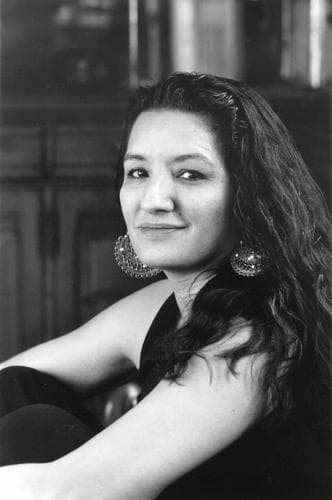
Biography coming soon.







