“Monsters don’t hide in the shadows; they are the shadows.”
— Audrey Rose reflecting on evil and the nature of the killer.

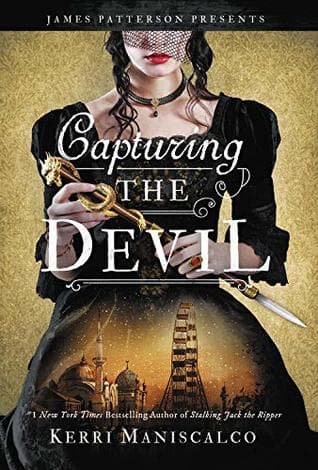
Kerri Maniscalco (2019)
Genre
Thriller / Fantasy / Historical Fiction / Mystery / Young Adult
Reading Time
540 min
Key Themes
See below
Sign in to track this book
In the shadow of the Chicago World's Fair, forensic investigators Audrey Rose and Thomas must stop a serial killer operating from his 'Murder Hotel' before their love story becomes his final exhibit.
Audrey Rose Wadsworth and Thomas Cresswell arrive in Chicago after leaving London. They plan to visit the World's Columbian Exposition, the White City, a marvel of innovation. However, their excitement fades with reports of missing people and murders around the fairgrounds. Audrey Rose, still recovering from past traumas, is drawn into the investigation. Thomas supports her, despite his initial concerns. They start to see a disturbing pattern, suggesting a new, clever killer is at large, operating freely amidst the city's splendor.
As the body count rises, Audrey Rose and Thomas join the investigation, working with local authorities but often on their own. The press calls the killer the 'White City Devil' due to his organized and cruel methods. They discover many victims were young women who came to Chicago for opportunities at the World's Fair, making them easy targets. Audrey Rose's forensic skills and Thomas's reasoning are tested as they explore the darker side of the exposition, finding clues among the spectacle.
Through investigation, including victim profiles and rumors, Audrey Rose and Thomas suspect H.H. Holmes, a charming local doctor and entrepreneur who owns an unusual hotel near the fairgrounds. This building, later called the 'Murder Castle,' has secret passages, soundproof rooms, gas lines, and a crematorium. They realize Holmes has been luring victims to his hotel, then systematically torturing and murdering them. The scale and planning of his crimes shock the experienced forensic duo, showing a new level of evil.
Knowing they need proof, Audrey Rose and Thomas decide to infiltrate Holmes's hotel. This is dangerous, as Holmes is intelligent and paranoid. They navigate the labyrinthine corridors, finding hidden rooms, false walls, and gruesome evidence. Audrey Rose's medical knowledge helps her identify murder methods, while Thomas's agility and observation skills help map the complex structure. The hotel's atmosphere is terrifying, and they narrowly avoid detection, realizing they are walking into a killer's death trap.
Their investigation ends in a direct confrontation with H.H. Holmes inside his hotel. Holmes is a formidable opponent, charming and manipulative, yet ruthless. He plays a psychological game with Audrey Rose and Thomas, boasting about his cleverness and the undetectable nature of his crimes. A tense chase follows through the hotel's secret passages, with Holmes trying to trap and kill them. The stakes are high, as they are isolated and deep within his territory, relying on their wits and trust to survive and bring him to justice.
Audrey Rose and Thomas use their skills to navigate the treacherous hotel, avoiding Holmes's traps. They gather crucial physical evidence and witness testimony, even as Holmes tries to burn down the hotel to destroy proof. Their escape is a desperate race against time, with fire, gas, and Holmes himself posing threats. They eventually alert authorities to Holmes's crimes and the location of his victims, ending his reign of terror. They sustain emotional and physical scars from the harrowing experience.
After their escape and the evidence they provided, H.H. Holmes is apprehended. His trial is a sensational event. Audrey Rose and Thomas are key in presenting the forensic findings and details of his murder scheme to the court. Despite Holmes's attempts to manipulate the jury, the evidence is undeniable. The trial is a public spectacle, and the world learns the true horror of the White City Devil, solidifying Audrey Rose's reputation as a brilliant forensic investigator and Thomas's as a keen detective.
The White City Devil case deeply affects Audrey Rose. The scale of Holmes's evil and the vulnerability of his victims weigh heavily on her, forcing her to confront humanity's darkest aspects. She struggles with nightmares and the emotional residue of the investigation, questioning her ability to continue her work. Thomas supports her, offering comfort and understanding. Their shared trauma and triumphs deepen their bond. They discuss their future, both professionally and personally, contemplating a life together despite the dangers of their chosen path.
After the Holmes case, Audrey Rose and Thomas find a moment of peace. The horrors they witnessed solidify their dedication to each other and to justice. They acknowledge the risks of their profession but choose to face them together. Thomas proposes to Audrey Rose, and she accepts, symbolizing their enduring love. The novel ends with them looking to a future where they continue their work, bound by love and purpose, ready to face new mysteries and challenges as a united front, having found their home in each other.
The Protagonist
Audrey Rose's arc culminates in confronting the ultimate evil, solidifying her professional identity and finding profound personal peace and commitment with Thomas.
The Protagonist
Thomas solidifies his role as Audrey Rose's partner in both life and work, proving his unwavering devotion and commitment.
The Antagonist
Holmes's arc is one of unmasking and ultimate downfall, revealing the true face of his monstrous depravity.
The Supporting
Mephistopheles continues to be an enigmatic ally, his true loyalties remaining subtly ambiguous.
The Supporting
Jonathan continues to support Audrey Rose, witnessing her growth into a fully fledged forensic expert.
The Mentioned
Maria's arc is tragically cut short, serving as a catalyst for the main characters' pursuit of justice.
This theme is explored through H.H. Holmes. Unlike previous killers driven by ideology, Holmes embodies a chilling, casual evil. His 'Murder Castle' shows his careful, calculated sadism, revealing evil as a structured system. Audrey Rose grapples with a killer who enjoys suffering and sees human life as disposable, pushing her understanding of humanity. The contrast between the World's Fair and Holmes's darkness highlights how evil can hide beneath civilized appearances.
“"Some men were not born evil, but rather chose it, one dark decision at a time, until their souls were nothing more than a hollowed-out husk."”
The World's Columbian Exposition, the 'White City,' symbolizes human progress and hope. It represents a shining future, yet it also serves as a hunting ground for H.H. Holmes. This duality is central, showing how advancements can mask corruption and vulnerability. The fair's anonymity and influx of people create perfect conditions for a predator. Audrey Rose and Thomas must uncover the rot beneath layers of innovation, questioning if progress makes society safer or offers new hiding places for darkness. The contrast is stark: the gleaming fair versus the dark, gas-filled corridors of the Murder Castle.
“"The White City promised a future of light, but it cast the longest shadows."”
Audrey Rose and Thomas's relationship is the emotional core of the series, tested and strengthened in 'Capturing the Devil.' They face their most dangerous case, yet their bond deepens. Their shared passion for justice, intellectual equality, and support are their greatest strengths. Thomas's steady presence helps Audrey Rose navigate her trauma, and her determination inspires him. Their decision to commit to each other, despite their profession's dangers, shows that love can thrive even in the face of evil, offering hope and resilience.
“"In a world of monsters, you are my compass, my steady hand, my most beautiful mystery."”
Both the antagonist and protagonists show forms of obsession. H.H. Holmes is obsessed with control, manipulation, and murder, meticulously building his 'Murder Castle' for his dark desires. This obsession leads to his downfall. Audrey Rose and Thomas are driven by their obsession with justice and truth. While noble, their relentless pursuit often puts them in danger and takes a psychological toll. The novel explores the line between dedication and fixation, and the personal costs of both, especially for Audrey Rose as she deals with the horrors she uncovers.
“"Justice, like truth, demanded a high price. I just prayed we wouldn't be forced to pay with our lives."”
A labyrinthine hotel designed by H.H. Holmes for torture and murder.
The Murder Castle is a central plot device, functioning as both a setting and a character in itself. Its intricate design – featuring secret passages, soundproof rooms, gas chambers, and a crematorium – serves as the ultimate trap and a symbol of Holmes's depravity. It raises the stakes for Audrey Rose and Thomas, transforming their investigation into a perilous infiltration and escape mission. The castle's complexity allows for thrilling chases, narrow escapes, and a palpable sense of claustrophobia, making it a truly terrifying antagonist in its own right and a testament to Holmes's meticulous evil.
A grand, technologically advanced fair that masks a dark underbelly.
The World's Fair acts as a powerful symbolic setting. Its dazzling facade of progress and innovation creates a stark contrast with the horrific crimes occurring within its shadows. This device highlights the theme of corruption beneath beauty and provides a constant stream of potential victims due to the anonymity and transient nature of the fairgoers. It also allows for a rich historical backdrop, grounding the fantastical elements of the mystery in a real-world event. The fair's grandeur makes the discovery of the 'White City Devil' all the more shocking and impactful, emphasizing the pervasive nature of evil.
The meticulous application of scientific and logical methods to solve crimes.
Audrey Rose's expertise in forensic pathology and Thomas's keen deductive reasoning are the primary tools used to unravel the mystery. This device grounds the thriller in intellectual pursuit, showcasing how observation, analysis, and scientific understanding can combat even the most cunning criminals. From examining skeletal remains to mapping the layout of the Murder Castle, their combined skills allow them to piece together fragmented evidence. This highlights the burgeoning field of forensic science in the late 19th century and empowers Audrey Rose as a female intellectual in a male-dominated field, driving the plot forward through intelligent investigation rather than brute force.
“Monsters don’t hide in the shadows; they are the shadows.”
— Audrey Rose reflecting on evil and the nature of the killer.
“Sometimes the greatest illusions are the ones we create for ourselves.”
— Audrey Rose considering her own biases and assumptions during an investigation.
“The dead whisper secrets to those who bother to listen.”
— Audrey Rose's approach to forensic science and finding clues from victims.
“Fear is a powerful weapon, but hope is an even stronger shield.”
— Audrey Rose contemplating the psychological toll of the killer's actions and the resilience needed to fight back.
“Even in the darkest corners, a flicker of light can expose the truth.”
— Audrey Rose and Thomas searching for clues in a grim location.
“To truly understand a monster, you must first understand what made it.”
— Audrey Rose delving into the psychology and motives of a serial killer.
“The past is never truly gone; it merely waits for the right moment to resurface.”
— A recurring theme as past events and secrets influence the present investigation.
“Sometimes the most dangerous lies are the ones we tell ourselves to feel safe.”
— Audrey Rose reflecting on denial and the comfort of ignorance.
“Justice isn't always about punishment; sometimes it's about uncovering the truth.”
— Audrey Rose's motivation for solving crimes, beyond just catching the culprit.
“The human heart, for all its complexities, often holds the key to the darkest mysteries.”
— Audrey Rose considering the emotional motives behind heinous crimes.
“Logic can only take you so far. Sometimes, you must trust your gut, even when it defies reason.”
— Audrey Rose making a crucial intuitive leap in the investigation.
“Every secret has a cost, and some are paid in blood.”
— The consequences of hidden truths coming to light.
“Even the most carefully constructed facades eventually crumble.”
— Audrey Rose observing how seemingly respectable individuals can hide sinister secrets.
“There’s a fine line between genius and madness, and some walk it with terrifying grace.”
— Audrey Rose contemplating the brilliance and depravity of the killer.
Ready to see how well you understood this book? Take our interactive quiz with 10 questions.







