“The sea is a hard mistress, but she gives a man time to think.”
— Harvey Cheyne reflects on his time aboard the fishing schooner.

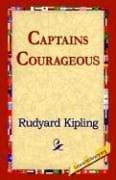
Rudyard Kipling (1896)
Genre
Children's / Historical Fiction / Young Adult
Reading Time
180 min
Key Themes
See below
Sign in to track this book
After a rich boy falls from a luxury liner, a fishing schooner rescues him, and its crew teaches him about hard work and the ocean.
Harvey Cheyne, a fifteen-year-old, very rich, and very spoiled American boy, travels with his mother on the transatlantic liner 'SS Spindrift' from America to Europe. Bored and seasick, he tries to smoke a cigar on deck, which is against the rules. The cigar and seasickness make him faint and fall overboard into the cold North Atlantic. He floats for hours, almost dying, before Manuel, a kind Portuguese fisherman from the schooner 'We're Here,' spots him and pulls him from the water. The 'We're Here' is a Gloucester fishing vessel on its way to the Grand Banks of Newfoundland. Harvey, still confused, tries to talk about his wealth and demand to be returned to his ship, but the crew thinks he is delirious.
Captain Disko Troop, the serious skipper of the 'We're Here,' does not believe Harvey's exaggerated stories of wealth. He thinks Harvey is a runaway or an orphan. He gives Harvey a choice: work as a doryman's boy for the season, earning ten dollars and passage back to New York after the fishing trip, or be left on the next passing vessel, which might not come for weeks. With no other option, Harvey agrees. He is assigned to Manuel, his rescuer, and begins the hard, dirty, and dangerous work of gutting and salting fish, learning to row a dory, and dealing with the crew's rough friendships. His pampered upbringing makes the change very difficult, but the crew's clear expectations slowly start to break down his sense of entitlement.
Under Manuel's patient but firm teaching, and Captain Troop's watchful eye, Harvey slowly learns the skills needed for life on a fishing schooner. He struggles with the physical demands, the constant smell of fish, and the lack of privacy. He also starts to appreciate the simple honesty and hard work of the fishermen. He learns to bait hooks, gut cod, row a dory through dangerous waters, and understand the sea's rhythms. At first mocked, his real efforts and growing ability start to earn him respect from the crew, especially from Dan, Disko's son, who becomes a mentor and friend. Harvey starts to see the world beyond his privileged life and develops a new sense of self-reliance and humility.
The 'We're Here' reaches the Grand Banks, a rich but dangerous fishing area. Harvey fully joins the daily fishing work, experiencing the excitement of a good catch and the danger of sudden fogs and storms. He sees the close community of the fishing fleet and the harsh realities of their lives. During a very thick fog, Manuel, Harvey's rescuer and mentor, is lost at sea when his dory separates from the schooner. The crew searches for a long time, but Manuel is never found. This sad event deeply affects Harvey, who had grown to admire and rely on Manuel. It shows the constant dangers the fishermen face, further solidifying Harvey's understanding of their difficult lives.
With their holds full of fish, the 'We're Here' joins other schooners in a race back to Gloucester for the best prices for their catch. Harvey, now a capable doryman's boy, takes part in the excitement and challenges of the journey. He has become physically strong, his hands calloused, and his mind sharp from the demanding life at sea. His old arrogance has been replaced by a quiet confidence and a deep appreciation for honest work and real human connection. He is no longer the pampered, helpless boy who fell overboard. He is a young man who has learned the value of hard work, responsibility, and the sea's power. He looks forward to reuniting with his family, eager to show his new maturity.
The 'We're Here' finally reaches Gloucester, Massachusetts, to a busy port. Harvey feels a lot of emotion, realizing his extraordinary journey is over. He is paid his ten dollars, which he carefully keeps. Meanwhile, his worried parents, Mr. and Mrs. Cheyne, have used their great wealth and influence to search the entire Atlantic for their missing son, believing him lost at sea. Through a vast telegraph network and private detectives, they eventually learn about the 'We're Here' and its return to Gloucester. The reunion is tearful and happy, with Harvey's parents barely recognizing the strong, sun-baked, and self-reliant young man standing before them.
Mr. Cheyne, at first doubtful of Harvey's amazing story, quickly confirms the story and the honesty of Captain Disko Troop and his crew. He is very grateful for their role in saving his son's life and, more importantly, in changing his character. He generously rewards Captain Troop and the entire crew, ensuring their financial security. He is especially impressed by the values and skills Harvey has gained. Mr. Cheyne, a smart businessman, recognizes the worth of the fishing industry and the men who work in it. He sees the positive change in his son, a change money alone could never have bought.
The 'We're Here' experience changes Harvey completely. He keeps his respect for manual labor, his appreciation for real friendship, and his practical understanding of the world. He loses his former idleness and embraces a life with purpose. His father, seeing this change, encourages Harvey to use his new discipline and work ethic in his future. Harvey attends Stanford University, doing well in his studies and sports, especially rowing. He becomes a capable and grounded young man, forever shaped by his forced but ultimately life-changing journey with the Grand Banks fishermen. This shows that real character comes from experience, not inherited wealth.
The Protagonist
Transforms from a helpless, entitled youth into a self-reliant, disciplined, and appreciative young man.
The Supporting
Remains steadfast in his character, but his interactions with Harvey highlight his wisdom and integrity.
The Supporting
His character provides a stable, compassionate presence, and his death serves as a catalyst for Harvey's deeper understanding of life and loss.
The Supporting
Serves as a consistent, positive influence and peer mentor to Harvey, showcasing the ideal of a young, capable fisherman.
The Supporting
His initial panic and relief at Harvey's return evolve into profound pride and understanding of his son's growth.
The Supporting
Her character reflects the emotional turmoil of a mother losing and then regaining her son, changed for the better.
The Supporting
A static character who embodies the spirit of the fishing crew.
The Supporting
A static character providing a background role in the ship's functioning.
The main theme is Harvey Cheyne's journey from a spoiled, superficial boy to a self-reliant young man. Without his wealth and forced to survive through honest labor, Harvey finds his true abilities and character. The sea is a harsh but effective teacher, making him shed his old identity and create a new one based on merit, hard work, and humility. His experiences on the 'We're Here' show him, and his parents, who he really is beyond his money.
“'He was Harvey Cheyne, of course, but he was also something else – a doryman's boy, and that was a different sort of pride.'”
Kipling clearly contrasts Harvey's life of easy luxury with the fishermen's strict, disciplined existence. The book shows that real value and character come from effort, responsibility, and persistence. Harvey's change happens because he works in the physically demanding and often dangerous job of fishing. The crew expects him to do his share, as Captain Troop's 'work or starve' rule shows. This teaches him a work ethic he did not have before his fall.
“'There ain't no time on the Banks for foolin' round, young un. You earn your grub here, same as the rest of us.'”
The novel looks at the shallowness of inherited wealth compared to the worth of a working-class life. At first, Harvey's claims of great wealth are met with disbelief and amusement by the 'We're Here' crew. They judge people by their actions and usefulness, not their bank accounts. The story questions the idea that social standing means personal value. It shows that the 'rough' fishermen have a dignity, skill, and moral code often missing in high society. Harvey's experience bridges this class divide, showing that character can go beyond social background.
“'Money talks ashore, boy, but out here, the sea talks, and she don't care who your father is.'”
The North Atlantic Ocean's power acts as a constant background and a main force in Harvey's education. The sea gives and takes, providing food but also claiming lives, as with Manuel's sad disappearance. Harvey learns to respect nature's power, the need for skill and caution, and how vulnerable humans are to the elements. This theme highlights the harsh realities of the fishermen's lives and the courage needed to face the ocean daily.
“'The Banks were a hard school, but they taught a man what a man was worth, and what the sea was worth – and what he was worth to the sea.'”
Despite their initial doubts and rough manner, the 'We're Here' crew forms a close community, a 'found family' for Harvey. They rely on each other for survival and friendship in the isolated Grand Banks. Harvey, at first an outsider, slowly becomes part of this community through shared work, danger, and mutual respect. This sense of belonging, especially his bond with Manuel and Dan, teaches him about loyalty, friendship, and the importance of human connection. This contrasts sharply with his solitary and privileged life ashore.
“'They were his people now, and he was one of them, tied by the common bond of the sea and the work it demanded.'”
Harvey's involuntary sea voyage as a catalyst for personal transformation.
The entire plot is structured around Harvey's journey aboard the 'We're Here.' It's not a voluntary quest, but an accidental one that forces him into a new environment. This physical journey across the Atlantic and through the fishing grounds directly parallels his internal journey of self-discovery and maturation. Each stage of the voyage, from his rescue to his return to Gloucester, marks a step in his character development, culminating in his complete transformation.
The narrative structure focusing on the protagonist's moral and psychological growth.
Captains Courageous is a classic example of a Bildungsroman. The story meticulously details Harvey Cheyne's growth from an immature, privileged boy into a responsible, capable young man. The narrative follows his experiences, struggles, and lessons learned through his interactions with the crew and the challenges of the sea. His education is not formal but experiential, shaping his character and worldview profoundly by the end of the novel.
The ocean as a powerful force representing life, death, and transformation.
The North Atlantic Ocean is a dominant symbolic element. It represents the raw, untamed forces of nature that strip away superficiality and demand respect. It is both a source of livelihood for the fishermen and a constant threat, claiming lives like Manuel's. For Harvey, the sea is a crucible, a harsh teacher that purifies his character, washing away his spoiled habits and forging him into a stronger, more authentic individual. It symbolizes the challenges of life that lead to growth.
The stark juxtaposition of Harvey's wealthy upbringing with the harsh fishing life.
Kipling effectively uses the contrast between Harvey's pampered, luxurious life on the 'SS Spindrift' and the Spartan, dangerous existence on the 'We're Here.' This sharp juxtaposition immediately highlights Harvey's initial weaknesses and emphasizes the profound nature of his transformation. It also serves to critique the excesses of wealth while celebrating the virtues of honest labor and self-reliance found in a different social class.
The guidance of older, experienced characters in shaping the protagonist.
Mentorship is a crucial plot device, primarily through Manuel, Captain Disko Troop, and Dan. Manuel provides the initial, patient guidance and kindness, teaching Harvey the practicalities of fishing. Captain Troop offers stern discipline and moral instruction, forcing Harvey to take responsibility. Dan acts as a peer mentor, showing Harvey the ropes and offering friendship. These relationships are instrumental in Harvey's education and character development, providing the necessary external forces for his internal change.
“The sea is a hard mistress, but she gives a man time to think.”
— Harvey Cheyne reflects on his time aboard the fishing schooner.
“It's a good thing to learn the truth from any man.”
— Disko Troop advises Harvey about humility and learning.
“A man must stand to his work.”
— Disko Troop emphasizes responsibility and duty to Harvey.
“There's no sense in taking on more than you can carry.”
— Dan Troop warns Harvey about overconfidence.
“The sea's the sea, and a man's a man.”
— Disko Troop states a simple truth about life at sea.
“You've got to learn the ropes before you can handle them.”
— Disko Troop teaches Harvey the basics of seamanship.
“A boy's a boy, but a man's a man, and there's a deal of difference.”
— Disko Troop contrasts Harvey's initial immaturity with growth.
“It's not what you've got, but what you do with it.”
— Disko Troop advises Harvey on valuing effort over privilege.
“The fish don't care who catches them.”
— Dan Troop remarks on the impartiality of nature and work.
“A man's worth is in his hands and his head.”
— Disko Troop emphasizes practical skills and intelligence.
“There's more to life than money and fine clothes.”
— Harvey learns this lesson through his experiences on the schooner.
“The wind and the waves are always the best teachers.”
— Reflection on Harvey's education through hardship at sea.
“You can't buy respect; you have to earn it.”
— Harvey realizes this after initially trying to command with wealth.
“Every man has his place, and every place has its man.”
— Disko Troop explains the order and roles on the fishing vessel.
Ready to see how well you understood this book? Take our interactive quiz with 10 questions.
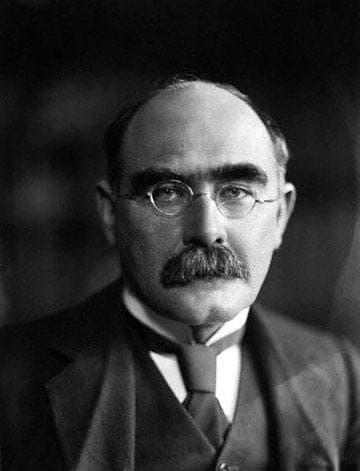
Joseph Rudyard Kipling was an English novelist, short-story writer, poet, and journalist. He was born in British India, which inspired much of his work.

Dan Gemeinhart
4.5

Kate O'Hearn
4.4

Jeanne Birdsall
4.4

Jen Wang
4.4

Wendelin Van Draanen
4.3

John Marsden
4.3

Chris Van Allsburg
4.3
Jennifer A. Nielsen
4.2