“There are no good men. All men are evil. All of them. And the sooner you learn that, the sooner you'll be able to cope with them.”
— Young Joseph Francis X. Armagh learns a harsh lesson about human nature.

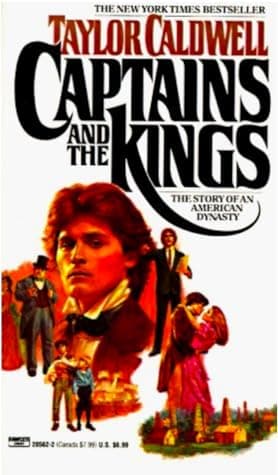
Taylor Caldwell (1972)
Genre
Historical Fiction / Romance
Reading Time
16-20 hours (approx. 816 pages at 50 pages/hour)
Key Themes
See below
Sign in to track this book
From a penniless Irish immigrant to a feared millionaire, Joseph Armagh builds an American dynasty only to discover that immense wealth and power cannot outrun a relentless family curse that demands a heavy price for his savage ambition.
In the early 1850s, thirteen-year-old Joseph Armagh, along with his younger brother Harry and infant sister Mary, arrives in America from Ireland. Their mother died during the voyage, leaving Joseph as the sole provider and protector. Landing in a hostile and impoverished Irish ghetto in New York, Joseph immediately faces the harsh realities of immigrant life. He quickly learns the importance of money and power, driven by a fierce determination to lift his family out of poverty. He takes on various menial jobs, from selling newspapers to working on the docks, enduring prejudice and exploitation, all while saving every penny.
Joseph's intelligence and ambition quickly set him apart. He sees opportunities where others see only despair. He begins to accumulate wealth through shrewd investments and cutthroat business dealings, starting with small ventures. His reputation as a man who gets what he wants, no matter the cost, begins to grow. He forms strategic alliances and outmaneuvers rivals, slowly building a foundation for his future empire. This period establishes his unwavering focus on acquiring power and wealth, often at the expense of personal relationships and moral compromises, as he sees these as the only means to protect his family.
Joseph, now a formidable businessman, marries the beautiful and wealthy Caroline, primarily for her social standing and connections. He develops a complex affection for her. They have several children: the ambitious Rory, the gentle Daniel, and the spirited Elizabeth. Despite his growing family, Joseph remains largely detached, focused primarily on expanding his business empire and political influence. Caroline, though initially drawn to his strength, becomes increasingly isolated and unhappy, feeling neglected and realizing the true extent of Joseph's emotional unavailability and his relentless pursuit of power.
As his fortune grows, Joseph extends his reach into politics. He understands that true power lies not just in wealth but in controlling the levers of government. He funds political campaigns, pulls strings, and installs his chosen candidates into positions of influence. He never seeks public office himself, preferring to operate from the shadows. His mansion becomes a hub for influential politicians and industrialists, all seeking his favor or fearing his wrath. He plans for his eldest son, Rory, to eventually become President of the United States, believing this will solidify the Armagh dynasty's ultimate power and legacy.
Joseph's plans for Rory's presidential ascent begin to unravel. Rory, pressured by his father's expectations, becomes entangled in a politically motivated scandal orchestrated by Joseph's hidden enemies. The scandal, though perhaps exaggerated, threatens to destroy the Armagh name. To protect the family's reputation and Joseph's larger political ambitions, Rory is coerced into committing suicide, made to appear as a heart attack. This devastating loss is the first major manifestation of the 'curse' that seems to plague the Armagh family, a direct consequence of Joseph's ambition and the enemies he has made.
Following Rory's tragic death, the remaining Armagh children react in their own ways. Daniel, always sensitive and artistic, retreats further into his studies and his love for music and literature, openly rejecting the world of business and politics his father represents. He finds solace in beauty and intellectual pursuits, much to Joseph's disappointment, who sees him as weak. Elizabeth, spirited and independent, chafes under her father's control and expectations. She rebels against societal norms and the arranged marriage Joseph attempts to force upon her, seeking her own path and asserting her individuality.
As Joseph ages, his empire continues to expand, but he finds himself increasingly isolated. His wife, Caroline, passes away, and his relationships with his surviving children remain strained. He is a multi-millionaire, one of the most powerful men in America, yet he is haunted by the losses and the moral compromises he made. He begins to reflect on the true meaning of his colossal fortune and its price. He questions whether the sacrifices, the betrayals, and the suffering were worth the power he amassed, recognizing the emptiness that often accompanies ultimate success achieved through such means.
Rory's son, Joseph Armagh Jr., becomes the focus of Joseph's hopes for the future. Joseph Sr. sees in his grandson a chance to rectify past mistakes and ensure the continuation of the Armagh dynasty. However, a recurring prophecy or family legend about a curse on the second son of each generation, stemming from an ancient Irish wrong, begins to gain prominence. Joseph Jr. is a kind and thoughtful young man, but he struggles under the weight of his grandfather's expectations and the ominous shadow of the family curse, which seems to target those who deviate from the path of ruthless ambition.
Daniel, despite his attempts to escape the family's influence, cannot fully outrun the curse. His sensitive and artistic soul is ill-equipped for the harsh, manipulative world his father created. He is drawn into a tragic love affair and ultimately succumbs to a life of quiet despair, unable to reconcile his values with the Armagh legacy. His fate shows the destructive power of Joseph's ambition, demonstrating how even those who resist the lure of power can be victims of its collateral damage, proving that the curse impacts not just those who seek power but also those connected to them.
Elizabeth, through sheer will and intelligence, manages to forge her own independent life, defying her father's attempts to control her. She pursues education and a career, demonstrating a strength that, though different from Joseph's, ultimately earns his grudging admiration. In his final years, Joseph comes to acknowledge Elizabeth's unique spirit and independence, perhaps seeing in her a reflection of his own unyielding will, albeit directed towards different ends. Her eventual success outside the immediate Armagh empire provides a glimmer of hope amidst the family's pervasive tragedy, suggesting an alternative to the destructive cycle.
On his deathbed, Joseph Armagh, a multi-millionaire and one of the most powerful men in America, surveys his vast estate. He reflects on his journey from penniless immigrant to titan of industry. He acknowledges the immense personal cost of his ambition, the loss of loved ones, and the pervasive 'curse' that has shadowed his family, particularly targeting the second sons. He grapples with the understanding that while he achieved immense material success, he sacrificed much of his humanity and happiness. His final thoughts are a complex mix of pride in his achievements and a deep, melancholic regret for the love and connection he failed to cultivate.
The novel concludes with the enduring presence of the Armagh curse, implicitly affecting the next generation, particularly Joseph Jr. and his descendants. While Joseph Armagh Sr. has died, his legacy, both material and spiritual, continues to shape the lives of his family. The curse, often manifesting as tragic deaths, mental anguish, or unfulfilled lives, is a constant reminder of the price of unchecked ambition and the sins of the patriarch. The narrative leaves the reader to ponder whether any future Armagh can escape the shadow of the family's founding ambition and the consequences it unleashed.
The Protagonist
Joseph transforms from a desperate immigrant into a powerful, feared magnate, but his relentless pursuit of power ultimately costs him personal happiness and inflicts a curse upon his family.
The Supporting
Caroline begins as a hopeful bride but slowly becomes a resigned, melancholic figure, a casualty of Joseph's unyielding ambition.
The Supporting
Rory is shaped by his father's ambition, rises quickly in politics, but is ultimately destroyed by the very system his father helped create.
The Supporting
Daniel tries to escape his family's legacy through art but is ultimately crushed by its pervasive influence and tragic circumstances.
The Supporting
Elizabeth evolves from a rebellious young woman into a strong, independent individual who forges her own destiny outside her father's influence.
The Supporting
Joseph Jr. inherits the family's legacy and the burden of the curse, his future uncertain but holding the potential for change.
The Supporting
Harry remains in Joseph's shadow, eventually drifting into a less prominent life, unable to fully partake in or escape his brother's empire.
The novel charts Joseph Armagh's ascent from poverty to immense wealth and power, but simultaneously reveals the moral and personal costs. Joseph's ambition, initially driven by a desire to protect his family, gradually consumes him, leading him to make ruthless decisions, betray allies, and sacrifice personal happiness. His relentless pursuit of power isolates him from his family, particularly his wife Caroline and his sensitive son Daniel, and ultimately causes the 'curse' that plagues his lineage. The narrative suggests that absolute power not only corrupts but also destroys the very human connections it was initially sought to protect.
“He had built an empire, yes, but at what cost? He looked at his hands, strong and still capable, but they had also torn apart the fabric of his own life, piece by piece.”
Captains and the Kings presents a complex and often cynical view of the American Dream. Joseph Armagh is the immigrant who arrives penniless and, through sheer will and hard work, achieves unimaginable success. However, the novel exposes the darker side of this dream, showing that such success often requires ruthless exploitation, moral compromise, and the suppression of empathy. Joseph's journey highlights the idea that the 'land of opportunity' can also be a brutal, unforgiving place where success is often predicated on the destruction of others, leaving behind a legacy of isolation and tragedy for those who achieve it at any cost.
“America. The golden land. And he had found its gold, yes. But it was cold, hard gold, and it burned his hands.”
A central theme is the concept of a family curse, an ancient Irish prophecy that plagues the Armagh line, particularly the 'second son' of each generation. This curse is a symbolic representation of the destructive consequences of Joseph's actions and the weight of his legacy. It manifests in the tragic fates of Rory and Daniel, suggesting that the sins of the patriarch are visited upon his descendants. The curse implies a sense of inherited fate, where future generations struggle to escape the patterns of ambition, betrayal, and sorrow set in motion by their forebear, questioning the possibility of free will against a predetermined destiny.
“The curse. It clung to them like a shroud, woven into the very fabric of their name, a payment for a debt long forgotten but never truly forgiven.”
Throughout the novel, Joseph Armagh consistently prioritizes power and wealth over genuine human connection and love. His marriage to Caroline is largely strategic, and his relationships with his children are strained by his emotional unavailability and overwhelming expectations. The narrative explores how the relentless pursuit of material success can lead to profound emotional isolation. Characters like Caroline and Daniel suffer deeply from the lack of love and understanding, highlighting that true happiness and fulfillment are often found not in wealth or power, but in human relationships, a lesson Joseph only begins to grasp late in life.
“He had wanted to give them everything, but in his wanting, he had given them nothing of himself.”
A recurring prophecy of tragedy for the 'second son' of each Armagh generation.
The family curse is a central plot device, originating from an ancient Irish legend or wrongdoing. It serves as both a literal and metaphorical representation of the destructive consequences of Joseph Armagh's ruthless ambition. It foreshadows the tragic fates of characters like Rory (who, though the eldest, suffers a 'cursed' end) and particularly Daniel, the sensitive second son. The curse creates dramatic tension, implying a predetermined destiny for the Armagh family, and raises questions about free will versus inherited fate. It underscores the idea that the pursuit of power at any cost carries a heavy, generational burden.
Hints and predictions of future tragedy, often through Joseph's reflections or family legends.
The novel frequently employs foreshadowing, particularly through Joseph's internal monologues and the recurring mentions of the family curse. Joseph often reflects on the sacrifices he's made and the enemies he's acquired, implicitly warning of future repercussions. The 'curse' itself acts as a constant, looming prophecy, hinting at the tragic destinies awaiting his children. This device builds suspense and creates a sense of inevitability around the Armagh family's misfortunes, reinforcing the theme that actions have consequences that ripple through generations, even if not immediately apparent.
Joseph Armagh's journey from rags to riches, representing a classic American narrative.
Joseph Armagh embodies the 'self-made man' archetype, a common figure in American literature. He starts with nothing, relying solely on his intelligence, determination, and ruthlessness to build an empire. This device allows the author to explore the darker facets of the American Dream, questioning the moral compromises required for such extraordinary success. Joseph's journey serves as a case study, demonstrating both the incredible potential for upward mobility in America and the profound personal and ethical costs associated with achieving it without restraint.
The physical representation of Joseph's accumulated wealth and emotional isolation.
The Armagh mansion serves as a powerful symbol throughout the novel. Initially, it represents Joseph's ultimate achievement, a tangible manifestation of his wealth, power, and social ascent from the squalor of the Irish ghetto. However, as the story progresses, it increasingly symbolizes his emotional isolation and the hollowness of his success. Despite its grandeur, the mansion often feels cold and empty, reflecting the strained relationships within the family and the lack of genuine warmth and connection, becoming a gilded cage rather than a loving home.
“There are no good men. All men are evil. All of them. And the sooner you learn that, the sooner you'll be able to cope with them.”
— Young Joseph Francis X. Armagh learns a harsh lesson about human nature.
“Power is not given, it is taken. And when it is taken, it must be held with a strong hand, or it will be taken from you.”
— A recurring theme reflecting Joseph's ruthless ambition and rise to power.
“Money is not happiness, but it can buy a good deal of comfort on the way to misery.”
— A reflection on the ultimate emptiness of wealth without true fulfillment.
“The only thing a man can truly call his own is his own will. Everything else can be taken from him.”
— Joseph's internal philosophy as he navigates a world of betrayal and loss.
“Love is a weakness. It makes you vulnerable. It makes you do foolish things.”
— Joseph's cynical view of love, often contrasted with his own deeply buried affections.
“History is written by the victors, and it is always a lie.”
— A commentary on the subjective and often manipulated nature of historical accounts.
“A man who fears nothing is a fool. A man who fears everything is a slave.”
— A nuanced view on courage and fear, emphasizing balance.
“The greatest prison is not made of stone and iron, but of the limitations we place upon ourselves.”
— A philosophical insight into self-imposed constraints and ambition.
“Family is a chain, binding you to the past, holding you from the future.”
— Joseph's complex and often strained relationship with his family.
“There is no justice in this world, only power and those who wield it.”
— A stark realization about the realities of society and the legal system.
“To forgive is to understand. And to understand is to accept that all men are flawed.”
— A rare moment of introspection on the nature of forgiveness and human imperfection.
“The future is not something that happens to you, it is something you make.”
— A testament to Joseph's proactive and determined approach to life.
“Every man has his price. It is merely a matter of finding what that price is.”
— Joseph's pragmatic and often manipulative view of human motivations.
“The world does not care about your intentions. It only cares about your actions and their consequences.”
— A reminder of the importance of results over mere good intentions.
Ready to see how well you understood this book? Take our interactive quiz with 10 questions.
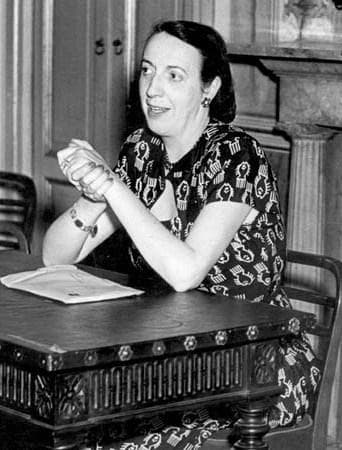
Biography coming soon.







