“Cannery Row in Monterey in California is a poem, a stink, a grating noise, a quality of light, a tone, a habit, a nostalgia, a dream.”
— Opening lines, introducing the setting of Cannery Row.


John Steinbeck (2002)
Genre
Literary Fiction / Historical Fiction
Reading Time
180-240 min
Key Themes
See below
Sign in to track this book
In the vibrant, post-Depression tide pools of Monterey, a motley crew of outcasts and philosophers navigates life's hilarious and heartbreaking currents, finding solace and survival in their shared humanity amidst the clatter of cannery machinery.
The novel opens by introducing Cannery Row, a street in Monterey, California, described as a 'poem, a stink, a grating noise, a quality of light, a tone, a habit, a nostalgia, a dream.' It is a place full of life, both human and animal, existing on society's fringes. We meet some key residents: Lee Chong, the Chinese grocer; Dora Flood, the madam of the Bear Flag Restaurant, a respectable brothel; and Doc, a marine biologist who runs Western Biological Laboratories. The story establishes the peculiar charm and resilient spirit of this community, where society's usual rules are bent, and a sense of shared existence prevails among the sardine canneries.
Mack, a resourceful tramp, and his friends—Hazel, Eddie, Hughie, and Jones—live a life of leisure and petty thievery. Tired of sleeping in culverts, they decide they need a more permanent home. Mack approaches Lee Chong, who owns an abandoned fish-meal storage shed. Through flattery, a sob story, and a vague promise of future payment, Mack convinces Lee Chong to let them live in the shed. Lee Chong, despite his business sense, often finds himself outmaneuvered by the Row's residents. Acquiring the Palace Flophouse and Grill starts many adventures for Mack and the boys.
Doc, owner of Western Biological Laboratories, is a central figure on Cannery Row, respected and loved by everyone. His lab is a blend of scientific equipment and marine specimens. Doc is knowledgeable, quiet, and appreciates beauty, whether in a poem or a tide pool creature. He often goes on collecting trips for specimens, returning with unique and sometimes dangerous finds. His door is always open; he offers solace, advice, and loans to residents, showing quiet stability amid the chaos.
Mack and the boys decide to throw a surprise party for Doc, whom they admire. Their intentions are good, but their plan is flawed. They get whiskey from Lee Chong by promising to catch frogs for Doc, which they then sell to him for money. They also steal groceries and a dog for the party. The party quickly goes out of control with too much drinking. It ends with extensive damage to Doc's lab, the destruction of valuable specimens, and a general mess. Doc returns to find his lab in ruins, but he is not angry, understanding their good intentions.
After the disastrous first party, Mack and the boys feel bad. They genuinely like Doc and regret the damage. They decide to make amends by cleaning up the lab and trying to restore order. Their efforts are clumsy and sometimes counterproductive. They also try to replace lost specimens, leading to comical but unsuccessful attempts at marine biology. Despite their ineptitude, their sincerity shows, and Doc, seeing their good intentions, accepts their apologies and their flawed attempts at restitution, strengthening their unique bond.
Mack and the boys start various schemes to survive and entertain themselves. One incident involves them getting many flagpole skates, which they try to sell to Doc. Doc, always patient, buys a few to humor them. Later, they go on a serious frog-catching trip to sell to scientific supply houses, hoping to earn enough money for a proper party for Doc. This expedition takes them into the wilderness, where their methods and camaraderie are highlighted, showing their ability to find joy and purpose in mundane tasks, all while keeping their amiable chaos.
Dora Flood, the madam of the Bear Flag Restaurant, runs a successful and, paradoxically, respectable establishment. Despite its nature, Dora follows strict rules of decorum and hygiene. She is a shrewd businesswoman, managing her girls and finances well. When the Great Depression hits, Dora is one of the few on Cannery Row who continues to do well, even quietly helping the less fortunate during the flu epidemic by providing food and medicine, showing hidden generosity. Her establishment is a stable, if unconventional, part of the Row's social fabric, providing a service and community support.
The novel introduces a haunted house story on Cannery Row, where a 'seer' or fortune-teller lives. This episode highlights the superstitious side of the community and its eccentric characters. The seer, a mysterious woman, offers cryptic predictions and advice, adding to the mystical feel of the Row. Her presence shows the mix of mundane and magical that fills the residents' lives, where rational explanations often exist with folklore and belief in the unseen. This interlude offers a glimpse into the diverse spiritual side of the community.
Determined to make up for the first failure, Mack and the boys plan another surprise party for Doc, this time with care and effort. They gather supplies, clean Doc's lab thoroughly, and invite Dora's girls and other residents. The party is a success, full of warmth, laughter, and genuine affection for Doc. Everyone brings what they can, creating a communal celebration. This party symbolizes the deep bond between Doc and the rest of Cannery Row, showing their collective love and respect for him, and their capacity for camaraderie and generosity.
The narrative ends by reinforcing Cannery Row's unique spirit. Despite their eccentricities, poverty, and unconventional lives, the residents share a strong sense of community and mutual dependence. They celebrate life, endure hardships, and find joy in their simple existence. The novel emphasizes accepting life as it is, with its beauty and ugliness, its moments of exuberance and loneliness. Doc, as the quiet observer and beloved friend, anchors this diverse group, embodying the intellectual curiosity and compassionate understanding that fills the Row's unique ecosystem, leaving a lasting impression of a lively, resilient, and deeply human place.
The Protagonist
Doc remains largely unchanged throughout the novel, serving as a stable, benevolent presence who observes and subtly influences the lives around him.
The Protagonist/Supporting
Mack remains a lovable rogue, though his genuine affection for Doc leads him to attempt to be more responsible, often with comical results.
The Supporting
Lee Chong remains a constant, slightly put-upon figure, a symbol of the enduring commerce and long-suffering generosity on the Row.
The Supporting
Dora remains a steadfast and resourceful figure, demonstrating her capacity for both business acumen and quiet philanthropy.
The Supporting
Hazel remains a loyal and good-natured member of Mack's group, embodying a certain childlike innocence.
The Supporting
Frankie remains a static character, a symbol of innocence and vulnerability under Doc's care.
The Supporting
Eddie remains a loyal and practical member of Mack's group.
The Mentioned
They serve as static, symbolic figures representing the Row's unique inhabitants.
The novel shows Cannery Row as a lively, connected community where individuals, despite their diverse backgrounds and unconventional lives, rely on one another for survival, emotional support, and belonging. This is clear in how Mack and the boys depend on Lee Chong for credit and Doc for understanding, and how Dora Flood, though a madam, helps during crises. The two parties for Doc show this theme, illustrating the collective effort and affection shared among residents, despite occasional mistakes. Their shared existence, though often chaotic, is tied by a deep, unspoken understanding and mutual acceptance.
“Its inhabitants are, as the man once said, 'whores, pimps, gamblers, and sons of bitches,' by which he meant Everybody. Had the man looked through another peephole he might have said, 'saints and angels and martyrs and holymen.'”
Cannery Row embraces life's contradictions, showing a world where beauty and squalor, humor and sadness, generosity and manipulation coexist. The novel does not judge its characters; instead, it accepts them as they are, celebrating their flaws and virtues equally. Dora Flood, a madam, is also a humanitarian. Mack, a 'bum,' has wisdom and loyalty. Doc, a scientist, appreciates poetry and simple joys. This acceptance is central to the Row's way of life, allowing inhabitants to find meaning and contentment in their unconventional existence, without seeking conventional 'success' or 'morality.'
“It is a poem, a stink, a grating noise, a quality of light, a tone, a habit, a nostalgia, a dream.”
Steinbeck elevates the lives of those on society's fringes—the tramps, the prostitutes, the eccentric scientists—showing their dignity, humanity, and unique contributions. The novel highlights the beauty and complexity in these often-overlooked individuals, suggesting that true value is not in social status or wealth, but in character, connection, and the capacity for joy and compassion. Doc finds beauty in marine life, and the story finds similar beauty in the 'tide pool' of human life on Cannery Row, showing that worth can be found in unexpected places and people.
“The things that make the Row are, for instance, the water front, the canneries, the Chinese grocery, the whore houses, and the laboratories.”
Beneath seemingly aimless lives, many characters in Cannery Row are quietly searching for meaning and connection. Doc finds it in his scientific work and his interactions with others. Mack and the boys find it in their camaraderie and their efforts to show admiration for Doc. Even the brief stories of minor characters, like the man who collects the rare specimen for Doc, suggest a desire for recognition or purpose. This search is not always obvious or successful, but it underlies many of their actions, connecting them in a shared human experience of seeking significance.
“Doc was a man of his time, and he lived in his time, but he was also a man of all time, and he lived for all time.”
The novel presents life on Cannery Row as a constant interplay between chaos and underlying order, much like the natural world Doc studies. The spontaneous, often destructive actions of Mack and the boys contrast with the routines of Dora and Lee Chong, and Doc's scientific precision. Yet, even within the chaos, there is a natural rhythm and a kind of 'ecological balance' that keeps the community together. The first party for Doc shows uncontrolled chaos, while the second party demonstrates a successful, though still lively, attempt at order and celebration, reflecting life's cyclical nature and the balance between spontaneity and intention.
“The word 'bum' has a bad sound. It is a good sound in Cannery Row. It is a word of distinction.”
A detached yet empathetic voice guiding the reader through Cannery Row.
The novel employs an omniscient narrator who provides a panoramic view of Cannery Row, often interjecting with philosophical observations and historical context. This narrative voice is both detached, offering a 'scientific' perspective on the human ecosystem, and deeply empathetic, revealing the inner lives and motivations of the characters without judgment. This allows Steinbeck to present the diverse cast of characters and their interconnected stories with a consistent tone, while also subtly guiding the reader's understanding of the Row's unique charm and underlying meaning.
A series of interconnected vignettes rather than a linear plot.
Cannery Row is structured as a series of interconnected vignettes and character sketches rather than a single, overarching linear plot. Each chapter or section often focuses on a particular character, event, or philosophical reflection, loosely tied together by the setting and the recurring characters. This episodic structure mirrors the organic, unpredictable flow of life on the Row, allowing Steinbeck to explore various aspects of the community and its inhabitants without strict adherence to a traditional narrative arc. It emphasizes atmosphere and character over plot progression, creating a rich tapestry of life.
The tide pool as a microcosm for the ecosystem of Cannery Row.
The tide pool, a frequent subject of Doc's scientific study, serves as a powerful symbol for Cannery Row itself. Just as a tide pool contains a diverse array of creatures living in a delicate, interdependent balance, Cannery Row is home to a varied collection of human 'specimens' who, despite their differences, rely on each other for survival and thrive in their unique environment. The constant ebb and flow of the tides parallel the changing fortunes and events on the Row, highlighting the natural, sometimes chaotic, yet ultimately resilient nature of the community.
Gentle humor and situational irony used to highlight human foibles.
Steinbeck employs understated humor and gentle irony throughout the novel, often stemming from the characters' well-intentioned but misguided actions. Mack and the boys' attempts to throw a party for Doc, for instance, are filled with comical mishaps and ironic outcomes. This humor is never mean-spirited; instead, it serves to endear the characters to the reader and to highlight the endearing absurdity of human nature. It also provides a lighthearted counterpoint to the underlying themes of poverty and marginalization, making the narrative both poignant and entertaining.
“Cannery Row in Monterey in California is a poem, a stink, a grating noise, a quality of light, a tone, a habit, a nostalgia, a dream.”
— Opening lines, introducing the setting of Cannery Row.
“It is a time of great peace, of great rest. It is a time for the geese to fly south, for the leaves to turn gold, for the sun to sink low and red.”
— Describing the feeling of autumn in Cannery Row.
“Lee Chong’s grocery, while not a model of orderliness, was a miracle of supply.”
— Introducing Lee Chong's store, a central hub for the characters.
“Doc was, of course, a great man. He was a very great man.”
— Narrator's high praise for Doc, emphasizing his importance and wisdom.
“It has always seemed to me that in order to be a good chemist, one must be a poet.”
— Doc's reflection on the connection between science and art.
“The things we admire in men, kindness, generosity, openness, honesty, understanding, are the concomitants of failure in our system. And those traits we despise, sharpness, greed, acquisitiveness, meanness, egotism, are the concomitants of success.”
— A philosophical observation on societal values and success.
“And when you collect marine animals, there are certain things you don’t think about.”
— Doc reflecting on the practicalities and mindset of his work.
“The word ‘whore’ does not mean what you think it means.”
— A character's redefinition of a derogatory term, highlighting different perspectives.
“They were not heroes, they were not great, they were not even very good. They were just people.”
— Describing the residents of Cannery Row, emphasizing their ordinariness.
“How can I, a man, know what a woman wants? It is a mystery.”
— A character's musing on the complexities of human relationships.
“It is a place of dreams and hopes, and of poverty and desperation.”
— Further description of Cannery Row, highlighting its duality.
“The boys had a way of not being there when they were wanted, and of being there when they were not.”
— Describing the elusive and unpredictable nature of the Palace Flophouse residents.
“A man must be a man, even if he is a bum.”
— A statement about dignity and self-respect, regardless of social standing.
“The bums who inhabited the Palace Flophouse were not bums at all. They were philosophers.”
— Narrator re-framing the perception of the Palace Flophouse residents.
Ready to see how well you understood this book? Take our interactive quiz with 10 questions.
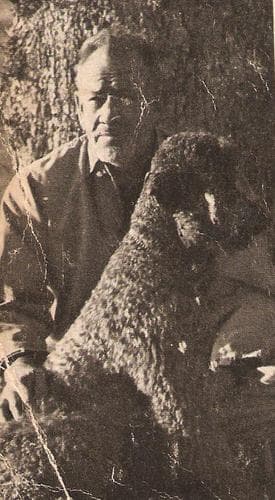
John Ernst Steinbeck was an American writer. He won the 1962 Nobel Prize in Literature "for his realistic and imaginative writings, combining as they do sympathetic humor and keen social perception". He has been called "a giant of American letters."







