“The best writers are the best thieves.”
— A character discussing the nature of writing and inspiration.

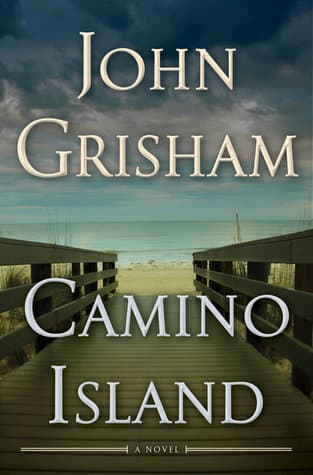
John Grisham (2017)
Genre
Thriller / Mystery
Reading Time
360 min
Key Themes
See below
Sign in to track this book
A struggling novelist infiltrates the world of rare book dealing and theft on a Florida island, falling for the charismatic bookseller suspected of hiding priceless stolen manuscripts.
Four thieves carry out a carefully planned heist from a secure vault under Princeton University's Firestone Library. They steal five original manuscripts by F. Scott Fitzgerald, including 'The Great Gatsby' and 'This Side of Paradise.' The thieves disable security, get past physical barriers, and escape with the manuscripts. The FBI and university officials are baffled. The theft starts a nationwide investigation, and the FBI quickly determines the manuscripts are too famous to sell openly and will likely go to the black market, valued at twenty-five million dollars.
Mercer Mann, a young novelist with writer's block, recently lost her teaching job at the University of North Carolina and faces financial problems. She gets an unexpected call from Elaine Shelby, who says she represents the 'National Security Agency' (NSA), though it is later revealed to be a private security firm working for the insurance company. Shelby offers Mercer one hundred thousand dollars to go undercover to Camino Island, Florida. Her job is to infiltrate the literary group around rare book dealer Bruce Cable, who is suspected of selling stolen books, and to find information about the stolen Fitzgerald manuscripts.
Mercer, pretending to be a novelist looking for inspiration, arrives in Santa Rosa, Camino Island. She quickly becomes part of the local scene, befriending bookstore owner and rare book dealer Bruce Cable. His store, Bay Books, is a center for the island's literary community. She rents a small cottage and starts attending Bruce's Sunday brunches, which are popular with local authors, academics, and collectors. Mercer watches Bruce closely, noting his charm, his knowledge of rare books, and his seemingly legitimate business, all while reporting her findings to Elaine Shelby, who monitors her progress and gives advice.
As Mercer spends more time on Camino Island, she becomes a regular at Bay Books and part of Bruce's inner circle. She meets his wife, Noelle, and his diverse group of friends, including authors and academics. Bruce, a charming and generous host, likes Mercer, offering her writing advice and inviting her to smaller gatherings. Mercer starts to notice small clues and hears rumors about Bruce's ties to the illegal side of the rare book world, particularly from a former associate. This confirms her suspicion that he is involved in illegal dealings, even if not directly with the Fitzgerald heist.
Mercer's persistence pays off when she gets access to Bruce's heavily secured, secret vault under his bookstore. Inside, she finds many rare and valuable books, some of which she suspects are stolen. More importantly, she uncovers evidence of a sophisticated black market network Bruce runs, dealing in high-value stolen literary items. She reports her findings to Elaine Shelby, confirming that Bruce is a significant player in the illegal rare book trade, though the Fitzgerald manuscripts are still missing.
Despite her goal and her growing certainty of Bruce's criminal activities, Mercer finds herself drawn to him. Bruce's intelligence, charm, and genuine passion for literature start to blur her professional detachment. A romantic relationship slowly develops between them, adding a deep moral and emotional conflict to Mercer's mission. She struggles with her loyalty to Elaine Shelby and the insurance company versus her growing feelings for Bruce, which makes betraying him increasingly difficult.
Through listening, careful questioning, and putting together information from Bruce's associates, Mercer finally finds a direct link between Bruce and the stolen Fitzgerald manuscripts. She learns that Bruce is selling the priceless documents for the thieves. The manuscripts are not in his immediate possession, but he is actively involved in their distribution. This discovery is a major breakthrough, confirming her mission's objective and forcing her to face the full consequences of her actions.
Mercer discovers that 'The Professor,' a shadowy figure, planned the Princeton heist. This information comes from fragments of conversations and encrypted messages Bruce has, hinting at a larger network. The Professor is careful and hard to find, operating from the shadows, and his involvement adds another layer of complexity to the recovery effort. Mercer realizes the operation is much larger than just Bruce Cable.
Mercer's undercover operation is eventually exposed. Bruce, perhaps having suspected her for some time or noticing inconsistencies, confronts her, leading to a tense and emotional scene. Feeling betrayed, Bruce is furious. Mercer, now in danger, must flee Camino Island suddenly. She reports her final findings to Elaine Shelby, confirming Bruce's involvement and providing important details about the manuscripts' location and the network of thieves, though leaving emotional damage behind.
Based on Mercer's information, the FBI and the private security firm act. The Fitzgerald manuscripts are eventually recovered from a secure location, though the exact details of the raid are somewhat unclear. The thieves, including 'The Professor,' are caught, and Bruce Cable is arrested for his role in the black market dealings. Mercer receives her payment, but the emotional cost of her deception, especially her betrayal of Bruce, affects her deeply. She tries to rebuild her life, perhaps finding inspiration for her own writing from her experiences.
The Protagonist
Mercer transforms from a struggling, naive writer into a seasoned operative, grappling with the moral complexities of her mission and the emotional toll of betrayal, ultimately finding new inspiration for her work.
The Antagonist/Love Interest
Bruce is initially portrayed as an untouchable, enigmatic figure, whose carefully constructed world unravels as Mercer gets closer, leading to his eventual exposure and arrest.
The Supporting
Shelby remains largely static, serving as the driving force and strategic mind behind Mercer's mission, ensuring the recovery of the manuscripts.
The Supporting
Noelle's arc is subtle, as she remains mostly unaware of her husband's criminal activities until his eventual downfall, her world collapsing around her.
The Antagonist
The Professor remains a shadowy figure until his eventual apprehension, his planning prowess leading to the initial success of the heist and the subsequent pursuit.
The Supporting
Nelson acts as a source of information for Mercer, his role primarily to advance Mercer's understanding of Bruce's world.
The Supporting
Tommy's arc is limited to his participation in the heist and subsequent escape, representing the direct action of the crime.
The Mentioned
The FBI's role is to pursue the culprits and recover the manuscripts, which they ultimately achieve with Mercer's help.
The novel explores deception and betrayal through Mercer Mann's undercover mission. She must deceive Bruce Cable and his friends, pretending interest and affection while secretly gathering evidence against him. This theme becomes more complex with Mercer's growing romantic feelings for Bruce, making her eventual betrayal personal. Bruce himself uses deception, presenting a respectable image while engaging in illegal rare book dealings.
“She was a spy, a fraud, a liar, and she was falling in love with her target.”
The book explores the attractive and dangerous world of the black market for rare books and manuscripts. It shows the great value placed on literary artifacts and how far collectors and dealers will go to get them, regardless of legality. Bruce Cable represents this appeal, running a sophisticated illegal business alongside his legitimate bookstore, driven by profit and perhaps a thrill for the forbidden. The theft of the Fitzgerald manuscripts highlights the high stakes and global reach of this underground economy.
“There was a dark side to the rare book business, a world where provenance was a suggestion and price was king.”
Grisham looks at the inherent and monetary value of art and literature, specifically through the priceless F. Scott Fitzgerald manuscripts. The novel contrasts the academic and cultural respect for these works with their high market value in illegal trade. It questions if such works can truly be 'owned' and explores the ethics of selling literary heritage. The twenty-five million dollar insurance policy on the manuscripts clearly shows their financial worth.
“The words themselves were priceless, but the paper they were written on had a value that could buy a small country.”
Mercer Mann's journey is one of self-discovery, driven by her difficult situation and the demands of her mission. She struggles with her identity as a writer, a teacher, and then an undercover agent. Her experience on Camino Island, especially her relationship with Bruce, challenges how she sees herself and her abilities. She learns about her own strength, her ability to deceive, and the emotional cost of living a lie, which ultimately shapes her future as an author.
“She had gone to Camino Island to find a story, but instead, she had found a new version of herself.”
The novel has much moral ambiguity, especially concerning its main characters. Bruce Cable is a criminal, yet he is shown as charming, intelligent, and genuinely passionate about books, which makes it hard to simply call him 'evil.' Mercer, the main character, uses deception and betrayal, blurring the lines between right and wrong for a 'good' cause (recovering stolen property). The private security firm also operates in a morally gray area, using covert tactics outside traditional law enforcement.
“In this world, the heroes were sometimes villains, and the villains often had their own codes of honor.”
The primary narrative device driving Mercer's investigation.
The undercover operation is the central plot device, placing Mercer Mann in a deceptive role to infiltrate Bruce Cable's world. This device generates suspense, conflict, and moral dilemmas as Mercer navigates her dual identity. It allows the reader to experience the hidden world of rare book dealing and the black market through her eyes, creating opportunities for discovery and personal growth, while building towards the inevitable moment her cover will be blown.
Misdirection about the true nature of Mercer's employers.
Initially, Mercer is led to believe she is working for the National Security Agency (NSA), adding a layer of perceived government authority and national importance to her mission. This turns out to be a red herring, as Elaine Shelby's organization is a private security firm working for the insurance company. This misdirection serves to heighten the stakes and Mercer's initial apprehension, while also highlighting the shadowy, unofficial nature of the recovery effort.
Bruce Cable's charm complicates Mercer's mission.
Bruce Cable's charismatic personality functions as a significant plot device, complicating Mercer's mission and creating emotional conflict. His charm, intelligence, and genuine love for books make him an attractive figure, blurring the lines between 'target' and 'love interest.' This device forces Mercer (and the reader) to confront the moral ambiguity of his character and makes her eventual betrayal all the more difficult and impactful, adding depth beyond a simple good-vs-evil narrative.
The stolen manuscripts as the central object of desire.
The five stolen F. Scott Fitzgerald manuscripts serve as the MacGuffin of the story. While their recovery is the ultimate goal, their specific content is less important than their role in driving the plot, motivating the characters (the thieves, the insurance company, Mercer), and setting the stakes. They are the catalyst for the entire narrative, uniting the disparate elements of the heist, the investigation, and Mercer's undercover work.
“The best writers are the best thieves.”
— A character discussing the nature of writing and inspiration.
“A good bookstore is a refuge, a sanctuary from the noise of the world.”
— Description of the bookstore on Camino Island.
“The manuscripts were priceless, but the secrets they held were even more valuable.”
— Referring to the stolen F. Scott Fitzgerald manuscripts.
“In the world of rare books, trust is a currency more fragile than gold.”
— Commentary on the rare book trade and its ethical dilemmas.
“He lived in the shadows, a ghost among the pages of history.”
— Describing a mysterious character involved in the theft.
“Every book has a story, but some stories are better left untold.”
— Reflection on the hidden narratives within the stolen manuscripts.
“The island was a paradise, but beneath its surface lurked a web of deception.”
— Setting description highlighting the contrast between appearance and reality.
“She was a writer who had forgotten how to write, until the theft gave her a story worth telling.”
— About the protagonist Mercer Mann finding inspiration.
“In the hunt for the manuscripts, the line between hunter and prey began to blur.”
— Describing the escalating tension in the investigation.
“The collector saw books not as stories, but as trophies to be won.”
— Critique of a character's motives in the rare book world.
“Sometimes the quietest places hold the loudest secrets.”
— Referring to the serene yet secretive atmosphere of Camino Island.
“The truth was a manuscript waiting to be edited by those who dared to rewrite history.”
— Philosophical musing on truth and manipulation in the plot.
“He traded in words, but his silence spoke volumes.”
— Describing a character who is enigmatic and reserved.
“In the end, the greatest theft was not of paper and ink, but of trust and innocence.”
— Reflection on the broader consequences of the crime.
Ready to see how well you understood this book? Take our interactive quiz with 10 questions.

Biography coming soon.







