BookBrief
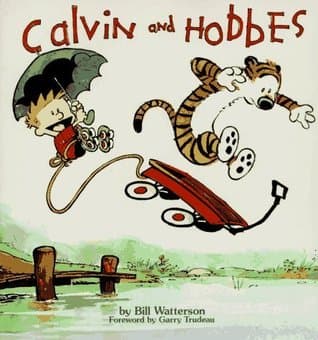
Calvin and Hobbes cover
Archivist's Choice

Calvin and Hobbes

Bill Watterson (1992)

Genre

Children's

Reading Time

12 Minutes

Key Themes

See below

Track Your Reading

Sign in to track this book

A mischievous boy's endless imagination turns his stuffed tiger into a thoughtful and adventurous best friend, leading to funny escapades and insights into childhood.

Synopsis

This collection introduces the imaginative world of Calvin, a mischievous and philosophical six-year-old, and his best friend, Hobbes, a sardonic tiger who is either a stuffed animal or a lively companion, depending on who's looking. Through their daily adventures, which range from battling imaginary monsters and exploring the cosmos to navigating school, chores, and the complexities of friendship and family, the strip humorously explores childhood, imagination, and the often-absurd realities of life. Each page offers a series of short, self-contained comic strips that capture the unique bond between the boy and his tiger, their distinctive personalities, and their often-profound observations on the world around them.
Difficulty
Easy
Pacing
Fast
Mood
Humorous, nostalgic, whimsical, insightful, lighthearted

Plot Summary

A Boy and His Tiger

The collection opens with Calvin, a six-year-old boy, and his stuffed tiger, Hobbes. To Calvin, Hobbes is a living, thinking friend who often pounces on him after school. To others, Hobbes is just a toy. Their first interactions show the strip's main dynamic: Calvin's imagined world alongside the everyday reality adults see. Hobbes often gives cynical or practical comments on Calvin's plans, often balancing Calvin's energy and wild ideas. This beginning sets up their adventures, showing their close friendship and the difference between Calvin's inner world and how others see him.

School Daze and Susie Derkins

Calvin's school problems are a common theme. He often gets bored, distracted, or acts out in class, annoying his teacher, Miss Wormwood. His interactions with Susie Derkins, a classmate, often turn into childish pranks and arguments, though there is an unspoken, developing friendship. Calvin often bothers Susie, whether by throwing snowballs or making rude comments, and she usually gets him back. These scenes show Calvin's immaturity and his trouble fitting into social rules and with authority, especially at school, where his imagination often feels limited.

The Wagon and the Philosophy of Life

One of Calvin and Hobbes's main activities is riding down steep hills in their wagon or sled, often very fast. These risky rides often come with deep talks about life's meaning, existence, and the universe's oddness. Hobbes often adds a dry joke or a more practical view to Calvin's big statements. The act of speeding down a hill becomes a symbol for dealing with life's messiness, with the boys using these exciting and dangerous moments to think about complex ideas, showing the strip's thoughtful side along with its humor.

Dad's 'Character-Building' Logic

Calvin's relationship with his father is playful and often frustrating. His dad often uses 'character-building' logic, giving strange and often made-up explanations for things, like why the sky is blue or how the TV works. These talks show his father's dry humor and his enjoyment in teasing his son, while also showing Calvin's trust and his slow realization that his dad is joking. It is a funny look at parent-child interaction, where the parent enjoys subtly changing the child's understanding of the world for fun, and the child slowly learns to question authority.

Mom's Patience and Punishment

Calvin's mother often deals with his bad behavior and imaginative messes. She is often seen trying to keep order, clean up, or just get Calvin to behave. Her patience is often tested, leading to typical parent reactions like sending Calvin to his room or giving him a time-out. These moments show the difficulties of parenting a child as energetic and imaginative as Calvin, and her reactions, though sometimes frustrated, also show a deep, if tired, love for her son. Her role often involves bringing Calvin back to reality, even if for a short time, from his elaborate fantasy worlds.

The Noodle Incident

Throughout the collection, there are frequent mentions of 'The Noodle Incident,' a past school event that is never fully explained but clearly got Calvin into big trouble. This running joke adds to Calvin's reputation as a troublemaker and makes readers curious, creating a sense of a larger, unseen history of Calvin's pranks. The mystery around the incident adds to Calvin's legend and shows his ability to create chaos, both at home and at school. It is a clever way to build character using implied history without needing direct explanation.

Transmogrifier and Duplicator

Calvin's imagination often appears as him inventing fantasy devices. He creates the 'Transmogrifier,' a cardboard box that can change him into any animal, and the 'Duplicator,' another box that can make copies of himself. These inventions often lead to funny problems, such as Calvin getting stuck as a tiger or making troublesome clones who refuse to do his homework. These plot devices show Calvin's endless creativity and his wish to avoid boring tasks, but they also teach him about the unexpected results of his elaborate plans and desires.

Snowmen and Art

Winter gives Calvin a new way to be creative: snowmen. However, Calvin's snowmen are far from normal. He builds elaborate, often grim and thoughtful scenes with his snow creations, showing them in various states of being broken apart, in despair, or dying violently. These snow sculptures are a unique art form for Calvin, showing his dark humor and his questions about life and death, even in a playful way. His parents are often confused or horrified by his creations, which are very different from typical childhood snow play, further showing Calvin's unusual nature.

The Dinosaurs and Spaceman Spiff

Calvin often escapes into vivid fantasy worlds, often as 'Spaceman Spiff,' an intergalactic hero fighting alien monsters (usually his teacher or Susie). He also imagines himself as a fierce dinosaur, scaring his suburban neighborhood. These elaborate fantasies are not just daydreams; they are full stories in Calvin's mind, often with his own dramatic narration. These parts give a look into Calvin's inner life, showing his desire for adventure, control, and escape from the normal duties and frustrations of being a six-year-old.

The Philosophical Ponderings

Among the chaos and mischief, Calvin and Hobbes often have surprisingly deep philosophical talks. They think about reality, God, art's meaning, and morality's challenges. These conversations often happen while they are doing normal things like eating breakfast or walking through the woods. Hobbes often acts as a more cynical or logical balance to Calvin's idealistic or dramatic statements. These talks raise the strip beyond simple humor, adding layers of thought and showing the complex themes that can be explored through a child's view.

The Bath Time Blues

Calvin's dislike for baths is a common source of conflict and humor. He uses various imaginative ways to avoid the dreaded tub, often imagining the bathwater as a monster or himself as a brave explorer navigating dangerous waters. These scenes show his active imagination, even when facing an unpleasant but necessary chore. His parents' attempts to get him into the bath often become small battles of wills, further showing the everyday struggles of parenting a very imaginative and resistant child, and Calvin's ability to turn the mundane into an epic struggle.

Growing Pains and the Future

Though not directly solved, the collection touches on Calvin's worries about growing up and eventually losing his imaginative world. He often says he wants to stay a child, free from adult duties and reality's limits. Hobbes, as a confidant, often gives comfort or a slightly sad view on childhood's fleeting nature. These moments add a touching layer to the strip, hinting at the universal theme of missing innocence and the bittersweet move from childhood fantasy to adult reality, even as Calvin continues to enjoy his current state.

Principal Figures

Calvin

The Protagonist

Calvin remains largely static in terms of his core personality, but his interactions subtly deepen his understanding of the world, even if he often resists it.

Hobbes

The Supporting

Hobbes's character remains consistent as Calvin's loyal companion and foil, never wavering in his unique existence within Calvin's world.

Calvin's Mom

The Supporting

Her character is largely static, serving as a consistent parental figure who navigates the challenges of raising an extraordinary child.

Calvin's Dad

The Supporting

His character remains consistent as the family's source of ironic humor and 'character-building' life lessons.

Susie Derkins

The Supporting

Susie's role remains consistent as Calvin's primary peer antagonist, highlighting his social awkwardness and her more conventional nature.

Miss Wormwood

The Supporting

Her character is static, embodying the authority figure constantly challenged by Calvin's nonconformity in the school setting.

Moe

The Antagonist

Moe remains a static antagonist, a constant physical threat that Calvin must occasionally navigate.

Rosalyn

The Supporting

Rosalyn's character is consistent, a recurring victim of Calvin's mischief who reluctantly returns for the money.

Themes & Insights

The Power of Imagination vs. Reality

This is the main theme of 'Calvin and Hobbes.' Calvin's world is constantly shaped by his endless imagination, where his stuffed tiger comes alive, normal tasks become big battles, and cardboard boxes turn into time machines. This imaginative world often clashes with the normal, rule-filled reality set by adults, school, and social norms. The strip explores the beauty and escape of childhood fantasy, but also the problems it causes when faced with the practicalities and expectations of the adult world, often showing the tension between a child's inner world and how others see him.

It's a magical world, Hobbes, ol' buddy... Let's go exploring!

Calvin

Childhood Rebellion and Authority

Calvin is a classic rebel, always pushing against the limits set by his parents, teacher, and society. He resists homework, chores, baths, and any structured activity that limits his freedom and imagination. This theme explores children's natural tendency to challenge authority and show their independence, often through mischievous acts and elaborate plans. The strip humorously shows the ongoing battle of wills between Calvin and the adults in his life, highlighting both the frustration of the authority figures and Calvin's strong will to live life his way.

I'm not going to do my homework! I'm going to watch TV! I'm going to eat sugar! I'm going to stay up late! I'm going to be a complete derelict! I'm going to be a menace to society!

Calvin

Friendship and Loyalty

The connection between Calvin and Hobbes is the emotional center of the strip. Their friendship is one of loyalty, shared adventures, and deep understanding, even when they argue. Hobbes is Calvin's confidant, conscience, and partner in crime, a constant presence in his imaginative world. This theme explores the deep importance of companionship, especially during childhood, and how a true friend can provide comfort, support, and a shared view in dealing with life's complexities. Their friendship goes beyond the question of Hobbes's 'realness,' emphasizing the emotional truth of their bond.

If people sat outside and looked at the stars each night, I'll bet they'd live a lot differently.

Calvin (to Hobbes)

Existentialism and Philosophy through a Child's Eyes

Despite being a comic strip about a six-year-old, 'Calvin and Hobbes' often explores deep philosophical questions. Calvin and Hobbes often discuss life's meaning, existence, the universe's oddness, and morality's complexities during their wagon rides or while looking at the stars. This theme shows how even children think about basic human questions, often with a unique mix of innocence, insight, and dark humor. The strip uses their childlike view to explore deep intellectual areas, making complex ideas understandable and often funny.

I like to verb words. It's fun to take a noun and verb it.

Calvin

Plot Devices & Literary Techniques

The Anthropomorphic Companion (Hobbes)

Hobbes's dual reality as a stuffed animal and a sentient being.

The anthropomorphic nature of Hobbes is the foundational plot device. For Calvin, Hobbes is a living, breathing, philosophical tiger; for all other characters, he is an inanimate stuffed animal. This duality allows the strip to explore Calvin's inner world, the power of imagination, and the unique bond of friendship, while simultaneously grounding the narrative in the mundane reality of his family life. It creates a constant, subtle tension and humor, as the reader is privy to Calvin's perspective, highlighting the contrast between his rich inner life and the adult world's perceptions.

Imaginary Alter Egos (Spaceman Spiff, Stupendous Man, Dinosaurs)

Calvin's various fantasy identities.

Calvin frequently adopts imaginary alter egos like 'Spaceman Spiff,' 'Stupendous Man,' or transforms into a dinosaur. These personas serve as a primary escape mechanism from the frustrations of reality (school, chores, bullies). This device allows Watterson to explore Calvin's desires for power, adventure, and control, as well as his coping mechanisms for dealing with difficult situations. Each alter ego represents a different facet of Calvin's personality and his imaginative ways of processing the world around him, often providing a humorous contrast to his real-world helplessness.

The Cardboard Box (Transmogrifier, Duplicator, Time Machine)

A simple box as a portal to endless possibilities.

A simple cardboard box is a recurring and versatile plot device that Calvin transforms into various fantastical inventions: a 'Transmogrifier' (changing him into animals), a 'Duplicator' (creating clones), or a 'Time Machine.' This device brilliantly showcases the boundless power of a child's imagination, demonstrating how an ordinary object can become a gateway to extraordinary adventures. It underscores the theme of imagination triumphing over material possessions and highlights Calvin's ingenuity in creating his own elaborate worlds and problem-solving tools.

Wagon/Sled Rides

Perilous descents accompanied by philosophical discourse.

Calvin and Hobbes's frequent, often reckless, descents down hills in their wagon or sled serve as a recurring visual motif and a unique plot device. These exhilarating, sometimes dangerous, rides are consistently accompanied by deep philosophical discussions. The act of hurtling down a hill becomes a metaphor for navigating the chaos and unpredictability of life, providing a dynamic backdrop for the boys' existential ponderings. It allows the strip to blend action and intellectualism, contrasting physical thrill with profound thought, and showcasing the unique blend of adventure and introspection that defines their friendship.

Critical analysis

Notable Quotes

Quiz

Test Your Knowledge

Ready to see how well you understood this book? Take our interactive quiz with 10 questions.

10
Questions
~5
Minutes
?
Best Score

Key Questions (FAQ)

Calvin and Hobbes is a comic strip that follows the imaginative adventures of a mischievous 6-year-old boy named Calvin and his best friend, a stuffed tiger named Hobbes, who magically comes to life when they are alone. Their escapades explore childhood, friendship, and the world from a unique perspective.

About the author

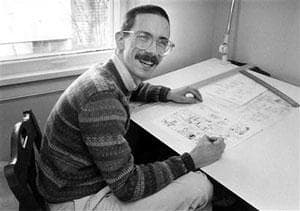
Bill Watterson

Bill Watterson is the celebrated creator of the iconic comic strip "Calvin and Hobbes." Known for its philosophical depth and artistic brilliance, the strip ran from 1985 to 1995 and continues to be beloved worldwide. Watterson's work is lauded for its imaginative storytelling and insightful commentary on childhood and adult life.