“Sleep. Call it sleep. But it was not sleep. It was a descent, a surrender, a letting go.”
— David's internal thoughts as he drifts into a dream-like state, reflecting his struggles with reality.


Henry Roth (2013)
Genre
Literary Fiction / Historical Fiction
Reading Time
1200 min
Key Themes
See below
Sign in to track this book
In 1900s Lower East Side, a young Jewish boy navigates language, faith, and self-awareness, seeking meaning in his chaotic immigrant life.
The novel begins with six-year-old David Schearl and his mother, Genya, arriving by ferry at the Lower East Side of New York City from Austria-Hungary. David's father, Albert, a stern and volatile man, meets them. The reunion is full of tension, especially between Albert and Genya, which David keenly observes. Their new home is a cramped tenement apartment, very different from their life in Europe. David, already a sensitive and imaginative child, is overwhelmed by the bustling, foreign city, and his parents' anxieties begin to shape his early views of his new world.
David's early years in America involve his attempts to understand his parents' complex and often frightening relationship. Albert is frequently abusive toward Genya, both physically and emotionally, driven by jealousy and his own frustrations with poverty. Genya, though protective of David, struggles under Albert's control and her own past secrets. David internalizes much of this conflict, finding comfort in solitary play and his vivid imagination. He begins to explore the streets of the Lower East Side, meeting other children and seeing the harsh realities of poverty, which further expose him to his environment.
Fascinated by the trolley tracks and the mysterious 'light' that powers them, David sticks a metal milk-ladle into the tracks. He experiences a powerful electrical shock, a moment of intense pain and transcendent feeling. This event, though a childhood accident, deeply affects David. He sees it as a mystical experience, a forbidden knowledge, and connects it with divine power and punishment. This incident introduces a recurring theme of forbidden knowledge and the search for spiritual meaning amidst his ordinary and often brutal life.
David is sent to cheder, a Hebrew school, where a strict rebbe teaches him. While he learns about the Hebrew language and religious texts, his experiences there are not purely spiritual. He meets other boys who introduce him to crude sexual language and acts. Most disturbingly, an older girl named Annie sexually abuses him, exploiting his innocence. These experiences confuse and traumatize David, blurring the lines between religious instruction, fear, and growing, misunderstood sexuality, adding to his internal turmoil and sense of sin.
David accidentally overhears a conversation between his mother, Genya, and her sister, Bertha. He learns the shocking truth that Genya had an incestuous relationship with her own father in Europe. This revelation shatters David's innocent view of his mother and creates an immense psychological burden. He struggles to process this information, feeling horror, confusion, and a growing sense of his mother's vulnerability and his own involvement in a world of hidden sins. This secret becomes a heavy weight on his young conscience, further isolating him in his inner world.
As the pressures of his home life, school, and the streets increase, David increasingly retreats into his vivid imagination. He creates elaborate fantasies and internal thoughts, often blending elements of his religious teachings with his personal experiences and fears. These imaginary worlds serve as a refuge from the harsh realities of poverty, parental abuse, and the confusing sexual encounters he endures. His imagination becomes a way to cope, to process the overwhelming sensory input and emotional trauma of his environment, though it also blurs the line between reality and fantasy.
Albert's jealousy and suspicion of Genya become extreme. He suspects her of infidelity, fueled by his own insecurities and rumors in the tenement. This paranoia leads to a violent confrontation where Albert physically abuses Genya and threatens David. David witnesses his mother's suffering firsthand, and his fear of his father intensifies. This scene shows Albert's destructive nature and the constant threat of violence in David's home life, pushing him further into anxiety and terror.
David, seeking meaning and escape from his home problems, begins to frequent a local synagogue. He is drawn to a charismatic, fiery preacher whose sermons about sin, redemption, and God's wrath resonate deeply with David's own anxieties and guilt, especially concerning his mother's past and his own sexual encounters. The intense rhetoric of the preacher both frightens and captivates David, offering a potential path to understanding or forgiveness, but also intensifying his sense of personal sin and the need for salvation.
Driven by a desperate need for a sign, a revelation, or perhaps a form of self-punishment, David returns to the trolley tracks. He again inserts a metal object into the tracks, deliberately seeking the electrical current. This time, the resulting shock is far more severe, causing a massive electrical surge that disrupts the entire neighborhood's power grid and results in a significant injury to David. The community is thrown into chaos, and David is left unconscious, his body physically scarred and his mind on the edge of delirium.
Following the electrical accident, David lies in a feverish, semi-conscious state. His mind races through a jumble of memories, fears, religious teachings, and his own vivid fantasies. He relives his traumas, confronts his guilt, and processes the overwhelming sensory experiences of his young life. In this state, David undergoes a profound internal reckoning, a spiritual and psychological awakening. He emerges from the fever with a new, though fragile, understanding of himself and his place in the world, hinting at a new ability to integrate his fragmented experiences.
Immediately after David's accident and feverish delirium, his father, Albert, shows a rare moment of genuine concern and tenderness. This brief softening of Albert's character offers a glimmer of hope for David's emotional well-being. While David's physical wounds heal, his psychological scars remain. The novel ends with David, still very young, having endured immense trauma and a deep internal journey. He has experienced the harshness of the world, the complexities of human nature, and the power of his own mind, leaving his future uncertain but marked by a newfound, if fragile, resilience.
The Protagonist
David begins as an innocent, observant child and evolves into a complex, traumatized individual who grapples with profound psychological and spiritual questions, culminating in a critical, if painful, self-awareness.
The Supporting
Genya starts as a somewhat hopeful immigrant but is slowly ground down by poverty, abuse, and her past, becoming a figure of tragic endurance.
The Antagonist
Albert remains largely static in his abusive nature, though he shows a brief, uncharacteristic moment of tenderness at the novel's end, hinting at a suppressed humanity.
The Supporting
Bertha's role is primarily to facilitate the revelation of a critical plot point, remaining a somewhat static character outside of this function.
The Supporting
Annie serves as a catalyst for David's early sexual trauma, her character arc is not explored beyond this role.
The Supporting
The Rebbe's character remains consistent as a strict religious instructor, serving as a symbol of traditional authority.
The Supporting
The Preacher's role is to provide a spiritual and emotional catalyst for David's internal struggles, remaining a consistent presence in his sermons.
The novel closely follows David's painful journey from childhood innocence to a raw awareness of life's harsh realities. This theme is clear from his arrival in the bustling, overwhelming Lower East Side, where his senses are constantly challenged. His exposure to his parents' violent arguments, the sexual abuse by Annie, and the shocking revelation of his mother's incestuous past systematically remove his innocence. Each experience forces David to confront the darker aspects of human nature and the world, leaving him with a deep sense of trauma and a fractured understanding of purity.
“He began to know, to distinguish, to see the world as a place of terror, and a place of wonder.”
Guilt and sin are constant forces that weigh heavily on David. He internalizes his parents' perceived sins, particularly his mother's secret, and feels involved in them. His own experiences, such as the initial electrical shock and the sexual encounters, are seen through a lens of religious guilt and a fear of divine punishment. The fiery sermons of the synagogue preacher intensify these feelings, leading David to believe he is inherently flawed and deserves retribution. This burden drives much of his internal conflict and his search for forgiveness, ending in his desperate reenactment of the electrical shock.
“And the sin was not his, but he must bear it. He must carry it, a heavy, secret stone in his heart.”
Amidst the poverty and brutality of his life, David constantly seeks deeper meaning and moments of transcendence. His fascination with the 'light' of the trolley tracks, which he sees as both dangerous and divine, is an early sign of this. He tries to find comfort and understanding in religious teachings, though these often conflict with his lived experiences. His vivid imagination is a crucial escape, allowing him to create his own worlds and interpret his chaotic reality through a more spiritual or symbolic lens. This search culminates in his final, desperate act on the tracks, a near-death experience that offers a profound, if traumatic, form of awakening.
“He wanted to know the secret of the light, the terrible, beautiful light that held the world together and tore it apart.”
The Lower East Side of New York City is not just a setting but a powerful force shaping David's identity. The crowded tenements, the mix of languages, the constant struggle of poverty, and the cultural clashes all contribute to his sensory and psychological development. The harshness of his surroundings, along with the instability of his home life, creates anxiety and a sense of alienation. Yet, it also fosters his resilience and his unique way of seeing the world. David's identity is closely linked to this specific time and place, showing how external pressures can deeply mold a person's inner world and outlook.
“The city was a monster, a roaring, devouring beast, and he was swallowed whole by its belly.”
A narrative technique that mirrors David's internal thoughts and perceptions.
Roth extensively employs stream of consciousness, particularly in depicting David's inner world. The narrative often shifts seamlessly between David's external observations and his raw, unfiltered thoughts, feelings, and fantasies. This device allows readers direct access to David's highly sensitive and imaginative mind, showcasing his linguistic creativity, his confusion, and his attempts to process the overwhelming stimuli of his environment. It blurs the line between objective reality and subjective experience, making David's psychological journey the central focus of the novel and immersing the reader in his unique perspective.
The use of light and darkness to represent knowledge, purity, danger, and sin.
Light, particularly the 'light' of the trolley tracks, serves as a powerful symbol throughout the novel. Initially, it represents forbidden knowledge, divine power, and a dangerous allure. David's encounters with this electrical current are transformative, linking light to both pain and transcendent experience. Conversely, darkness often symbolizes ignorance, hidden sins (like Genya's incest), and the oppressive aspects of David's life. The interplay between these two forces mirrors David's internal struggle to understand the world, reconcile good and evil, and find meaning amidst chaos.
The urban environment functions as an active, shaping force on David's development.
The Lower East Side of New York is more than just a backdrop; it acts as a dynamic, oppressive, and sometimes inspiring character in the novel. Its crowded tenements, diverse immigrant population, cacophony of sounds, and pervasive poverty constantly assault David's senses and shape his experiences. The streets are a place of both danger and discovery, offering encounters with other children, street vendors, and the harsh realities of urban life. The environment reflects and amplifies David's internal turmoil, becoming an inextricable part of his identity and influencing his psychological and emotional landscape.
David's vivid fantasies and anxieties often hint at future events or revelations.
David's highly active imagination and his internal monologues frequently foreshadow future events or reveal underlying truths. His early fascination with the trolley tracks and the 'light,' coupled with a sense of both danger and allure, foreshadows his later, more catastrophic encounter with electricity. Similarly, his anxieties and his attempts to make sense of the adult world often hint at the dark secrets, like his mother's incest, that he eventually uncovers. This device emphasizes David's precocious sensitivity and his subconscious awareness of the unspoken tensions and traumas around him.
“Sleep. Call it sleep. But it was not sleep. It was a descent, a surrender, a letting go.”
— David's internal thoughts as he drifts into a dream-like state, reflecting his struggles with reality.
“The street was a great maw, open to swallow him.”
— David's perception of the bustling, overwhelming streets of the Lower East Side.
“He was a small, lost animal, sniffing at the edges of a world too large for him.”
— Describing David's vulnerable and isolated feeling in the vastness of New York City.
“Words were things, solid and real, and they could hurt or comfort.”
— David's early understanding of the power and impact of language.
“The world was full of secrets, and he was always on the edge of discovering them, or being crushed by them.”
— David's constant sense of mystery and danger surrounding him.
“Always the hunger. Not for bread alone, but for something else, something he couldn't name.”
— David's deeper, unspoken longings beyond basic needs.
“The dirt was alive, the air was alive, everything was alive and dangerous.”
— David's heightened sensory experience of his environment, imbued with both wonder and threat.
“He wanted to be good. He wanted to be loved. But the world kept pulling him into its dark places.”
— David's internal conflict between his innocent desires and the harsh realities he faces.
“The noise was a wall, a solid thing that pressed against his ears and his mind.”
— David's struggle to cope with the cacophony of the city.
“Light was a god, a cruel god, showing all the ugliness and the beauty without mercy.”
— David's profound and often painful awareness of his surroundings through light.
“He felt the weight of the city on his small shoulders, a burden he could not shake off.”
— David's feeling of being oppressed by the sheer scale and challenges of urban life.
“The past was always there, a shadow, a whisper, never quite gone.”
— David's pervasive sense of his own history and trauma influencing his present.
“To be alone was to be free, but also to be utterly, terrifyingly exposed.”
— David's ambivalent feelings about solitude and its implications.
“He saw the pattern, the endless, intricate pattern of life and death, of rise and fall.”
— David's dawning, almost mystical understanding of the cycles of existence.
Ready to see how well you understood this book? Take our interactive quiz with 10 questions.
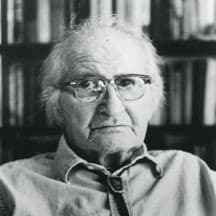
Henry Roth was an American novelist and short story writer who found success later in life after his 1934 novel Call It Sleep was reissued in paperback in 1964.







