“It was not very ladylike to slide down the straw stack, but it was a lot of fun. And Caddie had a way of forgetting to be ladylike when there was fun to be had.”
— Describing Caddie's tomboy nature and love for adventure.

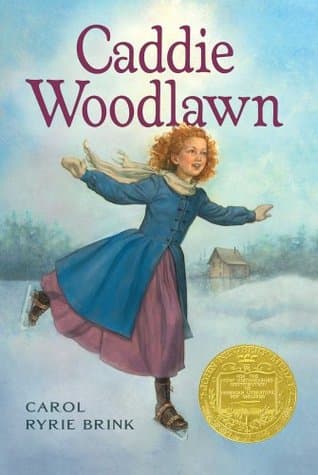
Carol Ryrie Brink (1935)
Genre
Children's / Historical Fiction / Young Adult
Reading Time
240 min
Key Themes
See below
Sign in to track this book
In 1860s Wisconsin, a tomboy named Caddie Woodlawn, based on a true story, has childhood adventures, dares her brothers, and befriends local Native Americans, all while defying the rigid expectations for girls of her time.
The story starts in 1864 in Dunnville, Wisconsin. It introduces eleven-year-old Caroline Augusta 'Caddie' Woodlawn, a tomboy who prefers being with her brothers, Tom and Warren, to her more 'ladylike' sisters, Clara and Minnie. Caddie, Tom, and Warren often play pranks and go on adventures. This often frustrates their refined Bostonian mother and quietly pleases their inventor father. They live on a frontier farm. Caddie's wild nature often clashes with the expectations for girls of her time. Early on, Caddie's adventurous spirit is shown through things like walking on a log over the Red Wing River and her dislike for house chores.
Caddie, Tom, and Warren go to the small, one-room schoolhouse in Dunnville. Caddie's mischievous nature is also seen at school, where she and her brothers play pranks on the new, easily flustered schoolmaster, Mr. Conklin. One prank involves Caddie tying the bell rope to a cow. Later, the community is scared when rumors of an Indian uprising spread, after recent conflicts in Minnesota. The settlers, including the Woodlawns' neighbors, gather at the schoolhouse for protection. They bring their valuables and guns. Tension is high as fear and prejudice are strong among the white settlers, which is different from Caddie's more open mind.
Amidst the growing fear, Caddie remembers her father's words about not judging all Indians by what a few do. She decides to act. She secretly leaves the schoolhouse and rides her pony, Betsy, through the night to warn her Ojibwa friend, John, and his tribe about the armed settlers. Her journey is dangerous and scary, but she keeps going. Caddie reaches the Indian camp and gives her message. She explains the settlers' fear and their readiness to fight. Her brave act of communication helps calm the situation. It prevents a possible fight between the settlers and the Ojibwa, who had no hostile plans.
After giving her warning, Caddie stays the night in the Ojibwa camp. She is treated with kindness and respect. She shares a meal and sees their customs. She learns more about their peaceful way of life and their connection to nature. The next morning, she rides back to her family, bringing a peace pipe from John as a sign of goodwill. This experience helps Caddie understand and feel for the Ojibwa people more. It strengthens her belief that they should not be feared but understood. Her father is proud of her courage and wisdom. Her mother is relieved but still worried about Caddie's safety.
Life on the frontier continues with daily chores and exciting adventures. Caddie and her brothers keep playing their noisy games, often doing daring things and having small accidents. A highlight is their trip to the circus in Menomonie, a rare and exciting event for the children. Caddie, Tom, and Warren sneak under the tent to watch the show, amazed by the animals and performers. Another event is their trip down the river on a raft. They face challenges and enjoy the freedom of the wilderness. These experiences further shape Caddie's independent and adventurous spirit.
The Woodlawn house changes when Cousin Annabelle arrives from Boston. Annabelle is everything Caddie is not: delicate, proper, and focused on cleanliness and manners. Her visit shows how 'wild' Caddie's habits are, making Caddie feel self-conscious and misunderstood. Annabelle is at first shocked by frontier life and Caddie's rough ways, especially when Caddie and her brothers play a prank with a skunk. This difference between the refined East and the untamed West shows Caddie's unique character and the challenges she faces in being herself while also meeting social expectations.
Caddie's mother worries about her daughter's lack of domestic skills. She starts to insist that Caddie spend more time indoors learning to sew, cook, and manage a household. Caddie finds these tasks boring and frustrating. She often makes mistakes or finds ways to escape. However, through these experiences, and by watching her mother's quiet strength, Caddie starts to appreciate these skills and her mother's role in the family. Despite trying to be 'ladylike,' Caddie still finds time for pranks, like painting her dog Nero red, which upsets her mother.
A sad event happens when the family's dog, Nero, gets sick and dies. Caddie is very affected by Nero's death. She experiences deep sadness for the first time. This loss teaches her about how short life is and the pain of saying goodbye. Her father helps her understand the cycle of life and death, offering comfort. This experience is important in Caddie's emotional growth. It shows her ability to feel deeply and have empathy, adding to her growing maturity beyond just her adventurous spirit.
Caddie celebrates her eleventh birthday. This age brings more pressure to fit social expectations for young women. During this time, the Woodlawn family gets a letter from Boston, which leads to a serious talk about their future. Her father, born in Boston, says his family wants them to return East. There, Caddie and her sisters could get a more 'proper' education and upbringing. This idea causes a lot of upset in the family, especially for Caddie. She cannot imagine leaving her Wisconsin frontier and her freedom. The children's opinions are heard, but the final decision is up to the parents.
After much thought and discussion, the Woodlawn family decides to stay in Wisconsin. Caddie's father watches his children's love for their frontier life. He sees the value of the independence and strength they have gained. He realizes their current home is where they belong. He says that Caddie, despite her 'wild' ways, is growing into a remarkable young woman. He believes the frontier has changed them all in good ways. This decision brings great relief and joy to Caddie. It makes her feel secure in her belonging and her unique identity in the world.
The Protagonist
Caddie evolves from a purely wild tomboy to a young woman who begins to understand the value of both her adventurous spirit and the responsibilities of growing up, embracing her unique identity.
The Supporting
He remains a consistent source of wisdom and support for Caddie, ultimately making the decision to keep his family on the frontier.
The Supporting
She maintains her refined nature but learns to accept and appreciate Caddie's unique spirit, finding a balance between her expectations and her daughter's true self.
The Supporting
He remains a constant, adventurous companion to Caddie, embodying the spirit of frontier childhood.
The Supporting
He remains a loyal follower and participant in Caddie's adventures, growing alongside his siblings.
The Supporting
She remains a more traditional and proper figure, highlighting Caddie's unique path.
The Supporting
She remains a younger sister figure, mostly observing the family's adventures.
The Supporting
She arrives as a symbol of rigid societal expectations and leaves with a slightly broadened perspective on life.
The Supporting
He serves as a consistent, trustworthy friend to Caddie, facilitating cross-cultural understanding.
Caddie's journey to define herself amid different expectations is the main theme. She struggles with social pressure to become a 'lady' and her desire for freedom and adventure. Her father's wisdom and her experiences, like riding to warn the Indians, help her see that her unique spirit is a strength. Cousin Annabelle's visit further shows this inner conflict. Caddie questions where she belongs and who she wants to be. In the end, Caddie accepts who she is, finding she can be both adventurous and responsible.
“"There would be a time for everything, a time for play and a time for work, a time for wildness and a time for rest, a time for being a tomboy and a time for being a lady."”
Frontier life in 1860s Wisconsin, which is hard but freeing, sets the stage for Caddie's growth. The challenges of farming, the close community, the threat of the wilderness, and simple joys all help her develop. Caddie's adventures, from walking on logs to riding through the night, happen because of her environment. The book shows how the frontier builds strength, independence, and a connection to nature. These things shape Caddie into a capable and empathetic person. Her coming-of-age is linked to the experiences and values of this historical setting.
“"Life on the frontier was never dull, not with six children and a father who was an inventor and a mother who had come from Boston and was determined to make a home in the wilderness."”
The book shows prejudice through the white settlers' fear and distrust of the Ojibwa Indians. Rumors of an uprising cause widespread fear, showing deep biases. Caddie challenges this prejudice through her friendship with John and her brave act of warning the tribe. Her father's lessons about judging individuals, not groups, stress empathy and understanding. Caddie's actions show how individual courage and communication can break down barriers and stop conflict, promoting a kinder view.
“"Some folks are always wanting to fight the Indians. They don't know them, that's all."”
The Woodlawn family is central to the story. They provide both challenges and support for Caddie. The dynamics between the noisy siblings, the parents' different personalities, and their efforts to build a life on the frontier show how important family bonds are. Despite her mother trying to 'tame' her, Caddie always feels loved and understood, especially by her father. The decision about returning to Boston highlights the family's deep roots in Wisconsin and their shared identity. It ultimately confirms their sense of belonging to their frontier home and to each other.
“"We're staying, children. This is home. And it's a good home."”
A spirited young girl who challenges traditional gender roles of her era.
Caddie Woodlawn embodies the classic tomboy archetype, a literary device used to explore themes of identity, freedom, and societal expectations. Her preference for outdoor adventures, rough-and-tumble games, and male company over domestic tasks immediately sets her apart from conventional female characters of her time. This device allows the author to critique rigid gender roles and celebrate a different kind of strength and spirit in a young girl. Caddie's tomboy nature is central to her conflicts and triumphs, particularly in her interactions with her mother and Cousin Annabelle, and her eventual acceptance of her unique identity.
The specific time and place shape characters, conflicts, and themes.
The historical setting of the Wisconsin frontier in the 1860s is more than just a backdrop; it is a crucial plot device that actively shapes the characters and narrative. The challenges of pioneering life, the proximity to Native American tribes, the lack of modern conveniences, and the social norms of the era directly influence Caddie's adventures, her family's struggles, and the community's fears. This setting provides the context for the Indian scare, the need for self-reliance, and the stark contrast between Caddie's wildness and the expectations of 'civilized' society, making the story a vivid piece of historical fiction.
The story follows the protagonist's journey from childhood innocence to a deeper understanding of self and the world.
Caddie Woodlawn is a quintessential coming-of-age story, focusing on Caddie's psychological and moral growth as she transitions from childhood to adolescence. The narrative tracks her development from a purely mischievous and independent tomboy to a young girl who begins to understand empathy, responsibility, and the complexities of human relationships. Key events like the Indian scare, the death of Nero, and the family's decision about Boston all serve as milestones in her journey, forcing her to confront difficult realities and mature. This device allows readers to witness Caddie's transformation and self-discovery.
Characters whose contrasting traits highlight the protagonist's qualities.
Cousin Annabelle and Caddie's older sister, Clara, serve as foil characters to Caddie. Annabelle, with her extreme primness, Bostonian airs, and aversion to anything rustic, starkly contrasts Caddie's wildness and comfort with frontier life. Clara, while Caddie's sister, represents a more conventional path for girls, often scolding Caddie for her unladylike behavior. These characters highlight Caddie's unique spirit, independence, and the societal pressures she faces, making her choices and struggles more pronounced and allowing the reader to better understand Caddie's internal conflicts and her eventual embrace of her authentic self.
“It was not very ladylike to slide down the straw stack, but it was a lot of fun. And Caddie had a way of forgetting to be ladylike when there was fun to be had.”
— Describing Caddie's tomboy nature and love for adventure.
“The Indians were coming! This thought, which would have filled most children with terror, only made Caddie's heart beat faster with a kind of wild excitement.”
— Caddie's reaction to the news of an impending Indian visit, highlighting her bravery.
“Being a pioneer was a lot of hard work, but it was also a lot of fun, and Caddie wouldn't have traded it for anything.”
— Caddie's overall perspective on her life on the Wisconsin frontier.
“You are a little lady, Caddie, and you must learn to behave like one. But don't ever let anyone take away your spirit.”
— Caddie's father giving her advice about growing up and maintaining her individuality.
“Caddie knew that she was a part of something big and important, something that was growing and changing all the time.”
— Caddie reflecting on her place in the developing American frontier.
“The woods were full of secrets, and Caddie knew them all.”
— Highlighting Caddie's intimate knowledge and comfort with the natural world around her.
“It was a good thing to be alive, a good thing to be Caddie Woodlawn, a good thing to be living on the frontier.”
— Caddie's simple yet profound appreciation for her life and circumstances.
“There was a time for being wild and a time for being quiet, and Caddie was learning to know the difference.”
— Caddie's gradual maturation and understanding of appropriate behavior.
“Sometimes the best way to get along with folks was to let them think they were right, even when you knew they weren't.”
— Caddie's pragmatic approach to social interactions, particularly with adults.
“The river was like a friend, always there, always flowing, always ready for a swim or a boat ride.”
— Caddie's connection to the natural landscape, especially the river.
“No matter how much trouble she got into, Caddie always knew her father would understand.”
— Caddie's deep trust and bond with her father.
“Life wasn't always easy, but it was always interesting.”
— A summary of Caddie's adventurous and often challenging life on the frontier.
“She wouldn't trade her patched dresses and bare feet for all the fine silks and slippers in the world.”
— Caddie's contentment with her simple, free life over the constraints of 'ladylike' society.
“The world was a wonderful place, full of things to see and do, and Caddie intended to see and do as much of it as she could.”
— Caddie's adventurous spirit and eagerness to experience life fully.
Ready to see how well you understood this book? Take our interactive quiz with 10 questions.

Carol Ryrie Brink was an American author celebrated for her children's literature. She is best known for her Newbery Medal-winning novel, Caddie Woodlawn, which vividly portrays pioneer life in Wisconsin. Brink's writing often focused on historical settings and strong female protagonists, capturing the spirit of adventure and resilience.

Dan Gemeinhart
4.5

Kate O'Hearn
4.4

Jeanne Birdsall
4.4

Jen Wang
4.4

Wendelin Van Draanen
4.3

John Marsden
4.3

Chris Van Allsburg
4.3

Jennifer A. Nielsen
4.2