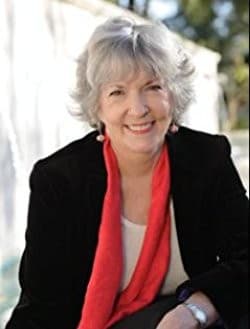
Biography coming soon.

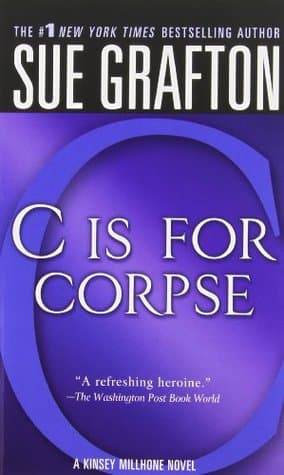
Sue Grafton (1992)
Genre
Thriller / Mystery
Reading Time
12 Minutes
Key Themes
See below
Sign in to track this book
Kinsey Millhone uncovers a deadly secret when investigating the attempted murder of a man with amnesia, only to find the case escalates when the victim is killed and the danger turns towards her.
Kinsey Millhone, a private investigator in Santa Teresa, California, is hired by Bobby Callahan, a 23-year-old who recently survived a serious car accident. Bobby thinks the crash was no accident and that someone purposely drove his Porsche off a bridge. He has partial amnesia, remembering little about the event or the weeks before it. He recalls a name, 'Blackman,' and a red address book he gave to someone for safekeeping, but he cannot remember who. Bobby fears for his life and offers Kinsey a large fee to investigate, convinced he is still in danger. Kinsey takes the case, sensing Bobby's genuine fear despite the vague information.
Just three days after hiring Kinsey, Bobby Callahan dies in a second, more definitive car accident. This time, his vehicle explodes after going off the road. Police initially call it an accident, possibly due to a faulty gas tank, but Kinsey immediately suspects murder designed to silence him. The timing, so soon after his first 'accident' and his expressed fears, strengthens her belief that someone wanted him dead. This tragic event deepens Kinsey's commitment to the case, changing it from an investigation into an attempted murder to a full murder inquiry with few leads.
With Bobby dead, Kinsey's main lead is the red address book he mentioned. She begins by interviewing Bobby's family: his overbearing mother, Caroline, and his estranged, wheelchair-bound father, John. Neither seems to know anything about the address book or Bobby's recent activities. Kinsey also talks with Bobby's girlfriend, Dolly, who is equally unhelpful. She checks Bobby's apartment and his parents' house, but the address book is nowhere to be found. Kinsey believes the book holds vital information about Bobby's life, his connections, and possibly his killer, making its recovery essential to her investigation.
Kinsey's investigation leads her to Darcy Callahan, Bobby's older sister. Darcy is complex, seemingly detached but with an underlying intensity. Kinsey learns that 'Blackman' was a childhood nickname for Darcy, from a game they played. This links Darcy directly to Bobby's last clear memory before his first accident. Kinsey learns Darcy and Bobby had a complicated relationship, marked by both affection and rivalry. Darcy admits seeing Bobby recently but denies knowing about the address book or his specific fears, though Kinsey senses she is holding back.
As Kinsey digs deeper, she uncovers the troubled history of the Callahan family. John Callahan, Bobby's father, was a successful architect whose career ended due to a debilitating accident, leaving him bitter. Caroline, Bobby's mother, appears controlling and obsessed with maintaining a facade of wealth. Kinsey learns the family's finances are not as stable as they appear, with significant debts. This financial strain, along with emotional complexities and resentments within the family, suggests motives, hinting that Bobby's death might be linked to family secrets or inheritances.
Kinsey discovers Bobby was set to inherit a large sum of money when he turned 25, from a trust established by his wealthy grandmother. His death before this age means the inheritance would go to other family members, specifically his parents and sister. This financial motive immediately becomes a key line of inquiry for Kinsey. She examines the will and trust fund details, realizing Bobby's early death significantly alters the family's financial future, potentially easing their mounting debts. This points to the possibility that Bobby's murder was for money, making his immediate family prime suspects.
Kinsey scrutinizes Dolly, Bobby's girlfriend, who first seemed a minor figure. Dolly is somewhat flighty and self-absorbed. Kinsey learns Dolly knew about Bobby's impending inheritance and their plans to marry once he received it. Kinsey questions Dolly about the address book and Bobby's last days. Dolly maintains her ignorance but shows a strange mix of grief and opportunism, more concerned for her own future than genuine sorrow for Bobby. Kinsey suspects Dolly might be withholding information or is somehow involved, possibly as an unwitting pawn or a complicit partner.
As Kinsey continues her investigation, she finds that key documents related to Bobby's trust fund and his grandmother's will are missing. She learns Bobby had been trying to access information about his inheritance, suggesting he might have uncovered something suspicious. This strengthens Kinsey's belief that Bobby's death is directly linked to his financial future and that someone was trying to prevent him from taking control of his inheritance or revealing a secret. The missing documents suggest a deliberate cover-up and point to someone within the family or close to their legal affairs.
Kinsey confronts Darcy again, pressing her harder about the address book and her knowledge of Bobby's worries. Under Kinsey's persistent questioning, Darcy finally admits Bobby had entrusted the red address book to her. She reveals Bobby suspected his family was trying to steal his inheritance and had been gathering evidence. Darcy also confesses she had been trying to protect Bobby and, after his death, feared for her own safety. This confession adds a new dimension to the case, confirming the family's deep dysfunction and the sinister plot around Bobby's inheritance.
Kinsey's investigation uncovers the truth: John Callahan, Bobby's father, was not as incapacitated as he appeared. He had been faking a more severe disability to gain sympathy and control family finances. It is revealed that John, with Caroline, planned to prevent Bobby from inheriting his money, as it would expose their financial mismanagement and a scheme to defraud the trust. They had been slowly taking funds, and Bobby's upcoming 25th birthday threatened to expose their deception. John, driven by greed and a desire for control, was the mastermind behind Bobby's 'accidents.'
Kinsey reconstructs the events of Bobby's first 'accident.' She discovers John Callahan, faking his disability, had deliberately forced Bobby's car off the road. The intent was not necessarily to kill him but to cause an accident that would either scare him into submission or incapacitate him enough to delay his access to the inheritance. Bobby's amnesia was an unexpected result, but it bought John time. This reveals John as a cunning and ruthless individual, willing to harm his own son for money.
After the first failed attempt and Bobby's hiring of Kinsey, John Callahan realized he needed to act decisively. Kinsey discovers John, using his architectural knowledge and access to Bobby's car, tampered with the vehicle, specifically the fuel lines, to ensure a fatal explosion in the second 'accident.' This careful planning shows John's cold determination to eliminate Bobby and secure the inheritance for himself and Caroline. The second 'accident' was a calculated murder, designed to look like a tragic mishap, permanently silencing Bobby and covering up the family's financial wrongdoing.
Armed with all the evidence, Kinsey confronts John Callahan. Initially, he maintains his innocent facade, but Kinsey meticulously presents the facts: his feigned disability, the financial motive, the car tampering, and Darcy's testimony. Cornered, John breaks down and confesses to orchestrating both 'accidents' and Bobby's murder. He reveals his desperation to maintain their lifestyle and prevent Bobby from exposing their fraud. The case ends with John's arrest, bringing a grim closure to Bobby Callahan's death and exposing the dark secrets within the seemingly respectable family.
Afterward, the Callahan family is shattered. John Callahan is arrested and faces murder charges. Caroline, Bobby's mother, must deal with the truth about her husband and the exposure of their financial schemes. Darcy, who held onto the address book and suspected foul play, deals with the trauma of losing her brother and the betrayal by her parents. The family's public image and financial situation are ruined. Kinsey reflects on the tragic results of greed and deception, and the lasting impact on those left behind, even as justice is served.
The Protagonist
Kinsey evolves from a skeptical investigator into a determined avenger for her deceased client, deepening her commitment to uncovering truth at any cost.
The Victim/Supporting
Bobby's brief appearance and subsequent death transform him from a client seeking answers into the central mystery Kinsey must solve.
The Antagonist
Initially appearing as a helpless victim of circumstance, John is revealed to be the calculating and ruthless architect of his son's murder, driven by financial desperation.
The Supporting
Caroline maintains a facade of normalcy and grief, slowly revealing her complicity in the family's financial deceptions and her husband's crimes.
The Supporting
Darcy transitions from a secretive and seemingly indifferent sister to a reluctant informant, driven by a sense of justice and fear for her own safety.
The Supporting
Dolly remains largely static, her primary role being a potential red herring and a demonstration of the casual opportunism surrounding Bobby's wealth.
The Supporting
Henry remains a consistent source of support and normalcy for Kinsey, a stable anchor in her turbulent professional life.
The novel explores how greed corrupts individuals and families, leading to extreme violence and deception. The Callahan family's financial struggles and the lure of Bobby's inheritance drive John Callahan to murder his own son. This theme highlights the destructive power of avarice, showing how it can dismantle family bonds and moral integrity, turning love and loyalty into calculated self-interest. The pursuit of wealth at any cost corrodes humanity.
“Money, it turned out, was the root of all evil and the motive for murder.”
The Callahan family is an example of deep dysfunction, where appearances are carefully maintained while dark secrets fester. The strained relationships, manipulation, and lack of genuine affection within the family contribute directly to the tragic events. The theme illustrates how a family's inability to communicate honestly and address underlying issues can create a toxic environment, leading to betrayal and violence. The novel peels back the layers of a seemingly respectable family to reveal deceit and resentment.
“Every family has its secrets, but some are deadlier than others.”
Kinsey Millhone's commitment to solving Bobby Callahan's murder, even after his death, embodies justice. She is driven not by personal gain, but by a moral imperative to ensure the killer is held accountable. This theme explores the personal cost of pursuing justice against powerful and deceitful adversaries. For Kinsey, bringing the killer to light is a form of vengeance for her client, ensuring his death was not in vain and that the perpetrators face consequences for their acts.
“I don't quit until I get to the bottom of things. Especially when someone's been murdered.”
A central theme is the contrast between how things appear and the reality beneath the surface. The Callahan family presents an image of wealth and respectability, but Kinsey uncovers financial ruin, manipulation, and murder. John Callahan's feigned disability is a key part of this theme, as he uses a false appearance to deceive everyone. The novel constantly challenges the reader to look beyond initial impressions and question what is truly happening, highlighting the dangers of superficial judgments.
“People are rarely what they seem on the surface. That's what makes my job interesting, and dangerous.”
A crucial plot device that complicates the initial investigation.
Bobby Callahan's amnesia after his first 'accident' serves as a critical plot device. It prevents him from providing Kinsey with clear, actionable information, thereby increasing the mystery and difficulty of the case. The amnesia initially protects the killer by obscuring Bobby's memories of the events leading up to the crash and the identity of his assailant. It forces Kinsey to start almost from scratch, relying on fragmented clues and indirect investigation, building suspense and prolonging the discovery of the truth.
A MacGuffin that drives Kinsey's initial search.
Bobby's mention of a red address book, which he entrusted to 'Blackman' (Darcy), acts as a significant MacGuffin. While the book itself is never fully revealed to contain a smoking gun, the search for it and the eventual revelation of its whereabouts drive much of Kinsey's early investigation. It is the key to unlocking Darcy's trust and ultimately revealing Bobby's suspicions about his family. The address book symbolizes the hidden information Bobby was trying to protect and becomes a tangible goal for Kinsey to pursue.
A deceptive facade used by the antagonist to manipulate others.
John Callahan's feigned or exaggerated disability is a powerful plot device that misdirects Kinsey and the reader. It allows him to appear harmless, incapacitated, and therefore beyond suspicion, while secretly orchestrating the murder of his son. This deception highlights the theme of appearance versus reality and adds a layer of cunning to the antagonist's character. The eventual revelation of his true physical capabilities is a shocking twist that underscores his manipulative nature and ruthless determination.
The financial incentive that drives the central crime.
The substantial inheritance Bobby Callahan is set to receive upon turning 25 serves as the primary motive for his murder. This classic plot device immediately establishes a clear, tangible reason for the crime, directing Kinsey's investigation towards the family's financial situation and potential beneficiaries. It provides a strong, understandable incentive for the killer, grounding the complex web of family dysfunction in a concrete, relatable desire for wealth and security.
Ready to see how well you understood this book? Take our interactive quiz with 10 questions.
Biography coming soon.







