“Perhaps the past is not a country we leave, but a country that leaves us.”
— Reflecting on the nature of memory and change, particularly after significant historical events.

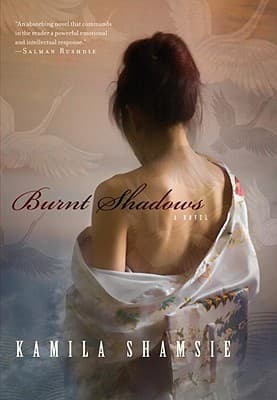
Kamila Shamsie (2009)
Genre
Literary Fiction / Historical Fiction
Reading Time
10-12 hours
Key Themes
See below
Sign in to track this book
After the Nagasaki bombing, a woman's life unfolds through love, betrayal, and the lasting marks of history, linking families across continents and generations through 20th-century upheavals.
On August 9, 1945, in Nagasaki, twenty-one-year-old Hiroko Tanaka prepares for her wedding to Konrad Weiss, a German national. As she stands on her veranda in a kimono with three black cranes, the atomic bomb drops. The blast destroys the city and kills Konrad instantly. Hiroko is gravely injured, surviving with severe burns on her back in the shape of the kimono's cranes. This is a lasting physical mark of her trauma. A kind doctor cares for her, but the psychological wounds of losing everyone and everything she knew, including her fiancé, leave her isolated in a changed world.
Two years after the bombing, Hiroko travels to Delhi, India, for a fresh start. She carries Konrad's last letter, which mentions his half-sister, Elizabeth Burton. Hiroko finds Elizabeth, a British woman married to James Burton, a colonial officer. Elizabeth welcomes Hiroko into their home. Hiroko also meets Sajjad Ashraf, James's educated Indian employee. Sajjad begins teaching Hiroko Urdu, and a quiet bond forms between them. This time marks Hiroko's tentative return to life. She navigates a new culture and slowly builds connections as India's partition approaches.
As India's Partition approaches, creating Pakistan, political tensions rise. James Burton helps manage the transition, and the Burtons, along with Hiroko and Sajjad, move to Karachi, Pakistan. Amidst the chaos and displacement, Hiroko and Sajjad's friendship grows into love. They marry and start a new life together in Pakistan, finding comfort and strength in each other. Their marriage is a cross-cultural bond formed during historical upheaval. They both seek to build a future in a newly independent nation while carrying their pasts.
Decades later, in Karachi, Hiroko and Sajjad have a son, Raza, now a young man. Raza is intelligent and passionate, grappling with his identity and Pakistan's political situation. Elizabeth and James Burton, now retired, stay connected with the Ashraf family, often visiting or writing. These visits show the lasting, though sometimes complicated, ties between the families. The story explores how the historical events that shaped Hiroko and Sajjad's lives continue to influence Raza's upbringing and worldview, subtly shaping relationships between generations.
Raza Ashraf eventually moves to New York for work, pursuing a career in finance. After the September 11th attacks, he feels growing disillusionment and anger with Western foreign policy and the 'War on Terror.' He feels increasingly alienated and targeted because of his Pakistani heritage. This marks a significant change in Raza's character. He becomes more politically radicalized, questioning his place in the world and seeking to understand global conflict's root causes, which eventually leads him down a dangerous path.
Harry Burton, Elizabeth and James's son, has taken a different path, becoming a high-ranking CIA operative. His work places him at the forefront of the 'War on Terror.' For a long time, his parents do not know that Harry's professional life involves complex and morally ambiguous operations. His journey highlights the generational divide and the vastly different ways the children of the original characters navigate the global political landscape. Harry's actions eventually intersect dramatically with Raza's.
The story moves to Afghanistan immediately after 9/11. Raza, driven by disillusionment and radicalized beliefs, travels to Afghanistan. There, he becomes involved with a militant group, working as a translator. At the same time, Harry Burton is also in Afghanistan, leading a covert CIA operation. Their paths, shaped by their families' intertwined histories and current global conflicts, are set to collide in this volatile region. This convergence shows how personal histories link to larger geopolitical events.
In Afghanistan, Harry and Raza eventually meet. The encounter is heavy with the weight of their families' decades-long connection, now strained by opposing beliefs and loyalties. Harry recognizes Raza and makes a decision with devastating consequences. He betrays Raza, leading to his capture by American forces, believing it is the right thing to do for national security, despite their shared history. This act of betrayal shatters the long-standing bonds between the Burton and Ashraf families, showing war's tragic impact on personal relationships.
Back in Pakistan, Hiroko is heartbroken and desperate after learning of Raza's disappearance in Afghanistan. She refuses to believe he is a terrorist and begins a tireless search for him, seeking answers and justice. Her search leads her to confront the Burtons, especially Elizabeth, demanding to know what Harry might know or have done. Hiroko channels her past trauma into fierce maternal protection, showing her unwavering love and resilience in the face of deep loss and uncertainty, even as she grapples with the possibility of betrayal from those she once considered family.
The novel ends with Raza imprisoned in a US detention facility, awaiting transfer to Guantanamo Bay, his future uncertain. Hiroko continues her relentless fight for his freedom, appealing to anyone who will listen, including the Burtons. The once-close families are broken by Harry's actions and Raza's fate. The ending leaves many questions about justice, loyalty, and the devastating, long-term effects of political conflicts on individual lives and intergenerational relationships. The story comes full circle, from Nagasaki's ashes to today's global conflict complexities.
The Protagonist
From a young woman in love, she transforms into a resilient survivor, a loving wife and mother, and ultimately a tireless advocate for her son, demonstrating profound strength in the face of repeated loss and injustice.
The Supporting
From a thoughtful employee, he becomes a devoted husband and father, providing stability and love, embodying the resilience of ordinary people caught in extraordinary historical shifts.
The Protagonist/Tragic Figure
From an ambitious young man, he becomes disillusioned and radicalized by global events, leading to his capture and imprisonment, representing the collateral damage of political conflict.
The Supporting
From a colonial wife offering hospitality, she evolves into a conflicted friend and mother, grappling with the moral implications of her son's actions and the shattering of her long-standing connections.
The Supporting
As a colonial officer, he navigates political transitions, then lives a life of retirement, his detached pragmatism contrasting with the deeply personal struggles of the other characters, particularly his son's.
The Antagonist/Supporting
From a seemingly minor character, he emerges as a pivotal antagonist whose betrayal of Raza shatters the intergenerational bonds, highlighting the moral compromises of the 'War on Terror'.
The Mentioned/Catalyst
His brief appearance and tragic death serve as the inciting incident, forever shaping Hiroko's life and setting in motion the chain of events that connect the families across generations.
The novel traces how historical events, especially the Nagasaki bombing, the Partition of India, and 9/11, leave lasting marks on individuals and shape their lives across generations. Hiroko's physical burns remind her of Nagasaki, influencing her resilience and her ability to love and lose. The Partition forces Hiroko and Sajjad to build a new life, and its legacy informs Raza's identity. 9/11 and the War on Terror then directly lead to Raza's radicalization and capture, showing how past conflicts are never truly over, but continue to echo through time, affecting personal relationships and global politics.
“The past was not a country she had left, but a country that had followed her.”
Characters in *Burnt Shadows* constantly grapple with identity amid displacement and cross-cultural relationships. Hiroko, a Japanese woman, finds a new home and identity in Pakistan, learning Urdu and raising a Pakistani son. Raza, a Pakistani man, feels alienated in post-9/11 New York, leading to a crisis of belonging that pushes him toward radicalism. The novel explores how nationality, ethnicity, and personal history combine to form complex identities, and how the search for belonging can lead to both deep connection and devastating conflict in a world both intertwined and divided.
“He was a man who belonged to no nation, only to the idea of justice.”
At its core, the novel explores complex bonds of love and loyalty and the devastating effects of betrayal. The deep love between Hiroko and Sajjad is constant amid chaos. The long friendship between Hiroko and Elizabeth, formed through Konrad, is ultimately tested and shattered by Harry's betrayal of Raza. This betrayal, driven by national allegiance over personal history, highlights war's moral ambiguities and the painful choices individuals make. The story questions whether family loyalty can survive national duty and how betrayal can irrevocably change lives.
“The greatest betrayal is not of a country, but of a trust.”
The novel suggests that violence often repeats itself, beginning with the atomic bomb and ending with the 'War on Terror.' Each act of violence, whether personal or global, seems to create more conflict and a desire for revenge. The Nagasaki bombing leads to Hiroko's personal devastation, the Partition creates new national tensions, and 9/11 ignites a global conflict that traps Raza. The story shows how violence, once started, has a ripple effect, creating new victims and continuing a chain of events difficult to break, even across generations and continents.
“Every war plants the seeds of the next.”
Memory shapes the characters' understanding of themselves and the world. Hiroko's memories of Konrad and Nagasaki are central to her identity. The novel itself acts as a form of collective memory, connecting different historical events and personal stories. The characters' attempts to tell their stories, or to understand others' stories, are vital to their survival and their search for meaning. The novel suggests that by remembering and sharing these narratives, there is a possibility, however small, of learning from the past and perhaps breaking cycles of violence.
“How do you tell a story that has no end?”
A symbolic garment that becomes a physical manifestation of trauma.
The kimono Hiroko wears on the day of the Nagasaki bombing, adorned with three black cranes, becomes a potent symbol. The cranes, traditionally symbols of longevity and good fortune, are burnt into her back by the atomic blast, transforming into permanent, painful shadows. This device physically embodies the trauma of war, turning a beautiful cultural garment into an indelible scar. It represents the way historical events can permanently alter and mark individuals, turning symbols of beauty into reminders of destruction, and linking Hiroko's personal body to the larger historical catastrophe.
Family ties that span decades and continents, binding characters across historical events.
The novel uses the interwoven family histories of the Tanakas, Ashrafs, and Burtons as a central structural device. The initial connection through Konrad Weiss's half-sister Elizabeth allows Hiroko to find a new life. These relationships, sometimes friendly, sometimes strained, allow the narrative to explore the long-term impact of historical events on individuals and families. The device highlights how personal lives are intertwined with global politics, and how choices made by one generation can have profound, often unforeseen, consequences for the next, ultimately leading to a tragic collision of fates.
The constant movement of characters across different nations and cultures.
The narrative's structure is defined by the geographical displacement of its characters: Hiroko from Japan to India to Pakistan; the Burtons from England to India to Pakistan and back; Raza from Pakistan to New York to Afghanistan. This device emphasizes the themes of identity, belonging, and the impact of global conflicts. Each move forces characters to adapt to new environments and cultures, highlighting their resilience but also the profound sense of loss and alienation that can accompany such transitions. It underscores the idea that home is not a fixed place but a constantly shifting concept.
Konrad's letter that provides the initial link between Hiroko and Elizabeth.
Konrad Weiss's last letter, mentioning his half-sister Elizabeth, serves as a crucial plot device. It is the tangible link that allows Hiroko to find Elizabeth in Delhi, initiating the long and complex relationship between the Tanaka/Ashraf and Burton families. The letter represents the enduring power of human connection, even across death and continents. It is a symbol of hope and a new beginning for Hiroko, and its contents set in motion the entire chain of events that will span decades and ultimately lead to both profound connection and devastating betrayal.
“Perhaps the past is not a country we leave, but a country that leaves us.”
— Reflecting on the nature of memory and change, particularly after significant historical events.
“The greatest weapon against fear is to know it, to understand its contours, to call it by its proper name.”
— Exploring how characters confront their anxieties and the political climate.
“History is not what happened, but what is remembered.”
— A recurring theme about the subjective nature of historical narrative and personal recollection.
“Sometimes the only way to forgive is to understand that the person who hurt you was also hurt.”
— Characters grappling with the pain inflicted by others and seeking reconciliation.
“We are all made of stories, and the stories we tell ourselves are the most powerful of all.”
— Highlighting the role of personal narratives in shaping identity and reality.
“Love, it turned out, was not an absolute. It was a shifting, changing thing, shaped by circumstance and time.”
— A character's realization about the complexities and impermanence of love amidst turmoil.
“The world was full of people who had lost things: homes, loved ones, innocence. And the world kept turning.”
— A somber observation on loss and the relentless march of time after devastating events.
“There are some things that cannot be burned away, even by the fiercest fire.”
— Referring to deep-seated memories, beliefs, or the human spirit in the face of destruction.
“Every act of violence leaves its own particular shadow, long and dark.”
— Reflecting on the lingering effects and consequences of violent acts across generations.
“To forget was a luxury not everyone could afford.”
— Characters burdened by their pasts, unable or unwilling to move on from traumatic experiences.
“The truth was a slippery thing, always changing shape depending on who was holding it.”
— Examining the subjective nature of truth and how it's influenced by individual perspectives.
“Sometimes, silence was the loudest sound of all.”
— Describing moments of profound unspoken emotion or tension between characters.
“The past was a stubborn guest, refusing to leave even when uninvited.”
— A character's struggle with persistent memories and the inescapable influence of history.
“Grief was not a linear path, but a tangled forest where you could get lost at any turn.”
— Describing the complex and unpredictable process of grieving a loved one.
Ready to see how well you understood this book? Take our interactive quiz with 10 questions.
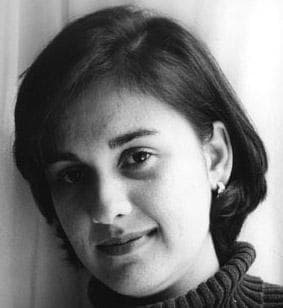
Kamila Shamsie FRSL is a Pakistani and British writer and novelist who is best known for her award-winning novel Home Fire (2017). Named on Granta magazine's list of 20 best young British writers, Shamsie has been described by The New Indian Express as "a novelist to reckon with and to look forward to." She also writes for publications including The Guardian, New Statesman, Index on Censorship and Prospect, and broadcasts on radio.







