“A good idea is like a good soup, it's never really done, you just keep adding things to it.”
— Bud reflects on how ideas evolve and improve.

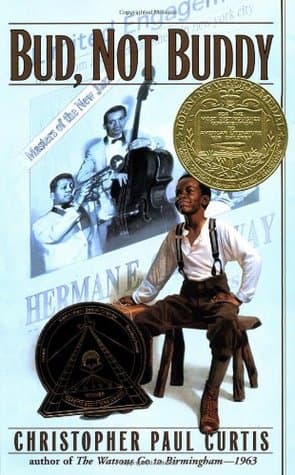
Christopher Paul Curtis (1994)
Genre
Children's / Historical Fiction / Young Adult
Reading Time
240 min
Key Themes
See below
Sign in to track this book
Armed with a suitcase of treasures and his own rulebook for life, ten-year-old Bud Caldwell escapes an orphanage in 1936 Michigan, determined to find his jazz musician father using only a handful of cryptic flyers as his guide.
Ten-year-old Bud Caldwell, an orphan in Flint, Michigan during the Great Depression, arrives at his fifth foster home, the Amoses'. He carries his most prized possessions in a tattered suitcase, including a valuable picture of his deceased mother, Angela. Upon arrival, he immediately clashes with the Amoses' twelve-year-old son, Todd, who bullies Bud and falsely accuses him of hitting him. Mrs. Amos, believing her son, locks Bud in a dark, scary shed filled with the remains of a deceased hornet's nest. Bud, convinced the shed is haunted by a vampire, endures a night of fear, eventually escaping through a window after breaking it with a rake. His escape follows his 'Rules and Things for Having a Funner Life and Making a Better Liar Out of Yourself'.
After escaping the shed, Bud decides to get revenge on Todd Amos for the abuse. He pours a bucket of warm water on Todd's sleeping face, making him wet the bed. Mrs. Amos discovers this and, enraged, threatens to send Bud to a new, even stricter foster home. Realizing he cannot stay, Bud takes his suitcase and runs away from the Amoses' house in the dead of night. He plans to head to the mission for breakfast and then begin his search for his father, a quest he has had since his mother's death four years prior. His only clue is a set of old flyers for a band called the 'Dusky Devastators of the Depression!!!!!!' featuring Herman E. Calloway.
Bud arrives at the mission just as the doors close for breakfast, realizing he's too late. Hungry and sad, he meets a kind woman who pretends he is her son, allowing him to get a meal. Afterward, Bud decides to visit the public library, a familiar place where his mother used to take him. He hopes to find information about the distance to Grand Rapids, the city mentioned on his mother's old band flyers, and possibly a map. He meets a librarian who helps him, but the librarian's well-meaning questions make Bud realize he needs to be more discreet about his plans to run away, as he doesn't want to be caught and sent back to another foster home.
Determined to reach Grand Rapids, Bud begins walking along the highway. After several hours, he meets a kind Black man named Lefty Lewis, who stops his car and offers Bud a ride. Lefty is suspicious, believing Bud might be a runaway, but Bud, using his 'Rules and Things,' makes up a story about being separated from his family and going to Grand Rapids. Lefty, a baseball player and union organizer, eventually trusts Bud and takes him to his home in Flint, where he provides Bud with food, a bath, and a comfortable bed. Lefty also calls Bud's 'father' (Herman E. Calloway) in Grand Rapids to let him know Bud is safe.
Bud spends the night at Lefty Lewis's house, where he is warmly welcomed by Lefty's daughter, Mrs. Sleet, and her children, Scott and Kim. He enjoys a delicious breakfast and the feeling of being part of a family, something he hasn't experienced since his mother died. Lefty says he called Herman E. Calloway and confirmed Bud's destination. Before dropping Bud off in Grand Rapids, Lefty takes him to a local union meeting, giving Bud a look into the struggles and solidarity of working people during the Depression. Lefty also gives Bud a sandwich and some money, ensuring he won't be hungry.
Lefty Lewis drops Bud off in Grand Rapids, right in front of 'The Log Cabin,' the club where Herman E. Calloway and his band, the 'Dusky Devastators of the Depression!!!!!!', are performing. Bud cautiously enters the club, which is dark and filled with people. He introduces himself to the band members, who are surprised by his appearance and his claim to be Herman E. Calloway's son. Herman E. Calloway, a stern and imposing man, denies any relation to Bud, believing he is a con artist or a runaway. Despite Calloway's dismissal, Bud is convinced he has found his father, based on the flyers his mother kept.
Herman E. Calloway continues to reject Bud, accusing him of lying and trying to take advantage of the band. However, the other band members, especially the singer, Miss Grace Thomas, show Bud kindness. Miss Thomas offers Bud food and tries to help him and Herman talk. The band members are interested in Bud's story and the old flyers he carries, which feature a younger Herman. Bud, firm in his belief, says that Herman is his father, citing the flyers as his mother's only clue. He refuses to leave, determined to prove his connection to Calloway.
The band members notice Bud's habit of tapping out rhythms on a saxophone case that Herman keeps locked. This case, it turns out, belonged to Herman's deceased daughter, Angela, Bud's mother. Bud recognizes a collection of smooth, gray rocks that Herman keeps, noting that his mother also had similar rocks with cities and dates painted on them. Herman, seeing the rocks, is deeply affected. He realizes that Bud's mother, Angela, was his daughter who ran away from home years ago. The rocks are a memento of their travels together, a shared secret only they would know.
The truth comes to Herman E. Calloway: Bud is his grandson. The shock and grief of discovering his daughter Angela's death, along with the joy of finding her son, overwhelm him. The band members, who had known Angela, are also deeply moved. Herman, though still gruff, begins to accept Bud. Bud is given a place to stay and a new saxophone, showing his acceptance into the band's family. He finally finds the stable, loving home he has wanted since his mother's death. He even gets a new name, 'Sleepy LaBone,' from the band, a sign of his belonging.
Bud settles into his new life with Herman E. Calloway and the band, now known as the 'Dusky Devastators of the Depression!!!!!!'. He learns to play the saxophone, experiencing the joy of music and the friendship of the musicians. While he still misses his mother, he finds comfort in being with his grandfather and the band, who treat him like family. He realizes that his journey, guided by his mother's flyers and his own rules, has led him to a place where he truly belongs. Bud's suitcase, once a symbol of his transient life, now holds the memories of his past and the promise of his future.
The Protagonist
Bud transforms from a lonely, searching orphan into a cherished member of a loving, albeit unconventional, family.
The Antagonist/Supporting
Herman evolves from a suspicious and cold figure to a loving, if still gruff, grandfather who embraces his newly found grandson.
The Mentioned
Her influence, though posthumous, guides Bud to his rightful family and brings reconciliation to her father.
The Supporting
Lefty serves as a temporary guardian and mentor, guiding Bud safely to the next stage of his quest.
The Supporting
She consistently provides emotional support and acts as a compassionate advocate for Bud within the band.
The Antagonist
Todd serves as a catalyst for Bud's flight, representing the oppressive forces Bud is trying to escape.
The Supporting
They serve as initial antagonists, their neglect and cruelty pushing Bud to embark on his quest.
The Supporting
The band transforms from a group of strangers to Bud's supportive and loving surrogate family.
The main theme of 'Bud, Not Buddy' is Bud's search for a family and a place where he truly belongs. Having lost his mother and endured harsh foster homes, Bud's journey is driven by his deep desire for connection. This theme appears in his determined pursuit of Herman E. Calloway, his temporary comfort with Lefty Lewis's family, and finally, his integration into the band. The book explores both biological family (Bud's connection to Herman) and chosen family (the band), showing that belonging can be found in unexpected places. Bud's ultimate happiness comes from finding people who care for him unconditionally.
“A family is a family, no matter what happens, and families stick together. Even if they don't want to.”
Despite facing hardship—abuse, hunger, homelessness, and the loss of his mother—Bud shows great resilience and hope. He uses his 'Rules and Things' to cope, turning difficult situations into manageable ones with wit and imagination. His determination to find his father, even when the clues are vague and the journey dangerous, shows his internal strength. Bud's ability to stay positive and keep moving forward, always believing that things will get better, shows hope in hard times.
“When one door closes, another one opens. But it's a whole lot of doors that are gonna be closing before that one opens.”
Bud often uses his imagination and storytelling (through his 'Rules and Things for Having a Funner Life and Making a Better Liar Out of Yourself') to deal with his harsh reality. He invents elaborate stories to protect himself from adults, cope with fear (like the 'vampire' shed), and keep his sense of self. His mother's legacy, too, is a story—the story of her life and the clues she left behind. The book suggests that stories, whether fictional or factual, are tools for survival, self-preservation, and understanding one's past and future. Music, a form of storytelling, also helps bring the family together.
“Because when a adult tells you something, you got to believe them. And if you don't, they get mad.”
The novel is set during the Great Depression, focusing on the experiences of African Americans during this period. Bud encounters the challenges of poverty and racial discrimination, as well as the strong sense of community and support within the Black community. Lefty Lewis's involvement in union organizing and the existence of a Black jazz band like Herman E. Calloway's show the resilience and cultural richness of African Americans. The story hints at racial segregation and the different opportunities available, providing a historical look at an important era.
“It's a good thing I got a union card, Bud. It keeps me from being a nobody.”
A list of life lessons and coping mechanisms Bud compiles.
This is a recurring literary device that provides insight into Bud's personality, resilience, and unique perspective. The 'Rules' are a collection of observations and strategies Bud has developed to survive the foster care system and navigate the adult world. They serve as a narrative framework, often preceding or explaining Bud's actions and thoughts. The rules add humor, demonstrate his intelligence, and highlight his coping mechanisms, revealing how he maintains control and hope in a chaotic world. They also provide a glimpse into the wisdom he's gained from his difficult experiences.
A physical and symbolic container of Bud's past and identity.
Bud's tattered cardboard suitcase is more than just luggage; it's a mobile repository of his most cherished possessions and, symbolically, his identity and his past. It holds the few remaining links to his mother: her picture, the rocks, and the band flyers. The suitcase represents Bud's transient existence, always on the move, but also his determination to hold onto his heritage and his quest. Its contents are the physical clues that eventually lead him to his family, making it a crucial plot driver and a symbol of his journey and his longing for belonging.
The primary clue guiding Bud's search for his father.
These old band flyers, kept by Bud's mother, are the central plot device that propels Bud's journey. They feature Herman E. Calloway and his band, serving as the sole tangible link Bud has to his presumed father. The flyers are both a mystery and a promise, representing Bud's hope for a family. Their faded condition and the details on them (like the band's name and locations) provide the necessary information for Bud to track down Herman, making them the catalyst for the entire plot and the ultimate reveal of his true lineage.
A deeply personal symbol connecting Bud, his mother, and Herman E. Calloway.
The smooth, gray rocks, which both Bud's mother and Herman E. Calloway collected and marked with dates and locations, serve as a powerful symbolic and plot device. Initially, they are just another item in Bud's suitcase, but when he sees a similar collection belonging to Herman, they become the undeniable proof of his identity. The rocks represent shared memories, a secret family history, and the deep, unspoken bond between Herman and his daughter, Angela. They are the ultimate confirmation of Bud's lineage and bring about the emotional climax of the story.
“A good idea is like a good soup, it's never really done, you just keep adding things to it.”
— Bud reflects on how ideas evolve and improve.
“My eyes aren't drowning, they're just sweating. I can't help it, it's a medical condition.”
— Bud tries to hide his tears after a difficult experience.
“It's funny how some people can just disappear from your life and you never see them again, and others stick with you no matter what.”
— Bud ponders the nature of relationships and loss.
“When a door closes, another one opens. But we often look so long and so regretfully upon the closed door that we do not see the one which has opened for us.”
— A variation of a famous quote, reflecting Bud's hopeful outlook.
“Rules and Things Number 3: If a grown-up ever starts a sentence by saying 'We need to have a little talk,' run as fast as you can in the opposite direction. Because nine times out of ten, no good is going to come at the end of that sentence.”
— One of Bud's many self-made rules for navigating the world.
“It's at times like these that you realize that you're on your own and that you don't have a momma to protect you.”
— Bud faces a scary situation alone, emphasizing his orphan status.
“Families are like a tree, some branches grow in different directions but the roots are always one.”
— Bud contemplates the idea of family and connection.
“I'd seen enough grown-ups to know that most of them thought they were doing you a favor by telling you what to do, even if it was something you already knew.”
— Bud's observations on adults and their interactions with children.
“You got to be careful what you wish for, because you just might get it.”
— A common adage, but particularly poignant in Bud's journey for his father.
“The one thing I knew about my momma was that she wasn't going to let me forget her. She made sure I had something to remember her by.”
— Bud treasures the few possessions his mother left him.
“There comes a time when you're going to have to make a decision, and when that time comes, you're going to have to decide if you're going to be a hero or a coward.”
— A piece of advice Bud remembers, guiding his actions.
“It's funny how a person can get used to anything.”
— Bud reflects on his adaptability to difficult circumstances.
“I could tell that he was a man who knew how to make people feel comfortable, which was a good thing because I wasn't comfortable very often.”
— Bud's first impression of Herman E. Calloway, his potential father.
“My momma said that if I was ever going to find my daddy, I had to keep a eye out for clues.”
— Bud's motivation for his journey and his detective-like approach.
“When you're looking for your family, you don't stop until you find them.”
— Bud's unwavering resolve to find his father.
Ready to see how well you understood this book? Take our interactive quiz with 10 questions.
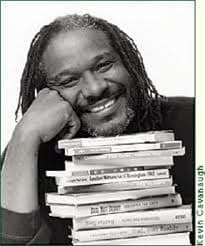
Christopher Paul Curtis is a celebrated author of children's historical fiction, renowned for his engaging narratives and authentic portrayals of African American life. His Newbery Medal-winning novel, "Bud, Not Buddy," and the Newbery Honor book "Elijah of Buxton" are cornerstones of his acclaimed body of work, earning him widespread recognition for bringing history to life for young readers.
Dan Gemeinhart
4.5
Kate O'Hearn
4.4

Jeanne Birdsall
4.4

Jen Wang
4.4
Wendelin Van Draanen
4.3

John Marsden
4.3

Chris Van Allsburg
4.3
Jennifer A. Nielsen
4.2