“There are only two kinds of people in this world: those who are alive, and those who are dead. The living are like a pile of shit, and the dead are like a pile of ash.”
— Song Gang's father reflects on life and death while on the latrine.

Sign in to track this book
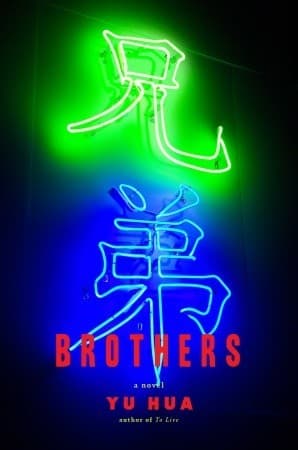
Two stepbrothers, one a sex-crazed opportunist and the other a sensitive intellectual, navigate China's chaotic transformation from the Cultural Revolution to rampant capitalism, testing their bond amidst outlandish characters and surreal societal shifts.
The story introduces Li Guangtou, known as Baldy Li, and his mother, Li Lan. Baldy Li's father dies prematurely while defecating, a comically tragic event. Soon after, Song Gang, a sensitive and orphaned boy, arrives in Liu Town with his mother, who is looking for work. Song Gang's father also died in an absurd accident, falling into a latrine while watching a revolutionary meeting. Li Lan and Song Gang's mother find comfort in each other and decide to marry, uniting the two boys as stepbrothers. Despite their different personalities – Baldy Li's boisterous and Song Gang's quiet – they form a strong, if sometimes difficult, bond, promising to always be brothers.
Baldy Li and Song Gang grow up in Liu Town, experiencing childhood joys and troubles. Baldy Li, curious about sex, often gets into trouble, bringing Song Gang along. They observe the bizarre events of the Cultural Revolution, which shapes their understanding of the world. Public denunciations, ideological fervor, and the breakdown of order become part of their daily lives. Despite the chaos, their bond deepens, with Song Gang often acting as Baldy Li's reluctant accomplice or moral guide. The period includes both innocent pranks and the growing awareness of societal madness.
As they enter adolescence, both Baldy Li and Song Gang develop feelings for the beautiful Lin Hong, the tailor's daughter. Song Gang, more reserved and handsome, first attracts Lin Hong with his gentle manner. Baldy Li, however, pursues her with his usual boldness and persistent, if often misguided, efforts. This shared affection for Lin Hong creates the first major rift in their bond, as romantic rivalry overshadows their childhood friendship. Lin Hong, initially pure, becomes an object of their desires, setting the stage for future conflicts.
The Cultural Revolution subsides, leaving behind a scarred but evolving society. The brothers, now young men, experience a calm period. Song Gang gets a steady job, showing his reliability. Baldy Li, always an entrepreneur, starts various small business ventures, often with limited success but great enthusiasm. This era marks a shift from ideological fervor to an economic awakening, where people start to find their place in a changing China. Their different approaches to life and work become clearer, foreshadowing their different paths in the coming years.
As China embraces market reforms, Baldy Li takes every opportunity. He starts with audacious, often absurd, business ventures, from selling blood to organizing unusual public spectacles. His lack of inhibition and keen eye for profit, along with a knack for attracting attention, lead to early financial success. He quickly accumulates wealth, becoming a prominent, if eccentric, figure in Liu Town. His success contrasts sharply with Song Gang's more conventional path, creating a growing difference in their fortunes and lifestyles, and further straining their relationship as Baldy Li's ego grows.
While Baldy Li's star rises, Song Gang's life becomes more difficult. He struggles to find stable work and adapt to the changing economic landscape. His gentle nature, once appealing, now seems ill-suited to the cutthroat world of the new China. Lin Hong, caught between the two brothers, eventually marries Song Gang, drawn by his sincerity and their long connection. However, this decision is complicated, as Baldy Li’s continued presence and increasing wealth cast a long shadow over their marriage, causing resentment and insecurity for Song Gang.
Baldy Li's business empire expands quickly. He enters real estate, entertainment, and even organ trafficking, accumulating vast wealth and power. His methods become increasingly unscrupulous, reflecting the moral decay in the new capitalist China. He surrounds himself with flatterers and engages in extravagant displays of wealth, further separating him from his humble origins and the values he once shared with Song Gang. His success is built on greed and exploitation, showing the dark side of unchecked economic growth and the abandonment of ethics for profit.
The once-strong bond between Baldy Li and Song Gang completely breaks down. Baldy Li, now powerful, uses his influence to undermine Song Gang at every turn, driven by lingering jealousy and a desire to possess Lin Hong. Lin Hong, facing financial hardship and the pressures of Song Gang's failures, is eventually drawn into Baldy Li's world, becoming a madam in his entertainment complex. This betrayal, both economic and emotional, is the ultimate blow to Song Gang, who sees his wife and brother consumed by the forces he despises. The fraternal promise is shattered.
Song Gang, unable to cope with his financial failures, the loss of Lin Hong to Baldy Li's influence, and his brother's profound betrayal, falls into deep despair. He tries various desperate measures to regain his dignity and support his family, but each attempt fails, often due to Baldy Li's actions. Feeling defeated and humiliated, Song Gang ends his life by drowning himself in a latrine, mirroring the absurd deaths of both his biological father and Baldy Li's father, bringing a cyclical and tragic end to his struggles.
With Song Gang's death, Baldy Li's path to absolute power is clear. He continues to expand his empire, becoming a ludicrous symbol of China's new wealth and moral bankruptcy. Despite his immense success and endless pursuit of pleasure, Baldy Li feels a void. He is sometimes haunted by memories of Song Gang and their shared past, suggesting a flicker of humanity beneath his hardened exterior. His life, while outwardly triumphant, is ultimately empty, highlighting the novel's critique of unchecked materialism and the cost of abandoning human connection and ethics.
The Protagonist/Antagonist
From a mischievous, sex-obsessed boy, Baldy Li evolves into a powerful, corrupt, and morally bankrupt business magnate, losing his humanity in the process.
The Protagonist
Song Gang's arc is one of decline, from a hopeful and sensitive young man to a defeated and tragic figure consumed by the harsh realities of the new economic order.
The Supporting
From a chaste village beauty, Lin Hong is corrupted by economic hardship and Baldy Li's influence, becoming a symbol of lost innocence.
The Supporting
Li Lan remains a steadfast maternal figure, navigating the changing times and the complex relationship between her two sons with a resilient spirit.
The Supporting
Poet Zhao remains largely static, consistently providing a satirical commentary on the changing socio-political landscape of Liu Town.
The Supporting
Yanker Yu consistently adapts to the prevailing power, showcasing his opportunistic and self-serving nature throughout the narrative.
The Mentioned
Popsicle Wang remains a background character, representing the everyday life and struggles of common people in Liu Town.
The novel shows how China's rapid embrace of capitalism leads to widespread moral decay. Baldy Li's rise to power is built on unethical ventures, from selling blood to organ trafficking, showing how the pursuit of wealth can strip people of their humanity. Lin Hong's transformation from a pure beauty to a madam, driven by economic need, further shows how money can corrupt innocence and traditional values. The contrast between Baldy Li's opulent, amoral success and Song Gang's principled but tragic failure highlights the devastating consequences of a society that prioritizes profit over ethics and human connection.
“In the new China, money was like an ocean, swallowing everything, even the sun.”
The central theme is the bond between Baldy Li and Song Gang. Initially, despite their differences, they share a deep connection, promising to always be brothers. However, this bond is eroded by romantic rivalry over Lin Hong, and ultimately shattered by Baldy Li's ruthless ambition and betrayal. Baldy Li actively undermines Song Gang's life, leading to his despair and tragic end. The destruction of their brotherhood symbolizes the breaking of traditional social ties and personal loyalties in the face of overwhelming societal change and individual greed. It questions whether any bond can withstand the pressures of extreme materialism.
“They had vowed to be brothers forever, but forever, it turned out, was a very short time in a changing world.”
Yu Hua uses dark humor and grotesque imagery to depict the absurdity of both the Cultural Revolution and the subsequent capitalist boom. The deaths of both fathers in latrines set a tragicomic tone throughout the narrative. The Cultural Revolution is shown as a period of ideological madness, while the capitalist era is depicted as an equally rabid pursuit of material gain. The novel suggests that while the outward forms of madness change, the underlying human capacity for extremism and irrationality remains. The characters' struggles are often a direct result of these historical upheavals, highlighting the traumatic impact of rapid societal transformation.
“China was a country where the absurd was merely a prelude to the grotesque.”
Both brothers, in their own ways, struggle to find their place and maintain their dignity amidst the tumultuous changes. Song Gang, with his traditional values and sensitivity, struggles to adapt, his dignity constantly assaulted by economic failures and his brother's actions. His suicide is a desperate, tragic attempt to reclaim self-worth. Baldy Li, conversely, defines his identity through wealth and power, but his relentless pursuit leaves him hollow, suggesting that true dignity cannot be bought. The novel explores the profound challenges individuals face in defining themselves when societal norms and values are constantly changing.
“What was a man's worth when everything he held dear could be bought or sold?”
Exaggerated and often shocking imagery used to highlight the absurd and brutal aspects of reality.
Yu Hua employs grotesque realism throughout 'Brothers' to depict the harsh realities of modern China. This is evident from the comically tragic deaths of the fathers in latrines, to Baldy Li's more extreme business ventures like selling blood and organs, and the graphic descriptions of Lin Hong's role as a madam. This device serves to shock the reader, emphasize the moral decay, and underscore the absurd and often brutal nature of life during periods of extreme societal upheaval, blurring the lines between comedy and tragedy.
The juxtaposed experiences of two characters to highlight thematic differences.
The entire narrative is built around the parallel yet contrasting lives of Baldy Li and Song Gang. Their opposing personalities, moral compasses, and life trajectories serve as foils to each other, allowing the author to explore different responses to the same historical and social changes. Baldy Li's opportunistic success highlights the dark side of capitalism, while Song Gang's principled failure underscores the human cost. This device effectively amplifies the novel's themes of moral corruption, betrayal, and the struggle for dignity in a rapidly changing world.
The recurring motif of latrines and excrement to signify death, indignity, and the absurd.
The motif of latrines and excrement recurs throughout the novel, most notably in the deaths of both Baldy Li's and Song Gang's biological fathers, and ultimately in Song Gang's own suicide. This device serves multiple purposes: it introduces an element of dark, grotesque humor from the outset, underscoring the absurdity and indignity of life and death. It also symbolizes the base, often unpleasant realities that underlie grand ideological or economic narratives, and the cyclical nature of tragic and undignified fates in a chaotic society.
The use of humor in the face of serious or tragic events to highlight absurdity.
'Brothers' is replete with dark humor, which often accompanies the most tragic or morally reprehensible events. From the ridiculous circumstances of the fathers' deaths to Baldy Li's outlandish schemes and the satirical portrayal of societal figures like Poet Zhao, humor is used to soften the blow of harsh realities while simultaneously magnifying their absurdity. This device allows Yu Hua to critique Chinese society with biting wit, preventing the narrative from becoming solely despairing and instead presenting a complex, often bizarre, view of human nature and historical events.
“There are only two kinds of people in this world: those who are alive, and those who are dead. The living are like a pile of shit, and the dead are like a pile of ash.”
— Song Gang's father reflects on life and death while on the latrine.
“To live is to suffer. To survive is to find some meaning in the suffering.”
— A general reflection on the harsh realities faced by the characters throughout the novel.
“The world is a stage, and we are all just players, waiting for our cue to exit.”
— Liu Fang's internal monologue about the transient nature of life and human existence.
“Money is a good thing, a truly good thing. With money, you can do anything. Without money, you can do nothing.”
— Li Guangtou's early realization about the power of wealth in a rapidly changing society.
“In this world, there is nothing that cannot be bought, only things that are not expensive enough.”
— Li Guangtou's cynical view on human morality and the corrupting influence of money.
“The past is like a ghost, always lurking, always ready to pounce.”
— Song Gang's recurring struggle with memories and the shadow of his father's death.
“A man without a future is a man without hope.”
— Song Gang's despair during a period of intense hardship and failure.
“The revolution was supposed to make everyone equal, but it only made some people more equal than others.”
— A critical observation on the outcomes of the Cultural Revolution and its impact on society.
“Beauty is a dangerous thing. It can bring you joy, but it can also bring you ruin.”
— Reflecting on the fate of some female characters whose beauty attracts both admiration and misfortune.
“No matter how much you try to escape, your family will always be a part of you.”
— The unbreakable bond between Song Gang and Li Guangtou, despite their vastly different paths.
“Laughter is a strange thing. Sometimes it means you're happy, sometimes it means you're trying not to cry.”
— A nuanced observation on human emotions and the complexities of expressing them.
“The more things change, the more they stay the same. Or perhaps, the more they stay the same, the more they change.”
— A philosophical musing on the cyclical nature of history and human behavior.
“He who has no shame has no limits.”
— Describing Li Guangtou's audacious and often morally ambiguous rise to power.
Ready to see how well you understood this book? Take our interactive quiz with 10 questions.

Biography coming soon.







