“Open Mike Friday is like a church. People come here to confess, to be forgiven, to find a little grace.”
— Tyrone's initial thoughts on the purpose of Open Mike Friday.

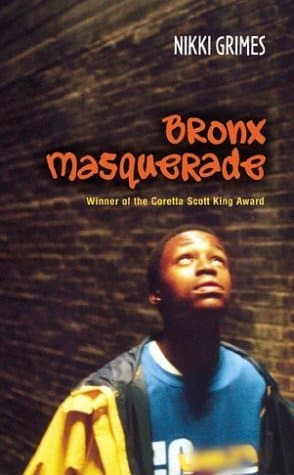
Nikki Grimes (2002)
Genre
Young Adult
Reading Time
180-240 min
Key Themes
See below
Sign in to track this book
Eighteen Bronx high school students, initially hiding behind indifference and anger, find that poetry helps them share their fears, loves, and tragedies, building unexpected empathy.
The story begins in Mr. Ward's English class at Paul Laurence Dunbar High School in the Bronx. Wesley Boone, a student often seen as a troublemaker, surprises everyone with a heartfelt poem instead of an essay. His poem, 'Bronx Masquerade,' discusses the masks people wear and the hidden truths beneath. Wesley is at first hesitant to read it aloud, but Mr. Ward encourages him. After Wesley reads, other students, including Tyrone Bittings, are moved and want to share their own poems. Mr. Ward suggests weekly open mic poetry sessions every Friday.
Tyrone Bittings, an aspiring rapper and the unofficial narrator, thinks about Wesley's poem and how the class might find a voice through poetry. He observes the diverse students in Mr. Ward's class, each with their own problems and dreams. The first Friday poetry session starts with excitement and nerves. Students like Raul Ramirez, an artist, and Diondra Jordan, an aspiring fashion designer, begin to share their work, showing glimpses of their inner lives and struggles, which often differ from their outward appearances.
Lupe Alvarin, a quiet and shy girl, reveals a deep desire for love and a baby through her poetry. She feels an emptiness and believes a child would fill it and give her unconditional love. Her poems are raw and vulnerable, surprising many classmates who hadn't seen her inner turmoil. Her desire comes from feeling unloved, and she sees motherhood as her way to purpose and acceptance. This revelation initially shocks some of her peers.
Porscha Johnson, known for being tough and confrontational, uses poetry to express her anger and grief. She reveals the impact of her mother's death from a drug overdose and the neglect she faced. Her poems are strong, full of rage and betrayal, but also hidden vulnerability. Through her verses, Porscha starts to process her trauma and challenge the strong image she has kept, letting classmates see her suffering and the reasons for her aggressive behavior.
Raynard Patterson, a quiet and often bullied student, stays silent during the poetry sessions, but Tyrone notices him. Tyrone, feeling empathy, tries to reach out to Raynard. Raynard's poems, when he finally shares them, are touching and reveal a secret: he is dyslexic and struggles with reading, which has caused him shame and isolation. His courage in sharing this through his words, despite fearing judgment, builds understanding and connection with his classmates, especially Tyrone.
Raul Ramirez, a talented artist, brings his perspective to the poetry sessions. He often sketches while others read, and his poems reflect his visual artistic style. Raul's work explores identity, self-expression, and the challenges of being a young Latino artist in the Bronx. He struggles with societal expectations versus his artistic passion. His poetry, like his art, is insightful, showing classmates how different expressions can intertwine and reveal the complex layers of an individual's identity and aspirations.
Diondra Jordan, an aspiring fashion designer, uses poetry to express her dreams of creating beautiful clothes and her frustrations with beauty standards. She deals with body image issues and pressure to conform, contrasting her creative vision with personal insecurities. Her poems reveal vulnerability beneath her stylish exterior, showing classmates the conflict between her artistic goals and her personal struggles with self-acceptance. Her honesty helps others recognize common pressures faced by young women.
As the weekly poetry sessions continue, more students open up, sharing fears, hopes, and secrets. Chankara Troupe, who was abused, speaks about her pain and resilience. Leslie Lucas, who recently moved, expresses feelings of displacement and loneliness. Shared vulnerability breaks down barriers and old ideas among students. They begin to see beyond the 'masquerade' each person wears, recognizing shared humanity and struggles, building community and mutual respect in the classroom.
The poetry sessions grow beyond just spoken word. Raul often sketches during readings, creating visual interpretations of poems. Sheila Gamberoni, a talented singer, sometimes sings her poems or adds music. Tyrone often thinks in rap lyrics, blending his musical goals with his poetic expression. This mix of art forms highlights the diverse talents in the class and shows how different creative outlets can express deep emotions and personal stories, making the sessions more dynamic and inclusive.
Through writing and performing poetry, the students develop a strong community. They offer encouragement, understanding, and sometimes criticism to one another. Porscha softens, finding empathy for others. Raynard gains confidence in expressing himself. Lupe finds validation for her feelings. The classroom becomes a safe space where students can be authentic, shed their masks, and support each other's personal and artistic growth. This shows the power of shared vulnerability and collective expression.
Inspired by their success and personal growth, Mr. Ward and the students decide to organize a school-wide poetry slam. This idea excites and scares many of them, as it means sharing deeply personal work with a larger audience. Performing publicly becomes a new challenge, pushing them further out of their comfort zones and testing the confidence they gained in private sessions. They begin preparing their pieces, refining their delivery, and supporting each other in this new effort.
The day of the school-wide poetry slam arrives. The students, though nervous, feel a sense of purpose and camaraderie. Each takes the stage, some reading with new confidence, others still trembling but determined. They share poems about identity, struggle, dreams, and the Bronx. Their individual voices combine into a strong collective story that connects with the audience, showing their courage and the impact of their creative journey. The event is a success for the performers, the class, and the school community.
After the slam, the students reflect on how much they have changed. They realize the poetry sessions helped them remove their 'masquerades,' revealing their true selves and building real connections. They learned to listen, empathize, and support one another, recognizing that everyone carries hidden burdens and dreams. The experience gives them a deeper understanding of themselves and others, showing that vulnerability can lead to strength and that finding one's voice is a powerful step toward self-acceptance and community.
The Protagonist/Narrator
Tyrone evolves from an observer into a participant, using his voice not just for rap but for poetic expression, and grows in empathy and leadership.
The Supporting
Wesley moves from a quiet rebel to a confident poet, revealing his inner sensitivity and inspiring others.
The Supporting
Mr. Ward maintains his role as a supportive mentor, facilitating the students' growth and the creation of a powerful community.
The Supporting
Lupe gains the courage to express her deepest desires, finding validation and understanding from her peers.
The Supporting
Porscha learns to channel her anger constructively through poetry, softening her exterior and allowing herself to connect with others.
The Supporting
Raynard overcomes his fear and shame, bravely revealing his dyslexia and gaining confidence and acceptance.
The Supporting
Raul continues to explore his artistic identity, using poetry to deepen his self-expression and connect with his community.
The Supporting
Diondra uses poetry to voice her insecurities and aspirations, gaining confidence in her self-worth beyond external appearance.
The Supporting
Chankara finds a voice for her past trauma, using poetry as a tool for healing and empowerment.
This theme is central to the novel, as poetry helps the diverse students of Dunbar High find and strengthen their individual voices. Many students initially wear 'masks' (as Wesley's poem shows) or stay silent, hiding their true selves and struggles. Through Mr. Ward's poetry sessions, they learn to express their fears, dreams, and pain, turning silence into powerful spoken word. For example, Porscha turns her rage over her mother's overdose into strong verses, while Raynard bravely reveals his dyslexia through his poem. Sharing not only empowers individuals but also builds collective understanding and empathy among the group, showing that finding one's voice is important for personal growth and connection.
“''Poetry is like a truth serum. You can't lie to yourself when you're writing it, and you can't lie to others when you're reading it.'”
The idea of 'masquerade' is introduced early by Wesley's poem and appears throughout the book. Many characters initially present a false front to the world—Porscha's tough exterior, Lupe's quiet shyness, Raynard's silence. These masks hide their true identities, insecurities, and struggles. The poetry sessions offer a safe space for them to drop these masks and show their real selves. For instance, Lupe's poems expose her deep desire for love and motherhood, surprising classmates who only saw her quiet manner. The students' journey is about removing these layers, understanding that true connection and self-acceptance come from embracing who they are, flaws and all, rather than hiding behind expectations or fears.
“'Behind every face is a story. And every story deserves to be heard.'”
The novel shows how shared vulnerability can build a strong sense of community and empathy. As students like Wesley, Lupe, Porscha, and Raynard bravely share their deepest fears, pains, and aspirations through poetry, their classmates start to see beyond surface judgments and stereotypes. The classroom changes from a group of individuals into a supportive family. Tyrone, at first an observer, develops strong empathy, especially for Raynard. The students learn to listen, understand, and support one another, realizing their shared humanity and the common threads of struggle and hope that connect them, all leading to a collective effort for the school-wide poetry slam.
“'We were all just pieces of a puzzle, and when we started to put our pieces together, we saw the whole picture.'”
Many characters in 'Bronx Masquerade' face significant personal difficulties, including poverty, abuse, learning disabilities, and loss. Porscha deals with the trauma of her mother's drug overdose, Chankara with past abuse, and Raynard with dyslexia and bullying. The poetry sessions become an important way for them to process these challenges, turning their pain into art. Writing and performing their poems is an act of resilience, showing their strength to confront their pasts and express their hopes for the future. Their collective journey shows that even with hard circumstances, creativity and community can help individuals not only survive but also grow and find their strength.
“'Sometimes the hardest things to say are the ones that need to be heard the most.'”
The story is told through the alternating first-person voices of 18 different students.
This device allows the reader to experience the inner lives, thoughts, and emotions of each student directly. By rotating the narrator with each chapter, the author provides a multifaceted view of the same events, particularly the poetry sessions, and reveals the unique struggles and dreams of a diverse group of teenagers. This structure prevents any single character from dominating the narrative, emphasizing the collective journey and the idea that every individual's story is valuable. It also builds empathy by giving direct access to each character's 'masquerade' and the truth beneath it.
The act of writing and sharing poetry drives the plot and facilitates character development.
Poetry is not merely a subject in English class; it is the central mechanism that propels the story and enables the characters' transformations. Wesley's initial poem acts as the catalyst for the entire project. For each student, poetry serves as a safe and powerful medium to express hidden feelings, confront personal demons, and articulate aspirations. The poems themselves are embedded within the narrative, directly showcasing the characters' voices and growth. This device illustrates the therapeutic and connective power of art, demonstrating how creative expression can bridge divides and foster self-discovery.
The central metaphor of masks and hidden identities that characters wear.
Introduced by Wesley's poem, the 'masquerade' metaphor underpins the entire narrative. It refers to the facades, stereotypes, and defenses that individuals present to the world to hide their true selves, fears, and vulnerabilities. Each character initially wears a 'mask' – Porscha's anger, Raynard's silence, Lupe's shyness. The plot's progression involves the gradual shedding of these masks through the vulnerability of sharing poetry. This device highlights the theme of authenticity versus appearance and underscores the novel's message that true understanding and connection come from looking beyond superficial exteriors.
The English classroom serves as a contained environment reflecting broader societal issues.
Mr. Ward's English classroom acts as a microcosm of the larger Bronx community and society at large. Within this small space, a diverse group of students, each facing unique socio-economic, personal, and emotional challenges, comes together. The dynamics within the classroom—initial skepticism, eventual trust, and the formation of a supportive community—mirror the potential for understanding and connection in the wider world. By focusing on this contained environment, the novel effectively explores universal themes of identity, prejudice, and the power of shared human experience.
“Open Mike Friday is like a church. People come here to confess, to be forgiven, to find a little grace.”
— Tyrone's initial thoughts on the purpose of Open Mike Friday.
“Sometimes you gotta speak up, even if your voice shakes.”
— Mr. Ward encouraging students to share their truths.
“A mask is a funny thing. It can hide you, or it can help you show who you really are.”
— Wesley's reflection on the nature of masks and identity.
“Poetry is like a mirror. You look into it and you see yourself, even the parts you didn't know were there.”
— Raul's perspective on the power of poetry.
“We all wear masks. Some of us just wear them better than others.”
— Chankara's observation about societal appearances.
“The stage is a place where you can be whoever you want to be, for a little while.”
— Sterling's appreciation for the freedom of performing.
“Words are powerful. They can build you up, or they can tear you down.”
— Tyrone's realization about the impact of language.
“It's not about being perfect. It's about being real.”
— Mr. Ward's advice to students struggling with self-doubt.
“Every poem is a journey. You start in one place and you end up somewhere else, and you're changed by it.”
— Diondra's thoughts on the transformative nature of writing.
“Sometimes the hardest thing to do is forgive yourself.”
— Janelle's internal struggle with self-blame.
“Art isn't just pretty pictures. It's a way to tell your story, to make people listen.”
— Raul's defense of the importance of art.
“You can't let other people define you. You gotta define yourself.”
— Papi's wisdom shared with Leslie.
“We're all connected, even if we don't always see it.”
— Mr. Ward reflecting on the sense of community in the class.
“The greatest poem is the one you haven't written yet.”
— Mr. Ward encouraging continuous creativity and potential.
“Sometimes the truth is messy, but it's still the truth.”
— Devon's realization about confronting difficult realities.
Ready to see how well you understood this book? Take our interactive quiz with 10 questions.

Biography coming soon.