“The past is a place of refuge as well as a place of torment.”
— Reflecting on memory and its dual nature.

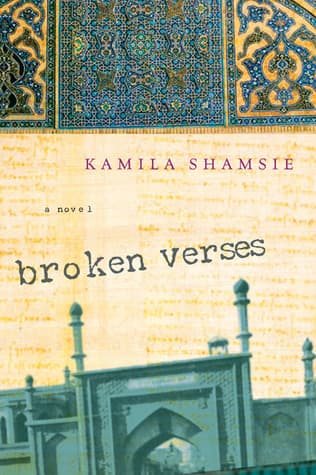
Kamila Shamsie (2005)
Genre
Literary Fiction / Mystery
Reading Time
450 min
Key Themes
See below
Sign in to track this book
In a Karachi simmering with political ghosts, a drifting daughter deciphers her vanished activist mother's secret letters, hoping they will lead her not just to a mystery's end, but to the heart of the woman who always left her behind.
Aasmaani, a thirty-year-old woman in Karachi, Pakistan, works as a researcher for the new independent TV station, 'The News.' For fourteen years, she has lived with the unresolved grief of her famous activist mother, Samina Akram, who disappeared after her lover, the renowned poet, was murdered by government thugs. Samina's disappearance was one of many times Aasmaani felt abandoned throughout her childhood, often left with her grandmother while Samina and the Poet traveled. One day, at 'The News,' Aasmaani meets a former friend of her mother's, who gives her a letter. This letter is written in a private code only Samina and the Poet knew, and it appears to be recently written, challenging Aasmaani's long-held belief that her mother was dead.
The first letter reignites Aasmaani's search for her mother. She immediately recognizes the code, a system based on specific lines from the Poet's work, which Samina and the Poet used to communicate privately. Aasmaani, having spent her childhood in her mother's world and the Poet's verses, understands this code. She begins the difficult process of deciphering the letter, a task that forces her to revisit her complex childhood memories, the political climate of the past, and the love story between her mother and the Poet. Each decoded word brings her closer to understanding the message and the hidden parts of her mother's life and choices.
After the initial discovery, more letters arrive, each delivered by different, seemingly unconnected individuals who claim no knowledge of their origin. These letters continue to be written in the code, confirming that Samina Akram is alive and communicating. Aasmaani dedicates herself to deciphering each one, a process that is both intellectually stimulating and emotionally draining. The letters begin to hint at Samina's experiences in hiding, her political beliefs, and her complicated feelings about her past. Aasmaani becomes consumed by the mystery, neglecting parts of her current life as she delves deeper into her mother's secret world.
Aasmaani's job at 'The News' becomes a valuable asset in her investigation. The station's archives and research capabilities allow her to explore Pakistan's political history, specifically the period surrounding her mother's activism and the Poet's murder. She researches old news reports, government documents, and interviews, piecing together the public story of her parents' lives and the events that led to their separation and Samina's disappearance. This research provides context for the letters and exposes Aasmaani to the broader political world that shaped her family's fate, revealing the dangers and sacrifices involved in their activism against a repressive regime.
As Aasmaani deciphers the letters, she gains deeper insight into the intense, almost mythic love affair between Samina and the Poet. The letters reveal their deep intellectual and emotional connection, and the Poet's verses become a way to understand her mother's mind. Aasmaani recognizes the Poet's influence on Samina's life and choices, and in doing so, she confronts her own feelings of being secondary to this grand passion. This understanding is tinged with both admiration for their bond and resentment for how it overshadowed her own needs and led to her mother's repeated absences. The Poet's legacy, both political and personal, casts a long shadow over Aasmaani's journey.
In her search, Aasmaani seeks out individuals who were part of Samina's circle during her activism. She meets former colleagues, friends, and even some who opposed them politically. These encounters are tense and nostalgic. Some are helpful, offering fragments of information or memories that shed light on Samina's character and her disappearance. Others are guarded, hesitant to speak about a past that remains dangerous or painful. Through these interactions, Aasmaani gathers clues and begins to see her mother not just as an absent parent, but as a complex woman deeply involved in a politically charged world.
As the letters progress, Aasmaani starts to understand that Samina's disappearance was not merely another act of abandonment, but a deliberate, strategic decision. The decoded messages reveal that Samina went into hiding to protect herself and possibly others, after the Poet's murder made it clear that her life was also in danger. Her continued silence was necessary for her survival and her ongoing commitment to the political cause. This realization is a turning point for Aasmaani, shifting her perspective from personal betrayal to a more nuanced understanding of her mother's sacrifice and resilience in the face of political persecution. The letters paint a picture of a woman who chose survival and continued struggle over a conventional life.
The intense focus on her mother's past and the deciphering of the letters takes a significant emotional toll on Aasmaani. She becomes increasingly isolated, her current relationships suffering as she becomes consumed by the mystery. Her personal life, including her romantic interests and friendships, takes a backseat to her obsession. She grapples with anger, longing, confusion, and a growing sense of admiration for her mother. The journey forces her to confront her own identity, her place in her family's legacy, and the definition of love and sacrifice. She questions what it means to be a daughter of such a prominent, yet absent, figure.
The letters provide Aasmaani with a series of final, intricate clues that point towards a specific location. These clues are deeply embedded in the Poet's work and Samina's personal history, requiring Aasmaani to use all her knowledge and intuition. The journey to this location is filled with anticipation and a sense of impending resolution. While the book ultimately reveals Samina's continued existence and her reasons for remaining hidden, it does not necessarily end in a direct reunion. Instead, Aasmaani finds a deep understanding of her mother's choices, her enduring love, and the complex interplay between personal sacrifice and political conviction. The 'reunion' is more spiritual and intellectual than physical.
By the end of her journey, Aasmaani achieves a deep understanding and forgiveness for her mother. She recognizes the immense pressures Samina faced and the sacrifices she made, not just for a cause, but also, in her own way, for her daughter's future. The initial anger and sense of abandonment are replaced by a more mature perspective on love, duty, and resilience. Aasmaani can finally integrate her mother's complex legacy into her own identity, no longer defined solely by her absence. She finds a way to move forward, carrying the knowledge and lessons from her past, but no longer burdened by unresolved grief or resentment, allowing her to forge her own path.
The Protagonist
Aasmaani transforms from a resentful, abandoned daughter into a woman who understands and forgives her mother, integrating her complex family legacy into her own sense of self.
The Central, though largely absent, character
Her arc is revealed retrospectively; she is shown to be a resilient and dedicated activist whose 'disappearance' was a calculated move to continue her struggle, rather than an abandonment.
The Influential, deceased character
His arc is presented in retrospect, showing his life as a progression from a revered artist to a martyred political symbol whose words continue to inspire and reveal truth.
The Supporting
Her arc is largely static, serving as a constant source of love and support for Aasmaani, embodying resilience and quiet strength.
The Supporting
Her arc is limited to initiating Aasmaani's journey and providing occasional, veiled guidance, remaining a somewhat enigmatic figure.
The Supporting
His arc is largely in relation to Aasmaani's, showing his attempts to connect with her despite her preoccupation with the past, ultimately reflecting her capacity for present-day relationships.
The Mentioned
They have no individual arc, serving as plot devices to deliver information and maintain the mystery.
The Antagonist
Its arc is static, representing a persistent oppressive force against which the characters struggle for truth and freedom.
The novel intertwines Aasmaani's personal search for her mother with Pakistan's political history. Samina Akram and the Poet's lives are defined by their activism against an oppressive regime, and their personal relationship is inseparable from their political struggle. Aasmaani's journey to understand her mother forces her to confront the dangerous political world that shaped her family's fate. For instance, the coded letters, a deeply personal form of communication, are built upon the Poet's politically charged verses, showing how even intimate acts have political meaning. The book argues that in certain contexts, personal lives are inherently political.
““The personal was political, her mother had always said. But what if the political was personal? What if the revolution was about a poem, or a love letter?””
At its heart, 'Broken Verses' explores the impact of loss and unresolved grief. Aasmaani has lived for fourteen years with the ambiguous loss of her mother, a disappearance she initially sees as a profound abandonment. Her journey to decipher the letters is a process of confronting this grief, revisiting childhood wounds, and ultimately, seeking to understand and forgive. The novel explores the complexities of forgiving a parent who made choices that caused pain, even if those choices were for a greater cause. The resolution of the mystery brings not a simple reunion, but a deeper understanding that allows for emotional healing and forgiveness, enabling Aasmaani to move forward.
““How do you forgive a mother who leaves? And how do you forgive yourself for wanting her to have been less than she was?””
Language, especially poetry, is a central force in the novel. The Poet's verses are not merely artistic expressions but a political weapon against oppression and the foundation of the coded communication between Samina and Aasmaani. Deciphering the letters is an act of interpreting poetry, revealing its hidden layers of meaning and its ability to convey truth even in silence. This theme highlights the power of words to resist censorship, preserve memory, and maintain connection across time and separation. It shows how literature can be a vehicle for both personal intimacy and political defiance.
““A poem was never just a poem. It was a weapon, a shield, a lover’s whisper, a coded message.””
Aasmaani's search for her mother is fundamentally a search for her own identity. Growing up in the shadow of two legendary, absent figures, she struggles to define who she is outside of their legacy. Her feelings of abandonment contribute to a sense of not fully belonging. As she uncovers the truth about Samina, Aasmaani begins to integrate her complex family history into her self-perception, understanding her lineage not as a burden but as a source of strength and context. The novel explores how our past, particularly our family history and the political world we inherit, shapes our sense of self and our place in the world.
““She had spent a lifetime trying to escape their story, only to find herself trapped inside its most intricate verses.””
The novel constantly moves between personal memory and collective history. Aasmaani's individual memories of her mother are fragmented and colored by her childhood perspective, while Pakistan's larger political history provides the backdrop for her parents' actions. Deciphering the letters involves piecing together both personal recollections and historical facts, showing how memory is often subjective and incomplete, yet crucial for understanding the past. The narrative shows how history is not just a collection of facts, but a living force that continues to impact the present and shape individual lives.
““History wasn’t just dates and names; it was the whispered secrets, the forgotten loves, the lines of a poem that could bring a world to its knees.””
A series of letters written in a private code based on the Poet's work.
The coded letters are the central plot device, driving the entire narrative. They are written in a unique cipher known only to Samina and the Poet, using specific lines from the Poet's vast body of work as keys. These letters serve multiple functions: they are the primary source of information about Samina's continued existence and her experiences in hiding, they provide a direct link to the emotional and intellectual world of her parents, and their deciphering forms the core of Aasmaani's investigative journey. The letters symbolize enduring connection, intellectual intimacy, and the power of language to conceal and reveal truth.
The literary works of the deceased Poet, used as a key to the coded letters and a window into the past.
The Poet's poetry functions as both a thematic element and a crucial plot device. Not only does it provide the basis for the coded letters, but it also offers Aasmaani, and the reader, profound insights into the political climate of the time, the Poet's revolutionary ideals, and the depth of his love for Samina. By immersing herself in his verses, Aasmaani gains a deeper understanding of her parents' world and the sacrifices they made. The poetry acts as a historical record, a personal diary, and a guide, allowing the past to speak directly to the present and shaping Aasmaani's interpretation of events.
The unresolved disappearance of Samina Akram, leaving Aasmaani in a state of prolonged grief.
Ambiguous loss is a psychological plot device that creates the initial emotional foundation for Aasmaani's character and her motivation. Samina's disappearance without a definitive answer (death or survival) leaves Aasmaani in a state of perpetual uncertainty and unresolved grief. This ambiguity fuels her longing for closure and drives her relentless pursuit of the truth. It explains her emotional stasis and her difficulty forming stable relationships, as she is constantly tethered to the 'what if' of her mother's fate. The discovery of the letters directly challenges this ambiguous loss, forcing a re-evaluation of her entire understanding of the past.
Aasmaani's workplace, providing resources for her investigation and a modern backdrop.
Aasmaani's job at 'The News,' Pakistan's first independent TV station, serves as a significant plot device. It provides her with access to research facilities, archives, and a network of contacts that are invaluable to her investigation into her mother's past. The station itself represents a new era of information and media freedom in Pakistan, contrasting with the repressive regimes of her parents' time. This setting allows the novel to explore themes of journalism, truth-seeking, and the role of media in shaping public perception, while simultaneously facilitating Aasmaani's personal quest for truth within a broader societal context.
“The past is a place of refuge as well as a place of torment.”
— Reflecting on memory and its dual nature.
“Every secret you keep is a separate burden.”
— Examining the weight of hidden truths.
“Stories are all we have to make sense of the world, to make sense of ourselves.”
— Contemplating the power and necessity of narrative.
“Sometimes the greatest betrayals are not the ones we commit, but the ones we endure.”
— Considering different forms of betrayal.
“A city holds its history not just in its buildings, but in the echoes of its people.”
— Thinking about how a city embodies its past.
“The silence between words can be more revealing than the words themselves.”
— Pondering unspoken communication and subtext.
“To be a writer is to be a scavenger of lives, even your own.”
— Reflecting on the nature of writing and inspiration.
“Love, when it goes wrong, leaves not just a scar, but a phantom limb that aches.”
— Describing the lasting pain of lost love.
“There are some questions that, once asked, can never be unasked, their answers forever altering the landscape of your understanding.”
— Discussing the irreversible impact of certain inquiries.
“The hardest part of remembering is not the remembering itself, but the living with what you remember.”
— Distinguishing between the act of memory and its consequences.
“We are all made of broken verses, striving to find the rhythm that makes us whole.”
— A central metaphor for human experience and the search for completeness.
“Even in absence, a person can cast a very long shadow.”
— Considering the enduring influence of someone who is gone.
“Sometimes the search for truth leads you to places you never intended to go, and to truths you never wanted to find.”
— Exploring the unpredictable nature of uncovering truth.
“The past is never truly dead; it is merely waiting for the right moment to re-emerge.”
— Highlighting the persistent nature of history and its impact.
Ready to see how well you understood this book? Take our interactive quiz with 10 questions.
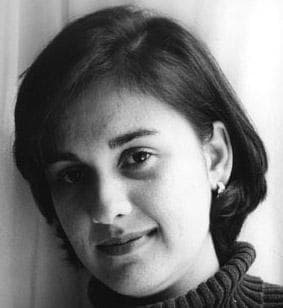
Kamila Shamsie FRSL is a Pakistani and British writer and novelist who is best known for her award-winning novel Home Fire (2017). Named on Granta magazine's list of 20 best young British writers, Shamsie has been described by The New Indian Express as "a novelist to reckon with and to look forward to." She also writes for publications including The Guardian, New Statesman, Index on Censorship and Prospect, and broadcasts on radio.







