“I am the lightning, and I will strike where I please.”
— Mare Barrow's declaration of her power and agency.

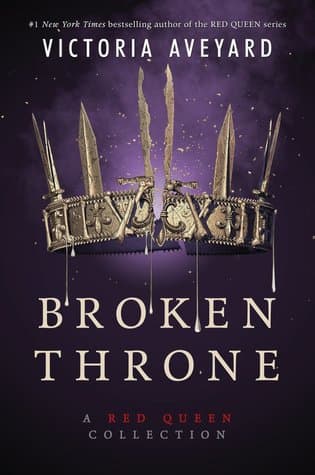
Victoria Aveyard (2019)
Genre
Fantasy / Science Fiction / Young Adult / Romance
Reading Time
240 min
Key Themes
See below
Sign in to track this book
Return to the world of the Red Queen with this collection, featuring new tales of power, rebellion, and intrigue from familiar and new characters.
This novella, told through journal entries, describes the life of Coriane Jacos, Cal's mother and Norta's first queen. It starts with her early life as a quiet princess, her growing friendship and love for Prince Tiberan Calore VI, and her struggles with Silver society's expectations. Coriane recounts the actions of Elara Merandus, who, using her mind-control abilities, isolates Coriane and drives her to despair. Elara's jealousy and ambition are clear as she manipulates King Tiberan and those around Coriane, leading to Coriane's suicide, which is made to look like a heart attack. This clears the way for Elara to become queen and raise Cal.
This novella follows Captain Farley's experiences before *Red Queen*. It details her recruitment into the Scarlet Guard by her father, Colonel Farley, and her rise through its ranks. We see her strategic mind and commitment to Red liberation. The story focuses on a mission where Farley must infiltrate a Silver stronghold to gather intelligence and sabotage operations. It shows her resourcefulness, her willingness to make difficult sacrifices, and the anger and conviction that fuel her fight against the Silver regime. The novella also hints at her growing doubts about some of the Guard's methods, even as she remains loyal to its goal.
Set after *War Storm*, this novella finds Julian Jacos, Maven's uncle and Coriane's brother, reflecting on the fallen kingdoms and the new world. He visits the ruins of the Rift and remembers his family, especially Coriane, and her tragic death. Julian deals with the weight of history and the responsibility of preserving knowledge in a world scarred by war. He works to establish new libraries and educational institutions, ensuring that the past is remembered but not repeated. His narrative is tinged with sadness but also a quiet hope for a future where knowledge can prevent further atrocities.
This novella follows Evangeline Samos and Elane Haven after the war, as they settle into new lives in Montfort. Evangeline, now disinherited from her house, struggles with her identity outside the Samos name and Silver society's expectations. She deals with her past trauma and lingering animosity towards her family, particularly her brother Ptolemus. Her relationship with Elane deepens as they navigate their future, facing both external judgment and internal doubts. Evangeline works to redefine herself, finding purpose in Montfort's more equal society while still carrying the weight of her Silver heritage, seeking acceptance and a place where she can belong with Elane.
This novella picks up a few months after *War Storm*, focusing on Mare Barrow and Cal Calore. They are both in Montfort, trying to navigate their futures and their difficult relationship. Mare struggles with the war's aftermath, her identity as a reluctant leader, and emotional scars. Cal, stripped of his crown, tries to find his place in a world where the monarchy has fallen. Their interactions are full of unresolved tension, love, and the lingering pain of betrayal and sacrifice. They must decide if their love can survive the new political landscape and their personal traumas, and if there is a future for them together in a world trying to heal.
This bonus scene provides an alternate or extended look at Mare's time as Maven's prisoner in *Glass Sword*. It explores the psychological torment Maven inflicts and Mare's resilience. The scene might reveal more about their captivity, perhaps a different interaction or a more detailed internal monologue from Mare as she endures imprisonment. It offers fans a glimpse into the author's process and a slightly different angle on a key moment in Mare's journey, emphasizing her struggle against Maven's control and her determination to escape.
This bonus scene from *War Storm* offers an extended or alternative perspective on a specific moment after a battle, possibly focusing on the emotional toll on the characters or a strategic discussion. It might explore the immediate aftermath of a confrontation, showing exhaustion, injuries, and the cost of war on the Scarlet Guard and their allies. The scene could provide additional character interactions, perhaps between Mare and Cal, or highlight the difficult decisions faced by leaders as they assess losses and plan next moves, adding depth to the war's conclusion.
This bonus scene from the Queenstrial in *Red Queen* offers a deeper look into the selection process for Maven's bride. It might feature a different interaction between the competing princesses, perhaps highlighting a specific character's ambition or a subtle act of manipulation. The scene could also provide more insight into the expectations placed upon Silver women and the political currents of the event. It offers a fresh perspective on the initial introduction to the Silver court's social dynamics and the superficial nature of their traditions, showing the pressure faced by participants, including Mare, during this event.
This bonus scene from 'Queen Song' likely adds a small, poignant detail to Coriane Jacos's tragic life. It might be a brief journal entry or a snippet of an interaction that further illuminates her character, her relationship with Tiberan, or her growing despair under Elara's influence. This scene could deepen the understanding of her internal struggles, perhaps showcasing a moment of quiet rebellion or a heartbreaking realization. It further fleshes out Coriane's personality and the subtle ways her life was being dismantled, adding another layer to the emotional impact of her story and Elara's manipulation.
This section describes Montfort's new political and social structure after the war. It outlines the challenges of transitioning from a world ruled by Silver hierarchy to a more equal society where Reds and Silvers are meant to coexist. It includes information on new governing bodies, economic reforms, and efforts to integrate different factions and bloodlines. The text explores the difficulties in overcoming centuries of prejudice and distrust, and the ongoing work required to establish a fair and stable nation. It emphasizes Montfort's ideals, even as it acknowledges the immense obstacles in achieving them, setting the stage for future developments.
The Supporting
From a hopeful, innocent princess, Coriane's arc descends into increasing isolation and despair, culminating in her tragic death orchestrated by Elara.
The Supporting
Farley evolves from a solely mission-driven rebel to a leader who grapples with the moral complexities of war and the future of a new society, eventually finding love and building a family.
The Supporting
Julian transitions from a reluctant participant in the rebellion to a dedicated architect of a new, knowledge-based society, seeking to heal the world through education.
The Supporting
Evangeline's arc sees her break free from the constraints of her noble house and societal expectations, embracing her love for Elane and forging a new identity in a more egalitarian world.
The Supporting
Elane consistently acts as a steadfast and supportive partner to Evangeline, her love and loyalty remaining a constant amidst Evangeline's personal and political turmoil.
The Protagonist
Mare evolves from a reluctant pawn in a political game to a powerful, if conflicted, leader of a revolution, grappling with the costs of war and the challenges of building a new world.
The Protagonist
Cal's arc sees him lose his throne, fight for a new vision of justice, and ultimately find his place not as a king, but as a leader dedicated to unity and peace.
The Antagonist
Maven's arc is a tragic descent into madness and tyranny, fueled by his mother's manipulation and his own insecurities, culminating in his ultimate defeat.
This theme is central to the series, seen in the Silver monarchy's oppression of Reds. The novellas in *Broken Throne* show how power, especially unchecked, can corrupt individuals and systems. Elara Merandus's pursuit of power in 'Queen Song' leads to her torment and murder of Coriane. Maven Calore's reign, influenced by Elara, shows how absolute power can turn insecurity into tyranny. Even the Scarlet Guard, seeking liberation, sometimes deals with the ethical issues of wielding power, highlighting the constant threat of corruption within any governing structure.
“Power is a dangerous game. It makes monsters of us all.”
Many characters in *Broken Throne* find themselves, especially after the old world falls. Evangeline Samos in 'Iron Heart' struggles to define herself outside her Samos name and Silver society's expectations, finding her identity in her love for Elane and a new life in Montfort. Mare and Cal in 'Fire Light' must deal with who they are without their former roles – Mare as the 'lightning girl' and Cal as the prince – and decide their individual futures. Julian Jacos, in 'Farewell,' redefines his purpose by preserving knowledge and building a new educational system, finding meaning beyond his family's tragic past.
“Who are you, when all the titles are stripped away?”
Love, in its various forms, is a strong motivator and often requires sacrifice throughout the series. Coriane's love for Tiberan and Cal in 'Queen Song' leads to her vulnerability and death. Evangeline and Elane's love in 'Iron Heart' requires them to leave their old lives and face societal judgment, a sacrifice of status for happiness. Mare and Cal's complex relationship in 'Fire Light' is tested by the sacrifices they made for the war and the difficult choices they face, showing that love often demands personal cost and compromise.
“Love is a weakness, but it is also the strongest thing we have.”
The past greatly impacts the present and future in *Broken Throne*. Julian Jacos in 'Farewell' dedicates his life to preserving history, haunted by his sister Coriane's tragic story and the war's atrocities. He understands that remembering the past is crucial for building a better future. The lingering prejudices between Reds and Silvers, rooted in centuries of oppression, continue to create challenges in Montfort, as seen in 'Montfort: The New Age.' Characters like Mare and Cal carry the weight of their personal histories – Mare's losses, Cal's royal lineage – which shapes their decisions and their ability to move forward, emphasizing that the past's echoes are never truly silent.
“The past is a stubborn thing, refusing to be forgotten.”
Provides an intimate, first-person perspective on character thoughts and hidden events.
Used primarily in 'Queen Song,' Coriane Jacos's journal entries offer a deeply personal and subjective account of her life, love, and eventual demise. This device allows the reader to experience events through her eyes, revealing her inner thoughts, fears, and the subtle manipulations of Elara Merandus that would otherwise remain hidden. It creates a sense of intimacy and tragedy, giving insight into the emotional toll of court life and the true nature of her death, which was publicly concealed. The journal format also makes the narrative feel like a discovered historical document, adding to the world-building and the sense of uncovering hidden truths.
Expands the world and character understanding by showing events through different eyes.
The collection of novellas itself functions as a plot device, offering multiple perspectives on the overarching narrative and world of Red Queen. By shifting focus from Mare to characters like Coriane, Farley, Julian, and Evangeline, the book enriches the reader's understanding of the political landscape, the motivations of various factions, and the personal stakes involved. This allows for a more comprehensive view of the war's impact and the challenges of rebuilding, providing depth to supporting characters and filling in gaps in the main series' narrative. It demonstrates that the story is larger than just one protagonist.
Offers alternative or extended insights into pivotal moments from the main series.
These scenes provide additional context or alternative angles on key events from the original *Red Queen* series. They allow readers to delve deeper into specific moments, character interactions, or internal monologues that were either cut for pacing or offered a different narrative direction. For example, a bonus scene from *Glass Sword* might elaborate on Mare's captivity, or one from *War Storm* could expand on the immediate aftermath of a battle. This device enhances fan engagement by providing 'behind-the-scenes' content and satisfying curiosity about unexplored facets of the story, enriching the overall reading experience.
Enhances immersion and understanding of the fictional world's geography and culture.
The inclusion of maps, flags, and historical documents serves to deepen the reader's immersion in the world of Red Queen. Maps help visualize the geography of Norta, Montfort, and other regions, making battles and character journeys more tangible. Flags and historical texts provide insight into the cultural identities, political factions, and historical conflicts that shape the narrative. These elements aren't just decorative; they reinforce the intricate political landscape, the long-standing divisions between Reds and Silvers, and the complex history that underpins the entire series, making the fictional world feel more real and lived-in.
“I am the lightning, and I will strike where I please.”
— Mare Barrow's declaration of her power and agency.
“The world is a cage, and we are all trapped within it. But some cages have wider bars than others.”
— Reflecting on the societal divisions and limitations.
“Sometimes, the best way to save someone is to let them go.”
— A difficult realization about love and sacrifice.
“Even a queen can bleed.”
— Highlighting the vulnerability of those in power.
“Hope is a dangerous thing. It can make you believe in impossible dreams.”
— A cynical view on the nature of hope in dire circumstances.
“We are all monsters in our own way. Some of us just hide it better than others.”
— Acknowledging the darker aspects of human nature.
“The strongest chains are not made of iron, but of loyalty.”
— Emphasizing the power of allegiance and trust.
“War changes everything. It changes who you are, what you believe, and who you love.”
— Reflecting on the profound impact of conflict.
“There are no heroes, only survivors.”
— A pragmatic view on the harsh realities of their world.
“The future is not written. It is forged by our choices.”
— A statement about agency and the ability to shape one's destiny.
“Power is a hungry beast. It devours everything in its path.”
— A warning about the corrupting nature of power.
“Sometimes, the greatest battles are fought within ourselves.”
— Focusing on internal struggles and personal growth.
“Even in the darkest night, there is always a flicker of light.”
— A hopeful sentiment amidst despair.
“To truly lead, you must first learn to serve.”
— A principle of effective leadership.
“Revenge is a dish best served cold, but justice is a fire that burns eternal.”
— Distinguishing between personal vengeance and true justice.
Ready to see how well you understood this book? Take our interactive quiz with 10 questions.

Biography coming soon.







