“The Kanun is like the spine of our world. If it breaks, everything collapses.”
— A character explaining the importance of the ancient code of laws governing blood feuds.

Ismail Kadare (2010)
Genre
Literary Fiction / Historical Fiction
Reading Time
240 min
Key Themes
See below
Sign in to track this book
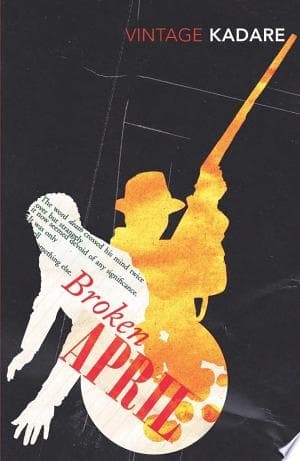
Haunted by an ancient blood feud, a young Albanian man's thirty-day reprieve after avenging his brother's death becomes a poignant dance with destiny as a curious honeymooning couple from the city inadvertently stumble into the fatal mechanism of his impending demise.
The novel opens with Gjorg Berisha, a young man from the remote Albanian highlands, preparing to avenge the murder of his older brother, Mëhill. By the ancient, unwritten code of the Kanun, Gjorg must kill the killer, Zef Kryeqyqe. The weight of this coming act, and the fate it sets for him, is heavy on Gjorg. He knows that once he does his duty, he will become a target himself, subject to the blood feud (gjakmarrja) that has governed his family and region for centuries. His family, though sad about the necessity, supports his following the Kanun, understanding that their honor and standing depend on it. Gjorg feels trapped by his land's traditions.
Gjorg finds Zef Kryeqyqe and, after a tense meeting, shoots and kills him. This act, while fulfilling his family's honor, immediately marks him for death. However, the Kanun gives him a 'thirty-day grace' period (besa) during which no one can retaliate. This temporary break lets him travel freely, attend markets, and even visit the tower of the Orosh family, the local chieftain, to pay the blood tax. Gjorg knows this period is just a brief pause before his certain fate. He carries the rifle, a symbol of his deed and his coming death, everywhere he goes, moving through a world that both respects and condemns him.
During his besa, Gjorg travels to the Kulla of Orosh, the fortified tower of the Prince of the Mark of Orosh, the feudal lord who collects the blood tax. This tax is a payment made by the avenger's family to the Prince for the right to kill and to maintain the Kanun system. The journey to the Kulla shows how formal the blood feud is. Gjorg sees the Prince's careful records of feuds and deaths, a system built on old violence. He meets other men in similar situations, all bound by the same code, all waiting for their grace period to end. The Kulla represents the Kanun's oppressive, inescapable structure.
At the same time, a young, intellectual couple from Tirana, Bessian and Diana Vorpsi, are on their honeymoon, traveling through the same northern Albanian highlands. Bessian, a writer, is interested in the Kanun and its old customs, seeing it as a unique cultural thing he wants to study and understand firsthand. Diana, at first interested in her husband's academic pursuit, is more sensitive and quickly becomes disturbed by the blood feud's harsh realities. Their journey takes them through villages and places where the Kanun's shadow is always present, a sharp contrast to their modern, urban lives. They are outsiders, observers, yet they are drawn into the grim atmosphere.
During their travels, Bessian and Diana meet Gjorg. He is easy to spot as a man under besa, carrying his rifle and showing a quiet acceptance of fate. Diana is especially struck by Gjorg's youth and the sadness in his eyes, realizing he is a victim as much as an avenger. She feels pity and a growing interest in his situation, seeing him not as savage but as a man trapped by an inescapable destiny. Bessian, meanwhile, sees Gjorg through an academic lens, observing him as a living example of the Kanun's principles. This meeting changes Diana, as the abstract idea of the blood feud becomes a real, human tragedy.
After their brief meeting, Diana becomes more and more worried about Gjorg's coming death. The thought of his young life being cut short by an old, brutal code weighs heavily on her. She questions the Kanun's morality, finding it impossible to understand and cruel. Her worry starts to strain her relationship with Bessian, who, while intellectually involved, cannot fully grasp the emotional impact the situation has on his wife. Diana secretly hopes that Gjorg might somehow escape his fate, even as she knows it is almost impossible within the highlands' strict rules. Her city feelings clash sharply with the mountains' harsh realities.
As Gjorg's besa days tick away, he feels an invisible clock counting down to his death. He continues to observe his people's rituals, attending markets and talking with others, but always knowing his life is on loan. He feels a deep detachment, as if he is already dead, just walking through the world for a final, brief period. He struggles with the desire to flee, an idea that is both tempting and unthinkable due to the deep-seated honor code. He understands that his family's reputation, and his own, depend on his acceptance of his fate.
Diana, tormented by Gjorg's fate, tries to convince Bessian to do something to help him, or at least for them to leave the highlands before Gjorg's grace period ends. She argues against the Kanun's cruelty, but Bessian, while sympathetic, remains an academic observer, unable or unwilling to directly interfere with customs he sees as deeply ingrained. Their different views create a gap between them. Diana's distress grows each day, as she feels a moral need to act, even if she doesn't know how, while Bessian remains in his detached intellectualism.
The thirty days of grace finally end for Gjorg. On the last day, he performs a final ritual, leaving a small payment at a specific stone, showing that his immunity has ended. He then goes to the mountains, becoming a fugitive, a target for the Kryeqyqe family. His journey is now one of constant evasion and fear. He knows that his life is over, and he waits for the inevitable bullet. The landscape, once familiar, becomes a hostile place. His existence changes from a man with a temporary break to a hunted animal, a ghost destined to join the long line of men lost to the blood feud.
Overwhelmed by the grim reality and her inability to change anything, Diana decides to leave the highlands, abandoning Bessian and their honeymoon. She can no longer bear to see the tragedy unfold. Her departure is an act of self-preservation, but she carries with her Gjorg's image and the weight of his fate. The experience has changed her, shattering her city complacency and exposing her to a world of old, brutal laws. She leaves with deep sadness and an understanding that some traditions, however horrific, are deeply ingrained and seemingly unbreakable, forever marking her.
The Protagonist
From an ordinary young man, Gjorg transforms into an avenger and then a hunted man, moving from a brief period of immunity towards his inevitable death, all while maintaining a quiet dignity.
The Supporting
Diana's initial curiosity gives way to profound shock, empathy, and ultimately despair, leading her to abandon her honeymoon and leave the highlands, forever changed by what she witnessed.
The Supporting
Bessian remains largely unchanged in his intellectual pursuit, failing to fully grasp the emotional and moral implications of the Kanun, leading to the breakdown of his marriage.
The Supporting
The Prince remains a static, symbolic figure, representing the unchanging and deeply entrenched power of the Kanun.
The Mentioned
Deceased before the main narrative, Mëhill's death serves as the unchanging inciting incident.
The Mentioned
Deceased early in the narrative, his death is the act that condemns Gjorg.
The Supporting
The Overseer remains a static figure, representing the administrative side of the Kanun.
The Kanun, an ancient code of honor and vengeance, is the main oppressive force in the novel. It dictates life and death, trapping individuals like Gjorg in an inescapable cycle of violence. The tradition is so deeply ingrained that even modern, urban characters like Diana struggle to understand its power. Gjorg's acceptance of his doom, his inability to even think of escape, shows the overwhelming weight of tradition. The novel explores how cultural codes, even when brutal, can completely control human lives, shaping destinies and suppressing individual will.
“For the blood that had been shed, another blood had to be shed, and for that blood yet another, until the whole of the mountain was one vast, unending blood-feud.”
A deep sense of fatalism fills 'Broken April.' Gjorg knows his fate from the moment he avenges his brother. His thirty-day grace period is just a delay, not a reprieve, and he moves towards his end with a quiet, resigned dignity. The characters, especially those from the highlands, accept their destinies as set by the Kanun. Diana's desperate attempts to find a way out for Gjorg are useless, showing the system's inevitability. The novel suggests that some destinies, especially those governed by old, powerful codes, are inescapable.
“He knew that the only thing that could save him was to renounce his own self, but he could not do it.”
The novel sharply contrasts the old, traditional world of the Albanian highlands with the modern, urban sensibilities of Tirana, shown by Bessian and Diana. Bessian's academic interest in the Kanun is contrasted with Diana's horror and empathy. The urban couple's inability to fully grasp or influence the mountain customs shows the big cultural difference. This clash reveals how hard it is for outsiders to understand deeply ingrained traditions and the emotional cost such a meeting can take. Diana's emotional breakdown shows the shock of confronting a world governed by very different values.
“How could a country exist where ancient laws still dominated the lives of people, dictating their every move, even their death?”
Honor (nderi) is central to the Kanun and drives the blood feud. Gjorg's act of vengeance is not out of personal hatred but a duty to uphold his family's honor. The Kanun says a life must be taken for a life, and not doing so brings shame. The cycle of vengeance is kept going by a link to family and community standing. The novel explores the heavy price paid for maintaining this honor, often at the cost of individual lives and suffering, suggesting that honor, in this context, is a brutal and destructive force.
“Blood had been shed, and blood had to be paid back. It was the law.”
An ancient, unwritten code dictating life and death in the highlands.
The Kanun is the central plot device and a character in itself. It is an ancient, unwritten code of laws and customs governing every aspect of life in the Albanian highlands, particularly concerning honor, property, and blood feuds (gjakmarrja). It dictates Gjorg's actions, his thirty-day grace period (besa), and his ultimate fate. It functions as an omnipotent, inescapable force, shaping the destinies of all characters. The Kanun is not just a set of rules but a living tradition that defines the cultural landscape and the psychology of the highlanders, making it the primary antagonist of the story.
A temporary period of immunity granted to the avenger.
The besa is a crucial plot device that allows for the narrative's central tension and the parallel journeys of Gjorg and the Vorpsis. It's a temporary truce, a thirty-day period of immunity granted by the Kanun to the avenger after a killing. This period allows Gjorg to travel, pay the blood tax, and exist briefly without immediate threat. It serves as a ticking clock, creating suspense and highlighting the inevitability of Gjorg's fate. It also allows for the encounter between Gjorg and Diana, catalyzing her emotional journey and the exploration of the Kanun's impact.
A fortified tower symbolizing the institutionalized nature of the Kanun.
The Kulla of Orosh, the fortified tower of the Prince, serves as a powerful symbol and a key setting. It is where the blood tax is paid and where the meticulous records of all blood feuds are kept. The Kulla represents the bureaucratic, formal, and deeply entrenched system of the Kanun. It's a place of grim legality, where ancient violence is administered with detached precision. Its imposing presence underscores the unchanging nature of the tradition and the power wielded by the Prince, who acts as its administrator, further emphasizing the Kanun's institutionalized grip on the region.
A payment made to the Prince for the right to kill under the Kanun.
The blood tax is a specific ritualistic payment made by the avenger's family to the Prince of Orosh. It functions as a chilling reminder that the Kanun is not merely a custom but a formalized system with economic implications. This tax legitimizes the act of killing within the framework of the Kanun, turning vengeance into a transaction. It highlights the deeply institutionalized nature of the blood feud, suggesting that it is not simply a spontaneous act of violence but a regulated, almost business-like affair that sustains a feudal power structure.
“The Kanun is like the spine of our world. If it breaks, everything collapses.”
— A character explaining the importance of the ancient code of laws governing blood feuds.
“A man who is to die has no need of haste.”
— Gjorg reflects on his impending death as he awaits his turn in the blood feud.
“The blood that is shed is not just blood; it is time, turned to stone.”
— Narrator describing the cyclical and timeless nature of the blood feuds.
“In our mountains, a man's life is measured not in years, but in the days of his bessa.”
— Reference to the temporary truce granted to those marked for death in a feud.
“The only thing more terrible than a blood feud is the emptiness that follows if it ends.”
— A character musing on the paradox of the feuds' necessity to social structure.
“He felt as if he were walking not on earth, but on a thin crust over a void.”
— Gjorg's sensation during his journey, symbolizing his precarious existence.
“Every murder begets another, as naturally as night follows day.”
— Narrator explaining the inexorable logic of the Kanun's cycle of vengeance.
“The dead are not forgotten; they are waiting.”
— Reflection on how past killings haunt the present and demand future retribution.
“In this land, even the stones seem to whisper of blood.”
— Descriptive passage evoking the pervasive atmosphere of violence and history.
“To break the Kanun is to break the world itself.”
— A warning about the consequences of defying the ancient code.
“He had become a ghost in his own life, moving toward a death that had already claimed him.”
— Gjorg's feeling of being dead while still alive, due to his marked fate.
“The truce is not peace; it is merely a postponement of the inevitable.”
— Comment on the bessa, highlighting its temporary and fragile nature.
“We are all prisoners of the Kanun, but some are more aware of their chains than others.”
— A philosophical observation on the characters' varying awareness of their bondage to tradition.
Ready to see how well you understood this book? Take our interactive quiz with 10 questions.
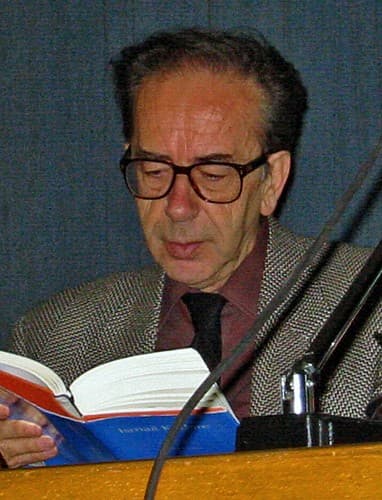
Ismail Kadare is an Albanian novelist, poet, essayist, screenwriter, and playwright. He is a leading international literary figure and intellectual. He focused on poetry until the publication of his first novel, The General of the Dead Army, which made him famous internationally.







