“I am not a monster. I am a girl with a monster inside.”
— Zera's internal struggle with her identity as a Heartless.

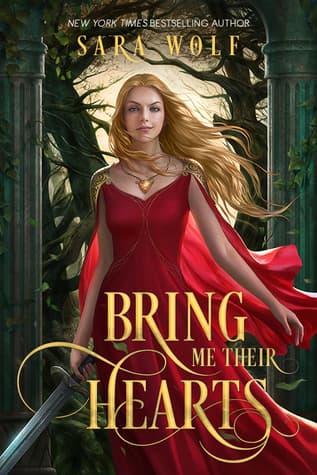
Sara Wolf (2018)
Genre
Fantasy / Young Adult / Romance
Reading Time
370 min
Key Themes
See below
Sign in to track this book
A Heartless assassin, bound by a witch's magic and desperate for her own heart back, infiltrates a royal court to steal a prince's, only to find herself entangled in a dangerous dance of wit and forbidden desire where the loser pays with their life—and their literal heart.
Zera, an immortal Heartless, lives a lonely life in the woods, bound to the witch Nightsinger. Her physical heart is in a jar, giving Nightsinger total control. Zera wants release from this service, haunted by memories of her family's murder and the painful process of becoming a Heartless. Nightsinger, seeing Zera's growing restlessness, offers a dangerous deal: retrieve Crown Prince Lucien d'Malvane's heart, and Zera will get hers back. If Zera is discovered or fails, Nightsinger will crush her heart, ending her life. This mission is Zera's only hope for true freedom, making her face the human world she has avoided for years, especially the royal court she dislikes.
Nightsinger magically changes Zera's appearance, making her look like a noblewoman, Lady Zera, and gives her a fake past. Zera arrives at the royal court, a place she sees with scorn and suspicion. Her first attempts to fit in are awkward because of her wild nature and lack of social skills, immediately getting the attention of Crown Prince Lucien d'Malvane. Their first meeting shows Zera's directness and Lucien's arrogant dismissal, creating an instant rivalry. Zera's mission is to get close to him, but her true nature as a Heartless makes her wary of any real connection, even as she finds herself interested in the mysterious prince.
To gain acceptance and get closer to Lucien, Zera decides to join the court's annual tournament, a series of challenges testing skill and wit. Despite her lack of formal noble training, Zera's Heartless strength and quick thinking allow her to do surprisingly well, often annoying other noble contestants, especially Lady Y'shennria. During these events, Zera and Lucien's rivalry grows, marked by sharp exchanges and competitive looks. Zera struggles to balance her mission with the unexpected human connections she starts to make, including a hesitant friendship with Princess Malachite, Lucien's younger sister, and the constant threat of being found out.
Tensions increase in the kingdom as rumors of war with the neighboring human kingdom of Vharden spread. The court is busy with strategy meetings and preparations, making Lucien an even more central figure. At the same time, Lucien starts to get a mysterious illness, with periods of weakness and coughing. This complicates Zera's mission; she needs him alive to take his heart, but his declining health makes her task both more urgent and harder. She watches him closely, noticing his vulnerability, which slowly weakens her resolve to see him only as a target. This period forces Zera to confront her developing feelings and the moral issues of her quest.
During one of Lucien's illness episodes, Zera finds a surprising secret: Lucien is not entirely human. He has a magical family line, which causes his illness and weakens him. This discovery greatly affects Zera, as it mirrors her own hidden nature. She realizes he is also a target, not just for her, but for those who would use his unique abilities. This shared secret forms an unexpected bond between them. Zera's mission changes from simply 'taking his heart' to a more complex goal of understanding his condition and perhaps even helping him, blurring the lines between predator and protector. She begins to question Nightsinger's real reasons.
Nightsinger, feeling Zera's weakening resolve and the delay in her mission, starts to control Zera's Heartless body more directly, causing her great pain and threatening to crush her heart. This harsh reminder forces Zera to work harder, but her growing affection for Lucien makes the task unbearable. Zera begins to secretly look for other solutions, desperate to save both herself and Lucien. She shares some of her fears and suspicions with Malachite, who, despite her youth, proves to be a surprisingly smart and loyal ally. Zera realizes the depth of the magical forces at play and the real danger Lucien is in.
The expected war with Vharden begins, bringing chaos and destruction to the kingdom. During a fierce battle, Zera's Heartless abilities are pushed to their limits as she fights alongside Lucien, protecting him and others. In the heat of combat, their guards drop, and their true feelings for each other become clear. They share a moment of vulnerability and connection, strengthening their bond. Zera struggles with the impossible choice: fulfill her bargain and betray the person she has come to care for, or defy Nightsinger and face certain destruction. The battle tests their alliance and makes Zera decide about her loyalties.
Zera's true nature as a Heartless is revealed, either by a mistake, an enemy's disclosure, or her own choice to protect Lucien. The court reacts with fear and anger, reinforcing their strong dislike for witches and their creations. Zera is cornered, her life in immediate danger from the witch-hating nobles. Nightsinger, angry at Zera's failure and defiance, appears, ready to punish her. This final confrontation forces Zera to fight for her life and her soul, and to finally choose where her loyalties lie, knowing the consequences are severe no matter her decision.
With courage and love for Lucien, Zera openly defies Nightsinger. She refuses to take Lucien's heart, choosing instead to protect him. Nightsinger, enraged by Zera's betrayal, tries to crush Zera's heart, but the magical bond between them is complex. Zera, with Lucien's help and perhaps an unexpected intervention from a third party, survives this initial attempt, though with great pain and sacrifice. Her Heartless existence is permanently changed, and she is no longer fully bound to Nightsinger. This act of defiance marks her true freedom, even if it comes at a great cost and sends her into an uncertain future, now an enemy to both Nightsinger and the human court.
After defying Nightsinger and being called a monster by the court, Zera and Lucien must flee. They become fugitives, hunted by Nightsinger's forces and possibly the royal army. Their escape is full of danger and challenges, but it also strengthens their bond. They are both outcasts, but they have each other. The ending leaves them in a risky situation, but with some hope. Zera is still a Heartless, but she has regained some of her humanity through her choices. They must now navigate a world that fears them, looking for a way to protect themselves and those they care about, and perhaps find a cure for Lucien's condition and Zera's Heartless state.
The Protagonist
Zera transforms from a cynical, obedient Heartless focused solely on her freedom to a compassionate individual willing to sacrifice for others, finding her humanity through love and defiance.
The Love Interest/Secondary Protagonist
Lucien evolves from a guarded, somewhat isolated prince to a trusting and courageous leader, willing to fight for love and challenge societal norms.
The Antagonist
Nightsinger remains a consistently powerful and malevolent force, her motivations becoming clearer as the plot progresses, but her core nature as an antagonist unchanging.
The Supporting
Malachite grows in her understanding of court intrigue and magical threats, becoming a more assertive and invaluable ally.
The Supporting
Y'shennria remains a rival, her ambition driving her actions and providing a foil to Zera's more genuine motivations.
The Supporting
Fione's character largely remains consistent, serving as a representation of the Heartless's plight and Zera's motivation to free them.
The Supporting
The King's character remains largely consistent, providing a stable, albeit sometimes misguided, authority figure.
The Mentioned
Lady Kith's role is largely static, providing background color to the court.
Zera's journey is about finding who she is beyond being a Heartless. Without her humanity, she struggles with her monstrous nature versus echoes of her past self. Her interactions with Lucien and Malachite make her face her ability to love, be loyal, and sacrifice, leading her to question what 'human' means and to build a new identity for herself. This theme is central to her internal conflict and her defiance of Nightsinger.
““I am a Heartless, a monster made of nothing but obedience and a witch's will. But I am also Zera, and I will not be broken.””
The main conflict is Zera's strong desire for freedom from Nightsinger's control. Her physical heart in a jar symbolizes the witch's absolute power over her. The deal for Lucien's heart is Zera's only path to freedom. However, as the story continues, Zera learns that true freedom is not just physical release but about having control, making choices, and breaking free from emotional and psychological manipulation, ultimately choosing love over her own survival.
““My heart is in a jar. My life is a bargain. My freedom is a lie.””
The book explores the unclear lines between humanity and monstrosity. Zera, a Heartless, is physically a monster, yet she shows more humanity, compassion, and moral struggle than many of the 'human' characters. Conversely, Lucien, a prince, has a hidden magical illness that makes him 'other,' yet he tries to protect his people. The story challenges the reader to look past appearances and social labels, suggesting that true monstrosity lies in cruelty and the abuse of power, not in one's physical form or magical nature.
““Perhaps the real monsters weren't the ones without hearts, but the ones who had them and chose not to use them.””
As Zera's feelings for Lucien grow, love and sacrifice become very important. Her first mission is to betray and kill him, but her developing affection forces her to make an impossible choice. Her defiance against Nightsinger is a deep sacrifice, putting Lucien's life and her new love above her long-sought freedom and even her existence. This theme shows how love can change things and inspire courage and selflessness, even in a being made to be unfeeling.
““I had come to steal a heart, but somehow, he had stolen mine.””
The world of 'Bring Me Their Hearts' has much prejudice against witches and magical beings like Heartless. The royal court's fear and hatred drive much of the conflict, making Zera's infiltration dangerous and her exposure possibly deadly. Lucien, with his own hidden magical background, also faces a type of prejudice. The story explores the dangers of judging based on fear and ignorance, and how important acceptance is, both of others and of one's own true nature, in forming alliances and finding belonging.
““They called me monster. And perhaps I was. But what did that make them, with their fear-filled eyes and their hate-filled hearts?””
A literal representation of Zera's bondage and Nightsinger's control.
The heart jar is the central symbolic and literal plot device. Zera's physical heart, stored in a magical jar under Nightsinger's command, represents her complete lack of autonomy. Its existence is the driving force behind Zera's quest for freedom. Nightsinger's ability to manipulate or crush the heart creates constant, high-stakes tension, serving as a magical leash that dictates Zera's actions and reminds her of the dire consequences of failure or defiance. It is the ultimate symbol of Zera's Heartless nature and her longing for humanity.
Zera's infiltration strategy and a source of dramatic irony.
Zera's disguise as Lady Zera is a critical plot device for her infiltration of the royal court. This deception creates dramatic irony, as the reader is aware of Zera's true, monstrous nature while the other characters are not. It allows for comedic moments as Zera struggles with noble etiquette, but more importantly, it heightens the tension and risk of her mission. The constant fear of exposure drives much of the narrative, forcing Zera to navigate a treacherous social landscape while hiding her true identity and purpose.
A series of challenges to advance the plot and character relationships.
The royal tournament serves as a structured series of events that allows Zera to prove her worth (or lack thereof in traditional noble skills) and gain proximity to Prince Lucien. Each challenge, whether it be a dance, a hunt, or a display of wit, provides opportunities for Zera and Lucien to interact, for their rivalry to deepen, and for Zera's unique (and often brutish) talents to shine through her disguise. It's a classic fantasy trope used effectively to drive the plot, develop relationships, and reveal character traits under pressure.
A secret affliction that creates vulnerability and deepens the bond with Zera.
Lucien's mysterious illness, later revealed to be a magical affliction stemming from his unique lineage, serves as a crucial plot device. It introduces vulnerability to the seemingly untouchable prince, making him a more complex character and a more sympathetic target for Zera. Its discovery forces Zera to see him not just as a mark, but as a fellow 'other,' forging an unexpected bond between them. The illness also provides a secondary mystery and a ticking clock, complicating Zera's mission and raising the stakes for both characters.
“I am not a monster. I am a girl with a monster inside.”
— Zera's internal struggle with her identity as a Heartless.
“Love is a weakness, and I cannot afford any more weaknesses.”
— Zera reflecting on her mission and emotional detachment.
“Sometimes the most dangerous monsters are the ones who look human.”
— Zera's observation on deceit and appearances.
“I will carve out my own heart if it means saving theirs.”
— Zera's determination to protect others despite her curse.
“Fear is a weapon, and I am well-armed.”
— Zera embracing her fears as strength.
“In a world of magic, the most powerful spell is hope.”
— A moment of optimism amidst dark circumstances.
“I am a weapon, sharpened by pain and aimed at destiny.”
— Zera's acceptance of her role and past suffering.
“The heart remembers what the mind tries to forget.”
— Reflection on emotional memories and trauma.
“To love is to risk everything, and I have nothing left to lose.”
— Zera's conflicted feelings about romance and loss.
“Monsters are not born; they are made by the choices we make.”
— Philosophical insight on morality and creation.
“My heart may be gone, but my soul still fights.”
— Zera's defiance against her cursed existence.
“In the darkness, even a spark of kindness can be a beacon.”
— Highlighting small acts of goodness in bleak times.
“I am a lie wrapped in truth, a shadow in the light.”
— Zera describing her dual nature and deception.
“The greatest battles are fought within the silence of our own hearts.”
— On internal struggles and personal wars.
Ready to see how well you understood this book? Take our interactive quiz with 10 questions.

Biography coming soon.







