“The past is never dead. It's not even past.”
— A recurring theme about the lingering influence of historical events and sins.

Douglas Preston (2004)
Genre
Historical Fiction / Mystery
Reading Time
15-20 hours
Key Themes
See below
Sign in to track this book
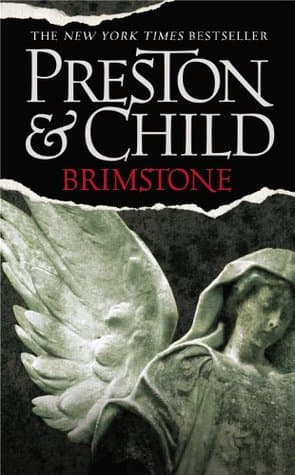
Agent Pendergast and Officer D'Agosta investigate impossible deaths marked by brimstone and claw marks, questioning if they hunt a killer or the Devil.
The novel opens with the discovery of art critic Jeremy Grove's body in his Long Island mansion. Grove is in a locked study, his face showing terror, and his body temperature is very high, as if burned from inside. The room smells of sulfur, and a distinct, three-pronged claw mark is burned into the wall. Lieutenant Vincent D'Agosta of the NYPD is called to the scene, confused by the impossible death — the room was sealed from inside, with no apparent way for an attacker to enter or exit. Local police, especially Chief John O'Malley, quickly dismiss the supernatural, but D'Agosta is bothered by the unexplainable details and the terror on Grove's face.
Special Agent Aloysius Pendergast, a mysterious and brilliant FBI agent, arrives from New Orleans to help D'Agosta. Pendergast immediately dismisses the simple explanations local police are pursuing and focuses on the strange details: the sulfur smell, the claw mark, and the impossible nature of Grove's death. He and D'Agosta begin to carefully examine Grove's life and connections, especially his recent purchase of a rare violin. Pendergast's unusual methods and deep intellect challenge D'Agosta's traditional police thinking, but D'Agosta quickly respects the agent's insights as they look deeper into the seemingly supernatural parts of the case.
A second victim, Donny Chauncey, a rich businessman and collector, is found dead in his penthouse apartment, exactly like Grove. The apartment is locked from inside, smells strongly of sulfur, and Chauncey's body is also superheated, his face frozen in terror. A similar claw mark is burned into the wall. This second death confirms Pendergast's belief that they are dealing with something beyond normal crime. The media begins to sensationalize the events, calling the killer 'The Devil' and increasing public fear. Pendergast and D'Agosta increase their investigation, looking for any link between Grove and Chauncey beyond their unusual deaths.
Pendergast and D'Agosta find a key link: both Jeremy Grove and Donny Chauncey were involved in the illegal trade of a legendary, very rare 18th-century violin known as the 'Stradivarius of the Devil' or 'Il Cannone di Satana.' This violin is rumored to be cursed, said to drive its owners mad or worse. Their investigation leads them to a network of collectors and dealers. They learn that Grove had recently bought the violin from Chauncey, and both men were known for aggressively seeking rare items, often through illegal means. Pendergast starts to suspect that the violin is not just a common thread but is central to the strange deaths, perhaps even holding a malevolent power.
Pendergast and D'Agosta trace the violin's history to a reclusive and brilliant, though eccentric, scientist named Dr. Enoch Leng, who lives in a heavily secured, run-down mansion in the Bronx. Leng is a former student of Grove's and an expert on ancient artifacts and obscure sciences. When they arrive at Leng's mansion, it is quiet. Breaking in, they find Leng's body, again, in the same impossible, superheated, sulfur-smelling condition as the previous victims, with the claw mark on the wall. The violin, however, is missing. This latest death deepens the mystery, suggesting a connection beyond simple ownership of the violin and pointing to Leng's own secret research.
Looking into Dr. Leng's past, Pendergast uncovers a dark family history going back centuries. He finds that the Leng family, especially Enoch's ancestor, an 18th-century alchemist named Antoine Leng, was deeply involved in esoteric research, trying to create a substance that could extend life or grant immortality. This research was linked with black magic and demonic pacts, according to old family journals and legends. Pendergast realizes the violin might be more than an instrument; it could be a key, a conduit, or a part of a larger, sinister alchemical experiment passed down through Leng family generations, possibly involving the essence of life and death.
To understand the supernatural, Pendergast talks to a reclusive demonologist. The demonologist explains that the 'Stradivarius of the Devil' is not just cursed but is a vessel for a powerful, evil entity, possibly a demon, trapped within its construction. This entity is responsible for the strange deaths, collecting the souls or life force of those who touch or own it. The sulfur smell and extreme heat are signs of this entity's presence. This revelation shifts the investigation's focus from a human killer to a supernatural one, forcing D'Agosta to face beliefs he once dismissed as superstition.
In a surprising turn, Pendergast discovers that Proctor, his seemingly loyal and efficient valet, has been secretly involved. Proctor, wanting immortality and eternal youth, has been manipulating events and seeking to get the violin for himself. He believes that by understanding and copying the Leng family's alchemical process, he can achieve his goal. Proctor reveals that he has been moving the violin between victims, watching the effects, and is now close to finishing the ancient ritual that would grant him eternal life, using the violin as a key part. This betrayal puts Pendergast and D'Agosta in danger.
Pendergast and D'Agosta pursue Proctor to a hidden, underground laboratory beneath Dr. Enoch Leng's mansion, a place filled with ancient alchemical equipment, strange chemicals, and disturbing texts. This is where Antoine Leng conducted his original experiments, and where Enoch Leng continued his ancestor's work. The laboratory is a maze of traps and hidden passages, meant to protect its dark secrets. Proctor, knowing Pendergast's methods and the Leng estate well, has set a series of complex obstacles. The agents realize the full scope of the Leng family's centuries-long desire for immortality and the terrifying lengths they went to achieve it, involving sacrifices and dark rituals.
Pendergast and D'Agosta finally confront Proctor in the heart of Leng's laboratory. Proctor is trying to complete the ancient alchemical ritual, using the 'Stradivarius of the Devil' to harness the life force of the deceased victims and gain immortality. He explains the complex, horrific process, revealing the true purpose of the violin and the nature of the entity within it. A desperate fight begins as Pendergast tries to stop Proctor from unleashing an unimaginable evil and condemning himself to a fate worse than death. The laboratory, filled with unstable chemicals and old mechanisms, becomes a dangerous battleground as the ritual reaches its climax.
In a final confrontation, Proctor, despite his cleverness, is consumed by the power he tried to control. The entity within the 'Stradivarius of the Devil,' unleashed during the ritual, turns on him, burning him in the same way as its previous victims, his face frozen in ultimate terror. Pendergast, seeing the great danger the violin poses, manages to destroy the instrument, breaking its hold and cutting its link to the evil entity. The violin's destruction ends the strange deaths and the immediate threat, but the experience leaves both Pendergast and D'Agosta shaken by their encounter with such an ancient and terrifying evil.
With Proctor dead and the violin destroyed, the immediate threat is gone. The official explanation for the deaths is a complex story of a crazy alchemist and an accidental chemical fire, a story Pendergast carefully created to prevent public panic and disbelief. D'Agosta, though deeply disturbed by the supernatural truths he saw, agrees to keep the cover story. The experience greatly affects him, making him rethink his view of the world. Pendergast, ever mysterious, leaves as quickly as he arrived, leaving D'Agosta to deal with the remaining questions and the chilling realization that some forces in the world defy all scientific explanation, forever changing his perception of reality.
The Protagonist
Pendergast further solidifies his role as an investigator of the supernatural and esoteric, confronting an ancient evil that challenges even his vast knowledge.
The Protagonist/Supporting
D'Agosta's worldview is shattered and rebuilt as he is forced to accept the existence of supernatural forces, transforming from a skeptic to a reluctant believer.
The Antagonist
Proctor's true nature as a manipulative, immortality-seeking antagonist is revealed, leading to his ultimate demise when he attempts to wield powers beyond his control.
The Victim/Mentioned
As a victim, Grove serves to initiate the plot and reveal the dangerous nature of the cursed violin, his past actions driving the initial investigation.
The Victim/Mentioned
As a victim, Chauncey's death reinforces the supernatural pattern and narrows the focus of the investigation to the cursed violin.
The Victim/Mentioned
Leng's death and the discovery of his laboratory reveal the centuries-old alchemical plot and the true, sinister history of the Leng family.
The Mentioned
Antoine Leng's historical actions and research establish the origin of the cursed violin and the alchemical pursuit of immortality, driving the overarching mystery.
The Supporting
O'Malley remains largely resistant to the supernatural implications, serving as a representation of conventional authority struggling with the inexplicable.
The novel explores evil in both human and supernatural forms. Human evil is seen in characters like Grove and Chauncey, driven by greed, and most clearly in Proctor's ruthless pursuit of immortality. This contrasts with the ancient, evil force of the entity within the 'Stradivarius of the Devil,' which acts as a demonic power. The story blurs these lines, suggesting that human ambition and forbidden knowledge can open doors to supernatural horrors, as seen in Antoine Leng's alchemical pacts. The terror comes from the idea that some evils are beyond human understanding and control, needing more than conventional police work to fight, as D'Agosta learns.
“There are more things in heaven and earth, Horatio, than are dreamt of in your philosophy.”
A central theme is the dangerous pursuit of knowledge beyond acceptable human limits. The Leng family, over generations, is obsessed with alchemical secrets, seeking immortality and power through forbidden means. This pursuit leads to the creation of the cursed violin and the release of an evil entity. Proctor, too, is drawn into this dangerous quest, believing he can master these ancient secrets for personal gain. The novel shows that such knowledge comes at a terrible price, leading to madness, destruction, and ultimately, a fate worse than death. It serves as a warning against pride and messing with forces beyond human understanding, similar to the Faustian bargain.
“Some secrets are best left undisturbed, for they hold the power to unravel not just minds, but souls.”
The conflict between rational, scientific explanation and the supernatural drives the story. D'Agosta, a practical detective, first dismisses the strange deaths as explainable by normal means, while Pendergast immediately sees something beyond the ordinary. As more evidence appears, D'Agosta is forced to confront his skepticism, witnessing events that defy all scientific laws. The novel challenges the reader's assumptions, pushing the limits of belief and suggesting that not everything can be understood through logic and reason. Ancient alchemy, a mix of early science and mysticism, further blurs this line, showing how humanity has long struggled with the inexplicable.
“Detective, there are phenomena in this world that defy your neat little categories of 'natural' and 'unnatural.'”
Greed and obsession are corrupting forces in the story. Jeremy Grove and Donny Chauncey are driven by their desire for rare and valuable items, leading them to the illegal black market and ultimately to their deaths. Proctor's obsession with immortality blinds him to morality, causing him to betray Pendergast and risk great destruction. Even the Leng family's centuries-long pursuit of eternal life comes from a deep obsession that becomes a destructive, generational curse. The novel shows how these human flaws can open paths to deep evil, making individuals vulnerable to darker forces and leading them to self-destruction and harm to others.
“The desire for more, for what is forbidden, is a hunger that can consume a man whole.”
A cursed, legendary violin that acts as a conduit for a malevolent entity.
This rare 18th-century violin is the central MacGuffin and plot device. It is not merely a valuable artifact but a vessel, imbued with a malevolent entity through ancient alchemical rituals and demonic pacts. Its presence is directly linked to the bizarre, superheated deaths, the sulfur smell, and the claw marks. The violin drives the plot, connecting the victims and leading Pendergast to the Leng family's dark history. Its destruction is crucial for ending the supernatural threat, making it a powerful symbol of forbidden knowledge and unleashed evil.
The seemingly impossible circumstances of the victims' deaths.
The initial deaths of Jeremy Grove, Donny Chauncey, and Dr. Enoch Leng all occur in rooms locked from the inside, with no apparent means of entry or exit for an assailant. This classic locked-room mystery setup immediately establishes the supernatural nature of the crimes, defying conventional police investigation and forcing D'Agosta and Pendergast to look beyond mundane explanations. It creates a sense of profound unease and impossibility, escalating the tension and highlighting the extraordinary nature of the antagonist.
A centuries-old pursuit of immortality through forbidden alchemy.
The extensive, generations-spanning alchemical research of the Leng family, particularly Antoine and Enoch Leng, serves as a crucial exposition device. Through their journals and hidden laboratory, Pendergast uncovers the historical context and the sinister purpose behind the cursed violin and the entity within it. This research reveals the true nature of the 'Devil's' power and the method by which it was created or bound, providing a horrifying scientific/mystical explanation for the supernatural events and Proctor's ultimate goal.
Recurring, distinct physical manifestations of the supernatural entity.
The consistent presence of a three-pronged claw mark burned into the wall and the pervasive smell of sulfur at each crime scene serve as powerful recurring motifs and forensic clues. These elements are concrete evidence of the supernatural entity's presence, defying rational explanation and forcing the characters (and the reader) to accept the impossible. They act as the 'signature' of the demonic killer, building suspense and reinforcing the escalating terror and the non-human nature of the perpetrator.
“The past is never dead. It's not even past.”
— A recurring theme about the lingering influence of historical events and sins.
“There are more things in heaven and earth, Horatio, than are dreamt of in your philosophy.”
— A character reflecting on the inexplicable nature of some events, echoing Shakespeare.
“The greatest trick the Devil ever pulled was convincing the world he didn't exist.”
— A discussion about the nature of evil and its insidious presence.
“Fear is a powerful weapon, but it cuts both ways.”
— A character observing how fear can be used to control, but also turn against its wielder.
“Every man has his price, and every woman her weakness.”
— A cynical observation about human nature and susceptibility to temptation.
“Justice is a slow wheel, but it grinds exceeding fine.”
— A reflection on the eventual, if delayed, triumph of justice.
“The truth is often stranger than fiction, and far more dangerous.”
— A character contemplating the shocking revelations uncovered during the investigation.
“Some secrets are best left buried, for the good of all.”
— A warning about the potential harm of unearthing certain truths.
“The stench of brimstone clung to him like a shroud.”
— A vivid description of a character's unsettling aura, hinting at supernatural or evil connections.
“History does not repeat itself, but it often rhymes.”
— A character drawing parallels between past and present events, seeing patterns.
“Faith is a comfort to some, a cage to others.”
— A nuanced view on the role of religion and belief in people's lives.
“The darkest corners of the human heart are where true monsters reside.”
— A reflection on the source of evil, not always external but internal.
“He carried his past like a physical burden, heavy and unyielding.”
— A description of a character haunted by their history and unable to escape it.
“Sometimes the only way to fight fire is with fire, even if it burns you in the process.”
— A character contemplating extreme measures to combat a dangerous threat.
Ready to see how well you understood this book? Take our interactive quiz with 10 questions.
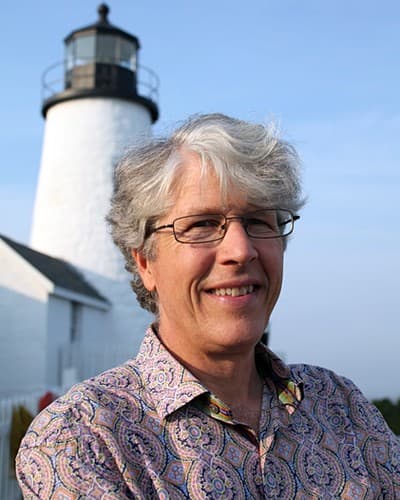
Douglas Preston is a prolific author known for his suspenseful thrillers, often co-authored with Lincoln Child. Their collaborative works, including the popular Pendergast series featuring novels like 'Relic' and 'Blue Labyrinth,' have achieved international bestseller status. Preston also co-authored the non-fiction bestseller 'The Monster of Florence,' showcasing his versatility in both fictional and true crime narratives.







