“There are some things you can't outrun.”
— Louis C. Lynch's recurring thought about the past catching up.


Richard Russo (2007)
Genre
Literary Fiction
Reading Time
10-12 hours
Key Themes
See below
Sign in to track this book
In the fading industrial town of Thomaston, an aging optimist confronts his family's complex legacy and the ghosts of his past as he prepares for a life-altering trip and unravels the mysteries of his lifelong friendships.
Louis Charles “Lucy” Lynch, a sixty-year-old owner of a successful chain of convenience stores, has lived his entire life in Thomaston, New York. He is happily married to Sarah and they have an adult son, Bobby. Lucy is an optimist, like his late father, despite a difficult relationship with his demanding mother, Tessa. As he gets ready for a long-planned trip to Italy with Sarah, he thinks about his life, his family, and his hometown, which he is trying to write about. This trip is important because he will reunite with his oldest friend, Bobby Noonan, a painter who left Thomaston decades ago for reasons unknown. Lucy hopes the journey and his writing project will help him understand his past and his friendship with Noonan.
Lucy's story goes back to his childhood in Thomaston, focusing on his friendship with Bobby Noonan. Lucy grew up poor; his family struggled financially, especially with his father's failed businesses. Bobby, however, came from a richer, though equally complicated, family. Their friendship grew despite their different social statuses, often involving adventures in town. An early event was when Bobby Noonan saved Lucy from drowning in the Thomaston River. This incident strengthened their connection but also created an unspoken debt. Lucy's mother, Tessa, a smart and driven woman, worked hard to improve their family's standing, eventually moving them to a better neighborhood and setting them up for future business success.
Tessa Lynch, Lucy's mother, is a strong figure whose ambition and business sense were key to the family's success. After years of dealing with Lucy's father's impractical ideas, Tessa took charge. She first got a job at a local convenience store, then bought and expanded it into a small chain. Her hard work and good eye for opportunities were the real reasons behind the 'Lynch empire.' Lucy often felt caught between his optimistic, somewhat naive father and his practical, demanding mother. Tessa's influence shaped much of his early life and gave him a strong sense of responsibility, even as he wished for his father's more carefree spirit. Her wish for respect and money was always part of their family life.
The story moves to the high school years, where the friendship between Lucy, Bobby Noonan, and Sarah Bergstrom becomes a love triangle. Sarah, smart and independent, is liked by both boys. Lucy and Sarah have a deep, quiet connection, but Bobby, with his artistic talent and charm, also gets Sarah's attention. This time is full of unspoken tension, jealousy, and the start of adult desires and responsibilities. A big event is the high school play, where Bobby's artistic talent shines, showing the differences between the three. The unspoken competition for Sarah's affection creates a subtle but deep crack in the boys' friendship, leading to future problems and unspoken resentments that would affect their lives.
A difficult and upsetting event happens at the local quarry, involving Lucy, Bobby Noonan, and Sarah. While the full details are unclear at first, it is clear that something disturbing happened, leaving a lasting mark on all three. This incident, hinted at through broken memories, involves a moment of carelessness, a near-tragedy, and a cover-up. The exact nature of the event, which may have involved a sexual assault or a perceived betrayal, creates a divide between Lucy and Bobby. After this, Bobby Noonan suddenly leaves Thomaston, seemingly without explanation, to pursue his art career elsewhere, leaving Lucy and Sarah to deal with the aftermath and the unspoken weight of their shared secret. This departure ends their close youthful friendship.
Along with Lucy's story, Bobby Noonan's story unfolds from his point of view in Italy. After leaving Thomaston, Noonan becomes a painter, eventually becoming known internationally. He lives a solitary life in a small Italian village, far from the small-town life of his youth. His success as an artist, however, has not brought him complete peace. Noonan's chapters show his struggles with memory, regret, and the lasting effect of his past in Thomaston, especially the unresolved issues with Lucy and Sarah. He still grapples with the events at the quarry and his decision to leave, often putting his complex feelings into his art. His thoughts offer a different view from Lucy's optimism, giving a more cynical and sad look at their shared history and the nature of memory.
After Bobby Noonan leaves, Lucy and Sarah marry and settle into a normal life in Thomaston. Lucy takes over the family convenience store business, expanding it into a successful chain, which pleases his mother Tessa. They raise their son, Bobby, named after Noonan, a choice that quietly acknowledges their absent friend's lasting, though complicated, presence in their lives. Despite their stable and successful life, the unresolved past, especially the quarry incident and Noonan's sudden exit, is an unspoken issue in their marriage. Sarah, in particular, carries the weight of past events, often showing a quiet sadness. Lucy, always an optimist, tries to focus on the present and future, but his history project constantly pulls him back to the mysteries of their shared past.
Lucy and Sarah finally go on their trip to Italy, arriving at Bobby Noonan's quiet village. The reunion between the three old friends is full of unspoken tension and complex feelings. Noonan, at first reserved, slowly starts to talk with Lucy and Sarah, and the decades-old silence begins to break. The beautiful Italian setting contrasts with the harsh realities of Thomaston, but it also helps bring up old memories. As they spend time together, parts of the past, especially the events around the quarry, come back. Their conversations, often indirect, make Lucy and Sarah face the versions of history they have believed and the uncomfortable truths that have been hidden for so long.
During their time in Italy, the full and painful truth of the quarry incident finally comes out. It is revealed that Bobby Noonan, in a moment of youthful recklessness and possibly drunk, tried to sexually assault Sarah. Lucy stepped in, but not before Sarah was deeply hurt. Noonan left because of guilt and shame, while Lucy and Sarah, to protect themselves and each other, buried the memory and never spoke of it. This revelation is devastating for Lucy, who must reconcile his idealized image of his best friend with the terrible act. Sarah, too, must revisit her trauma. The confrontation is difficult and emotional, forcing all three to face their roles, their involvement, and the lasting effects of that single, terrible day.
With the truth of the quarry incident revealed, Lucy, Sarah, and Noonan must face a painful reckoning. Noonan expresses his deep regret and shame, admitting the harm he caused. Sarah, though still deeply hurt, begins to process her trauma and the decades of silence around it. Lucy struggles to reconcile his lifelong friendship with the betrayal he now understands. The process is not one of easy forgiveness, but rather a difficult, honest confrontation with their shared history. They begin to understand the complex reasons and effects of their actions and inactions. The trip becomes less about seeing an old friend and more about a deep, though late, attempt at healing and understanding the true nature of their bonds and the burdens they have carried.
The 'Bridge of Sighs,' both the actual bridge in Venice and a symbol of moving from innocence to experience, joy to sorrow, and past to present, becomes a main idea. After the revelations, the trio visits Venice, and the bridge symbolizes the weight of their past and the chance for a new understanding. While complete forgiveness is still hard to find, a fragile peace is reached. Lucy gains a more complete, though painful, understanding of his life, his friendships, and his hometown. Sarah finds a voice for her long-hidden pain. Noonan, through his art and his late confession, seeks some redemption. They leave Italy with a clearer, more honest view of their connected lives, ready to face their remaining years with a deeper, if more complicated, sense of themselves and their relationships.
The Protagonist
Lucy moves from an optimistic, somewhat naive view of his past to a more complete, albeit painful, understanding of the dark complexities of his friendships and family history.
The Major Supporting
Sarah transitions from silently enduring past trauma to confronting it directly, finding agency and a measure of healing.
The Major Supporting
Noonan moves from self-imposed exile and suppression of guilt to a belated, painful confrontation with his past, seeking a form of redemption.
The Supporting
Her arc is largely static, representing the enduring force of her personality and influence on Lucy's life.
The Supporting/Mentioned
His influence is primarily through Lucy's memories and his legacy of optimism.
The Supporting
His arc is largely in the background, representing the future generation inheriting the family legacy.
The Supporting
He remains a static character, representing the unchanging aspects of Thomaston.
The Mentioned
His role is largely contextual, representing the community's moral compass.
The novel is built around Lucy's attempt to write a 'history' of his family and hometown, showing how memory is subjective and often unreliable. Lucy often finds differences between his idealized memories and the painful truths that appear, especially about the quarry incident and Bobby Noonan's departure. The story itself moves between Lucy's present thoughts and his detailed memories, showing how personal stories are shaped, hidden, and re-evaluated over time. The difference between Lucy's optimistic version of events and Noonan's more cynical view further highlights this theme, showing how different people remember and understand shared experiences.
““The past wasn’t dead, it wasn’t even past, as Faulkner said, and in Thomaston, New York, it was often standing right next to you at the grocery store.””
The lasting and complex friendship between Lucy, Sarah, and Bobby Noonan is a main part of the novel. Their bond, formed in childhood, is tested by class differences, romantic rivalry, and a devastating act of betrayal. Lucy's strong loyalty to Noonan, even when he is gone, is a big part of who Lucy is. The novel explores the pain of finding out that someone you trust and love can cause great harm, and the difficult process of dealing with those conflicting feelings. The trip to Italy makes them face the true nature of their loyalty and the long-term effects of their shared secrets.
““How could you know someone all your life, be closer to him than a brother, and not know the truth of what he was capable of?””
Thomaston, New York, is almost a character in itself, representing how hard it is to escape one's origins. Lucy's entire life is rooted there, and even Noonan, who left, is still tied to it through memory and regret. The novel explores how family dynamics—especially the different influences of Lucy's optimistic father and ambitious mother—shape a person's worldview and future. The small-town setting creates a sense of connection, where everyone knows everyone else's business, and the past is always present. This theme shows how our identities are linked to the places and people we come from, for better or worse.
““Thomaston was the kind of town where if you left, you never really did, and if you stayed, you never really could.””
A main tension in the novel is between Lucy's natural optimism and Bobby Noonan's more cynical, world-weary outlook. Lucy, despite difficulties, always looks for the good and tries to find positive meaning in events, like his father. Noonan, in contrast, sees the world, and especially their shared past, with regret and disappointment. This difference in themes is important in how the truth of the past is slowly revealed and processed. The novel suggests that while optimism can help people cope, a full understanding of life often means facing difficult truths, even if they break comforting illusions.
““It was easy enough to be optimistic when you hadn’t been paying attention.””
The novel looks closely at the destructive power of hidden secrets and long silence, especially about the quarry incident. The trauma Sarah experienced, and the cover-up by all three characters, affects their lives for decades, creating unspoken resentments and emotional distance. The story shows how unaddressed trauma can fester, affecting relationships and personal well-being. The trip to Italy helps break this silence, showing the difficult but necessary process of facing painful truths to begin healing, even after many years.
““Some secrets were so heavy they bent the truth out of shape, making everyone involved complicit in the lie.””
Alternating between Lucy's first-person account and Noonan's third-person perspective.
While primarily narrated by Lucy Lynch in the first person, the novel frequently shifts to Bobby Noonan's perspective, often through third-person limited sections or through Lucy's interpretation of Noonan's life. This allows for a multifaceted view of the past events, particularly the pivotal quarry incident, and highlights the subjective nature of memory and truth. By presenting both Lucy's optimistic, often idealized version of events and Noonan's more cynical and regretful one, Russo creates a rich tapestry of conflicting realities, forcing the reader to piece together the full picture alongside the characters themselves.
Interweaving present-day events with extensive recollections of the past.
The novel's structure is predominantly non-linear, with Lucy's present-day reflections on his life and trip to Italy constantly interspersed with detailed flashbacks to his childhood, adolescence, and early adulthood in Thomaston. These flashbacks are not always chronological and often jump between different periods, mirroring the way memory works. This device slowly reveals layers of information about the characters' pasts, building suspense around the central mystery of the quarry incident and the reasons for Noonan's departure, allowing the reader to experience the gradual uncovering of truth alongside Lucy.
Lucy's personal writing project as a metafictional device.
Lucy's ongoing endeavor to write a 'history' of his family and Thomaston serves as a metafictional device. It provides a natural framework for the novel's extensive flashbacks and reflections, justifying the deep dive into the past. This project also underscores the theme of memory and the construction of personal narrative; Lucy is actively trying to make sense of his life by writing it down, and the act of writing forces him to confront the gaps and uncomfortable truths in his own story. The 'history' is not just a plot element but a representation of the human need to understand and articulate one's past.
A literal and metaphorical symbol of transition, regret, and revelation.
The Bridge of Sighs, both the actual bridge in Venice and its metaphorical resonance, is a powerful symbol in the novel. Literally, it represents the journey to Italy and the reunion of the old friends. Metaphorically, it symbolizes the passage from one state of being to another—from innocence to experience, from ignorance to painful knowledge, from silence to revelation. Traditionally associated with prisoners' last view of beauty before imprisonment, it aptly represents the characters' confrontation with their past 'sins' and the emotional burden they have carried, offering a moment of poignant reflection before facing the consequences of their actions.
The small town acting as a crucible for character development and destiny.
Thomaston, New York, is more than just a setting; it functions almost as a character itself, shaping the destinies and identities of its inhabitants. Its small-town rhythms, social dynamics, and unchanging nature provide a powerful backdrop for the personal dramas of Lucy, Sarah, and Noonan. The town represents the inescapable pull of home, the weight of reputation, and the difficulty of escaping one's origins. It is a place where secrets linger and the past is always present, influencing the present lives of those who stay and those who leave.
“There are some things you can't outrun.”
— Louis C. Lynch's recurring thought about the past catching up.
“The past was like a drug, and he'd been clean for years, or so he'd told himself.”
— Louis reflecting on his past and the hold it still has on him.
“The hardest part of being a grown-up was realizing that your parents were just people, flawed and scared and trying their best, just like you.”
— Lucy Lynch's evolving understanding of her parents.
“It was impossible to live in a small town without being defined by it, in ways both good and bad.”
— Louis contemplating the inescapable influence of Thomaston on its residents.
“Sometimes you just had to let people be who they were, even if who they were wasn't who you wanted them to be.”
— Lucy's realization about accepting others, particularly her father.
“Every life was a series of choices, some small, some monumental, and every choice had consequences.”
— A general reflection on the nature of life and decision-making.
“He'd learned a long time ago that the truth often hurt, but lies, in the end, hurt even more.”
— Louis's perspective on honesty and deception.
“The thing about memory was that it was never quite accurate, always colored by what you wanted to believe, or what you needed to forget.”
— A reflection on the subjective nature of memory.
“You could leave a place, but the place never really left you.”
— Louis's feeling about Thomaston and his inability to fully escape its influence.
“It was amazing how much weight a secret could accumulate over the years.”
— Referring to the burden of long-held secrets within families and friendships.
“Hope was a dangerous thing, especially when you had so little reason for it.”
— Reflecting on the precarious nature of hope in difficult circumstances.
“The only thing worse than not knowing was knowing just enough to make you miserable.”
— A character grappling with partial, painful truths.
“Sometimes the greatest acts of love were the ones you never spoke about, the sacrifices made in silence.”
— A contemplation on unspoken acts of love and dedication.
“He understood then that true courage wasn't about being fearless, but about facing your fears anyway.”
— Louis's realization about the nature of courage in confronting his past.
Ready to see how well you understood this book? Take our interactive quiz with 10 questions.
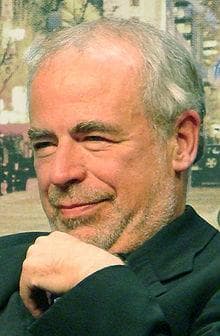
Richard Russo is an American novelist, short story writer, screenwriter, and teacher. In 2002, he was awarded a Pulitzer Prize in Fiction for his novel Empire Falls.







