“I’ve been making a tour of the places where I was happy and my memory is just a muddle. And you, my dear, were the cause of it.”
— Charles reflects on his past with Julia.


Evelyn Waugh (1945)
Genre
Literary Fiction / Historical Fiction
Reading Time
9-12 hours
Key Themes
See below
Sign in to track this book
An artist, Charles Ryder, recounts his deep involvement with the Marchmain family and the slow decline of their privileged world, influenced by modernity and faith.
Captain Charles Ryder, an officer in the British Army during World War II, is stationed near an English country estate. He is surprised to find the estate is Brideshead Castle, a place connected to his youth and the Marchmain family. The castle, now used by the military, is a shadow of its former self, a symbol of a lost era. This unexpected return brings back many memories, leading Charles to think about his past, his relationships with the Marchmain family, and how Brideshead affected his life. He looks at the familiar yet changed landscape, setting up his long flashback.
In the early 1920s, Charles Ryder is an uninspired history student at Oxford University, dealing with loneliness and an uncaring father. His life changes when he meets Lord Sebastian Flyte, the flamboyant and aristocratic son of the Marchmain family, known for carrying a teddy bear named Aloysius. Sebastian, with his charm, wit, and air of sadness, captivates Charles. They become close friends, spending their days having fun, dining at fancy restaurants, and drinking champagne. Sebastian introduces Charles to a world of privilege and beauty, drawing him away from his solitary life and into the Marchmain family's circle.
Sebastian invites Charles to Brideshead Castle for the summer. This visit is Charles's first deep experience of the Marchmain family's eccentric and Catholic world. He meets Lady Marchmain, Sebastian's religious mother, and his siblings: Julia, Cordelia, and Brideshead. Lord Marchmain, their father, lives in exile in Venice because of an affair and his rejection of the Church. Charles is fascinated by the family's complex relationships, their aristocratic life, and the strong sense of tradition and Catholicism that fills the estate. He is especially drawn to the beauty of Brideshead itself, which becomes a symbol of the family's lasting legacy.
Sebastian's heavy drinking, at first seen as charming, becomes serious alcoholism. Lady Marchmain, worried by her son's self-destructive path, tries to intervene, but Sebastian often sees her efforts as stifling. She asks Charles to be a companion and a good influence, but Charles feels caught between Sebastian's wish for freedom and Lady Marchmain's religious expectations. The family tension grows, and Sebastian's behavior becomes more unpredictable, straining his friendship with Charles, who struggles to balance his loyalty to Sebastian with his growing awareness of his friend's addiction.
Sebastian's alcoholism reaches a bad point, leading to a public scandal. Lady Marchmain, frustrated and heartbroken, tries desperately to control Sebastian, which only pushes him further away. He eventually leaves England, seeking escape from his family's expectations and his own problems, first to Venice and then to North Africa. Charles, who had tried to help Sebastian, finds himself increasingly at odds with Lady Marchmain, who blames him for enabling Sebastian's behavior. Feeling unwelcome at Brideshead, Charles also leaves, ending his close ties with the family and the estate, though the memories remain.
After leaving Oxford and the Marchmain family, Charles Ryder focuses on his architectural painting. He works hard, building a successful career and gaining recognition for his art. During this time, he marries Celia Mulcaster, a fashionable and socially ambitious woman. While his career thrives, his marriage to Celia is mostly conventional and lacks deep emotional connection. Their relationship is marked by a polite distance and a shared pursuit of social standing, rather than true intimacy. Charles achieves professional success, but a sense of emptiness and longing stays with him.
Years after Sebastian's departure and Charles's own separation from the Marchmain family, he meets Julia Flyte on a transatlantic liner. Both are unhappily married, Julia to the wealthy but uncultured Rex Mottram. Their reunion has a powerful, unspoken connection. Julia, now a sophisticated and beautiful woman, is as captivating to Charles as Sebastian once was. They begin an intense affair, finding comfort and understanding in each other. Their relationship is a desperate attempt to regain the magic of their youth, and Charles sees Julia as the embodiment of the lost world he longs for.
Lord Marchmain, after decades of living in Venice, returns to Brideshead Castle to die. His return brings the Marchmain family together, including Julia and Charles. Lord Marchmain, who had long given up his Catholic faith, at first resists the Church's rites. However, in his final moments, influenced by his daughter Cordelia's fervent prayers and a deep return to his roots, he makes the sign of the cross. This act of faith, seen by Charles, deeply affects Julia and highlights the lasting power of Catholicism within the family, even for those who tried to escape it.
Lord Marchmain's death and his unexpected return to faith deeply affect Julia. Seeing her father's final act of regret and thinking about her own Catholic upbringing, Julia realizes she cannot continue her affair with Charles without risking her soul. Despite her love for Charles, she makes the difficult decision to end their relationship, choosing to reconcile with her faith and seek spiritual redemption. This choice leaves Charles heartbroken and alone, marking the end of his dream of a life with Julia and his final removal from the intimate world of Brideshead.
Returning to the present day, Charles Ryder, now stationed at Brideshead during World War II, walks through the damaged castle. The chapel, once locked, has been reopened for military use, and a flickering sanctuary lamp shows the enduring presence of faith. Charles thinks about the Marchmain family, their struggles, their faith, and how they affected his life. He acknowledges the beauty and tragedy of their world, and though he remains an agnostic, he recognizes the unique, persistent power of their Catholicism, which shaped their lives and, by extension, his own. He leaves Brideshead, carrying his memories but with a sense of understanding.
The Protagonist
Charles evolves from an impressionable young man seeking belonging to a disillusioned, yet more understanding, individual who recognizes the enduring spiritual forces that shaped the lives he admired.
The Supporting
Sebastian descends from a charming aesthete into a chronic alcoholic seeking escape, eventually finding a form of spiritual peace in humble service.
The Supporting
Julia attempts to escape her Catholic heritage through a worldly life and an affair, but ultimately succumbs to the call of faith, renouncing her love for Charles.
The Supporting
Lady Marchmain remains steadfast in her faith throughout her life, a constant spiritual force despite personal heartbreak and her children's struggles.
The Supporting
Lord Marchmain lives decades in apostasy, only to make a symbolic return to his faith on his deathbed, revealing the inescapable pull of his origins.
The Supporting
Cordelia remains a steadfast example of unwavering faith, dedicated to spiritual service and prayer for her family.
The Supporting
Rex remains a static character, representing worldly ambition and a superficial understanding of faith and culture.
The Supporting
Cara remains a constant, understanding presence in Lord Marchmain's life, offering an objective perspective on the Marchmain family's complexities.
The novel shows the fading grandeur and eventual decline of the English aristocracy, symbolized by the Marchmain family and Brideshead Castle. Charles Ryder, an outsider, watches their world of privilege and beauty slowly fall apart under changing social norms, economic shifts, and war. The military taking over Brideshead in the beginning and end of the novel clearly marks the end of an era. The Marchmains, despite their wealth, are increasingly out of step with the modern world, their traditions losing relevance.
“''These men must die in their beds, or in their boots, or on the scaffold, but not by the hand of any woman.''”
Catholicism is a central theme, acting as both a comfort and a source of conflict for the Marchmain family. Despite their individual rebellions and attempts to escape it, the characters are repeatedly drawn back to their faith. Sebastian's sadness, Julia's guilt, and Lord Marchmain's deathbed conversion all show the inescapable hold of Catholicism. Charles, an agnostic, observes this with fascination, recognizing its deep influence even as he remains outside of it. The flickering sanctuary lamp in the chapel at the end symbolizes the quiet endurance of faith amid the ruins of the secular world.
“''The trouble with Sebastian is that he is a Catholic.''”
The entire story is a memory, with Charles Ryder looking back from a bleak wartime present to a more vibrant and seemingly perfect past. The novel romanticizes the pre-war era, especially the 1920s and 30s, as a 'golden age' of youth, beauty, and aristocratic privilege. Charles's memories of Oxford and Brideshead are filled with a longing for a lost world of innocence and beauty that he believes has been destroyed by time and conflict. This strong nostalgia shapes his perceptions and colors his descriptions, making the past seem more vivid and desirable than the present.
“''To have been in love with Sebastian was to have been in love with a part of myself.''”
The novel explores different kinds of love—friendship, romantic love, and family love—and their inherent lack of fulfillment. Charles's intense friendship with Sebastian, his affair with Julia, and the complex relationships within the Marchmain family are all marked by longing and eventual loss. Charles repeatedly searches for an ideal love or belonging that remains just out of reach. The characters' attempts to find happiness outside of their spiritual or social limits often lead to heartbreak, showing the temporary nature of worldly affections and the pervasive sense of spiritual and emotional emptiness.
“''I was in search of love in those days, and I went full of curiosity and hope to every new acquaintance.''”
The entire novel is Charles Ryder's personal recollection, filtered through his memory and emotions. His story is deeply personal, colored by nostalgia, longing, and his own changing understanding of events. He admits that his memories may not be entirely accurate, stating, "I am not I; thou art not he or she; they are not they." This self-awareness shows that memory can be unreliable and that personal perception shapes how history is told. The events are not objective facts but Charles's interpretation of a key period in his life, emphasizing the subjective nature of storytelling.
“''It is a good thing to have an end to journey towards; but it is the journey that matters, in the end.''”
The main story is told as a flashback from a disillusioned wartime present.
The novel begins and ends with Charles Ryder, now an army captain during World War II, stationed at Brideshead Castle. This framing device creates a sense of nostalgia and loss, as Charles reflects on his past experiences with the Marchmain family. It allows the narrative to be imbued with a melancholic, reflective tone, setting the stage for a story about a vanished world and the profound impact it had on the protagonist. The wartime present contrasts sharply with the pre-war 'golden age' of his memories, emphasizing the theme of decline and the passage of time.
The story is told entirely through the personal, retrospective lens of Charles Ryder.
Charles Ryder's first-person narration allows for a deeply personal and intimate account of the events. His subjective perspective means that the characters and events are filtered through his emotions, prejudices, and evolving understanding. This device highlights the theme of memory and perception, as Charles often reflects on the reliability of his own recollections. It also positions the reader to experience the Marchmains' world through the eyes of an outsider who is simultaneously captivated and ultimately distanced, fostering empathy while maintaining a critical distance.
The ancestral home represents the grandeur, tradition, and eventual decline of the English aristocracy and Catholicism.
Brideshead Castle is more than just a setting; it is a central symbol in the novel. Initially, it represents an idealized world of beauty, privilege, and tradition that captivates Charles. Its chapel, art, and gardens embody the Marchmain family's history and their Catholic faith. As the story progresses, the castle reflects the family's fortunes and spiritual state—locked and neglected at times, then reclaimed. Its final depiction as a military barracks underscores the decline of the aristocracy and the changing times, yet the re-lit sanctuary lamp in the chapel signifies the enduring, almost indestructible, power of faith.
Characters like Rex Mottram and Cara serve to highlight aspects of the Marchmains and Charles.
Waugh uses several characters as foils. Rex Mottram, Julia's uncultured and pragmatic husband, highlights the Marchmains' aristocratic sensibilities and the superficiality of a purely worldly life, particularly in contrast to Charles's aesthetic appreciation and the family's deep-seated faith. Cara, Lord Marchmain's mistress, offers an objective, non-Catholic perspective on the Marchmain family's complexities, contrasting with their intense, often self-destructive emotional and spiritual struggles. These foils provide alternative viewpoints and illuminate the core themes and character traits of the main protagonists.
“I’ve been making a tour of the places where I was happy and my memory is just a muddle. And you, my dear, were the cause of it.”
— Charles reflects on his past with Julia.
“To know and love one other human being is the root of all of it. All the rest is a form of idolatry.”
— Sebastian's view on human connection and faith.
“The languor of Youth—how delightful! How good to be in a world of such people and such places!”
— Charles's initial enchantment with Brideshead and Sebastian.
“I caught a glimpse of not just an old house but of a whole way of life that was already vanishing.”
— Charles's observation of Brideshead as a symbol of a dying era.
“Perhaps I am more attached to the place than to the people.”
— Charles's complex feelings about Brideshead.
“My theme is memory, that winged messenger that like an owl flies by night...”
— Charles's reflection on the nature of memory.
“The trouble with you, Charles, is that you are a romantic.”
— Julia's assessment of Charles's character.
“To be an agnostic is to be a man without a country.”
— Lord Marchmain's contemplation on faith.
“I’ve always been bad at letting go.”
— Charles's internal struggle with change and loss.
“It was as though a curtain had fallen, and I was left outside, in the dark.”
— Charles's feeling of exclusion from Sebastian's world.
“The world is not a place for happiness. It is a place for trial.”
— Cordelia's perspective on life and faith.
“I had been there before; I knew all about it. The hot, heavy scent of a summer day.”
— Charles's nostalgic return to Brideshead.
“You can’t just walk out on your faith.”
— Julia's struggle with her Catholic upbringing.
“It was a tiny foretaste of what was to come, a premonition of the whole unhappy future.”
— Charles's early sense of impending melancholy.
Ready to see how well you understood this book? Take our interactive quiz with 10 questions.
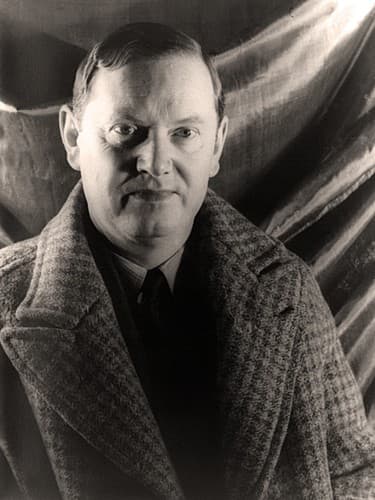
Arthur Evelyn St. John Waugh was an English writer of novels, biographies, and travel books; he was also a prolific journalist and book reviewer. His most famous works include the early satires Decline and Fall (1928) and A Handful of Dust (1934), the novel Brideshead Revisited (1945), and the Second World War trilogy Sword of Honour (1952–1961). He is recognised as one of the great prose stylists of the English language in the 20th century.







