“The past is a story we tell ourselves. But the future is a story we live.”
— Gemma's grandmother often shared wisdom about time and memory.

Jane Yolen (1992)
Genre
Fantasy / Young Adult / Romance
Reading Time
240 min
Key Themes
See below
Sign in to track this book
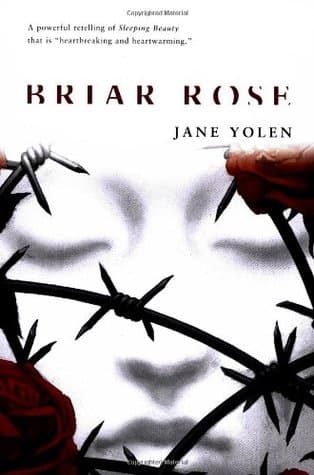
A young woman's quest to understand her grandmother's deathbed confession, 'I am Briar Rose,' leads her to a historical truth that redefines the Sleeping Beauty fairy tale with the horrors and hope of the Holocaust.
Rebecca is at her grandmother Gemma's bedside as she dies. For years, Gemma told Rebecca and her sisters a version of the Sleeping Beauty fairy tale where she was 'Briar Rose.' As Gemma dies, she asks Rebecca to 'find the castle' and 'wake the princess,' hinting that her fairy tale is a hidden truth. This wish makes Rebecca determined to find the real meaning behind Gemma's lifelong obsession with Briar Rose and the disturbing details she included in the story.
After Gemma's funeral, Rebecca looks into her grandmother's past, starting with the clues Gemma left. She finds old photos, letters, and documents, but nothing directly connects Gemma to a 'castle' or 'princess.' Rebecca talks about Gemma's stories with her parents and aunts, who know about Gemma's focus on Briar Rose but see it as a way to cope with unspoken trauma. Rebecca focuses on the hints Gemma sometimes gave about Europe and a feeling of displacement, suggesting her grandmother's life before America held the answer.
Rebecca's research uncovers a key piece of information: Gemma, whose real name was Becca, was a Jewish refugee from Poland. This discovery shifts Rebecca's focus from a literal fairy-tale castle to the realities of World War II. She learns that Gemma came to America after the war, having lost her entire family. This deeply troubles Rebecca, as it suggests the atrocities her grandmother must have endured, explaining her quiet nature and the symbolic language of her 'Briar Rose' tale. Rebecca realizes the 'sleeping' princess might represent the hidden memories of trauma.
Driven to understand Gemma's past and fulfill her promise, Rebecca travels to Poland. Her journey is guided by historical records and Gemma's fragmented memories. She learns about Chelmno, a Nazi extermination camp, which Gemma had symbolically called the 'castle' where the 'princess' slept. Rebecca's arrival in Poland is a direct confrontation with history, as she visits memorials and historical sites, grappling with the scale of the tragedy that affected her family. She begins to understand that Gemma's fairy tale was a way to process unimaginable horror.
In Poland, Rebecca seeks out local historians and survivors. She meets Josef Potocki, an elderly Polish man who was a partisan during World War II and lived near Chelmno. Josef, at first hesitant, recognizes a photograph of young Gemma (Becca) and slowly shares his memories. He says he knew Becca during the war and saw the horrors of the Chelmno camp. His testimony is important, as he fills in the missing pieces of Gemma's fragmented story, confirming the 'castle' as the camp and the 'sleeping' as the victims.
Josef Potocki takes Rebecca to the site of the former Chelmno extermination camp, now mostly overgrown. He describes the gas vans, the mass graves, and the brutality. He explains how he and his fellow partisans tried to help, often with little success. Josef recounts the day he found Becca (Gemma) among the dead, barely alive, having survived the gas. He and his group rescued her, nursed her back to health, and helped her escape. This account confirms the brutality Gemma endured and the 'sleeping' princess's near-death experience.
Josef explains that after rescuing Becca from Chelmno, they brought her to their hidden camp in the forest. She was in a catatonic state, deeply traumatized. The partisans, especially a kind woman named Magda, nursed her back to physical health, but her mind remained 'asleep' to the horrors she had seen. It was during this recovery that the 'Briar Rose' story likely began to form in Becca's mind as a way to protect herself psychologically, replacing the unbearable reality with a fairy-tale metaphor. This period marks the start of Gemma's long and difficult healing journey.
Josef clarifies that Magda, the woman who cared for Becca, became a key figure in her recovery. Magda, a strong and compassionate partisan, took on the role of protector and nurturer, fitting the 'fairy godmother' in Gemma's story. Magda helped Becca regain some sense of herself, teaching her to find strength and hope amid the devastation. Josef says that Magda's kindness and dedication helped 'wake' Becca from her psychological sleep, allowing her to process some of her trauma and begin a new life.
Josef further explains that after the war, with the help of the partisans, Becca left Poland. She eventually found passage to America, where she took the name Gemma to symbolize a new beginning, leaving her traumatic past behind, but never forgetting it. She built a new life, married, and had children, but the 'Briar Rose' story remained her personal, coded narrative of survival. Rebecca understands that Gemma's insistence on telling the story was not just for entertainment but a deep need to remember her past without explicitly reliving its horrors for her family.
With Josef's full account, Rebecca finally understands Gemma's dying wish: 'find the castle' meant uncovering the truth of Chelmno, and 'wake the princess' meant bringing Gemma's story of survival and the memory of the victims back into the light. By taking this journey, Rebecca has not only fulfilled her promise but has also 'woken' the sleeping princess within herself — understanding and accepting her family's history. She feels a deep connection to Gemma and the countless victims, realizing that remembering is a powerful act of healing.
Rebecca returns home, changed by her journey. She shares the full, difficult truth of Gemma's past with her family, who are shocked but grateful for Rebecca's determination. The fairy tale, once a whimsical story, now holds a profound and tragic meaning. Rebecca understands that while the past cannot be undone, it must be remembered. She feels a responsibility to ensure Gemma's story, and the stories of all those lost in the Holocaust, are not forgotten. Her journey has brought not only grief but also a deeper appreciation for strength, love, and the lasting power of memory.
The Protagonist
Rebecca transforms from a curious granddaughter into a keeper of memory, understanding the weight of historical trauma and finding her own strength in bearing witness.
The Central Figure (posthumous)
Though mostly revealed posthumously, Gemma's arc is one of profound survival, the creative adaptation of trauma into narrative, and ultimately, a final act of trust in her granddaughter to uncover her truth.
The Supporting
Josef's arc is one of finally sharing a long-held, painful memory, providing crucial historical testimony, and finding a sense of closure by fulfilling a moral obligation to the past.
The Mentioned
Magda's arc, though unseen, is one of selfless compassion and providing critical emotional and physical support to a traumatized survivor, enabling her eventual healing.
The Supporting
They move from a passive acceptance of Gemma's past to a full, though painful, understanding, brought about by Rebecca's discoveries, leading to a deeper appreciation for their mother's resilience.
The Mentioned
Their arc is largely static, serving as a contrast to Rebecca's proactive pursuit of truth, highlighting her unique commitment to Gemma's legacy.
The novel shows how storytelling, especially fairy tales, can be a way to cope with trauma. Gemma turns the horrors of the Holocaust into the metaphor of 'Briar Rose,' allowing her to share her experience in a coded way with her family, protecting them from the direct brutality while keeping the memory alive. This theme is central to Gemma's character and her lifelong narrative, leading to Rebecca's understanding that the fairy tale was not a lie, but a deep truth told through metaphor.
““It was the only way she could tell it, I think. Not as a story, but as a dream, a fairy tale. So that the horror would be softened.””
The novel explores memory: individual, family, and collective. Rebecca's search is an act of remembrance, ensuring that Gemma's personal history, and by extension, the history of the Holocaust, is not forgotten. The fragmented nature of Gemma's memories, her children's suppression, and Rebecca's investigation all highlight the struggle to preserve and pass on painful truths across generations. The story emphasizes the need to remember history, even when it is difficult, to honor the victims and learn from the past.
““You promised to find the castle,” Gemma had whispered, her voice barely a breath. “And wake the princess.””
Rebecca's journey is a search for truth — the truth behind Gemma's stories and her family's origins. This search for truth is tied to her own identity, as understanding her grandmother's past helps Rebecca understand her own heritage and place in the world. The shift from a whimsical fairy tale to the grim reality of the Holocaust forces Rebecca to confront the darker parts of human history and her connection to it, ultimately strengthening her sense of self and purpose.
““I wanted to know the truth, not just the fairy tale. And the truth, I was learning, was far more terrible and beautiful than any story.””
Despite the horror, the novel shows the lasting power of love and human strength. Gemma's survival, her ability to build a new life, and her love for her family show her strength. The kindness of Josef and Magda, who risked their lives to save and care for Becca, shows the capacity for compassion even in the darkest times. Rebecca's love for Gemma drives her determination, bringing healing and understanding to her family.
““They thought they had killed us all. But we survived. We always survive.””
The novel contrasts the innocent world of childhood fairy tales with the realities of the Holocaust. Gemma's 'Briar Rose' story, at first a comforting childhood narrative, is revealed to be a veiled account of suffering. This contrast shows how children are shielded from harsh truths, but also how those truths eventually appear, forcing a confrontation with the darker parts of history. Rebecca's move from childhood belief to adult understanding reflects this tension.
““The fairy tale was like a beautiful, fragile glass, holding a terrible, burning fire inside.””
Gemma's 'Briar Rose' story frames the historical narrative.
The entire novel is framed by Gemma's unique retelling of 'Briar Rose.' This fairy tale serves as a protective layer, allowing Gemma to speak of her trauma without directly confronting its horror. For Rebecca, it's the initial mystery that drives her quest. As the story unfolds, the elements of the fairy tale—the sleeping princess, the briar thicket, the castle—are systematically revealed to be powerful metaphors for the gas chambers, the trauma-induced catatonia, and the extermination camp itself. This device allows for a gradual uncovering of truth, mirroring the process of memory retrieval.
Key elements of the fairy tale symbolize aspects of the Holocaust.
The novel heavily relies on symbolism to convey the unspeakable. 'Briar Rose' is Gemma herself, a survivor who was once 'asleep' to the world due to trauma. The 'castle' is the Chelmno extermination camp, a place of death and imprisonment. The 'briar thicket' represents the impenetrable defenses of denial and the passage of time that obscured the truth. 'Sleeping' symbolizes not just the victims of the gas chambers, but also Gemma's catatonic state and the world's collective amnesia regarding the Holocaust. These symbols allow the narrative to explore profound themes without explicit, graphic detail.
The lasting psychological impact of trauma passed down through generations.
While not a single plot device, intergenerational trauma is a driving force in the narrative. Gemma's trauma, though unarticulated, subtly affects her children (Rebecca's parents) who avoid the painful truth. It is Rebecca, the third generation, who feels compelled to confront and understand this inherited burden. Her quest is a direct consequence of the lingering, unspoken pain that has permeated her family, illustrating how unresolved historical trauma can manifest in subsequent generations, driving them to seek closure and understanding.
Rebecca's journey to uncover her grandmother's past.
The novel employs a classic quest narrative structure. Rebecca embarks on a physical and emotional journey, driven by a specific goal (fulfilling Gemma's dying wish). Her quest involves overcoming obstacles (lack of information, family reluctance, the emotional weight of history) and encountering a wise guide (Josef Potocki). The resolution of the quest brings not a magical reward, but a profound truth and a deepened understanding of her identity and heritage, transforming Rebecca in the process.
“The past is a story we tell ourselves. But the future is a story we live.”
— Gemma's grandmother often shared wisdom about time and memory.
“There are some things you carry with you, no matter how hard you try to leave them behind.”
— Bechko reflects on the lasting impact of the Holocaust.
“Every fairy tale has a dark side. Every princess has her dragons.”
— Gemma ponders the true nature of fairy tales as she uncovers her family's past.
“Love is not a spell. It is a choice. A choice you make every day.”
— The grandmother imparts a lesson about the active nature of love.
“Sometimes the greatest magic is simply remembering.”
— Gemma understands the power of historical memory.
“The sleeping beauty awoke, but the world around her had not changed. It had only grown older, and sadder.”
— A reflection on the aftermath of a long sleep, contrasting the fairy tale with reality.
“Silence can be a kind of prison, too.”
— Gemma realizes the burden of her grandmother's unspoken past.
“It is harder to forget than to remember.”
— A poignant observation about the difficulty of repressing traumatic memories.
“The monsters are real, but they are not always under the bed. Sometimes they are in the history books.”
— Gemma's understanding of evil evolves from childhood fears to historical atrocities.
“A story is a way of holding the past in your hands.”
— The grandmother's perspective on the function of storytelling.
“Even a curse can be a kind of protection.”
— A philosophical thought on how adversity can sometimes shield one from worse fates.
“We are all woven into the stories of others, whether we know it or not.”
— Gemma considers the interconnectedness of lives and narratives.
“The thorns are part of the rose. You cannot have one without the other.”
— A metaphor for the dual nature of beauty and pain, particularly in love and life.
Ready to see how well you understood this book? Take our interactive quiz with 10 questions.
Biography coming soon.







