“In the midst of a world that is falling apart, to believe in the possibility of rebirth is not madness, but the deepest wisdom.”
— Spoken by Pietro Spina, reflecting on the state of Italy and the enduring hope for change.

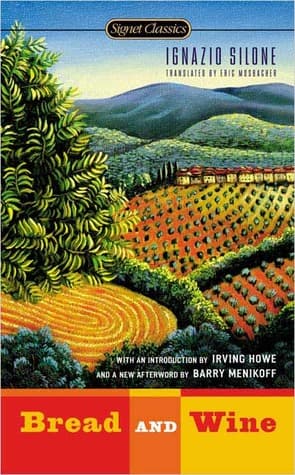
Ignazio Silone (1962)
Genre
Literary Fiction / Historical Fiction
Reading Time
608 min
Key Themes
See below
Sign in to track this book
In Fascist Italy, a disguised revolutionary navigates a treacherous world of desperate peasants, cynical priests, and brutal ideologues, battling the regime's assault on body and mind.
Pietro Spina, a socialist and anti-fascist, returns to his native Italy after 15 years in exile. He wants to continue his revolutionary work against Fascism. To avoid the Fascist secret police, he disguises himself as Don Paolo Spada, a Catholic priest. He arrives in Rome, a city under Mussolini's tight grip, and immediately feels the suffocating fear and surveillance. His initial contacts are cautious, reflecting the deep paranoia in society. He quickly learns that many old comrades have been imprisoned, killed, or have given in to the regime, leaving him isolated in a country he no longer fully recognizes.
Pietro's health, already fragile from years of hardship, quickly worsens in Rome. He develops a severe lung condition, making political activities impossible. Desperate for a safe haven and medical attention, he decides to seek refuge in the remote Abruzzi mountains, his childhood home. He plans to visit his former mentor, Don Benedetto, an elderly, respected priest known for his wisdom, who lives in Rocca dei Marsi. Spina hopes Don Benedetto, despite their different views, will offer sanctuary and a chance to recover, away from Fascist eyes.
In Rocca dei Marsi, Pietro, still disguised as Don Paolo, is welcomed by Don Benedetto and the community. He sees firsthand the harsh realities of peasant life under Fascism: extreme poverty, illiteracy, and deep resignation. The villagers, though seemingly apolitical, are affected by the regime's policies, which often prioritize urban development over rural needs. Spina witnesses their quiet suffering and the subtle ways they resist or adapt to oppression. He also meets local characters, including the cynical shopkeeper, the devout women, and young, disillusioned intellectuals like Cristina, who dreams of a different future.
Pietro spends much time with Don Benedetto, having long discussions about philosophy, religion, and politics. Don Benedetto, despite his age, has a sharp mind and understands human nature. He challenges Pietro's purely materialistic revolutionary ideals, urging him to consider the spiritual side of human suffering and the importance of individual moral responsibility. Their conversations explore truth, the Church's role, and the ethical dilemmas faced by those who fight for justice. Don Benedetto's perspective, rooted in faith, subtly influences Pietro, prompting him to re-evaluate some of his old beliefs about liberation.
The relative peace of Rocca dei Marsi is increasingly disturbed by the Fascist regime. Local officials, led by the opportunistic Podestà, tighten control over villagers' lives. Propaganda posters appear, mandatory youth organizations are enforced, and surveillance becomes more obvious. Pietro witnesses the subtle intimidation and forced conformity that Fascists impose, even in this remote area. The villagers, initially resistant in small ways, slowly begin to internalize the fear, leading to a chilling resignation and the erosion of their traditional communal bonds. This shows how pervasive Fascist control was, reaching even Italy's most isolated corners.
Pietro forms a significant connection with Cristina, a bright, idealistic young woman from the village. She represents the younger generation struggling with Fascist Italy – a generation wanting meaning and change but stifled by the regime. Cristina admires Pietro's intellect and perceived spiritual depth (as Don Paolo) and confides in him her disillusionment with the superficiality and corruption she sees around her. She struggles with her religious faith and a growing sense of social justice. Her idealism, however, is tinged with melancholy and hopelessness, reflecting the limited avenues for expression and action available to young people in that oppressive environment.
Despite his illness and the dangers, Pietro cannot entirely suppress his revolutionary spirit. Through his disguise as Don Paolo, he subtly tries to sow seeds of resistance among the villagers. He uses parables and veiled criticisms to expose the Fascist regime's injustices, encouraging people to think critically and not simply accept their fate. He discusses with more open-minded individuals, hinting at a different future. However, the widespread fear and the villagers' ingrained fatalism make his efforts challenging, showing the great difficulty of organizing dissent in such a tightly controlled society.
As Pietro spends more time in the village, his sophisticated manners, intellect, and occasional slips in clerical norms begin to raise suspicions. The Fascist authorities, always watchful, start investigating the new 'Don Paolo.' The local police chief, a shrewd and cynical man, grows increasingly doubtful of Pietro's story. At the same time, some observant villagers, including Cristina, begin to sense that there is more to 'Don Paolo' than meets the eye, leading to subtle tension as Pietro tries to maintain his elaborate deception while his true identity slowly unravels.
Pietro's disguise eventually crumbles. A mix of increased Fascist scrutiny, a careless mistake, and possibly a betrayal leads to his identity as Pietro Spina being exposed. The Fascist police launch a full-scale search for him in the Abruzzi region. Realizing the immense danger, Pietro is forced to abandon his refuge in Rocca dei Marsi and go on the run again. His flight is sudden and desperate, leaving behind the connections he had formed and the relative safety he had found, showing the relentless pursuit of political dissidents by the Fascist regime.
After fleeing Rocca dei Marsi, Pietro Spina disappears into the rugged Abruzzi mountains. He becomes a fugitive, living off the land and relying on his wits to avoid capture. This solitary wandering forces him into deep introspection. He reflects on his past actions, his political ideals, and the lessons learned from Don Benedetto and his interactions with the villagers. His journey becomes a metaphor for the isolated struggle of those who resist totalitarianism, choosing a lonely path of conscience over conformity. The ending leaves Pietro's ultimate fate uncertain but reaffirms his commitment to his ideals, even against overwhelming odds.
The Protagonist
Pietro evolves from a dogmatic revolutionary to a more reflective individual who understands the spiritual and moral dimensions of human suffering and resistance, even as he maintains his commitment to justice.
The Supporting
Don Benedetto remains a steadfast moral anchor throughout the narrative, his wisdom serving as a constant for Pietro's evolving perspective.
The Supporting
Cristina's initial idealism and search for meaning are gradually overshadowed by the oppressive reality, leading to a sense of despair and ultimately, her tragic end.
The Antagonist (minor)
The Podestà remains a static representation of local Fascist authority, his character unchanging in its opportunism and cruelty.
The Supporting
Luigi has already undergone his arc before the story begins, serving as a cautionary tale of the toll of resistance under Fascism.
The Supporting
The General's character remains largely static, serving as a symbol of the old guard's quiet decline and complicity.
The Supporting
Nunzio remains a steadfast representation of the enduring peasant spirit, adapting to circumstances without fundamentally changing his core values.
The novel explores various forms of resistance against totalitarianism, from Pietro Spina's active revolutionary efforts to Don Benedetto's quiet moral integrity and the peasants' subtle, everyday acts of defiance. It questions the effectiveness of purely political action versus a more spiritual or ethical stand. Pietro's journey suggests that true resistance involves not just fighting an external enemy, but also an internal struggle to maintain one's humanity and integrity under oppression. The peasants' fatalism also highlights how hard collective action is against a widespread regime.
“A man is never alone when he is with his conscience.”
Silone examines the interplay between religious faith, political ideology, and personal doubt. Pietro, an atheist communist, is forced into the role of a priest, making him confront the spiritual dimensions of human suffering and moral responsibilities beyond political dogma. Don Benedetto represents a profound, questioning faith that is both deeply rooted and intellectually open. The villagers often display a more superstitious or resigned form of faith. The novel suggests that while ideologies can provide structure, true humanism requires a deeper engagement with moral and ethical questions, often found in the struggles of faith and doubt.
“Bread and wine, bread and wine. That is all we need to live, and to die.”
The theme of truth and deception is central, appearing in Pietro's literal disguise, the Fascist regime's propaganda, and characters' self-deception. Pietro's 'Don Paolo' persona forces him to live a lie, yet through it, he discovers new truths about himself and others. The Fascists maintain power through falsehoods and suppressing inconvenient truths. The novel suggests that in an oppressive society, 'truth' itself becomes dangerous and elusive, and distinguishing between genuine belief and forced conformity is a constant challenge. The search for authentic truth becomes a revolutionary act.
“To tell the truth, even in a small matter, is a revolutionary act.”
Silone, from a peasant background, vividly portrays the poverty, ignorance, and resignation of the Italian peasantry under Fascism. Their lives involve hard labor, lack of education, and exploitation, making them vulnerable to both the regime's oppression and the manipulation of local elites. The novel emphasizes their deep connection to the land and their traditional ways, which are slowly eroded by modernization and political control. Pietro's interactions with them highlight the gap between intellectual revolutionary ideals and the immediate, material concerns of common people, showing the challenge of mobilizing a population accustomed to centuries of subjugation.
“Our land is poor, but our hearts are poorer.”
Pietro Spina's adoption of a priest's identity.
This device is central to the plot, allowing Pietro to evade capture and move through society, observing the effects of Fascism firsthand. More profoundly, it forces him into an identity completely antithetical to his own, prompting deep introspection and a re-evaluation of his materialist worldview. The disguise creates dramatic irony and allows Silone to explore themes of faith, truth, and the nature of moral authority from a unique perspective. It also highlights the pervasive fear that necessitated such elaborate deceptions for political dissidents.
A secluded mountain village that serves as a microcosm of Italy.
Rocca dei Marsi functions as a microcosm, allowing Silone to illustrate how Fascism permeates even the most isolated communities, affecting the lives of ordinary people. Its remoteness initially offers Pietro a degree of safety and a chance to observe society without being directly embroiled in political action. The village also represents a traditional, almost timeless Italy, providing a stark contrast to the modern, totalitarian state. Its eventual infiltration by Fascist control underscores the regime's pervasive reach and the erosion of traditional community life.
Extended discussions, primarily between Pietro and Don Benedetto.
These dialogues are a key device for exploring the novel's complex themes. They allow Silone to present differing viewpoints on faith, politics, justice, and human nature without resorting to authorial pronouncements. The intellectual sparring between Pietro's Marxist perspective and Don Benedetto's humanistic faith pushes both characters, and the reader, to consider deeper ethical and moral questions beyond simplistic ideological divides. These discussions are not merely academic; they profoundly influence Pietro's internal journey and his evolving understanding of what it means to truly fight for freedom.
“In the midst of a world that is falling apart, to believe in the possibility of rebirth is not madness, but the deepest wisdom.”
— Spoken by Pietro Spina, reflecting on the state of Italy and the enduring hope for change.
“Bread and wine are the symbols of communion, of shared life, of the sacrifice that binds us to one another.”
— A central theme of the novel, often discussed in relation to Christian symbolism and human solidarity.
“The greatest danger for those who fight for justice is not defeat, but becoming like their oppressors.”
— Pietro Spina's internal monologue about the pitfalls of revolutionary movements.
“To hide is not to escape, but to learn to see the world from another perspective.”
— Pietro Spina, in hiding, observing the daily lives of ordinary people.
“Fear is a bad master, but it can also be a good teacher.”
— A reflection on the pervasive fear under the fascist regime and its effects on individuals.
“The truth is not always what we want to hear, but it is always what we need to know.”
— Discussed in conversations about political propaganda versus genuine understanding.
“Every man has his own desert, his own solitude where he must confront himself.”
— Pietro Spina's internal musings on the necessity of introspection and isolation.
“To be truly free, one must first be free from oneself.”
— A philosophical point made during a discussion about personal limitations and societal constraints.
“The silence of the oppressed is often more eloquent than the loudest protests.”
— Pietro Spina observing the quiet suffering and resilience of the villagers.
“Hope is a delicate plant that needs constant tending.”
— A metaphor used to describe the ongoing effort required to maintain belief in difficult times.
“The most dangerous illusions are those we create for ourselves.”
— A critique of self-deception, particularly in political or personal ideals.
“To live is to choose, and to choose is to be responsible.”
— A reflection on existential responsibility in the face of political and personal decisions.
“Sometimes, the greatest act of rebellion is simply to remain human.”
— Pietro Spina's realization about the strength found in ordinary humanity amidst dehumanizing forces.
Ready to see how well you understood this book? Take our interactive quiz with 10 questions.
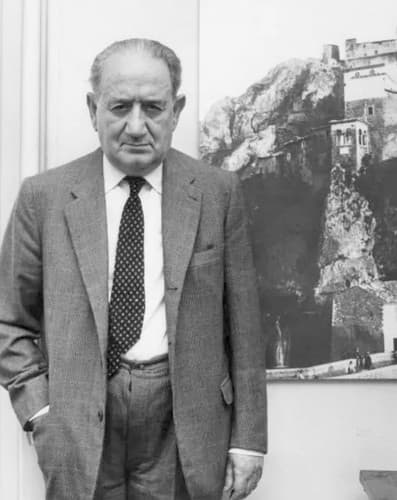
Biography coming soon.