
Biography coming soon.
Archivist's Choice
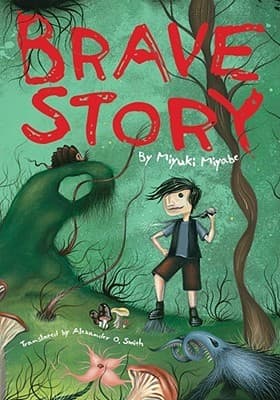
Brave Story
Miyuki Miyabe (2007)
Genre
Fantasy / Children's / Young Adult
Reading Time
12 Minutes
Key Themes
See below
Track Your Reading
Sign in to track this book
A boy's desperate journey through a parallel world to confront a goddess and gather mystical gems to rewrite his troubled fate.
Synopsis
Wataru Mitani, a troubled young boy, finds his life in chaos as his family unravels and a mysterious new student upends his world. Driven by a desperate need to alter his fate, he enters the magical realm of Vision. Here, he must embark on a perilous quest to collect five elusive gemstones, each representing a virtue like charity or bravery, to forge the powerful Demon's Bane. This artifact is his only hope of reaching the Tower of Destiny and confronting the Goddess of fate to reshape his future, all while outmaneuvering a relentless rival from his own world.
Difficulty
Medium
Pacing
Moderate
Mood
Adventurous, hopeful, determined, fantastical, bittersweet
Plot Summary
A Life Unraveling
Eleven-year-old Wataru Mitani's normal life begins to fall apart. His parents, who have been distant, announce their separation. His father leaves to live with another woman. This news shatters Wataru's security. At the same time, a new student, Mitsuru Ashikawa, joins his class, drawing attention with his aloof manner and strange powers. Wataru feels a connection to Mitsuru, but also a growing rivalry. The trouble at home, combined with Mitsuru's presence, leaves Wataru lost and desperate to change his bleak reality. He overhears his father speak of a 'goddess' and a 'chance to redo everything,' sparking hope.
The Door to Vision
Desperate to escape his pain and find a solution, Wataru follows Mitsuru to an abandoned building, rumored to be haunted. There, he sees Mitsuru perform a ritual and enter a glowing door that appears from nowhere. Overcome by curiosity and a desperate hope this door might change his fate, Wataru follows Mitsuru through the portal. He finds himself in a strange land called Vision, a world with mythical creatures, magic, and different rules. He quickly learns that Vision is a place where one can seek the Goddess of Destiny to have a wish granted, if they complete a dangerous journey.
The Traveler's Test and the First Companion
Upon entering Vision, Wataru immediately faces a test from the gatekeeper, a wise old man. He must choose his 'occupation' for his journey, which sets his initial abilities. Wataru chooses 'Traveler,' showing his desire for self-discovery. He soon meets a young, lizard-like creature named Kee-Maa, from the 'Kee-Ma tribe,' who becomes his first companion. Kee-Maa, initially wary, agrees to help Wataru navigate Vision's lands. Together, they begin their quest to reach the Tower of Destiny, learning about the world's magic, its dangers, and the five gemstones needed to power the Demon's Bane, the key to the Goddess's favor.
The Land of the Water Tribe and the Gem of Charity
Wataru and Kee-Maa travel through Vision's regions, facing challenges. Their journey leads them to the Land of the Water Tribe, where they find a community struggling with a severe drought. Wataru, seeing their trouble, feels he must help, even if it delays his own quest. He learns about the 'Gem of Charity' and realizes charity is about selflessness and understanding. By helping the Water Tribe, putting their needs before his own, and showing empathy, Wataru earns the first gemstone. This experience deepens his understanding and strengthens his resolve.
Mitsuru's Shadow and the Gem of Bravery
Throughout his journey, Wataru often meets Mitsuru, who is also seeking the Goddess of Destiny. Mitsuru, always ahead and seemingly more powerful, treats Wataru with disdain and often blocks his progress. Wataru learns that Mitsuru also wants to change his own tragic past, making their rivalry more intense. In a dangerous situation with a beast or trap, Wataru must confront his fears. Despite being outmatched, he shows courage, not just in fighting, but in protecting Kee-Maa or other innocent beings. This selfless bravery, often against Mitsuru's harsher approach, earns him the 'Gem of Bravery.'
The Forest of Doubt and the Gem of Faith
The quest takes a toll on Wataru, physically and emotionally. He has moments of doubt about his success, his wish's worth, and even the Goddess's existence. They enter a mystical forest or similar environment that preys on insecurities, showing illusions and temptations. Wataru grapples with his past mistakes and the overwhelming challenges. During this time of introspection, he must find his inner strength and belief in himself. Overcoming these psychological trials, perhaps with trust in Kee-Maa or a guiding spirit, he earns the 'Gem of Faith,' solidifying his conviction.
The Trials of the Sky People and the Gem of Grace
Wataru and Kee-Maa venture into the Sky Lands, home to an ethereal race known for their ancient wisdom and traditions. Here, Wataru faces trials that test his understanding of beauty, harmony, and compassion. He might have to mediate a conflict, show mercy to an adversary, or understand a different perspective, requiring a gentle approach. The 'Gem of Grace' is about inner harmony, forgiveness, and acting with kindness even in difficult circumstances. His actions, showing growing maturity and a graceful understanding of others' problems, lead him to acquire the fourth gemstone.
The Dark Labyrinth and the Gem of Darkness and Light
The final gemstone, representing the balance of darkness and light, is in a challenging, often metaphorical place, perhaps a 'Dark Labyrinth' or 'Cave of Shadows.' This stage forces Wataru to confront his own inner darkness, his regrets, anger, and selfish desires. He must acknowledge these parts of himself without letting them consume him, understanding that true strength comes from integrating both his virtues and his flaws. This gem is about self-acceptance and realizing that light needs darkness. Through this self-reflection, Wataru earns the fifth and final gemstone, completing the Demon's Bane.
The Ascent to the Tower of Destiny
With all five gemstones collected, Wataru has the fully powered Demon's Bane. He and Kee-Maa make their final ascent to the Tower of Destiny, Vision's highest point, where the Goddess waits. However, Mitsuru is also heading to the Tower, having acquired his own powerful artifacts, or found a shortcut through his ruthlessness. The rivalry grows as they both push towards the summit, knowing only one can have their wish granted. The journey up the Tower has its own dangers, testing their physical and mental endurance to the limit, with the stakes higher than ever.
The Confrontation and the Goddess's Judgment
At the top of the Tower of Destiny, Wataru and Mitsuru finally confront each other, their paths ending in a dramatic showdown. Their conflicting ideas are clear. The Goddess of Destiny appears, majestic and impartial, ready to judge their worth and grant a single wish. She acknowledges their journeys but stresses that their wishes and the paths they took are important. The Goddess reveals the quest's true purpose: it's not just about collecting items, but about the personal growth along the way. Wataru's wish, born from selfless love, differs from Mitsuru's, driven by anger and revenge.
The Choice and the Sacrifice
When given the chance to make his wish, Wataru, after seeing Mitsuru's despair and understanding his pain, makes a selfless choice. Instead of wishing for his own family to reunite, he uses his wish to help Mitsuru, or to fix a basic flaw in Vision that caused Mitsuru's suffering. This act of ultimate charity and grace, surprising even the Goddess, shows Wataru's transformation. Mitsuru, seeing Wataru's compassion, is deeply affected. The Goddess acknowledges Wataru's growth and the purity of his heart, signaling a resolution beyond simple wish-fulfillment.
Return to the Real World
Having completed his quest and made his selfless choice, Wataru returns to his own world. He finds that his original wish for his parents to reunite has not come true as he imagined, but his perspective has shifted. He is no longer the lost, desperate boy who entered Vision. He carries the wisdom, courage, and compassion he gained, allowing him to face his family's challenges with new maturity and resilience. The world may not have changed for him, but he has changed for the world, now able to forge his own happy future with strength and acceptance. He also understands Mitsuru's future, knowing his sacrifice affected both their destinies.
Principal Figures
Wataru Mitani
The Protagonist
Wataru transforms from a desperate, self-pitying child into a compassionate, brave, and self-aware young man who understands that true change comes from within.
Mitsuru Ashikawa
The Antagonist
Mitsuru remains largely unchanged until Wataru's selfless act, which begins to thaw his hardened heart and offers him a path towards redemption.
Kee-Maa
The Supporting
Kee-Maa's loyalty deepens, and he learns to trust and rely on Wataru as much as Wataru relies on him, growing from a cautious guide to a devoted friend.
The Goddess of Destiny
The Supporting
The Goddess's role is primarily static, serving as the ultimate goal and judge, but her presence catalyzes the arcs of Wataru and Mitsuru.
Wataru's Mother (Saori Mitani)
The Supporting
Her arc is primarily experienced through Wataru's perception; her suffering motivates his journey, and his return ultimately helps her heal.
Wataru's Father (Kenji Mitani)
The Supporting
His actions initiate the plot, but his personal arc is largely off-screen, a driving force for Wataru's transformation.
Auntie
The Supporting
Auntie's role is largely static, providing consistent emotional support for Wataru and his mother.
The Gatekeeper
The Supporting
The Gatekeeper's role is primarily to initiate Wataru's journey and provide initial guidance; he does not undergo a personal arc.
Themes & Insights
The Nature of Destiny vs. Free Will
The central theme explores whether one's fate is set or if individuals can change their own lives. Wataru's initial quest is driven by a desire to 'redo everything' and alter his family's destiny. However, his journey through Vision teaches him that true change doesn't come from a magical wish to rewrite the past, but from personal growth, conscious choices, and taking responsibility for one's actions. The Goddess of Destiny grants wishes based on the Traveler's journey and transformation, implying that while there may be a 'destiny,' it is shaped by choices made along the way.
“True courage isn't about fighting monsters. It's about facing your own heart and choosing to do what's right, even when it's hard.”
Compassion and Selflessness
Wataru's journey is a lesson in empathy and putting others before oneself. Each gemstone he collects represents a virtue, with 'Charity' and 'Grace' relating to compassion. Initially driven by a selfish desire to fix his own problems, Wataru learns the value of helping others, even those who have wronged him or are his rivals. His ultimate act of compassion, sacrificing his own wish for Mitsuru's sake, shows the power of selflessness and demonstrates that true heroism lies in understanding and easing the suffering of others, rather than simply achieving personal goals.
“The greatest power isn't in what you can take, but in what you are willing to give.”
The Journey of Self-Discovery
Beyond the fantasy, 'Brave Story' is a coming-of-age story about Wataru's internal journey. The external quest for gemstones and the Tower of Destiny mirrors his internal struggle to understand himself, his emotions, and his place in the world. Each trial forces him to confront his fears, doubts, and weaknesses, while also revealing his hidden strengths. By the end, Wataru doesn't just return with a changed situation, but as a changed person, having gained maturity, resilience, and a deeper understanding of what truly matters. The quest is a metaphor for the challenges of growing up.
“You cannot change the world until you first change yourself.”
The Nature of Good and Evil
The story explores good and evil, particularly through the rivalry between Wataru and Mitsuru. Mitsuru is an antagonist, but his motivations come from deep pain and tragedy, blurring the lines of clear villainy. Wataru learns that even those who commit cruel acts can be driven by understandable suffering, and that 'evil' is often a product of despair and unaddressed trauma. The 'Gem of Darkness and Light' symbolizes the need to accept all aspects of oneself, and the realization that 'darkness' can be understood and perhaps healed through compassion.
“There are no truly evil people in this world; only those who have forgotten how to love.”
Plot Devices & Literary Techniques
The Portal to Vision
A magical gateway to another world.
The shimmering door that Wataru follows Mitsuru through serves as the primary portal fantasy device, transporting the protagonist from his mundane, troubled reality into the extraordinary, magical world of Vision. This device is crucial for initiating the adventure and establishing the contrasting realities. It symbolizes escape, hope, and the unknown, allowing Wataru to leave behind his problems temporarily and embark on a journey of self-discovery where the rules of his old world no longer apply, making profound transformation possible.
The Five Gemstones (Demon's Bane)
Symbolic artifacts representing virtues and power.
The five gemstones – Charity, Bravery, Faith, Grace, and the Power of Darkness and Light – are the central MacGuffin of Wataru's quest. They are physical representations of the virtues Wataru must cultivate and embody throughout his journey. Collecting them is not merely about acquisition but about personal growth and understanding each virtue. When united in the Demon's Bane, they unlock the power to make a wish, but their true significance lies in the internal transformation required to earn each one, making them a powerful symbol of Wataru's character development.
The Rival (Mitsuru Ashikawa)
A dark mirror and driving force for the protagonist.
Mitsuru serves as a foil and an antagonist, embodying Wataru's potential darker path if he were consumed by despair and anger. His presence provides constant external conflict, pushing Wataru to overcome obstacles and define his own moral code. Mitsuru's own tragic backstory adds depth to his character, making him more than a simple villain and allowing for a nuanced exploration of revenge versus compassion. He ultimately becomes a catalyst for Wataru's greatest act of selflessness, highlighting the protagonist's profound growth.
The Goddess's Wish
The ultimate goal, symbolizing the power to change fate.
The promise of a granted wish from the Goddess of Destiny is the ultimate goal that drives both Wataru and Mitsuru. This device provides a clear objective for their arduous journeys. However, its true purpose is revealed to be less about the wish itself and more about the transformation required to earn it. The Goddess's power to grant a wish symbolizes the profound desire for change and the hope that external forces can fix internal problems, but the narrative ultimately subverts this, showing that true power comes from within and the choices made along the way.
Critical analysis
Notable Quotes
Quiz
Test Your Knowledge
Ready to see how well you understood this book? Take our interactive quiz with 10 questions.
10
Questions
~5
Minutes
?
Best Score
Key Questions (FAQ)
Brave Story is a fantasy novel about a young boy named Wataru Mitani whose life is in turmoil. To change his fate and solve his family's problems, he embarks on a perilous journey to the magical world of Vision to collect five gemstones that hold the power to alter his future.







