“Words can be like X-rays if you use them properly—they’ll go through anything. You read and you’re pierced.”
— Helmholtz Watson, a writer, discussing the power of language.

Aldous Huxley (2004)
Genre
Fantasy / Science Fiction / Philosophy
Reading Time
290 min
Key Themes
See below
Sign in to track this book
In a future where happiness comes from chemicals and individuality is gone, one man's desire for real experience threatens the calm, controlled society.
The novel starts at the Central London Hatchery and Conditioning Centre. Director Thomas (Tomakin) and Assistant Director of Predestination and Conditioning Henry Foster show students how humans are created and conditioned. Embryos are engineered and grown in bottles, then conditioned with methods like sleep-teaching to accept their assigned caste roles (Alpha, Beta, Gamma, Delta, Epsilon) and jobs. Citizens are encouraged to have casual sex, use the drug soma for instant happiness, and consume constantly. All this keeps the World State stable and stops individual thought or emotion. Lenina Crowne, a Beta-Plus, is an ideal citizen, while Bernard Marx, an Alpha-Plus psychologist, feels out of place and wants more.
Bernard Marx, an Alpha-Plus, is smaller than others in his caste. It is rumored he received alcohol in his blood during development, which led to him being an outcast and feeling inadequate. He does not like the casual sex and constant distractions of the World State. He prefers being alone and having serious conversations, which makes him an outsider. He likes Lenina Crowne, who is beautiful and popular. She is a perfectly conditioned citizen, enjoying casual sex and soma without question. Their relationship is strained by Bernard's desire for real connection and Lenina's inability to understand this. Her conditioning makes her uncomfortable with his unusual views and sad moods.
Bernard wants to impress Lenina and perhaps find a sense of belonging. He gets permission from the Director to visit the New Mexico Savage Reservation. Before they leave, the Director says he once visited the Reservation years ago with a woman who got pregnant and was lost there. This is a scandalous admission in the World State. During their trip, Bernard and Lenina see a Native American ritual with self-harm and sacrifice. Lenina is very disturbed by this, finding the customs barbaric and dirty. Bernard, however, is interested in the raw emotion and spiritual aspects. He senses a freedom missing in his own society. Here, they meet John and his mother, Linda.
While visiting the Reservation, Bernard and Lenina meet Linda. She is an older, overweight woman with missing teeth, an outcast from both the Reservation and the World State. Bernard is surprised when Linda says she is the woman who went with the Director years ago and got pregnant, giving birth to John. She explains she was left behind and forced to live among the 'savages.' She adopted their customs but still remembered the World State, especially her love for soma. John, her son, is a young man raised with Reservation traditions and an old copy of Shakespeare's complete works, which he values and uses to understand the world.
Bernard sees a chance to gain status and perhaps get back at the Director. He arranges for Linda and John to return to the World State. When they arrive, Bernard sets up a public confrontation at the Conditioning Centre. He reveals Linda and John are the Director's lost lover and son. This causes a scandal, as parenthood is an obscene idea in the World State, and the Director's personal involvement with a 'savage' is a major breach of social rules. Overwhelmed by shame and public mockery, the Director resigns, ending his career and influence. Bernard is satisfied for a time.
John, the 'Savage,' becomes a celebrity in the World State right away. At first, he is fascinated by the technology, cleanliness, and apparent happiness of the society. He is especially drawn to Lenina, seeing her as a beautiful Juliet, and dreams of a romantic, Shakespearean courtship. However, his initial wonder quickly turns to disgust. He is horrified by the casual sex, the common soma, the lack of real emotion, and the dehumanizing aspects of conditioning. He finds the World State's citizens shallow and their lives pointless, a sharp contrast to the deep emotions and struggles he learned from Shakespeare and the Reservation.
Linda cannot adjust to the World State's customs or her aging body. She is given unlimited soma to keep her calm. She spends her days in a drugged state, slowly getting worse. When John visits her as she is dying, he is upset by her condition and the uncaring nurses. Her death, from a soma overdose, devastates John. In a public display of raw, unconditioned grief, he yells at the nurses and then throws packages of soma out of a hospital window. He tries to free the Deltas from their conditioning. This act of defiance causes a riot and gets the attention of the authorities.
After the soma riot, John, Bernard, and Helmholtz Watson (Bernard's intellectual friend who also feels out of place) are arrested. They are brought before Mustapha Mond, the Resident World Controller for Western Europe. Mond has a deep philosophical debate with them. He explains the World State's reasons for giving up art, science, religion, and real human emotion for stability and universal happiness. He reveals his own past as a scientist who chose to become a Controller rather than be exiled for his forbidden knowledge. Mond argues that happiness, stability, and no suffering are most important, even if it means suppressing individuality and truth.
Because of their rebellion, Bernard and Helmholtz are exiled to islands. There, they can live among others who share their independent thoughts and feelings. Helmholtz accepts this fate, but Bernard still fears it. John, however, refuses exile. He seeks refuge in an abandoned lighthouse in the countryside. He wants to live a life of solitude, penance, and self-sufficiency, free from the World State's influence. He tries to purify himself through self-harm and gardening, hoping to find a meaningful existence. But his unique life is soon discovered by curious World State citizens who come to watch him.
The public's interest in John grows, turning his isolated life into a show. A reporter films John self-harming, which becomes a popular 'Feelie,' attracting even bigger crowds. Overwhelmed by the constant intrusion and seeing Lenina among the onlookers, John is pulled into a frenzied 'Orgy-porgy' ritual. This is a chaotic dance of sex and soma, fueled by the crowd's excitement. The experience leaves him distraught and disgusted with himself. He feels completely compromised and unable to match his ideals with his situation. The next morning, found by the curious crowds, John hangs himself from the archway of his lighthouse. His last act is a desperate escape from a world he could not tolerate.
The Protagonist
John moves from an idealized view of the World State to profound disillusionment and ultimately, a tragic self-destruction in his pursuit of authentic existence.
The Protagonist/Supporting
Bernard's initial rebellion stems from his insecurity, and while he briefly gains status, his lack of genuine conviction leads to his eventual exile, unredeemed.
The Supporting
Lenina remains largely static, a representation of the World State's successful conditioning, unable to adapt or truly comprehend the alternative values presented by John or Bernard.
The Supporting
Helmholtz evolves from vague dissatisfaction to a clear embrace of intellectual and emotional freedom, culminating in his willing exile.
The Antagonist/Supporting
Mond's arc is largely static, serving as the philosophical voice of the World State, revealing his past choice to maintain the system he now governs.
The Supporting
Linda's arc is one of decline and ultimate death, highlighting the World State's inability to cope with aging and illness naturally, and the destructive power of addiction.
The Supporting
The Director's arc is one of public downfall and disgrace, serving as an example of the World State's strict enforcement of its social rules.
The Supporting
Henry remains a static character, serving as a representation of the average, perfectly conditioned citizen of the World State.
The Supporting
Fanny remains a static character, serving as a foil to Bernard's non-conformity and a mirror to Lenina's initial conditioning.
The World State in 'Brave New World' shows a society where a totalitarian government controls every part of human life, from birth to death. Through genetic engineering, sleep-teaching, and conditioning, people lose their free will, individuality, and deep emotions. The Controllers value stability and happiness above all else. They achieve this by suppressing art, science, history, and real human connection. The novel warns about the appeal of a seemingly perfect society that trades freedom for comfort and order. It shows how such control leads to people becoming less human, seen in the robotic obedience of most citizens and John the Savage's final despair.
“''But I don't want comfort. I want God, I want poetry, I want real danger, I want freedom, I want goodness. I want sin.'”
A main theme is how individuality and real human connection are removed in the World State. Citizens are mass-produced and conditioned to fit into set castes. Unique thoughts and feelings are suppressed from childhood. Relationships are superficial and casual, without love, commitment, or deep emotional bonds. The idea of family is considered disgusting, and being alone is seen as abnormal. Bernard Marx's feeling of being an outsider and John the Savage's strong desire for real love and friendship show the deep emptiness that comes from this loss. The novel suggests that true humanity needs individual thought, personal suffering, and real relationships.
“''Everybody belongs to everybody else,' he repeated. 'Everybody belongs to everybody else.'”
Huxley explores the conflict between engineered, widespread happiness and the search for truth and individual freedom. The World State gives its citizens constant pleasure through soma, casual sex, and constant distraction. It removes pain, suffering, and difficult emotions. Mustapha Mond argues that this engineered happiness is better than a life with uncomfortable truths, real art, and complex human experiences. However, John the Savage, and to some extent Bernard and Helmholtz, find this happiness shallow and meaningless. They want the depth, beauty, and even the pain that come with real human existence. This shows that a life without challenges and deep meaning is ultimately unfulfilling, even if it is 'happy'.
“''The world's stable now. People are happy; they get what they want, and they never want what they can't get.'”
The novel looks closely at how advanced technology and science can be used for social control instead of human improvement. Genetic engineering, conditioning, and reproductive technologies create a perfectly ordered, caste-based society. Soma, a strong mood-altering drug, is a scientific achievement used to suppress disagreement and ensure contentment. While these advances remove disease, aging, and war, they also strip humanity of its essence, making people mere parts of a societal machine. Huxley warns that uncontrolled scientific progress, without ethical thought and human values, can lead to a dystopian future where humanity's greatest achievements become its biggest chains.
“''We can make a new world, a world where people are happy all the time.'”
The World State controls its people not only through direct conditioning but also through a widespread culture of consumerism and distraction. Citizens are always encouraged to buy new products, engage in superficial entertainment (Feelies, Obstacle Golf), and have endless casual sex. This constant stimulation and focus on material pleasure stops any deep thought, critical analysis, or emotional reflection. The goal is to keep citizens busy and satisfied with surface pleasures, diverting their attention from any unhappiness with their controlled lives. This theme shows how a society can be controlled not by force, but by engineered contentment and endless consumption.
“''Ending is better than mending. The more stitches, the less riches.'”
A futuristic society that appears utopian but is inherently repressive.
The World State serves as a classic dystopian setting, presenting a seemingly perfect society free from war, poverty, and suffering, achieved through scientific control. However, this perfection comes at the cost of individual freedom, emotional depth, and genuine human experience. The contrast between the World State's promises and its dehumanizing reality is central to the novel's critique of totalitarianism and unchecked scientific progress. The setting allows Huxley to explore the dark side of a 'utopian' vision, where happiness is enforced and individuality eradicated.
A method of conditioning used to instill societal values and beliefs during sleep.
Hypnopaedia is a key conditioning technique used by the World State to instill moral and social values, as well as caste-specific beliefs, into children while they sleep. It is not used for intellectual learning but for moral conditioning, ensuring that citizens internalize the World State's slogans and ideologies from an early age. This device highlights the insidious nature of brainwashing and how deeply ingrained societal norms can become when implanted subconsciously, making rebellion or even individual thought incredibly difficult for the conditioned citizens, as exemplified by Lenina's inability to question her programming.
A powerful tranquilizing drug used to maintain social stability and individual happiness.
Soma is a ubiquitous, mood-altering drug provided by the World State to its citizens. It offers instant happiness, dulls pain, and suppresses any unpleasant emotions or thoughts, acting as a powerful tool for social control. It allows citizens to escape reality and avoid confronting any underlying dissatisfaction with their lives. The drug symbolizes the World State's promise of perpetual contentment and its method of pacifying its population, demonstrating how a government can control its people not through fear, but through engineered pleasure and distraction, making them willingly compliant. John's attempt to throw away soma highlights its role as a key mechanism of enslavement.
A contrasting environment that preserves traditional, 'primitive' human life.
The Savage Reservation serves as a crucial foil to the World State, representing a 'primitive' and uncontrolled way of life. It is a place where natural birth, family, religion, and suffering still exist, providing a stark contrast to the sterile, engineered existence of the civilized world. This setting allows Huxley to introduce John the Savage, whose upbringing on the Reservation provides him with a unique perspective and a critical lens through which to view the World State. The Reservation highlights what has been lost in the pursuit of stability and happiness, serving as a reminder of traditional human values and experiences.
John the Savage's reliance on Shakespeare to interpret his world.
John the Savage's deep familiarity with Shakespeare's plays, particularly 'Romeo and Juliet' and 'Othello', provides him with a vocabulary and framework for understanding human emotion, love, tragedy, and morality that is entirely absent in the World State. His constant quoting of Shakespeare highlights the richness and complexity of human experience that has been suppressed by the World State. This device emphasizes the power of art and literature to convey profound truths and emotions, contrasting sharply with the superficial and conditioned language of the civilized world, and underscoring John's tragic inability to find an outlet for such depth in his new environment.
“Words can be like X-rays if you use them properly—they’ll go through anything. You read and you’re pierced.”
— Helmholtz Watson, a writer, discussing the power of language.
“But I don't want comfort. I want God, I want poetry, I want real danger, I want freedom, I want goodness. I want sin.”
— John the Savage rejecting the World State's values in a conversation with Mustapha Mond.
“A gramme is better than a damn.”
— Slogan promoting the use of soma, a happiness-inducing drug, to avoid negative emotions.
“Ending is better than mending. The more stitches, the less riches.”
— Consumerist slogan encouraging disposal of old items rather than repair.
“Everyone belongs to everyone else.”
— A fundamental principle of the World State promoting promiscuity and communal relationships.
“I ate civilization. It poisoned me; I was defiled. And then... I ate my own wickedness.”
— John the Savage expressing his self-loathing and struggle with his desires.
“Happiness is never grand.”
— Mustapha Mond explaining why the World State prioritizes shallow happiness over deep, challenging experiences.
“One believes things because one has been conditioned to believe them.”
— Mustapha Mond discussing how societal conditioning shapes beliefs and behaviors.
“The world's stable now. People are happy; they get what they want, and they never want what they can't get.”
— Mustapha Mond defending the World State's engineered society to John the Savage.
“I want to know what passion is. I want to feel something strongly.”
— Helmholtz Watson expressing his artistic frustration with the emotionless society.
“Civilization is sterilization.”
— Bernard Marx reflecting on the sanitized, controlled nature of the World State.
“You can't make tragedies without social instability.”
— Mustapha Mond explaining why art and literature are restricted in the World State.
“O brave new world that has such people in it.”
— John the Savage quoting Shakespeare's The Tempest, initially with hope, later with irony.
Ready to see how well you understood this book? Take our interactive quiz with 10 questions.
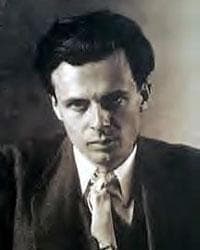
Aldous Leonard Huxley was an English writer and philosopher. His bibliography spans nearly 50 books, including novels and non-fiction works, as well as essays, narratives, and poems.







