“Basketball is the only thing that makes sense to me.”
— Finley expresses his reliance on basketball to cope with life's challenges.

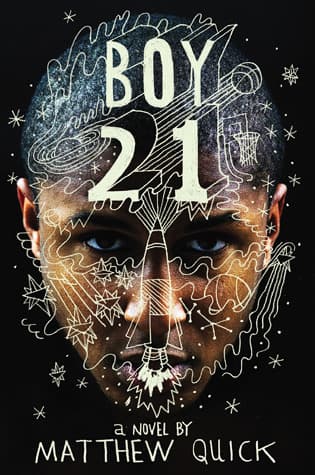
Matthew Quick (2013)
Genre
Young Adult / Romance
Reading Time
250 min
Key Themes
See below
Sign in to track this book
In a town marked by the Irish Mob and racial divisions, Finley, a white basketball player, finds his court refuge challenged by Russ, a former star who now only answers to 'Boy21' and dreams of space, forcing both to face their shared pain and unexpected path to recovery.
Finley, called 'White Rabbit' because he is the only white player on the varsity basketball team, lives in the crime-ridden town of Bellmont. He cares for his grandfather, who uses a wheelchair, and finds his main escape in basketball. He plays with his girlfriend, Erin, who is also a star player. Bellmont has the Irish Mob, drug activity, and racial tensions, creating constant danger. Finley wants to leave Bellmont with Erin, using basketball as their way out. He wears number 21. On the court, his life's chaos disappears, replaced by the game's order and purpose. His life involves school, basketball, and caring for his grandfather, a routine that provides some stability.
Coach Powers asks Finley to look after a new student named Russ. Russ, a former basketball star from a wealthy part of Philadelphia, has experienced a severe trauma. His parents were murdered, and he was found with their bodies. This tragedy has left him disturbed, making him believe he is an alien named Boy21, a reference to his former jersey number. Coach Powers wants to help Russ get back to normal and possibly play basketball again. He asks Finley to be his guide and friend, even if it means Finley sacrifices some of his own playing time. Finley is unsure at first, seeing the big commitment this will be and how it might affect his basketball goals.
Finley agrees to Coach Powers' request and starts spending time with Russ, who insists on being called Boy21. Russ's behavior is unpredictable; he mostly communicates through his alien persona, speaking in a detached, philosophical way about space, stars, and his 'home planet.' He carries a small, smooth rock, claiming it is a piece of his spaceship. Finley struggles to understand Russ, who seems disconnected from reality and his trauma. Their talks are often one-sided, with Finley trying to engage Boy21 while Boy21 stays lost in his space delusions. Despite the difficulty, Finley tries to be patient, slowly learning to deal with Boy21's unique way of thinking.
As Finley spends more time with Boy21, his own life gets more complicated. His basketball performance suffers, leading to less playing time, which frustrates his teammates and Coach Powers. The stress also affects his relationship with Erin. She struggles to understand Finley's strong commitment to Boy21 and feels ignored, especially as their dream of leaving Bellmont through basketball seems to be fading. Finley, caught between his loyalty to Coach Powers, his promise to Boy21, and his own goals, feels more isolated and burdened. He starts to question his decision as the cost to his personal life and future grows.
Amidst Boy21's constant alien persona, Finley starts to see brief glimpses of the boy Russ once was. Once, at the park, Boy21 briefly drops his act, showing raw sadness when talking about his parents. Another time, he shows a flicker of his old basketball skill, instinctively making a perfect shot. These moments are rare and quickly disappear behind the alien mask, but they give Finley hope that Russ is not completely lost. Finley realizes that Russ's alien identity is a way to cope, a way to distance himself from the unbearable pain of his past. These glimmers strengthen Finley's desire to help him.
The already unstable atmosphere in Bellmont worsens. Drug-related violence and racial tensions increase. Finley's friend and teammate, Wesley, is caught in a gang dispute, suffering a serious injury that keeps him from basketball. This incident deeply affects Finley, showing the constant danger in their town. The rising violence makes Finley's dream of leaving with Erin even more urgent. The threats seem bigger, making the basketball court feel less like a safe place and more like a temporary break from the harsh realities outside. The constant fear adds stress to Finley's already difficult life.
One night, Erin is attacked and sexually assaulted by members of the Irish Mob, a result of the rising violence in Bellmont. The attack leaves her physically and emotionally broken, ending her basketball career and devastating Finley. Her dreams, and their shared future, are shattered. Finley is consumed by grief, anger, and a deep feeling of helplessness. This tragedy breaks his world, making him question everything. The incident also affects Boy21, who, in a rare clear moment, shows genuine distress and empathy, briefly dropping his alien persona to comfort Finley. This is a big step in Boy21's own healing.
Erin's attack helps Russ change. Seeing Finley's despair and the horror of the event seems to shock him back to reality. Slowly, the 'Boy21' persona starts to fade. Russ begins to speak more normally, talking about his past, and showing renewed interest in basketball. He asks Finley to take him to the court, where he shows his incredible talent, playing with a fierce skill that had been hidden. He asks for his old jersey number, 21, showing his return to his identity as Russ, the basketball player. This change is a direct response to the human suffering he witnessed, forcing him to face reality.
In a selfless act of friendship, Finley gives up his jersey number 21 for Russ. Russ, now fully embracing his identity and talent, plays on the court and quickly becomes the Bellmont team's star player. His exceptional skill and determination energize the team, leading them to many wins. Finley, meanwhile, finds a new purpose. He takes on a supporting role, becoming an important part of the team not as the star scorer, but as a facilitator, a rebounder, and a key defensive player. He finds satisfaction in helping the team succeed and supporting Russ's recovery.
As Russ does well on the court, Finley and Erin slowly begin the hard process of healing. Erin, though unable to play basketball, finds strength in Finley's support and starts to rebuild her life. Finley, no longer carrying the burden of being the team's only hope for escape, finds peace. He realizes that his future does not have to be defined only by basketball scholarships. He accepts that his future with Erin will be different than they imagined, but still possible. The experience with Russ, and the tragedy with Erin, makes Finley mature and find inner strength, realizing that true escape is not just about leaving Bellmont, but finding peace within himself.
The Protagonist
Finley transforms from a hopeful but burdened basketball star to a selfless friend who finds his own identity and peace outside of conventional success.
The Supporting/Co-protagonist
Russ starts as a deeply traumatized individual lost in delusion, gradually finding his way back to reality and his identity as a basketball player and a human being.
The Supporting
Erin's arc moves from a hopeful, ambitious athlete to a victim of violence, who then begins the arduous journey of healing and redefining her future.
The Supporting
His character largely remains static, serving as a grounding force and a source of responsibility for Finley.
The Supporting
Coach Powers remains a steadfast mentor, guiding his team through challenges and fostering growth in his players.
The Supporting
Wesley's arc is cut short by violence, serving as a tragic illustration of Bellmont's dangers.
The Mentioned
Not applicable; he is primarily a background figure.
The Antagonist
Not applicable; they are a collective antagonistic force.
The novel explores how characters deal with who they are, especially after trauma and societal expectations. Finley struggles with his identity as the 'White Rabbit' on a mostly Black team and later as Boy21's protector. He eventually finds a new self beyond his initial basketball goals. Russ's 'Boy21' persona is an extreme example of a broken identity, a coping mechanism he must lose to find himself again. Erin also faces an identity crisis after her attack, as her athletic identity is taken away, forcing her to redefine herself. The book suggests that identity is not fixed but changes through experience and hardship.
“Maybe Boy21 isn't really an alien. Maybe he's just a kid who got lost.”
Trauma is a main theme, appearing in different ways for Russ, Finley, and Erin. Russ's alien delusion is a direct response to his parents' horrific murder, showing how the mind can create defenses against unbearable pain. Finley experiences trauma through his life in Bellmont and directly through Erin's attack, which deeply affects him. Erin's physical and emotional trauma after the assault shows the long and difficult path to healing. The story illustrates that healing is not a straight line and often requires connection, empathy, and courage to face painful truths. The book suggests that shared suffering can surprisingly lead to recovery.
“Sometimes the only way to get through something is to pretend it never happened, even if it did.”
The bond between Finley and Russ is the emotional center of the novel, showing the power of friendship. Finley's strong commitment to Russ, even at the cost of his own playing time and relationship with Erin, is a selfless act. He puts Russ's well-being above his own desires, showing true friendship. This sacrifice leads to Russ's healing and, unexpectedly, opens new paths for Finley. The story shows how real connection and empathy can provide help in times of despair and how sacrificing for another can lead to unexpected personal growth.
“I didn't want to be Boy21 anymore. I just wanted to be Russ, and I wanted to be on that court with Finley.”
The desire to escape Bellmont's harsh realities drives many characters. Finley and Erin initially see basketball as their way out, a symbol of hope for a better future. The widespread violence, drug abuse, and racial tensions make Bellmont a place from which escape feels necessary. However, the novel also redefines what 'escape' means. While physical escape might be a goal, the characters learn that true freedom comes from inner peace, healing, and finding purpose, rather than just moving away. The shattering of one dream (basketball scholarships) forces them to find new sources of hope and new definitions of success.
“We were going to get out of Bellmont. That was the plan. Basketball was the way.”
The town of Bellmont itself is a powerful force, shaping the lives of its residents. It is shown as a place with crime, poverty, racial tension, and a general feeling of hopelessness. This environment makes characters like Finley mature quickly, carry heavy burdens, and constantly seek an escape. The violence, shown by the Irish Mob, directly affects the plot through incidents like Wesley's injury and Erin's attack, showing how the outside world can brutally intrude on personal dreams. The environment's constant pressure makes the characters' resilience and their small victories more significant, showing the struggle to maintain humanity and hope in difficult circumstances.
“Bellmont was a place you didn't leave without a fight. Or, if you were lucky, with a scholarship.”
A coping mechanism for trauma, symbolizing emotional detachment.
Russ's adoption of the 'Boy21' identity, coupled with his belief in being an alien, serves as a powerful psychological defense mechanism. This persona allows him to distance himself emotionally from the horrific trauma of his parents' murders. It functions as a narrative device to illustrate the profound impact of grief and the mind's capacity to create elaborate fantasies to cope with unbearable pain. The gradual shedding of this persona as Russ begins to heal marks a significant turning point in his character arc and in the overall narrative, symbolizing his return to reality and humanity. It makes his journey back to himself more poignant and impactful.
A symbol of hope, escape, and later, a means of connection and healing.
Basketball operates as a multifaceted symbol throughout the novel. Initially, for Finley and Erin, it represents their primary hope for escaping the grim realities of Bellmont through college scholarships. It's a source of identity, discipline, and a temporary sanctuary from their troubled lives. For Russ, it's a forgotten talent, a link to his past self before trauma, and later, a powerful tool for his reintegration and healing. The game's structure and rules contrast sharply with the chaos of Bellmont, offering order and purpose. Ultimately, it evolves from a personal ambition into a shared language and a collective endeavor that binds the characters together, even as their individual roles within it change.
Provides an intimate perspective on Bellmont's harsh realities and Finley's internal struggles.
The story is told from Finley's first-person perspective, which allows readers to experience the gritty reality of Bellmont, his internal conflicts, and his developing understanding of Russ directly through his eyes. This narrative choice creates a strong sense of empathy for Finley, making his burdens, sacrifices, and emotional journey deeply personal. It also makes Russ's 'Boy21' persona more mysterious and compelling, as we only learn about it through Finley's interpretations and observations. The limited perspective emphasizes Finley's isolation and the subjective nature of his experiences, drawing the reader into his world and his moral dilemmas.
A recurring motif representing identity, shared purpose, and sacrifice.
The number 21 holds significant symbolic weight in the novel. It is Finley's jersey number, representing his identity as a basketball player and his aspirations. It is also the number Russ wore before his trauma, and the origin of his 'Boy21' persona. The transfer of the number from Finley to Russ symbolizes Finley's ultimate act of sacrifice and friendship, as well as Russ's reclamation of his identity and talent. It signifies a passing of the torch and a shared connection between the two boys, binding their fates together. It becomes a powerful emblem of their intertwined journeys and the choices they make for each other.
“Basketball is the only thing that makes sense to me.”
— Finley expresses his reliance on basketball to cope with life's challenges.
“Sometimes you have to leave the only home you've ever known to find yourself.”
— Reflecting on the changes and growth experienced by the characters.
“We're all just trying to survive in our own ways.”
— A moment of understanding between Finley and Russ about their struggles.
“The court is the one place where I don't have to think about anything else.”
— Finley describes basketball as an escape from his troubled life.
“You can't run from your past, but you can learn to live with it.”
— Advice given to Finley about dealing with trauma and history.
“Friendship is about being there, even when you don't know what to say.”
— Highlighting the bond between Finley and Russ as they support each other.
“In Bellmont, you either play ball or you get caught up in something worse.”
— Describing the limited options and dangers in their hometown.
“He calls himself Boy21, but I think he's just trying to forget who he was.”
— Finley's observation about Russ's new identity as a coping mechanism.
“Love isn't always about grand gestures; sometimes it's just showing up.”
— Reflecting on the quiet, consistent support in relationships.
“We all have our own version of normal, and that's okay.”
— Acknowledging the different ways characters deal with their realities.
“The stars don't care about our problems; they just keep shining.”
— A moment of perspective under the night sky with Russ.
“Sometimes the hardest part is letting someone in.”
— Finley's struggle to open up and trust others.
“You don't have to be okay all the time. It's enough to just be.”
— Words of comfort during a difficult emotional moment.
“Home isn't a place; it's the people who make you feel safe.”
— Realization about what truly constitutes home for the characters.
Ready to see how well you understood this book? Take our interactive quiz with 10 questions.

Biography coming soon.