“I was a scavenger. I was a survivor. I was a creature of habit. I was a creature of instinct. I was a creature of a thousand tiny betrayals, most of them my own.”
— The narrator, Rachel, reflecting on her nature and past in the ruined city.

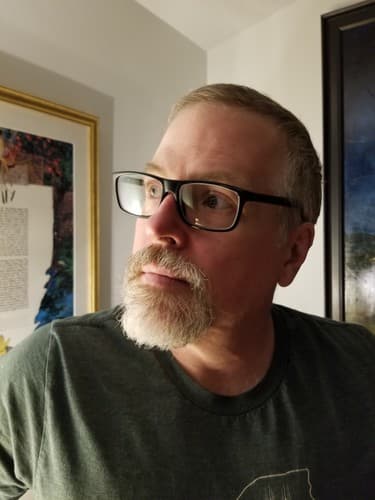
Jeff VanderMeer (2017)
Genre
Fantasy / Science Fiction
Reading Time
6-8 hours
Key Themes
See below
Sign in to track this book
In a city after the apocalypse, ruled by a giant, flying bear, a scavenger develops a strange connection with an evolving creature she calls Borne. This forces her to face dangerous truths about her lover and the biotech company that changed their world.
In a ruined, unnamed city, Rachel scavenges bioengineered scraps, often from the fur of Mord, a huge, flying bear who terrorizes the city but also provides food. One day, she finds a small, green, shapeless blob tangled in Mord's fur. This creature, which she names Borne, is unlike anything she has seen, possibly a discarded Company experiment. She feels an immediate, strong connection to it, a feeling she usually hides as a weakness in their harsh world. Wick, her lover, sells bioengineered memory-creatures and initially wants to harvest Borne for its genes. But Rachel convinces him to let her keep it, a choice that goes against their practical, survivalist life in the underground refuge of the Balcony Cliffs.
Borne quickly changes from a simple blob into a conscious, speaking being, showing endless curiosity and a childlike need for affection and information. Rachel starts teaching Borne about their world, sharing stories of her lost island home and the city's dangers. Borne's questions are sharp and often unsettling, exploring their existence and the Company's origins. This fast development strengthens Rachel's protective feelings but also changes her relationship with Wick, who sees Borne with both fascination and suspicion. Borne makes the Balcony Cliffs feel more like a home, but also more exposed.
As Borne grows, Rachel's worry about Wick's past increases. She finds a hidden, burned journal titled 'Mord' in Wick's apartment, along with unclear mentions of a rival drug dealer called the Magician. More troubling, she finds blueprints showing that the Balcony Cliffs' layout strangely matches the Company building's design. These findings confirm her suspicions that Wick is hiding important secrets about his time with the Company and his real connection to Mord. Wick's evasiveness and reluctance to talk about his past fuel Rachel's distrust, causing a rift in their relationship and making her question his reasons for protecting her and Borne. She realizes her sanctuary might be a trap Wick designed.
Borne, driven by its growing intelligence and a desire to understand its own origins, starts acting more recklessly. It manipulates memory-creatures and does things that attract Mord's attention. Mord, the huge, flying bear, is not just a force of nature but a tormented creature, once a Company experiment itself, now a tyrannical ruler of the skies. Borne's interactions with Mord, whether on purpose or by accident, signal to the giant bear that something important is happening in the Balcony Cliffs. This increased attention from Mord puts Rachel, Wick, and their whole refuge in serious danger, forcing them to face the true power of the Company's creations.
The Magician, a clever and manipulative rival drug dealer, tries several times to get into the Balcony Cliffs. The Magician knows about Wick's past with the Company and his unique supply of memory-creatures, and sees Borne as valuable or a threat. These attempts lead to dangerous conflicts, forcing Rachel and Wick to defend their home and secrets. The Magician's presence shows how unstable their lives are, highlighting the constant threat from outsiders trying to exploit Company leftovers. Rachel realizes the Magician knows a lot about Wick's past, further deepening her suspicions about Wick's true loyalties and how much he has hidden.
Through its own investigations and meetings, Borne eventually discovers a terrible truth: it is not a separate creature, but a piece, a 'child' of Mord, made from the bear's genetic material during the Company's experiments. This discovery shatters Borne's developing sense of self and its relationship with Rachel, causing a deep identity crisis. Borne struggles with being part of the creature that terrorizes their world and what it means to exist as a derived being rather than a unique individual. This forces Borne to deal with its inherited nature and its possible future, echoing the existential questions raised by all Company creations.
Cornered by Rachel's discoveries and Borne's increasingly wild behavior, Wick finally admits his past: he was a geneticist at the Company. He reveals his part in the experiments that turned a normal bear into the huge, flying Mord, and explains his guilt over Mord's suffering and destruction. Wick admits he designed the Balcony Cliffs as a smaller copy of the Company's facility, a place where he could continue his work, perhaps even to find a way to 'fix' Mord. His confession is a painful revealing of his carefully kept secrets, explaining his knowledge of Company technology and his deep, conflicted connection to Mord and, by extension, Borne. This revelation completely changes Rachel's view of Wick and their shared sanctuary.
Driven by Borne's actions or perhaps an instinctive pull to its fragmented self, Mord attacks the Balcony Cliffs. The huge bear, a force of nature and bioengineered horror, tears through their defenses, causing massive destruction. Rachel, Wick, and Borne are forced into a desperate fight for survival. This confrontation is not just physical; it is a clash of wills and a reckoning with the results of Company experiments. The fight is brutal and chaotic, showing Mord's immense power and how fragile their refuge is. Rachel and Wick must use all their combined knowledge and resources to resist the attack, as the Balcony Cliffs collapse around them.
In a dramatic and sad moment, Borne makes a decision during the battle with Mord. Recognizing its connection to the bear and perhaps wanting to ease Mord's suffering or assert its own will, Borne merges with the huge creature. This act is a complex transformation, an attempt to rejoin and either heal Mord, control him, or simply become one with its origin. The merging is a visually and emotionally intense event, marking the end of Borne's journey to understand itself and its final acceptance of its identity. The immediate result of this merging is unclear, leaving Rachel and Wick to witness a change that remakes their world.
After the battle and Borne's merging with Mord, the city changes forever. The huge bear, now with Borne's consciousness and possibly its form, still exists, but its behavior seems different. Rachel and Wick, having survived the destruction of the Balcony Cliffs, must navigate this new reality. Their relationship, tested by secrets and loss, begins to heal, strengthened by shared trauma and new understanding. They watch the changed Mord, a creature now showing both monstrous power and a subtle, familiar intelligence. The ending hints at a future where the Company's creations continue to evolve, and where humanity must adapt to a world shaped by bioengineering and the complex past.
The Protagonist
Rachel evolves from a solitary, guarded scavenger to a nurturing figure, confronting her fear of attachment and ultimately embracing her role as a caregiver and protector in a profoundly changed world.
The Supporting/Protagonist
Wick moves from a secretive, guilt-ridden figure to one who confronts his past, accepts responsibility, and ultimately partners with Rachel in navigating the consequences of his actions.
The Protagonist
Borne transforms from an innocent, evolving creature into a self-aware entity struggling with its identity, ultimately choosing to merge with its 'parent' Mord, becoming a new, complex being.
The Antagonist/Force of Nature
Mord remains largely a force of nature until Borne's influence, suggesting a potential shift in his consciousness or behavior after their merging.
The Antagonist/Supporting
The Magician acts as a persistent external threat, his machinations serving to escalate the central conflict and reveal more about Wick's past.
The Mentioned/Overarching Antagonist
The Company's influence is constant, but its true nature and the extent of its past experiments are gradually revealed through Wick's confessions and Borne's discoveries.
The novel constantly asks what makes something 'alive' and 'conscious' through Borne's quick development. Borne, starting as a 'green lump,' gains consciousness, language, and complex emotions, challenging Rachel's first idea of it as an object. This theme is also explored through the memory-creatures, which hold other people's memories, and Mord, a very smart but tortured bioengineered bear. The story blurs the lines between organic and artificial, natural and engineered, making us think about the ethics of creating life and the value of all forms of consciousness. Borne's journey to understand itself as a piece of Mord highlights the struggle for identity even in the most unusual forms of life.
““If I am a person, then you are a person. And if I am not a person, then you are not a person.””
In a harsh, post-apocalyptic world, forming attachments is seen as a weakness that can lead to pain and death. Rachel at first resists her growing affection for Borne, knowing it is a dangerous bond. However, her love for Borne becomes her greatest strength and her deepest source of meaning. Wick also struggles with attachment, his secrets coming from a desire to protect Rachel and make up for his past. The story explores how love and connection, though risky, are necessary for survival and humanity in a desolate place. The pain of loss, especially Rachel's memories of her lost island, shows the cost of attachment but also its lasting power.
““Love, in the city, was a kind of currency. But it was also a kind of trap.””
The Company and its creations warn about the dangers of uncontrolled scientific ambition and the ethical duties that come with genetic engineering. Mord, a gentle bear turned into a destructive force, shows this pride. Wick's guilt over his part in Mord's creation and his attempts to 'fix' him highlight the lasting effects of such experiments. The entire ruined city shows a civilization that pushed the limits of biotechnology without thinking about the long-term impact. The story suggests that even after a 'Collapse,' the creations of an irresponsible past continue to shape the present and future, requiring responsibility and adaptation.
““The Company had been like a god, creating and destroying, without understanding the true nature of what it wrought.””
Borne's entire existence is a journey of identity, starting as an unknown 'thing' and changing into a conscious being that grapples with its origins as a piece of Mord. This search for self-understanding drives many of its actions and questions. Rachel also faces her identity as a survivor, a lover, and a 'mother' in a world that constantly threatens to take away humanity. Wick struggles with his past identity as a Company geneticist and his current identity as a protector and a man seeking redemption. The theme explores how identity is not fixed but changes, shaped by relationships, experiences, and the revelations about one's origins and purpose, ending with Borne's choice to merge with its parent.
““I wanted to know what I was, and the only way to know was to become what I was not.””
Bioengineered organisms that store and transmit memories.
Memory-creatures are tiny bioengineered organisms sold by dealers like Wick. They are ingested or inserted into the body and release powerful memories, either from other people or from the user's own forgotten past, or simply induce vivid visions. They serve multiple functions: as a form of escapism from the harsh reality of the city, as a commodity in the post-Collapse economy, and as a narrative device to reveal backstory and character motivations. They also highlight the ethical ambiguities of manipulating consciousness and the pervasive influence of bioengineering on daily life, offering both comfort and potential for psychological harm.
The lingering presence and dangerous creations of a defunct biotech corporation.
Though the Company itself is largely collapsed, its creations and abandoned facilities are central to the plot. Mord, Borne, and the memory-creatures are all direct results of Company experimentation. This device establishes the setting as a post-apocalyptic landscape haunted by the remnants of unchecked scientific ambition. It provides the origin for many of the story's conflicts and characters' motivations (e.g., Wick's guilt). The Company's legacy ensures that even in its absence, its power and influence continue to shape the lives of the city's inhabitants, representing a past that refuses to die and a future dictated by its consequences.
Rachel and Wick's subterranean refuge, mirroring the Company building.
The Balcony Cliffs serve as Rachel and Wick's home and sanctuary, a complex subterranean dwelling carved into the cliffs. Its significance as a plot device is revealed when Rachel discovers its layout eerily mirrors the blueprint of the Company building. This establishes Wick's hidden past and his continued, perhaps obsessive, connection to the Company's work. The Balcony Cliffs become a symbol of both safety and entrapment, a place where secrets are kept and where the past can literally be rebuilt. Its eventual destruction during Mord's attack signifies the crumbling of their fragile peace and the inescapable influence of the outside world.
A source of valuable scavenged bio-matter and a dangerous hunting ground.
Mord's fur is not just a physical attribute of the colossal bear, but a crucial element of the city's ecosystem and a dangerous scavenging ground. It's where Rachel finds Borne, and where other scavengers seek valuable bio-matter. This device highlights the desperate nature of survival in the ruined city, where even the most dangerous entities provide a means of sustenance. It symbolizes the precarious balance between life and death, and how humanity adapts to exploit even the most terrifying aspects of its environment. The act of scavenging from Mord's fur constantly reminds characters of his omnipresent threat and the raw, brutal reality of their existence.
“I was a scavenger. I was a survivor. I was a creature of habit. I was a creature of instinct. I was a creature of a thousand tiny betrayals, most of them my own.”
— The narrator, Rachel, reflecting on her nature and past in the ruined city.
“He was a giant flying bear. He was also our protector, our tormentor, our provider, and our doom.”
— Describing Mord, the colossal flying bear that dominates the city's ecosystem.
“The city was a wound, and we were the maggots feasting on it, or the healers trying to close it, depending on your perspective.”
— Rachel's grim view of the ruined city and the scavengers inhabiting it.
“Borne was not a pet. Borne was a thing. And then Borne was a person. And then Borne was... something else.”
— Rachel's evolving understanding and relationship with Borne.
“We were all just trying to make sense of a world that refused to make sense.”
— A general reflection on the struggle of the characters in their chaotic environment.
“Sometimes the only way to survive was to become the monster you feared.”
— Rachel's internal struggle with the harsh realities of her existence.
“He taught me that love was not a weakness, but a vulnerability. And vulnerability was a weapon, if you knew how to wield it.”
— Rachel reflecting on her relationship with Wick and the nature of love in their world.
“The past was a dead thing, but it still had teeth.”
— Rachel's thoughts on the lingering impact of past events and traumas.
“Borne learned quickly. Too quickly, sometimes. Like a disease, or a wildfire.”
— Rachel observing Borne's rapid and unsettling development.
“We were not heroes. We were just people, trying to get by, trying to hold on to something that resembled a life.”
— Rachel's humble assessment of herself and Wick amidst the grander struggles.
“The world was ending, or perhaps it had already ended, and we were just living in its long, slow afterglow.”
— A poetic and melancholic description of the post-apocalyptic setting.
“He loved me, I think, in the way a drowning man loves the surface of the water, even as it tries to kill him.”
— Rachel's complex and often painful understanding of Wick's affection.
“Borne was a mirror, reflecting back all the things I didn't want to see in myself.”
— Rachel's realization about how Borne's existence forces her to confront her own nature.
“The city had a heartbeat, a low, thrumming pulse of decay and rebirth.”
— A sensory description of the living, breathing, yet decaying city.
Ready to see how well you understood this book? Take our interactive quiz with 10 questions.
Biography coming soon.







