“Are you going to be a good Indian girl, Dimple, or are you going to be a good American girl?”
— Dimple's mother often poses this question, highlighting the cultural clash.

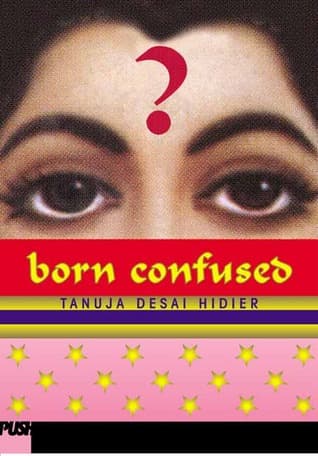
Tanuja Desai Hidier (2002)
Genre
Young Adult / Romance
Reading Time
10-12 hours
Key Themes
See below
Sign in to track this book
Caught between her parents' Indian traditions and the sudden trendiness of her heritage, Dimple Lala navigates high school, arranged introductions, and an unexpected nightclub encounter to discover that the 'suitable boy' might just be the one spinning a different kind of magic.
Dimple Lala, a high school student in suburban America, feels caught between her parents' traditional Indian expectations and her desire to fit into American youth culture. Her parents, frustrated by her disinterest in Indian traditions, arrange for her to meet Karsh, the son of family friends. Dimple, dreading the encounter, finds him awkward and unappealing during their initial, forced conversation at a family gathering. She dismisses him as a 'boring FOB' (Fresh Off the Boat) and wants to avoid further interaction, reinforcing her belief that arranged meetings are outdated and embarrassing. This meeting highlights her internal conflict regarding her cultural identity and her resistance to her parents' attempts to connect her with her heritage.
Despite her initial dismissal of Karsh, Dimple, along with her best friend Gwyn, decides to go to a trendy club. To her shock, she finds Karsh on stage, transformed into a confident and mesmerizing DJ, spinning a mix of traditional Indian music with contemporary beats. He is charismatic and commands the crowd, a stark contrast to the shy boy she met earlier. This unexpected revelation deeply shakes Dimple's preconceptions about him and her own understanding of what it means to be 'Indian.' She is both intrigued and bewildered by this dual identity, starting a shift in her perspective.
Intrigued by DJ Karsh, Dimple begins to frequent the clubs where he performs. She is captivated by his music, which blends traditional Indian sounds with modern electronica, and the diverse crowd he attracts. Through Karsh, she starts to see her Indian heritage not as something to be hidden or resisted, but as a source of creativity and connection. He introduces her to a different facet of Indian-American identity, one that embraces fusion and self-expression. This exposure challenges her previous notions and sparks a new curiosity about her roots, slowly breaking down her ingrained resistance.
As Dimple spends more time with Karsh, their connection deepens, and she finds herself falling for him. Their conversations often revolve around music, identity, and the complexities of being Indian in America. However, Karsh remains somewhat enigmatic, often disappearing or being vague about his personal life. This mystery, while alluring, also causes Dimple confusion and insecurity. She struggles to reconcile the 'suitable boy' her parents introduced with the captivating DJ, and her growing feelings are tinged with uncertainty about his true intentions and the nature of their relationship. Gwyn, her best friend, notices Dimple's obsession and expresses concern.
Dimple's parents, noticing her late nights and increasing independence, become concerned. They are aware of her connection to Karsh, but their understanding of him is limited to the 'suitable boy' they approved. They don't know about his DJ persona or the club scene she's immersed herself in. Their traditional expectations clash with Dimple's newfound freedom and attraction to a world they don't understand. This leads to growing tension and arguments at home, as Dimple struggles to balance her desire for autonomy with her family's cultural values and protective instincts, feeling increasingly misunderstood.
Dimple, encouraged by Gwyn, takes up a modeling opportunity, a world that further distances her from her parents' expectations. During a photoshoot, she meets Raj, a charismatic and cynical photographer who sees through her carefully constructed facade. Raj challenges Dimple's perceptions, particularly her romanticized view of Karsh and her own identity struggles. He pushes her to be authentic and confront her insecurities, offering a different perspective on art, culture, and self-expression. Their interactions, though sometimes confrontational, force Dimple to introspect and question her motivations and desires.
The truth about Karsh's double life and his various secrets eventually comes to light. Dimple discovers he has been manipulative, possibly using her, and has other romantic entanglements. This betrayal shatters her trust and leaves her heartbroken and confused. The idealized image she had built of him crumbles, forcing her to confront the reality of his character and her own naivete. The confrontation is painful and leads to a dramatic breakup, leaving Dimple feeling lost and questioning her judgment and understanding of love and relationships.
Devastated by the breakup with Karsh, Dimple retreats and begins a period of introspection. The pain forces her to re-evaluate her life choices and her relationship with her Indian heritage. Instead of resisting, she starts to genuinely explore her culture, engaging with her parents' stories, traditions, and music on her own terms. She finds solace and a sense of belonging in these connections, discovering a richness she had previously dismissed. This period marks a significant turning point in her journey toward self-acceptance and cultural understanding, realizing the value of her roots independently of any romantic interest.
During her emotional recovery, Dimple finds an unexpected confidant and mentor in Raj. He helps her process her heartbreak and encourages her artistic inclinations, particularly photography. Through her lens, Dimple begins to capture the complexities of her world, her family, and her evolving identity. Raj's honest, albeit sometimes harsh, feedback pushes her to develop her artistic voice and to see beauty and truth in her own experiences. Their relationship becomes one of mutual respect and artistic collaboration, helping Dimple channel her emotions into creative expression.
For her senior project, Dimple decides to create a photography series that explores her bicultural identity, capturing the nuances of being Indian-American. This project becomes a powerful medium for her self-expression and understanding. She photographs her family, her friends, and scenes that represent the blending of cultures in her life. The process is cathartic, allowing her to reconcile the different facets of her identity and embrace her unique position. The project is a culmination of her journey, showing her growth and newfound confidence in who she is.
As the novel concludes, Dimple has gained an understanding of herself and her place in the world. She has navigated heartbreak, embraced her cultural heritage, and found her artistic voice. While the future remains open, she is no longer 'born confused' but approaches it with clarity and self-acceptance. Her relationships with her parents have improved, and she has formed a strong, supportive bond with Raj. She looks forward to college, ready to explore new opportunities with a confident and integrated sense of her bicultural identity, having truly found her heart, culture, and place in America.
The Protagonist
Dimple transforms from a culturally resistant and confused teenager into a self-assured young woman who embraces her bicultural identity through art and self-discovery.
The Love Interest/Antagonist
Karsh acts as a catalyst for Dimple's journey, initially drawing her into a new world but ultimately teaching her a painful lesson about trust and authenticity.
The Supporting
Gwyn remains a steadfast friend, offering consistent support and perspective throughout Dimple's tumultuous journey.
The Supporting/Mentor
Raj evolves from a critical observer to a supportive mentor and friend, guiding Dimple towards self-discovery and artistic expression.
The Supporting
She gradually comes to understand Dimple's bicultural identity, fostering a deeper, more accepting relationship with her daughter.
The Supporting
He supports Dimple's journey, eventually accepting her unique path while still valuing their shared heritage.
The central theme is Dimple's struggle to reconcile her Indian heritage with her American upbringing. She initially rejects her Indian roots, viewing them as outdated and embarrassing, in favor of fitting into mainstream American culture. However, through her relationship with Karsh and later her artistic endeavors with Raj, she learns to embrace the richness of her bicultural identity. This journey is about finding a unique space where both cultures coexist and contribute to her sense of self, as seen in her final photography project that celebrates this fusion.
“Born Confused? Maybe. But now I'm born… something else. Something new.”
The theme of love is explored through Dimple's intense and ultimately painful relationship with Karsh. She is initially drawn to his mysterious allure and the way he blends cultures, mistaking infatuation for true connection. However, Karsh's dishonesty and manipulative behavior highlight the dangers of idealized love and the importance of authenticity. This heartbreak forces Dimple to confront her own naivete and learn lessons about trust, self-worth, and the complexities of human relationships, ultimately leading her to a more mature understanding of love.
“He was like a song I wanted to dance to, but I couldn't hear the lyrics anymore.”
Art, particularly music and photography, is a powerful medium for self-expression and discovery throughout the novel. Karsh's DJing allows him to fuse cultures and express his identity, which initially draws Dimple in. Later, Dimple finds her own voice through photography, guided by Raj. Her camera becomes a tool for understanding her family, her culture, and her place in the world. Her senior project, a photographic exploration of her bicultural identity, shows how art helps her process confusion, heal from heartbreak, and ultimately embrace who she is.
“My camera became my third eye, showing me what I couldn't see with the other two.”
The novel portrays the generational and cultural gaps between Dimple and her immigrant parents. Her parents cling to traditional Indian values and customs, desiring an arranged marriage for Dimple and struggling to understand her Americanized desires. Dimple, in turn, initially views their traditions as embarrassing and restrictive. This conflict drives much of the early plot. As Dimple matures, she begins to bridge this gap, not by abandoning her American self, but by finding a personal connection to her heritage, allowing for greater understanding and respect between her and her parents.
“They wanted me to be Indian. I just wanted to be... me.”
Karsh's contrasting personas as a 'suitable boy' and a charismatic DJ.
Karsh's double life is a pivotal plot device. Initially presented as the awkward 'suitable boy' for an arranged meeting, he is later revealed to be a captivating DJ in the club scene. This duality initially fascinates Dimple, drawing her into his world and challenging her preconceptions about Indian identity. However, it also becomes a source of deception and heartbreak when his two lives, and the secrets within them, inevitably clash. This device highlights the complexities of identity, especially for bicultural individuals, and the allure and dangers of hidden aspects of a person.
The fusion of Indian and Western music as a metaphor for bicultural identity.
Music serves as a powerful symbolic and narrative device. Karsh's DJing, which blends traditional Indian sounds with contemporary Western beats, acts as a metaphor for the fusion of cultures. It initially draws Dimple into a new understanding of her heritage, showing her that 'Indian' can be cool and modern. For Dimple, music becomes a way to explore and express her bicultural identity, moving beyond simple assimilation or rejection. It represents the possibility of creating something new and authentic from diverse influences, reflecting her own journey of self-discovery.
Dimple's use of photography to explore and define her identity.
Photography functions as a crucial plot device for Dimple's character development. Initially a hobby, it evolves into a serious artistic pursuit and a tool for introspection. Under Raj's guidance, Dimple uses her camera to capture the world around her, particularly the nuances of her bicultural family life. The act of framing and capturing images forces her to observe, analyze, and ultimately define her own identity. Her senior project, a photographic series on biculturalism, symbolizes her journey from confusion to clarity, allowing her to visually articulate her unique place in the world.
“Are you going to be a good Indian girl, Dimple, or are you going to be a good American girl?”
— Dimple's mother often poses this question, highlighting the cultural clash.
“Sometimes you just have to choose which part of yourself you're going to be today.”
— Dimple reflects on the constant need to balance her dual identities.
“The thing about being born confused is that you never really get un-confused. You just learn to live with it.”
— A central theme of the book, summarizing Dimple's ongoing struggle.
“It's not about finding yourself, it's about creating yourself.”
— Dimple's evolving perspective on shaping her own future.
“Love, like a good curry, needs time to simmer.”
— Dimple's internal musings on the nature of romance.
“You can't just pick and choose the parts of your culture you like. It's all or nothing, isn't it?”
— Dimple struggles with the perceived rigidity of cultural expectations.
“Maybe being in love isn't about being perfect, but about being perfectly imperfect together.”
— Dimple's realization about the complexities of relationships.
“The city hummed with a thousand stories, each one a potential path not taken.”
— Dimple observes New York City, feeling the weight of possibilities.
“Sometimes the biggest rebellion is just living your own life, exactly as you want it.”
— Dimple considers the quiet power of personal autonomy.
“He saw me, really saw me, not just the Indian girl or the American girl, but just... me.”
— Dimple's feelings about a significant romantic connection.
“My mother's expectations were a heavy sari, beautiful but sometimes suffocating.”
— Dimple uses a vivid metaphor to describe her mother's influence.
“The future isn't a straight line; it's a dance, full of unexpected turns and partners.”
— Dimple's hopeful and realistic outlook on her path forward.
“Being an adult meant making your own mistakes, not just inheriting your parents'.”
— Dimple's growing understanding of maturity and responsibility.
“Silence can be a language too, full of unsaid things and unspoken desires.”
— Dimple reflects on the nuances of communication in relationships.
Ready to see how well you understood this book? Take our interactive quiz with 10 questions.

Biography coming soon.