“Being a monster is not a choice, but how you deal with it is.”
— Millie's internal struggle with her identity as a borderline personality and a newly turned mythical creature.

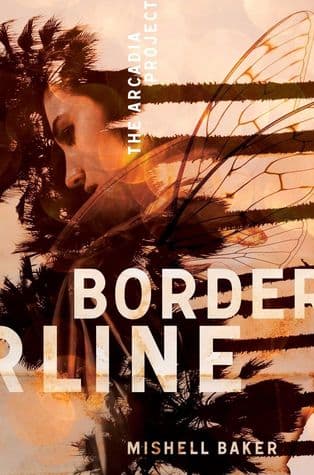
Mishell Baker (2016)
Genre
Fantasy / Mystery
Reading Time
780 min
Key Themes
See below
Sign in to track this book
A disabled, suicidal filmmaker gets a second chance policing mythical creatures in Hollywood, where she must find a missing fairy noble amidst a conspiracy that threatens to ignite an interdimensional war.
Millie Roper, a former film student and aspiring director, lives in a care facility after a failed suicide attempt left her a double amputee. Her life feels over, filled with depression and worthlessness. One day, a mysterious woman named Caryl offers her a second chance. Caryl reveals the Arcadia Project, a secret organization that manages interactions between the human world and a parallel reality of fae creatures. Despite her initial skepticism and deep-seated issues, Millie, desperate for purpose, agrees to join the project, seeing it as her last chance at redemption.
Millie meets her new colleagues at the Arcadia Project's Los Angeles office, including her cynical, wheelchair-bound supervisor, T. She learns her job is policing the fae. Her first assignment is to find Lord Jim Davies, a renowned actor who is also a high-ranking nobleman of the Seelie Court. Jim vanished just before a treaty renewal, and his disappearance threatens to destabilize the peace between the Seelie and Unseelie Courts, potentially leading to war. Millie, despite her inexperience, is chosen for this task because of her unique perspective and film background.
Millie starts her investigation by delving into Jim Davies's life, attending Hollywood parties and interviewing his associates. She meets his human girlfriend, Angela, who seems genuinely distressed, and his agent, who cares more about damage control. Millie quickly realizes Jim had a complex, often manipulative personality, using his fae glamour to influence people. She also learns about his strained relationship with his family in the Seelie Court, especially his sister, who dislikes his human lifestyle. Her physical limitations and subtle fae magic interfere with the investigation.
As Millie investigates, she finds clues suggesting Jim's disappearance is not a simple runaway case. She finds evidence of fae glamour used to hide truths and manipulate perceptions. She suspects Jim was involved in something more sinister than just acting. During her investigation, Millie begins to experience strange visions and sensations, blurring the lines between reality and fae influence. She starts to question who she can trust, including some of her colleagues at the Arcadia Project, as the political stakes around Jim's absence grow.
Millie's leads eventually bring her into contact with members of the Unseelie Court, who are usually Seelie adversaries. She learns Jim had dealings with them, further complicating the political situation. Her interactions with the Unseelie are tense and dangerous, forcing her to rely on her wits and growing understanding of fae customs. She begins to suspect the Unseelie might be involved in Jim's disappearance, perhaps to provoke a war with the Seelie, or that Jim himself was playing both sides. The threat of violence and magic constantly hangs over her as she navigates this dangerous territory.
Amidst the fae intrigue, Millie continues to battle her personal struggles, grappling with her past suicide attempt and physical limitations. These struggles make her vulnerable but also give her a unique perspective. She forms an unlikely alliance with a cynical, world-weary Unseelie operative, who gives her crucial information and protection, though with his own agenda. This partnership challenges Millie's ideas about the fae and makes her re-evaluate her understanding of good and evil within the fae courts. She realizes the lines between factions are far more blurred than she first believed.
Millie finally uncovers the truth about Lord Jim Davies. She discovers Jim was not just a missing person but a key player in a larger, more insidious scheme. He was a ruthless manipulator, using his glamour and connections to gain power and resources from both human and fae worlds. His disappearance was not entirely involuntary, but part of a complex plan involving a rogue faction aiming to disrupt the fae treaty and seize control. Millie learns that Jim had been dabbling in dangerous magic and forming alliances that put everyone at risk, including himself.
Using her investigative skills, unique insights, and information from her fae allies, Millie identifies the true mastermind behind Jim Davies's disappearance and the rising tensions. It is not a simple case of Seelie vs. Unseelie, but a powerful individual or group manipulating events from the shadows. This revelation is shocking, as it implicates someone unexpected, showing a deeper level of corruption and ambition within the fae world that threatens to spill into the human realm. Millie realizes the full scope of the danger and the urgency of her mission.
The climax involves Millie confronting the mastermind and their co-conspirators. This confrontation is dangerous, involving both fae magic and human subterfuge. Millie, despite her physical limitations, uses her intelligence and new understanding of fae politics to outmaneuver her adversaries. She must make difficult choices and take significant risks to expose the truth and prevent the treaty from shattering, which would lead to an all-out war between the fae courts and potentially devastating consequences for the human world. Her actions determine the fate of both realms.
After the crisis, the treaty is secured, though precariously. Millie emerges from the experience changed. She has proven her worth to the Arcadia Project and found a new sense of purpose and self-acceptance. She begins to come to terms with her past and her physical condition, realizing that her perceived weaknesses can be strengths. While the fae world remains complex and dangerous, Millie has found her place within it, ready to face future challenges as a valued member of the Arcadia Project. She is no longer just a survivor, but an active participant in shaping the peace between worlds.
The Protagonist
Millie transforms from a broken, suicidal individual into a capable, self-accepting agent who finds meaning and purpose in protecting the balance between worlds.
The Supporting
Caryl remains largely consistent, serving as a catalyst for Millie's journey and a symbol of the Arcadia Project's enigmatic nature.
The Supporting
T evolves from a skeptical superior to a more trusting and supportive mentor for Millie.
The Antagonist/Missing Person
Jim's character is revealed retrospectively as Millie uncovers his true nature and the extent of his manipulations.
The Supporting
Angela's understanding of Jim and the fae world shifts as Millie uncovers the truth, leading to a disillusionment.
The Supporting
This character's relationship with Millie evolves from antagonism to a cautious, mutually beneficial alliance.
The main theme is Millie's journey to find redemption and purpose after her life-altering suicide attempt. The Arcadia Project offers her a 'second chance' at a meaningful existence, letting her use her intelligence and unique perspective to protect the balance between worlds. This theme shows up in her struggles with self-worth, her drive to prove herself, and her eventual acceptance of her new identity and abilities. Her physical scars become symbols of her past, but her actions show her capacity for a valuable future, as when she uses her understanding of illusion (from her film background) to solve the fae mystery.
“Maybe this was the universe's way of giving me a second act, a chance to direct my own story for once.”
Millie's struggle with her identity as a double amputee and a suicide attempt survivor is a central element. She deals with feelings of brokenness and inadequacy, often using humor as a shield. Her journey with the Arcadia Project forces her to face these insecurities and redefine herself not by her limitations, but by her strengths and contributions. The fae world, with its focus on glamour and illusion, ironically helps her see past superficial appearances, allowing her to accept her physical self and embrace her unique mental acuity. Her story is about finding peace with who she is, scars and all.
“I wasn't just a broken girl anymore. I was a broken girl with a job to do.”
Given Millie's filmmaking background and the fae's connection to glamour and manipulation, the theme of illusion versus reality is everywhere. The fae use glamour to create illusions, hiding their true forms or intentions. Millie, with her understanding of cinematic illusion, is uniquely able to see through these deceptions. This theme is clear in Lord Jim Davies's acting career and his use of glamour to manipulate people, and in Millie's own journey to distinguish between Hollywood's 'glamour' and the dangerous reality of fae politics. It questions what is real and what is only perceived.
“Glamour wasn't just about looking pretty; it was about shaping perception, about making people believe what you wanted them to believe.”
The novel explores different kinds of power: the political power of the fae courts, the manipulative power of glamour, the social power of Hollywood, and the personal power individuals have over others. Lord Jim Davies embodies manipulation, using his charisma and fae abilities to control those around him. The Arcadia Project itself has power by policing the borders between worlds. Millie, initially powerless, gains agency by understanding and navigating these power dynamics. The theme highlights how power can be used for both protection and exploitation, and how manipulation, whether magical or psychological, can have far-reaching effects.
“Power in the fae world wasn't always about brute strength. Sometimes, it was about knowing the right lies to tell, and who would believe them.”
A secret organization policing human-fae interactions.
The Arcadia Project serves as the central inciting force and the framework for Millie's new life. It's a shadowy organization that monitors and manages the traffic between the human world and Arcadia (the fae realm). It provides Millie with a purpose, a support system (however dysfunctional), and the tools to operate in a world she never knew existed. The Project's rules, resources, and internal politics significantly influence the plot, dictating Millie's assignments and the scope of her actions. It's both her salvation and a source of constant danger.
The magical ability of fae to create illusions and influence perceptions.
Fae glamour is a crucial plot device, driving much of the mystery and misdirection in the story. It allows fae creatures to appear human, to enhance their beauty, or to subtly influence the thoughts and emotions of mortals. Lord Jim Davies extensively uses glamour to maintain his celebrity status and manipulate those around him, making it difficult for Millie to discern truth from illusion. Millie's background in film, where she understood visual effects and storytelling, gives her a unique advantage in recognizing and countering glamour's effects, making it a key element in her investigative success.
Her physical limitations and how they impact her investigation.
Millie's double amputee status, a direct result of her suicide attempt, is a significant plot device. It presents her with physical challenges and limitations, making certain investigative tasks harder and forcing her to find creative solutions. However, it also serves as a source of her unique perspective and resilience. Her perceived 'weakness' makes her less threatening to some fae, and her experiences with pain and brokenness allow her to empathize or connect with others in unexpected ways. It's a constant reminder of her past but also a symbol of her enduring strength.
A looming political deadline that escalates the urgency of the investigation.
The impending renewal of a centuries-old treaty between the Seelie and Unseelie Courts serves as a critical time constraint and source of escalating tension. Lord Jim Davies's disappearance is directly tied to this treaty, as his absence threatens to destabilize the delicate peace and potentially spark an all-out war between the fae factions. This deadline injects a sense of urgency into Millie's investigation, raising the stakes considerably beyond just finding a missing person. It transforms a simple detective case into a matter of inter-dimensional politics and the prevention of widespread conflict.
“Being a monster is not a choice, but how you deal with it is.”
— Millie's internal struggle with her identity as a borderline personality and a newly turned mythical creature.
“The world doesn't care about your feelings. It cares about what you do.”
— A harsh but pragmatic realization Millie has while navigating her new reality and the demands placed upon her.
“Madness is just a different kind of logic.”
— Millie's perspective on her own mental health and the way the world of fae operates, often defying conventional sense.
“Sometimes the only way to find yourself is to get utterly lost.”
— Millie's journey of self-discovery, which involves being thrown into an unfamiliar and dangerous world.
“You can't outrun your past, but you can learn to dance with it.”
— Referring to Millie's attempts to escape her past mistakes and diagnoses, and the eventual need to integrate them.
“The truth is rarely simple, and never convenient.”
— Millie uncovering the complex political machinations and hidden histories within the world of the Fae.
“Fear is a compass, pointing you towards what you value most.”
— Millie reflecting on her own fears and how they reveal her true priorities, despite her cynicism.
“Every secret has a price, and sometimes that price is your sanity.”
— The mental toll taken on Millie as she delves deeper into mysteries and hidden information.
“Just because you're broken doesn't mean you're useless.”
— A recurring theme about Millie's self-worth despite her mental health struggles and imperfections.
“Magic isn't about power; it's about perspective.”
— Millie's understanding of how the Fae manipulate reality, often through altered perception rather than brute force.
“The greatest prison is the one you build for yourself.”
— Millie's past self-destructive behaviors and isolation, which she begins to overcome.
“Sometimes the only way to save someone is to let them save themselves.”
— Millie grappling with her desire to help others, but realizing the limits of her intervention.
“Trust is a fragile thing, easily shattered, almost impossible to fully repair.”
— Millie's experiences with betrayal and her difficulty in forming lasting bonds due to her past.
“There are no monsters under the bed, only people with different rules.”
— Millie's re-evaluation of the 'monsters' of the Fae world, seeing them as beings with their own complex societies.
“Sanity is a luxury few can afford in this business.”
— Millie's cynical observation about the demands and dangers of working for the 'Therapeutic Guidance Bureau'.
Ready to see how well you understood this book? Take our interactive quiz with 10 questions.

Biography coming soon.







