“A man's got to stand for something, or he'll fall for anything.”
— Chantry reflects on his principles as a lawman.

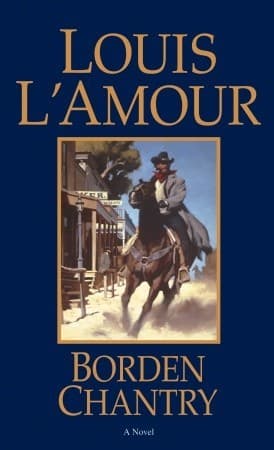
Louis L'Amour (1977)
Genre
Historical Fiction / Mystery
Reading Time
240 min
Key Themes
See below
Sign in to track this book
Marshal Borden Chantry races against time to unmask a phantom gunman systematically executing townsmen, threatening to turn his quiet cow town into a blood-soaked graveyard.
The story opens in the town of Chantry, named after Marshal Borden Chantry's family. Borden, a young, capable lawman, has always kept order, despite the occasional 'fair fight' gunfight. This peace ends when Matt Rix is shot down in cold blood at the saloon. The killer, a mysterious figure, disappears into the night, leaving no clear witnesses. This senseless violence is unlike anything Borden has seen, a drastic shift from the 'fair fight' code of the West he understands. The town immediately feels fear and confusion, and Borden feels responsible to find this elusive killer.
Before Borden can make much progress in the Rix case, Joe Griz is found dead, shot in the back. This second murder confirms that a serial killer is operating in Chantry, not just a random act of violence. The town's residents become more agitated, suspecting everyone and trusting no one. Borden, with his deputy, Bill Chance, begins to investigate, searching for connections between the victims. The lack of clear motives or witnesses makes the task difficult, and the pressure on Borden grows as the townsfolk look to him for protection and answers he struggles to provide.
As more people die, Borden looks into the victims' pasts, trying to find any shared connections or old enemies. He interviews townspeople, including saloon owner Ben Curry, and the rancher, Judson. Whispers of old feuds, land disputes, and unrequited loves begin to surface. Borden thinks the killer might be targeting men involved in a past event, perhaps a range war or a mining claim dispute. He also watches new arrivals and drifters, but the killer seems to know the town and its routines well, suggesting an insider.
The killing continues, with five men now dead. Each murder is swift and brutal, leaving no trace of the killer. The town is in a state of near panic. Citizens gather, demanding action and openly questioning Borden's ability to protect them. Some suggest forming a vigilante committee, which Borden strongly opposes, knowing it would only lead to more chaos and innocent lives lost. He feels alone in his position, burdened by the responsibility of keeping order while facing an invisible, merciless enemy. He works harder, knowing time is running out to prevent more bloodshed and a complete breakdown of law.
Through investigation and careful observation of the crime scenes, Borden starts to see a pattern. The killer uses a specific type of firearm and is precise. The victims, while seemingly different, might be connected by something subtle. Borden suspects the killer is not just a random madman, but someone with a personal vendetta or a twisted sense of justice. He thinks the killer might be trying to send a message or settle an old score, slowly piecing together the profile of a dangerous person who knows Chantry and its inhabitants well.
A mysterious stranger, Jessup, rides into Chantry, seemingly just passing through. However, Jessup's presence makes some older residents uneasy, and Borden notices his sharp observation of the town's crisis. Borden cautiously approaches Jessup, sensing he might have information or a connection to the town's past that could help with the murders. Jessup eventually reveals bits of information about old feuds and hidden animosities from years ago, particularly involving some of the deceased and other long-time residents. This new perspective gives Borden a fresh direction for his investigation, shifting his focus to events before the current crisis.
Following Jessup's hints and his own renewed investigation into the town's history, Borden uncovers a complex and bitter land dispute from years past. He learns that the victims, and potentially other prominent figures in Chantry, were involved in a scheme to illegally acquire land from a family who were then driven out. The original owner, Kincaid, had his land stolen through dubious legal maneuvers, and his family suffered greatly. This revelation provides the first clear, compelling motive for the killings, suggesting a methodical act of revenge rather than random violence.
With the land dispute as the core motive, Borden pieces together the final clues, leading him to a shocking conclusion: the killer is Kincaid, the man whose family was wronged years ago. Kincaid, believed to have left the area or even died, has returned under a new identity, carefully planning his revenge. The killer's knowledge of the town, his precise methods, and his ability to evade capture all make sense now. Borden realizes the killer has been hiding in plain sight, carefully orchestrating his retribution against those who wronged him and his family.
Borden tracks Kincaid to a secluded cabin outside of town, where the killer has been planning his final acts of vengeance. The confrontation is tense. Kincaid reveals his bitterness and the careful planning behind each murder. He explains his motive, detailing how each victim played a role in the ruin of his family. Borden, while understanding the killer's pain, knows he cannot allow lawlessness. A final shootout ensues. Borden, relying on his skill and commitment to justice, manages to disarm and apprehend Kincaid, ending the brutal killings that have plagued Chantry.
With Kincaid in custody, a fragile peace returns to Chantry. The town, though scarred by the violence, begins to heal. Borden, having done his duty, reflects on justice. He understands the injustice Kincaid suffered, yet he upholds the law's necessity in preventing anarchy. The experience has matured Borden, solidifying his belief in the rule of law even when faced with compelling reasons for revenge. He ensures Kincaid will face legal consequences, and Chantry, though changed, looks to rebuild its trust and community under Borden's leadership.
The Protagonist
Borden evolves from a confident lawman to a more seasoned and introspective marshal, grappling with the complexities of justice and revenge.
The Antagonist
Kincaid's arc is one of sustained, calculated revenge, culminating in his confrontation and capture by Borden Chantry.
The Supporting
Bill remains a consistent and loyal figure, providing essential support to Borden without significant personal transformation.
The Supporting
Judson serves as a source of historical knowledge and wisdom, guiding Borden's investigation without undergoing a personal arc.
The Supporting
Ben's role is primarily to provide setting and information, remaining a consistent character throughout the narrative.
The Supporting
Jessup serves as a plot device to introduce key historical information, his purpose fulfilled once the details of the land dispute are revealed.
The Mentioned
Matt Rix's death initiates the central conflict of the story.
The Mentioned
Joe Griz's death escalates the town's crisis and deepens the mystery.
This is a main theme of 'Borden Chantry.' The novel explores the contrast between the lawful justice Borden Chantry upholds and Kincaid's brutal, personal quest for revenge. Kincaid's actions are driven by an injustice suffered by his family, but Borden believes that such acts, however provoked, lead only to more chaos and suffering. The story makes readers confront the complexities of 'righting wrongs' and whether personal vengeance can ever truly be justice. Borden's commitment to the law, even when understanding Kincaid's pain, highlights this conflict.
“A man's got to live by the law, even when the law don't seem to reach out and touch every wrong.”
The past plays a defining role in 'Borden Chantry.' The entire murder spree is a direct result of historical injustices—a land dispute and the ruin of a family—that happened years before the story begins. The novel shows how unresolved grievances and unpunished crimes from the past can resurface with devastating consequences. Borden must look into Chantry's history to understand the killer's motives, showing that a community's peace can be fragile if its foundations are built upon forgotten or ignored wrongs. The past is not merely prologue; it drives the present conflict.
“Sometimes the shadows of old wrongs reach out a long way, Marshal.”
The novel shows the constant struggle between maintaining social order and the threat of anarchy, especially in a frontier town. Borden Chantry's main role is to uphold law and prevent chaos. The serial murders push the town to its limit, with citizens calling for vigilante justice. Borden's refusal to allow this, despite the pressure, shows his commitment to established legal processes over mob rule. The story illustrates how quickly fear and uncertainty can destroy societal norms and how important strong, principled leadership is in preserving a functioning community.
“If every man takes the law into his own hands, there won't be any law left for any of us.”
Beyond the conflict with revenge, the book explores the practical and philosophical aspects of law and justice in the American West. Borden Chantry embodies the ideal of a fair and impartial lawman, even as he operates in a world where personal codes often come before legal statutes. The story questions the limits of law when faced with deep grievances and the challenge of enforcing it in a community where past wrongs were never addressed. It highlights the burden of proof, the difficulty of investigation, and the ultimate responsibility of a lawman to protect the innocent and punish the guilty, regardless of their motivations.
“Justice ain't just about what feels right, it's about what is right under the law.”
A serial killer whose identity and motives are initially unknown, building suspense.
The 'unseen killer' device is central to the mystery in 'Borden Chantry.' For much of the novel, the killer's identity, and even their specific motive, remains shrouded in secrecy. This creates intense suspense and tension, forcing Borden and the reader to piece together clues from disparate murders. The killer's ability to strike without witnesses and disappear seamlessly heightens the sense of dread and makes the investigation incredibly challenging. This device effectively portrays the fear and paranoia gripping the town, as anyone could be the next victim or even the perpetrator, until Borden finally unmasks Kincaid.
Past events and hidden secrets gradually uncovered to explain present conflicts.
The device of 'historical revelation' is crucial to unraveling the mystery. The true motive behind the murders is rooted in a land dispute and injustices that occurred years before the story begins. Borden must act as a historical detective, piecing together old grudges, forgotten names, and past events through interviews and subtle hints from characters like Judson and Jessup. This device not only provides a compelling motive for the killer but also enriches the setting of Chantry, giving it a deeper, more complex history that directly impacts the present-day crisis. The past is slowly unveiled, explaining the present violence.
A moral code of the Old West that is violated by the killer, signaling a new kind of threat.
The 'fair fight' code, a common trope in Westerns, serves as a significant plot device by its deliberate violation. Borden Chantry's town has previously seen violence, but always within this unwritten code of honor. The killer's cold-blooded, ambush-style murders, often shooting victims in the back or without warning, immediately signals that this is a different, more sinister kind of threat. This violation of the established code of conduct creates a profound sense of unease and fear, as the killer operates outside the understood rules, making him unpredictable and much more terrifying than a traditional gunfighter.
The narrative is primarily focused on Borden's limited knowledge, mirroring his investigation.
The novel largely employs a 'limited perspective,' focusing on Borden Chantry's point of view and his evolving understanding of the case. The reader only knows what Borden discovers, making the investigation a shared journey of discovery. This device enhances the mystery, as the audience experiences Borden's frustrations, dead ends, and eventual breakthroughs alongside him. It prevents premature revelation of the killer's identity or motives, building suspense and ensuring that the final reveal is impactful, as it is experienced directly through the protagonist's arduous process of deduction.
“A man's got to stand for something, or he'll fall for anything.”
— Chantry reflects on his principles as a lawman.
“The trouble with a small town is that everybody knows your business, and nobody knows the truth.”
— Chantry observes the gossip and secrets in his community.
“A gun is a tool, like a hammer or an axe. It's the man behind it that makes the difference.”
— Chantry discusses violence and responsibility.
“Sometimes the past won't stay buried, no matter how deep you dig.”
— Chantry uncovers old secrets during the investigation.
“Justice isn't about revenge; it's about making things right.”
— Chantry explains his approach to law enforcement.
“In this country, a man's word is his bond, and I aim to keep mine.”
— Chantry emphasizes honesty and reliability.
“Fear can make a man do things he never thought he would.”
— Chantry reflects on human behavior under pressure.
“The land doesn't care who owns it; it just is.”
— Chantry contemplates the Western landscape.
“A good lawman listens more than he talks.”
— Chantry shares advice on investigation.
“There's a fine line between courage and foolishness, and I try to walk it.”
— Chantry discusses risk-taking in his role.
“Money can buy a lot of things, but it can't buy respect.”
— Chantry comments on wealth and character.
“In the end, we're all accountable for our actions, one way or another.”
— Chantry reflects on morality and consequences.
“A quiet man often sees more than a loud one.”
— Chantry observes the value of silence and observation.
“The West is changing, and a man has to change with it or get left behind.”
— Chantry remarks on progress and adaptation.
Ready to see how well you understood this book? Take our interactive quiz with 10 questions.
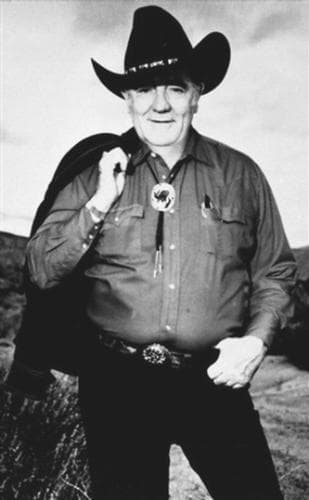
Biography coming soon.







