“The wind was a playful puppy, nipping at my hair and trying to snatch my hat.”
— Describing the weather on a day of outdoor adventure.


Kathy MacKel (2010)
Genre
Children's / Young Adult
Reading Time
240 min
Key Themes
See below
Sign in to track this book
A thirteen-year-old basketball player and her cheerleading sister face a moral challenge when steroids appear, forcing them to confront the real cost of 'boosting' their game and the integrity of their competitive world.
Thirteen-year-old Savvy, a six-foot-two eighth-grader, has raw basketball talent and a strong three-point shot. But her thin build makes her vulnerable to aggressive players, often keeping her on the bench for her middle school team. Her older sister, Callie, a freshman, wants to be a flyer on the high school varsity cheerleading squad, a position that requires extreme lightness and agility, which she struggles with. Their father, a former college basketball player, is very supportive, often pushing Savvy to practice. Their mother, a nurse, is more concerned with their overall health. Both girls feel pressure to do well and get more playing time, setting the stage for their individual challenges.
During a locker room check at school, a small, unlabeled vial with a clear liquid is found in Savvy's gym bag. Coach Albright, her basketball coach, immediately recognizes it as a performance-enhancing drug, likely steroids. Savvy is shocked and strongly denies owning it, saying she has never seen it before. The school administration, including Principal Davies, is told, and a formal investigation begins. Savvy is suspended from the team until the outcome, and the incident clouds her reputation and basketball future. Her parents are called in, and while her father initially disbelieves, the seriousness of the situation quickly becomes clear.
The discovery of the steroids causes great conflict in Savvy's family. Her father, though supportive, struggles to accept the accusation against his daughter. Her mother, worried about Savvy's health and emotional state, tries to be calming. Callie, at first doubtful, begins to question Savvy's innocence, especially as the pressure grows for her own cheerleading goals. Savvy feels alone and betrayed, trying to understand who would frame her and why. The family home, usually a place of athletic encouragement, becomes a center of suspicion and unspoken accusations, affecting everyone's daily lives.
Meanwhile, Callie's cheerleading journey becomes harder. Coach Evans, the high school cheerleading coach, makes it clear that Callie's weight prevents her from becoming a flyer. She constantly reminds Callie that she needs to be lighter to be safely lifted and thrown. This pressure leads Callie to extreme dieting and over-exercising, often skipping meals and pushing herself to exhaustion. She feels the weight of expectations from her coach, her teammates, and herself, desperate to prove her worth and get the flyer position, which she believes is her only way to recognition and belonging.
Determined to clear her name, Savvy, with the help of her best friend, Maya, starts her own investigation. They review the events leading up to the discovery, trying to remember anyone who might have had access to her gym bag or a reason to target her. Savvy considers rivals on her team, or even someone from another school. Maya, a loyal and observant friend, helps Savvy connect clues, offering emotional support and a sounding board for her frustrations. Their detective work is slow and frustrating, but it gives Savvy a sense of control in a situation where she feels powerless.
News of Savvy's suspension and the steroid accusation quickly spreads throughout the school. She becomes the subject of whispers, side glances, and exclusion from some of her peers and even former teammates. Her reputation, once defined by her basketball talent, is now stained by suspicion. Savvy struggles with the emotional toll of being publicly accused and judged, feeling isolated and misunderstood. Even though she says she is innocent, the doubt makes it hard for her to engage with her usual social circle, further increasing her loneliness and sense of injustice.
Callie's desperation to become a flyer grows. She sees the success of other, lighter cheerleaders and feels increasingly inadequate. Overhearing talks about performance enhancers and quick fixes, she starts to research ways to speed up her weight loss. Driven by her ambition and the constant pressure from Coach Evans, Callie makes a dangerous decision. She finds information about a substance, similar to what was found in Savvy's bag, that promises to boost metabolism and help with rapid weight loss, seeing it as her only option to achieve her cheerleading dream.
Overwhelmed by guilt and the growing tension at home, Callie finally breaks down and tells the truth to her parents and Savvy. She tearfully admits that she placed the vial in Savvy's gym bag. Callie explains that she found the steroids, which belonged to a high school athlete she knew, and, in a moment of panic and desperation about her own weight for cheerleading, she considered using them herself. Frightened by the possible consequences and wanting to get rid of them, she impulsively hid them in Savvy's bag, not fully understanding the serious implications of her actions.
Callie's confession brings both relief and renewed pain to the family. Savvy, though hurt by her sister's betrayal, is also relieved to finally clear her name. The sisters begin the difficult process of reconciling, supported by their parents. Callie faces immediate consequences at school, including suspension from the cheerleading squad and required counseling. The incident forces both girls to confront the intense pressures of competitive sports and the dangers of seeking shortcuts. The family commits to open communication and supporting each other through their individual challenges.
With the truth revealed, Savvy's suspension is lifted, and she is back on her basketball team. She returns to the court with a new sense of purpose, understanding that true success comes from hard work and honesty. Callie, though no longer on the cheerleading squad, begins to address her body image issues and the underlying pressures that led to her desperate act. Both sisters, having gone through a traumatic experience, emerge with a better understanding of honesty, the dangers of performance-enhancing drugs, and what support and family truly mean. They learn that their worth is not just defined by their athletic achievements.
The Protagonist
Savvy transforms from a naive athlete focused solely on her game to a more mature individual who understands the importance of integrity, resilience, and standing up for herself.
The Antagonist/Supporting
Callie moves from a desperate, insecure athlete making a grave error to someone who takes responsibility for her actions and begins to address her underlying issues.
The Supporting
Maya's character remains consistently supportive, serving as a pillar of strength for Savvy.
The Supporting
He learns to temper his competitive drive with a greater focus on his daughters' emotional health and integrity.
The Supporting
Her character remains a steady source of support and wisdom, guiding her family through crisis.
The Supporting
Her role is primarily functional, enforcing rules and then rectifying the situation based on new information.
The Supporting
Her character serves as a catalyst for Callie's struggles, representing external pressure.
The novel clearly shows the immense pressure young athletes face to excel and make the team. Savvy feels pressure from her father and her own desire to play, while Callie experiences intense pressure from her cheerleading coach and the physical demands of her sport, leading to unhealthy body image issues. This theme appears in Callie's desperate actions to lose weight and Savvy's constant effort to prove her worth on the court, showing how these pressures can lead to unethical choices and personal distress.
“"Everyone wanted a boost. Not just to be better, but to be the best. To be noticed. To be picked."”
A central theme is the moral choice between achieving success through hard work and integrity versus using shortcuts, like performance-enhancing drugs. Savvy's false accusation forces her to confront this choice, while Callie's actions directly show the temptation and consequences of seeking an easy way out. The story emphasizes that real victory is not just about winning, but how one achieves it. Callie's confession and subsequent consequences reinforce that shortcuts ultimately lead to bigger problems and erode trust.
“"There's no shortcut to being good, Savvy. Just hard work. Always."”
The steroid accusation severely tests the trust within Savvy's family. The initial suspicion, betrayal, and eventual reconciliation between Savvy and Callie form the emotional core of the story. It explores how a crisis can reveal hidden tensions and force family members to face difficult truths about each other and themselves. The parents' struggle to support both daughters, and the eventual coming together after Callie's confession, highlight the importance of communication, forgiveness, and unconditional love in overcoming difficulty.
“"How could she trust her own sister after this? The betrayal cut deeper than any loss on the court."”
This theme is mainly explored through Callie's character, showing how external pressures damage a young person's body image and self-worth. Callie's desire to be a flyer makes her believe her body is inadequate, pushing her toward unhealthy dieting and considering steroids. The story suggests that true self-worth comes from within, not from achieving a specific body type or athletic position. Her journey emphasizes the importance of self-acceptance and healthy practices over dangerous quick fixes driven by external approval.
“"She just wanted to be light enough. To be perfect enough. To be wanted."”
The initial focus on Savvy as the steroid user misdirects the reader.
The discovery of steroids in Savvy's gym bag immediately establishes her as the prime suspect, leading the reader to believe she might be involved or that a rival framed her. This misdirection serves to heighten the mystery and suspense, as the audience, like Savvy, struggles to understand who would do this. It keeps the true culprit, Callie, hidden until her confession, making the revelation more impactful and unexpected. The red herring effectively builds dramatic tension and allows for the exploration of Savvy's struggle with false accusation.
Savvy and Callie's individual struggles mirror and intertwine.
The narrative follows both Savvy's basketball aspirations and Callie's cheerleading ambitions simultaneously. Both sisters face intense pressure to 'boost' their performance, albeit in different sports. While Savvy is trying to improve her game, Callie is trying to lose weight for her position. These parallel journeys highlight the pervasive nature of competitive pressure in youth sports and eventually converge when Callie's desperation leads to her actions against Savvy. This device allows for a broader exploration of the novel's themes from two distinct, yet interconnected, perspectives.
The vial serves as the central object driving the plot's conflict.
The vial of steroids itself acts as a MacGuffin. While its contents are crucial to the plot (being performance-enhancing drugs), its true significance lies in being the catalyst for the entire conflict: Savvy's accusation, the family's turmoil, and Callie's eventual confession. The story isn't primarily about the chemical properties of the steroids, but about the dramatic events, moral dilemmas, and character development that stem from its discovery and the subsequent investigation. It initiates the central mystery and propels the narrative forward.
“The wind was a playful puppy, nipping at my hair and trying to snatch my hat.”
— Describing the weather on a day of outdoor adventure.
“Sometimes, the biggest leaps are the ones you take inside your own head.”
— A character contemplating a difficult decision.
“A secret shared is a burden halved, and a joy doubled.”
— Two friends confiding in each other.
“The best way to find your way in the dark is to make your own light.”
— A character facing a challenging situation without clear guidance.
“Even the smallest spark can ignite the biggest change.”
— Reflecting on how minor actions can have significant consequences.
“Fear is just excitement without a map.”
— A mentor character offering advice to a nervous protaganist.
“Our mistakes don't define us; how we learn from them does.”
— After a character makes an error.
“The world isn't always fair, but it's always worth fighting for.”
— A character expressing determination in the face of injustice.
“Home isn't a place, it's the people who make you feel safe.”
— A character finding comfort and belonging.
“Imagination is the only limit to what you can achieve.”
— Encouraging a character to dream big.
“Sometimes you have to get lost to find a better path.”
— A character reflecting on an unexpected detour.
“Kindness is a language the deaf can hear and the blind can see.”
— Emphasizing the importance of empathy.
“The greatest adventures are often found just outside your comfort zone.”
— A character deciding to try something new and daunting.
Ready to see how well you understood this book? Take our interactive quiz with 10 questions.

Dan Gemeinhart
4.5

Kate O'Hearn
4.4

Jeanne Birdsall
4.4

Jen Wang
4.4
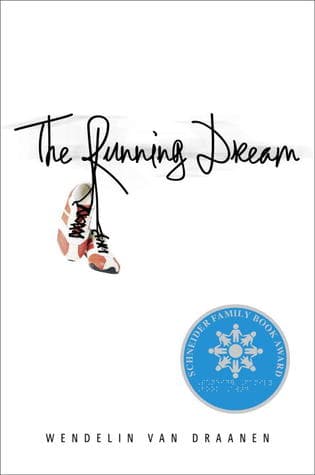
Wendelin Van Draanen
4.3

John Marsden
4.3

Chris Van Allsburg
4.3

Jennifer A. Nielsen
4.2