“The world was not a safe place, and magic was not a safe thing.”
— Liza's understanding of the world after the Faerie War.

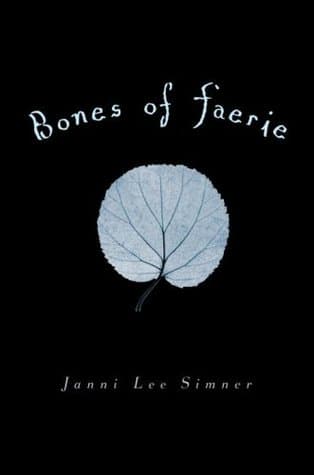
Janni Lee Simner (2009)
Genre
Fantasy / Young Adult
Reading Time
250 min
Key Themes
See below
Sign in to track this book
After a devastating war with Faerie, a 15-year-old girl discovers she has forbidden magic, forcing her to journey into the heart of Faerie to heal two broken worlds.
Fifteen-year-old Liza lives in a post-war world where Faerie magic damaged the land. Her town, built on stilts above a dangerous, magic-filled forest, has strict rules against anything magical, including the 'Sight' – the ability to see the past or future. Liza's mother, a stern woman, constantly reminds Liza of Faerie's dangers. One day, while helping her father gather wood, Liza has her first vision, seeing a tree's past and future. The vision is overwhelming, and she accidentally reveals her ability to her mother. Horrified, her mother threatens to turn her over to the town elders for 'cleansing' – a process that often results in death. Liza's only choice is to escape into the dangerous forest.
Fleeing her home, Liza enters the forbidden forest, a place twisted and dangerous from the Faerie War. The trees are sentient and hostile, and the ground is covered with 'bones of faerie' – crystallized magic. She meets Matthew, another exile who has a different Faerie ability: the power to influence plants. Matthew, at first cautious, offers Liza guidance and companionship. He explains that the forest is a living entity, scarred and resentful, and that many with Faerie abilities must live in its depths, hiding from human towns. Liza begins to understand the war's devastation and the fear it still causes in humanity.
Matthew leads Liza to a hidden village deep within the forest, a safe place for people with Faerie abilities. Here, Liza meets others who have different magical talents, such as healing or talking with animals. She meets the village Elder, a wise old woman who explains that the war was not a simple victory for humanity, but a conflict that left both worlds broken. The Elder reveals that Liza's ability, the Sight, is rare and powerful, and it might be the way to understand what truly happened to Faerie. Liza starts to feel she belongs among these outcasts, a contrast to the fear and rejection she faced at home.
As Liza spends time in the hidden village, her visions become more frequent and clear. She sees fragments of Faerie, not as the desolate wasteland humanity believes it to be, but as a place of damaged magic. These visions often show a specific gateway, a shimmering portal to the Faerie realm. The Elder and Matthew see the importance of these visions, understanding that Faerie is not gone, but hidden. A sense of purpose grows in Liza; she feels a strong pull towards Faerie, an instinct that tells her she must find this gateway and discover the truth behind its disappearance and the war's real cost.
Guided by Liza's clearer visions, she, Matthew, and a few other villagers set out to find the gateway to Faerie. Their journey is dangerous as they go deeper into the volatile forest, facing aggressive magical creatures and the war's lingering, hostile magic. Liza's Sight is vital, allowing her to anticipate dangers and find hidden paths. Matthew's plant manipulation skills are useful for clearing obstacles and making temporary shelters. Along the way, they find more evidence of the war's devastation, including old battlegrounds where human and Faerie magic clashed. Their determination is tested, but the shared hope of finding Faerie keeps them moving.
After a difficult journey, Liza's visions lead them to the gateway – a shimmering, almost invisible portal hidden in a grove of old, twisted trees. With a shared breath, Liza steps through, followed by Matthew and the others. They find themselves in Faerie, but it is not the magical land of legends. Instead, it is a desolate, silent realm, its magic dormant, its landscapes scarred and broken. The air feels heavy with sadness and loss. The Faerie creatures they encounter are few, weakened and confused. Liza realizes that Faerie suffered just as much, if not more, than the human world, and the war was a disaster for both sides.
Deep within Faerie, Liza's Sight guides them to a central location – a collapsed, crystalline structure that was once the heart of Faerie's magic. Here, she has a powerful vision, showing the true events of the war's end. She sees the Faerie Queen, in a desperate act to save her realm from total destruction, sacrificing herself to seal Faerie away from humanity, causing its magic to retreat and its essence to slumber. The Queen's sacrifice was not a defeat, but a desperate measure to save what little remained. Liza understands that the 'bones of faerie' in the human world are not just magic remnants, but echoes of Faerie's sleeping heart, trying to reconnect.
With this new understanding, Liza realizes that her Sight is not just a tool for seeing, but a connection. The visions she experienced, the pull she felt, were Faerie itself trying to communicate, trying to awaken. She understands that the energy she feels from the 'bones of faerie' is a reciprocal force, a connection that can be strengthened. Liza believes that by using her Sight, she can help bridge the gap between the two worlds, allowing Faerie's magic to slowly reawaken and flow once more. This awakening is not just for Faerie, but also for the human world, which has suffered from the absence of magic and the war's lingering scars.
Liza, Matthew, and their companions return through the gateway, carrying the truth of Faerie's state and the war's real impact. They bring back not just knowledge, but a renewed sense of purpose. Liza's visions now show her glimpses of a future where humanity and Faerie can coexist, where past scars can begin to heal. She knows that convincing the fearful human world will be a challenge, but she is determined to share what she has learned. Matthew also feels a stronger connection to his own abilities and a renewed hope for a future where those with Faerie gifts are not persecuted.
Returning to the hidden village, Liza shares her discoveries with the Elder and the other exiles. The Elder, though saddened by Faerie's state, is also hopeful for its possible restoration. Liza begins to use her Sight, not just to see, but to project her understanding, subtly influencing the human world's magic and the 'bones of faerie.' She understands that healing will be a long process, requiring patience and courage. The ending suggests a new beginning, where Liza, Matthew, and others like them, can act as bridges between the two worlds, working towards a future of understanding and mutual healing, rather than fear and conflict.
The Protagonist
Liza transforms from a fearful, repressed girl into a courageous leader who accepts and wields her unique Faerie Sight to seek truth and reconciliation.
The Supporting
Matthew grows from a cautious survivor into a trusted ally and friend, embracing his own powers and supporting Liza's quest.
The Supporting
Remains largely static in her fear and prejudice, serving as an initial catalyst for Liza's journey.
The Supporting
Serves as a steadfast source of wisdom and support, validating Liza's purpose and guiding her understanding.
The Mentioned
Her past sacrifice is revealed, giving context to the state of Faerie and inspiring Liza's mission.
The Supporting
Remains mostly static, serving as a contrast to Liza's mother's overt hostility and highlighting the pervasive fear in the human world.
The Supporting
Its nature is revealed to be a living, reacting entity, reflecting the devastation of the war and later, the potential for healing as Faerie awakens.
The novel shows the lasting damage of the Faerie War, not just on the land but on people. Liza's town is built on stilts, physically separating itself from the dangerous forest, showing their desire to escape and repress the magic that destroyed their world. The fear of magic is so deep that it leads to persecution, as seen when Liza's mother is willing to turn her own daughter over to the elders. This theme explores how trauma can lead to strict social rules and prejudice, hindering progress and understanding. The 'bones of faerie' scattered throughout the human world are constant reminders of the conflict's destructive power.
“The magic of Faerie was a poison, a madness that destroyed everything it touched. It ruined the land, twisted the trees, and made monsters of men. We learned our lesson.”
Liza's journey is about accepting who she is and her magical abilities. Raised in a society that demonizes magic, she first fears her Sight. Her flight from home is an escape from repression. In the hidden village, she finds a community where her abilities are accepted and valued, allowing her to embrace her identity. This theme highlights the importance of self-acceptance and finding belonging, especially when one's true nature is seen as 'other' or dangerous by society. Liza's growth is tied to her willingness to explore and use her unique gifts.
“You are not broken, child. You are merely… different. And in this world, different can be a strength.”
The story challenges humanity's one-sided view of the Faerie War. Initially, humans see Faerie as an evil force that attacked their world, leading to their victory. Liza's visions and her journey into Faerie show a more complex and tragic truth: Faerie was not defeated but sacrificed itself to survive, and both worlds suffered great losses. This theme shows that history is often written by the victors, and true understanding requires looking at multiple perspectives. Liza's Sight helps uncover this buried truth, showing that empathy and a willingness to look beyond surface appearances are important for reconciliation.
“The war was not a triumph, child. It was a wound. For both worlds.”
Despite the physical and magical separation of Faerie and the human world, the story shows their deep and lasting connection. The 'bones of faerie' are not just inert remnants but active echoes of Faerie's sleeping heart, subtly trying to reconnect. Liza's Sight is not just an individual ability but a way to bridge the gap between the realms. This theme suggests that despite conflict and separation, fundamental connections remain, and the well-being of one world often depends on the health of the other. The potential for healing is in recognizing and nurturing these inherent bonds.
“The magic never truly left us, Liza. It only retreated. And it waits for a path back.”
Liza's unique Faerie ability to perceive the past and future of objects and places.
The Sight is Liza's primary Faerie ability, allowing her to see fragmented memories and potential futures embedded within the physical world. It functions as a crucial narrative tool, providing exposition about the Faerie War, guiding Liza's journey to the gateway, and revealing the true nature of Faerie's disappearance. Beyond mere perception, the Sight also acts as a conduit, connecting Liza to Faerie's latent magic and eventually becoming a key to its potential reawakening. It is both a burden and a gift, initially causing her exile but ultimately empowering her quest for truth.
Crystallized remnants of magic scattered across the human world, physical evidence of the war.
The 'bones of faerie' are crystalline formations found throughout the magic-scarred human world. They serve as a constant, tangible reminder of the Faerie War's destructive power and the lingering presence of magic. Initially presented as inert, dangerous curiosities, their true nature is later revealed: they are echoes of Faerie's sleeping heart, subtly trying to reconnect with its realm. This device provides a physical link between the two worlds, foreshadowing Faerie's dormant state and Liza's role in its awakening, acting as a reciprocal force to her Sight.
A living, dangerous, and magic-blighted forest that separates human settlements from the hidden magical world.
The forest acts as a literal and metaphorical barrier. Physically, it is a perilous environment teeming with hostile, magic-infused plants and creatures, making travel dangerous. Metaphorically, it represents the raw, untamed, and feared aspects of magic that humanity has tried to suppress since the war. For Liza, it is initially a place of exile and danger, but it transforms into a sanctuary and a path to self-discovery, where she encounters others like her. The forest is a dynamic setting that reflects the lingering trauma of the war and the potential for a wild, untamed magic.
A hidden, shimmering portal that provides physical access between the human world and Faerie.
The gateway is the crucial physical link between the two realms. Its discovery and passage are central to Liza's quest, allowing her to gain direct knowledge of Faerie's true state. It serves as a symbol of the possibility of reconciliation and understanding between the worlds, but also highlights the difficulty of achieving such a connection, as it is hidden and difficult to access. Its existence proves that the separation of worlds is not absolute and offers a tangible means for interaction and healing.
“The world was not a safe place, and magic was not a safe thing.”
— Liza's understanding of the world after the Faerie War.
“Sometimes you have to do what's right, even if it's hard. Even if it hurts.”
— Liza grappling with difficult choices and responsibilities.
“Faerie was a beautiful lie, and the truth was far more terrible.”
— Liza reflecting on the deceptive nature of Faerie.
“A promise made to a faerie is a binding thing, even if you don't remember making it.”
— The consequences of interacting with fae.
“The old ways were gone, but the magic wasn't. It just changed.”
— Liza observing the evolution of magic in the post-war world.
“Fear was a cold knot in her stomach, but defiance was a spark.”
— Liza facing a dangerous situation.
“She wasn't just a girl anymore. She was a weapon, and a shield.”
— Liza embracing her growing magical abilities and role.
“The forest remembered. It always remembered.”
— Liza sensing the ancient knowledge held within the natural world.
“There were some scars that never truly healed, only faded into the background.”
— Liza's internal struggle with past trauma.
“Sometimes the greatest strength was knowing when to ask for help.”
— Liza learning the importance of relying on others.
“The magic whispered to her, a language older than words.”
— Liza's innate connection to the magical world.
“Hope was a dangerous thing, but living without it was even worse.”
— Liza's internal debate about maintaining optimism in a bleak world.
“Every choice had a ripple, and some ripples turned into waves.”
— Liza understanding the far-reaching consequences of her decisions.
Ready to see how well you understood this book? Take our interactive quiz with 10 questions.

Biography coming soon.







