“It was impossible to be a successful racehorse trainer and not be something of a gambler.”
— Kit Fielding reflects on the nature of his profession.


Dick Francis (1532)
Genre
Thriller / Mystery
Reading Time
360 min
Key Themes
See below
Sign in to track this book
Jockey Kit Fielding races against a ruthless arms dealer, navigating threats to unmask those behind the killing of racehorses before he becomes the next victim.
Kit Fielding, a steeplechase jockey, gets an anonymous letter threatening to 'break his neck' if he keeps riding for the Earl of October. At the same time, his girlfriend, Danielle de Brescou, is leaving him to return to France. Kit loves Danielle and tries to convince her to stay, but her family obligations call her back. The threat letter and Danielle's departure leave Kit feeling unsettled, despite his usual calm. He tries to dismiss the threat as a joke, but its sinister tone suggests bigger problems ahead.
While driving home, two men ambush and beat Kit, repeating the warning to stop riding for the Earl. Shaken but determined, Kit reports the incident to the police. Later, he visits his aunt and uncle, the Earl and Countess of October. They tell him about disturbing events: several of their horses have died or been injured in suspicious 'accidents,' and a valuable stallion, Crown Bolt, is now targeted. They believe someone is sabotaging their racing operation and ask Kit to help find the culprit, fearing for their horses and stud farm.
To Kit's surprise and relief, Danielle returns to England, deciding to stay with him. However, her return comes with a new, more serious threat. She reveals that her father, a wealthy French industrialist, is being pressured by an international arms dealer named Raoul Latour. Latour demands access to her father's factories. Latour, a ruthless figure, is also interested in the Earl of October's horses. A valuable yearling belonging to the Earl is stolen, confirming the growing danger. Kit suspects a link between Latour's activities and the attacks on the October horses, realizing the situation is more complex than simple racing rivalry.
Kit and Danielle combine their efforts to investigate Raoul Latour. Danielle uses her family connections to gather information on Latour's business, while Kit uses his contacts in the racing world. They discover that Latour has a history of coercive business practices and is involved in various illegal activities, including arms dealing. Their investigation suggests Latour is trying to control the Earl of October's stud farm for reasons beyond racing, possibly as a front for illegal activities or money laundering. The couple realizes they face a dangerous adversary who operates outside the law.
Kit's rival, jockey Bobby Allardeck, acts increasingly hostile towards him. During a race, Allardeck deliberately tries to cause an accident, endangering Kit and his horse. Kit avoids a serious fall but believes Allardeck's actions were intentional. He begins to suspect Allardeck might be involved with Latour or the people behind the threats, either willingly or under pressure. This incident strengthens Kit's resolve to find the truth, as the danger now affects his professional life and safety on the racecourse, making every ride a potential trap.
Kit confronts Bobby Allardeck. Under pressure, Allardeck confesses his unwilling involvement. He reveals that Latour's operatives blackmailed him into sabotaging the Earl of October's horses and trying to injure Kit. Latour threatened Allardeck's family and career, leaving him no choice. Allardeck provides key information about Latour's methods and some of his associates. This confession confirms Kit's suspicions about Latour's reach and ruthlessness, showing Allardeck as a victim and giving Kit a new lead.
The situation turns terrifying when Latour's men kidnap Danielle. Latour contacts the Earl of October directly, revealing his motive: he wants to force the Earl to sell him Crown Bolt, the valuable stallion, and other key horses at a very low price. He threatens Danielle's life if his demands are not met. The kidnapping is a calculated move to apply maximum pressure, showing Latour will stop at nothing. Kit is distraught but also driven, realizing he must act quickly to save Danielle and protect his family's interests.
With Danielle's life at risk, Kit, the Earl, and Countess form a desperate plan. They decide to pretend to comply with Latour's demands while secretly working with the police and Danielle's father to plan a rescue. Kit plans to use the horse transfer to find Danielle's location and create a diversion. He knows the risks are huge, and any mistake could cost Danielle her life. The plan needs careful coordination and deception, pushing Kit to his limits as he navigates the dangerous world of international criminals.
The plan begins. Kit, with police and security forces, tracks Latour's men during the supposed horse transfer. A tense confrontation happens at a remote location where Danielle is held. Kit confronts Raoul Latour, using his knowledge of Latour's operations to gain an advantage. Amid the chaos, Danielle is safely rescued. Latour's network is exposed, and his key operatives are arrested. The rescue shows Kit's courage and the coordinated efforts of everyone involved, ending the immediate danger.
Despite rescuing Danielle and breaking up part of his network, Raoul Latour escapes capture. He slips away, leaving destruction and a clear message that he remains a powerful, uncaptured threat. Kit and Danielle are safe, but the experience leaves them shaken. They understand that Latour will likely seek revenge or continue his illegal activities elsewhere. The ending suggests that while this battle is won, the war against Latour may not be over, leaving a lingering sense of unease and the possibility of future encounters.
The Protagonist
Kit evolves from a focused jockey dealing with personal heartbreak and a vague threat to a resourceful and courageous protector, willing to risk his life for those he loves and for justice.
The Supporting/Love Interest
Initially struggling with family obligations versus her love for Kit, Danielle becomes an active participant in uncovering Latour's plot and endures a terrifying kidnapping, emerging stronger and more committed.
The Antagonist
Latour remains a consistently menacing and powerful villain throughout, escalating his tactics until his network is disrupted, though he ultimately escapes capture.
The Supporting
The Earl begins as a worried horse owner and becomes a determined ally, willing to take significant risks to protect his family and his legacy.
The Supporting
She remains a steadfast and supportive figure, providing emotional strength to her husband and nephew.
The Supporting/Antagonist (initially)
From a seemingly malevolent rival, Allardeck is revealed to be a blackmailed victim, eventually providing crucial information to Kit.
The Mentioned
Crown Bolt remains a coveted asset, whose fate dictates much of the plot's progression.
The novel contrasts the integrity of characters like Kit Fielding and the Earl of October with the corruption of Raoul Latour. Kit, facing danger and sabotage, refuses to compromise his principles or abandon his family. Latour, in contrast, operates outside law and ethics, using blackmail, violence, and intimidation. The story shows the strength of honesty and loyalty against villainy, especially through Kit's commitment to justice, even when risking his life to protect his aunt and uncle's horses and Danielle.
“He lived by a code, an unwritten rule of honesty and fair dealing, which made Latour's world a foreign, repugnant place.”
This theme explores how innocent people and animals become targets in the pursuit of power and money. The October horses, especially Crown Bolt, are victims of Latour's schemes, injured and stolen for financial gain. Bobby Allardeck, though a rival, is an innocent caught in Latour's web, blackmailed into complicity. Most importantly, Danielle de Brescou, whose only 'crime' is her family connection and relationship with Kit, is kidnapped and used as a pawn. The novel shows the devastating impact of ruthless ambition on those simply living their lives, forcing them into dangerous situations they never sought.
“The horses were not just animals; they were innocents caught in a battle they could not comprehend.”
Kit Fielding's actions are driven by his love for Danielle and his loyalty to his family. His initial heartbreak over Danielle's departure and his relief at her return show his deep feelings. When Danielle is kidnapped, Kit's determination grows; her safety becomes his main concern, fueling his courage and resourcefulness. His loyalty to his aunt and uncle, the Earl and Countess of October, is equally strong, making him protect their horses and legacy at great personal risk. This theme illustrates how strong personal connections can inspire acts of bravery and self-sacrifice, contrasting with Latour's greed.
“He would tear down the world if it meant bringing her back safely.”
The novel explores the dangerous operations of international crime, specifically through Raoul Latour's arms dealing and his network. It shows how seemingly separate elements—horse racing, factories, and personal relationships—can get caught in a large criminal enterprise. Latour's ability to operate across borders, use blackmail and violence, and remain largely untouchable highlights the challenges of fighting such powerful figures. The story reveals that beneath ordinary life, a ruthless criminal underworld can have significant and destructive influence, forcing ordinary people like Kit to face extraordinary dangers.
“Latour's reach was long, his methods brutal, and his world a dark mirror to their own.”
Introduces the central conflict and foreshadows danger.
The anonymous letter received by Kit Fielding at the novel's beginning serves as a classic plot device to introduce the central conflict and establish an immediate sense of unease. It directly threatens Kit's livelihood and personal safety, setting the stakes. This device creates initial mystery and suspense, prompting Kit (and the reader) to question who is behind the threats and why. It effectively launches the narrative into the mystery surrounding the attacks on the Earl of October's horses and foreshadows the escalating danger Kit will face, serving as the inciting incident.
Raises the stakes dramatically and provides a strong emotional catalyst.
Danielle's kidnapping acts as a crucial plot device that dramatically elevates the stakes of the narrative. Prior to this, the threats were primarily against horses and Kit's career. Her abduction transforms the conflict into a deeply personal and life-threatening crisis for Kit. It serves as a powerful emotional catalyst, galvanizing Kit to move beyond investigation and into direct, desperate action. This device intensifies the suspense, creates a clear ticking clock, and provides a compelling motivation for Kit's daring rescue plan, pushing him to his absolute limits.
A red herring that later becomes a source of crucial information.
Bobby Allardeck initially functions as a red herring, appearing to be a malicious rival deliberately trying to harm Kit. This device misdirects the reader's suspicion, making Allardeck seem like a potential main antagonist or key conspirator. However, his later confession reveals he is an unwilling pawn, blackmailed by Latour. This twist not only exonerates Allardeck but also provides Kit with vital intelligence about Latour's network and methods. It adds complexity to the moral landscape and demonstrates the pervasive reach of Latour's corruption, showing how even rivals can be forced into complicity.
The MacGuffin that drives Latour's actions.
Crown Bolt, the highly valuable stallion, serves as a MacGuffin—an object that is vitally important to the plot but whose specific nature is less important than its role in driving the characters' motivations and actions. Latour's desire to acquire Crown Bolt, and other horses, at a vastly reduced price is the primary catalyst for all his criminal activities against the Earl of October. This device provides a clear, tangible goal for the antagonist and gives the protagonists something concrete to protect, thereby structuring much of the conflict and leading to the ultimate confrontation.
“It was impossible to be a successful racehorse trainer and not be something of a gambler.”
— Kit Fielding reflects on the nature of his profession.
“What mattered was not so much the winning, but the trying to win.”
— Kit's philosophy on competition and effort.
“Fear was a cold, sharp thing, but it could also be a spur.”
— Kit experiences fear but uses it as motivation.
“Money was a good servant but a bad master.”
— A general observation on the role of money.
“He had learned long ago that the truth often lay hidden beneath layers of plausible lies.”
— Kit's experience in uncovering deception.
“There were always people willing to take advantage, given half a chance.”
— Kit's cynical but realistic view of human nature.
“To be truly free, one had to be prepared to fight for it.”
— A thought on the cost of freedom.
“”
— Kit grapples with past events and their impact.
“Even the strongest chain has a weak link.”
— Kit considers vulnerabilities in plans or systems.
“”
— Kit's approach to solving mysteries.
“”
— Kit's belief in self-reliance over chance.
“Silence could be more eloquent than any words.”
— Kit interprets unspoken cues.
“”
— Kit contemplates the high stakes of his actions.
“”
— Kit's deep appreciation for his horses and loyal companions.
“”
— Kit's persistent approach to challenges.
Ready to see how well you understood this book? Take our interactive quiz with 10 questions.
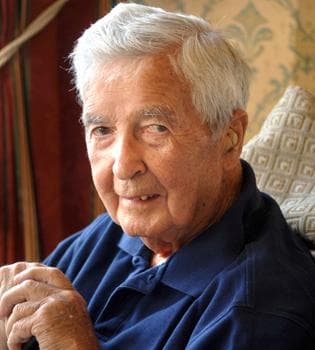
Dick Francis was a celebrated British author renowned for his thrilling crime novels, many of which were set in the world of horse racing. His acclaimed works include 'Bolt,' 'Odds Against,' and 'The Sport of Kings.' Francis's meticulous research and authentic portrayal of racing life earned him critical praise and a dedicated international following, solidifying his legacy as a master of suspense.







