“She is learning to live without a future.”
— Rennie's reflection on her life after her mastectomy and the emotional aftermath.


Margaret Atwood (1981)
Genre
Literary Fiction / Mystery
Reading Time
360 min
Key Themes
See below
Sign in to track this book
A journalist's Caribbean trip turns into a brutal test of power, sex, and survival amidst political trouble and personal collapse.
Rennie Wilford, a young Toronto journalist who writes about 'lifestyles' and 'soft news,' finds her life falling apart. Her long relationship with Jake, a surgeon, has ended, leaving her feeling lost. She feels growing doubt about her work, especially after writing a piece about 'kink' that she now dislikes. Her apartment is broken into, but nothing is stolen; instead, things are rearranged in a disturbing, personal way. This incident, along with silent, threatening phone calls, suggests she has a stalker. The police are unhelpful, dismissing her fears. To escape this unsettling situation and recover from recent breast cancer surgery, Rennie decides to vacation on the small Caribbean island of St. Antoine, hoping for rest and to be anonymous.
When Rennie arrives in St. Antoine, she immediately notices how different the island is from her Canadian life. The heat, the poverty, and a general feeling of decay are clear. She checks into a run-down hotel and soon meets various unusual expats and locals. Lora, a bold American woman who sells local crafts, becomes an unwilling companion. Paul, a charming but mysterious man who seems involved in shady dealings, also gets her attention. These first meetings, combined with the island's underlying tension and the constant presence of stray dogs, add to Rennie's growing confusion. She tries to stay detached, observing the island as a journalist, but finds herself increasingly drawn into its strange rhythms.
As Rennie settles into St. Antoine, she starts to see the clear signs of political instability. Talk of an upcoming election, rival groups, and a history of overthrows and violence fills the air. She learns about Prince, the current leader, and his opponent, the more radical Caine. Paul, with his secret connections, seems involved in the political plotting, hinting at his role as an arms dealer or fixer. The local police, often carrying guns, add to the feeling of growing tension. Rennie, at first determined to stay a detached observer, finds it harder to ignore the political currents that threaten to become open conflict, feeling a growing worry about her safety.
The fragile peace of St. Antoine ends with the brutal killing of a local woman, a vendor Rennie had met. The body is found near Rennie's hotel, and the incident shocks the small community. Rennie is deeply troubled by the violence, which brings the island's underlying brutality to the surface. The police start an investigation, but their methods are rough and frightening. Rennie, having seen some suspicious activity around the time of the murder, finds herself unwillingly involved or at least a person of interest. This event is a turning point, as her journalistic detachment becomes impossible to keep, forcing her to face the island's grim realities.
After the murder, the political situation on St. Antoine quickly worsens. In a sudden, violent crackdown, Rennie and Lora are arrested by the local police and military. They are accused of various unclear crimes, including conspiracy, likely because they are foreigners and seem connected to the opposition. Jailed in a dirty, crowded cell, Rennie experiences the full horror of the island's justice system. She undergoes repeated, frightening interrogations, where authorities try to get confessions or information about the political unrest. Her past, medical history, and Canadian life are twisted and used against her, eroding her sense of self and reality.
Life in the St. Antoine prison is a brutal experience. Rennie and Lora are packed into a tiny, unclean cell with several local women, enduring terrible food, no privacy, and constant fear. The heat is overwhelming, and the conditions are dehumanizing. Rennie's attempts to keep her intellectual distance and journalistic objectivity break down under her suffering. She sees the casual cruelty of the guards and the despair of her fellow prisoners. Despite their initial disagreements, Rennie and Lora form a bond of shared weakness and desperation. Lora, with her street smarts and strength, becomes both a source of frustration and comfort for Rennie as they navigate their terrifying new reality, holding onto bits of hope.
During her imprisonment, Rennie often thinks back to her life in Toronto, often mixing past and present. These memories reveal more about her relationship with Jake, her work frustrations, and her stalker's unsettling presence. It is slowly shown that the stalker was not a random stranger but a former lover, Jake, who, after their breakup, started tormenting her with silent calls and rearranged objects in her apartment as a twisted way of control and lingering attachment. This realization adds another layer of pain to Rennie's already broken mind, showing the hidden nature of power and control in her personal life, mirroring the political power struggles on the island.
The political tensions on St. Antoine finally erupt into a violent overthrow. Gunfire and explosions shake the island, and the prison becomes a chaotic, dangerous place. The guards are replaced by new, more brutal forces, and the prisoners' fate becomes even more uncertain. Rennie and Lora witness the increasing violence and the casual disregard for human life. The overthrow, led by Caine's group, means a complete breakdown of order. In this chaos, Rennie's fear grows, and her hold on reality becomes weak. She sees a rat in her cell, a repeated image that represents the decay and terror around her, and she feels completely helpless.
During the height of the overthrow and the growing chaos in the prison, Lora, who has a severe leg infection, becomes sicker and delirious. Her pain is extreme, and she begs Rennie to help her. In a moment of deep despair and empathy, Rennie performs a desperate act of compassion. She squeezes the pus from Lora's infected leg, a gruesome and personal act that goes beyond their earlier dislike and creates a deep, raw connection between them. This act, born of shared suffering and the basic need for human connection, shows Rennie's change from a detached observer to someone capable of deep human care, even in the most inhumane conditions.
Eventually, after an unknown time, Rennie is released or 'rescued' from the prison, though the details are unclear. She is put on a plane, likely back to Canada, but the experience has changed her forever. The ending is not a clear solution; Rennie is physically free but mentally and emotionally broken. She carries the pain of her imprisonment, the brutality she saw, and her deep connection with Lora. The world she returns to feels strange, and her past life seems distant and unimportant. The novel ends with Rennie's future uncertain, leaving the reader to think about the lasting effects of bodily harm, both physical and psychological, and the hard-to-find nature of true freedom and healing.
The Protagonist
Rennie transforms from a detached, cynical observer into a deeply empathetic individual, forced to confront the brutal realities of power and suffering.
The Supporting
Lora provides a foil for Rennie, demonstrating raw survival and ultimately inspiring Rennie's deepest act of empathy.
The Supporting
Paul remains largely static, serving as a catalyst for Rennie's awareness of the island's dangerous political reality.
The Supporting
Jake's character is explored primarily through Rennie's flashbacks, revealing the psychological harm he inflicted.
The Mentioned
Prince's rule is depicted as unstable and ultimately ends in a violent coup.
The Mentioned
Caine rises to power through a violent coup, plunging the island into further instability.
The Mentioned
Her murder acts as a turning point in the plot, directly leading to Rennie's entanglement.
The Antagonist
Their role shifts from maintaining an unstable order to enforcing a more brutal, revolutionary one, consistently acting as oppressors.
Rennie's journey is one of self-discovery, forced by extreme events. Without her journalist identity and personal comforts, she deals with who she really is. Her physical and emotional 'bodily harm' makes her face her past pains, including her relationship with Jake and her cancer. In the dehumanizing prison, her intellectual detachment breaks down, showing a core of empathy and strength she didn't know she had. The island's chaos removes her previous ideas, forcing her to redefine her values and her ability for human connection.
“She was a person who wrote about lifestyles. It was a long way from the truth. The truth was not a lifestyle.”
The desire for power and control shows up on many levels in the novel. Politically, it is clear in the fight between Prince and Caine on St. Antoine, leading to a violent overthrow and oppression of the people. Personally, it is seen in Jake's stalking of Rennie, a desperate attempt to keep control over her after their breakup. In the prison, the guards have absolute power over the inmates, showing how unchecked authority dehumanizes people. Rennie's initial journalistic detachment is itself a form of control, an attempt to distance herself from life's messy realities, which ultimately fails.
“Power was a question of who could do what to whom and get away with it.”
The title theme runs through the story. Rennie's breast cancer surgery is the first 'bodily harm,' leading to physical and psychological weakness. This is made worse by Jake's psychological stalking, which causes emotional harm. On St. Antoine, the physical violence of the murder, the prison's brutal conditions, and Lora's infected leg all represent literal bodily harm. Beyond the physical, the novel explores the pain of seeing violence, the dehumanization of imprisonment, and the lasting psychological scars that fundamentally change Rennie's view of herself and the world.
“She had thought that harm was a word you used for things that happened in the dark, that was wrong. Harm was a word for things that happened in the light.”
Rennie starts the novel as a detached observer, both in her journalism and personal life. She uses her intelligence and cynical humor to create a barrier between herself and suffering. Her trip to St. Antoine is an attempt to keep this distance. However, the growing violence, her own imprisonment, and especially Lora's suffering force her to drop this detachment. Her act of compassion towards Lora, squeezing the pus from her leg, is a key moment where she fully embraces empathy, going beyond her previous emotional barriers and connecting with another person on a basic level.
“She had always prided herself on being able to see both sides, to understand everything. But understanding was a luxury.”
The novel criticizes the Western view of post-colonial nations. Rennie, a Canadian journalist, at first sees St. Antoine with a sense of exoticism and journalistic curiosity, looking for a 'story' or an escape. However, the island's political instability, poverty, and violence reveal the harsh realities behind the pretty facade, challenging her naive ideas. The interactions with locals and expats show the power differences between the developed world and developing nations, and the often unintended results of Western involvement or indifference. This forces Rennie to face her own involvement and limited understanding.
“She had come here to get away from everything, to find a place where nothing was happening. But everything was happening, always, everywhere.”
Interspersed memories and thoughts that blur past and present, revealing Rennie's inner turmoil.
Atwood employs frequent flashbacks to Rennie's life in Toronto, particularly her relationship with Jake, her cancer diagnosis, and the stalker incidents. These are often presented in a stream-of-consciousness style, blurring the lines between her present reality in St. Antoine and her past traumas. This device allows the reader to understand Rennie's psychological state, her coping mechanisms, and the origins of her 'bodily harm' as she navigates her imprisonment. It highlights how past experiences shape present perceptions and how trauma can manifest in fragmented memories.
A recurring symbol of decay, fear, and the dehumanizing conditions of imprisonment.
The image of the rat, particularly in Rennie's prison cell, serves as a powerful and recurring motif. It symbolizes the pervasive decay, the unsanitary conditions, and the utter dehumanization of her environment. The rat embodies her fear, her loss of control, and the primal terror of being reduced to an animalistic existence. Its presence underscores the psychological torment of imprisonment and the stripping away of human dignity. Rennie's visceral reaction to the rat highlights her struggle to maintain her humanity amidst the squalor.
Rennie's initial coping mechanism, which evolves into a critique of objective observation.
Rennie's profession as a journalist initially serves as a plot device for her character's worldview. She attempts to observe the world, including her own suffering, with a detached, analytical eye. This detachment allows her to avoid emotional engagement. However, the events on St. Antoine, particularly her imprisonment, systematically dismantle this coping mechanism. The novel uses her journalistic background to critique the limitations and potential moral failings of pure objectivity in the face of profound human suffering, ultimately forcing her to engage emotionally and empathetically.
The ironic juxtaposition of Rennie's past work with the harsh realities she faces.
Rennie's past work as a 'lifestyle' journalist, writing about 'kink' and other superficial topics, serves as a stark contrast to the brutal realities she encounters on St. Antoine. This ironic juxtaposition highlights the vast chasm between her privileged, comfortable Western life and the violence and poverty of the developing world. It underscores her initial naivety and provides a measure of her transformation, as her 'soft news' perspective is utterly inadequate for comprehending the 'hard news' of political oppression and bodily harm she experiences.
“She is learning to live without a future.”
— Rennie's reflection on her life after her mastectomy and the emotional aftermath.
“The past is a foreign country; they do things differently there.”
— Rennie contemplating her memories and how they shape her present.
“Fear is a kind of hunger.”
— Rennie's observation about the consuming nature of fear in her experiences.
“She has become a tourist in her own life.”
— Rennie feeling disconnected from her own existence after her illness.
“Violence is not an abstraction. It is as real as hunger.”
— Rennie's realization about the tangible nature of violence during her time in the Caribbean.
“The body remembers what the mind tries to forget.”
— Rennie reflecting on how physical trauma lingers beyond conscious memory.
“She is looking for a story that will explain her life to her.”
— Rennie's search for meaning and narrative in her experiences.
“In the end, we are all alone with our bodies.”
— Rennie's existential musing on the isolation of physical existence.
“The truth is not always what you want to hear.”
— Rennie confronting uncomfortable realities about herself and the world.
“She has learned that survival is not the same as living.”
— Rennie distinguishing between mere existence and meaningful life after her ordeal.
“Every wound tells a story.”
— Rennie considering how physical and emotional scars narrate personal history.
“The world is full of invisible lines that separate us.”
— Rennie observing social and personal boundaries during her travels.
“She is trying to remember who she was before the damage.”
— Rennie's struggle to reconnect with her pre-trauma identity.
“Sometimes the only way out is through.”
— Rennie's realization about facing difficulties directly rather than avoiding them.
“We are all prisoners of our own perceptions.”
— Rennie reflecting on how personal viewpoints limit understanding.
Ready to see how well you understood this book? Take our interactive quiz with 10 questions.
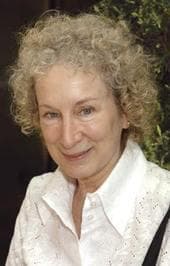
Margaret Eleanor Atwood is a Canadian poet, novelist, literary critic, essayist, teacher, environmental activist, and inventor. Since 1961, she has published eighteen books of poetry, eighteen novels, eleven books of non-fiction, nine collections of short fiction, eight children's books, two graphic novels, and a number of small press editions of both poetry and fiction. Atwood has won numerous awards and honors for her writing, including two Booker Prizes, the Arthur C. Clarke Award, the Governor General's Award, the Franz Kafka Prize, Princess of Asturias Awards, and the National Book Critics and PEN Center USA Lifetime Achievement Awards. A number of her works have been adapted for film and television.







