“Sometimes the most ordinary things could be made extraordinary, simply by doing them with the right people.”
— Bob reflecting on his friendship with Livy.

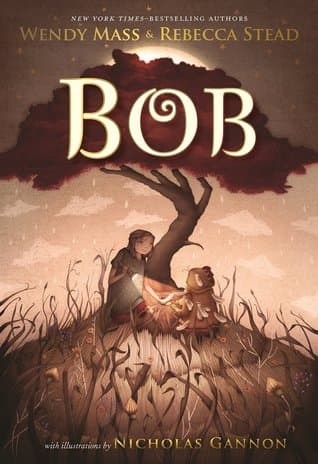
Wendy Mass (2018)
Genre
Fantasy / Children's / Mystery
Reading Time
150 min
Key Themes
See below
Sign in to track this book
Five years after promising to help him, Livy returns to her grandmother's house in Australia to find Bob, a mysterious, chicken-suited creature, still waiting in the closet, ready to unravel the magical mystery of his origins and find his way home.
Ten-year-old Livy returns to her grandmother's house in Australia after five years, feeling a strange sense of déjà vu and a persistent feeling that she's forgotten something important. While exploring the house, she opens a closet door and finds a small, green creature wearing a chicken suit. This creature, Bob, immediately recognizes Livy and reminds her of a promise she made five years ago: to help him find his way home. Livy, however, has no memory of Bob or making such a promise. Bob has been patiently waiting in the closet, just as Livy instructed him, for her return. His memory of his past is completely blank, except for Livy's name and her promise. The reunion is a mix of relief for Bob and confusion for Livy, setting the stage for their quest.
Livy tries to remember Bob. She realizes that her grandmother, Gran, and her mother don't seem to notice Bob, leading Livy to believe that only she can see him. Bob explains that he can't leave the property and doesn't know why. They start their investigation by searching Livy's old bedroom, where Bob had originally appeared. They find some of Livy's childhood drawings, one of which depicts a green creature in a chicken suit, confirming Bob's existence in her past. Livy also finds an old, handmade map with an 'X' marked on it, which Bob recognizes as a place they used to visit. This initial discovery gives them their first clue.
Following the map, Livy and Bob go to an old, large tree on Gran's property, a place Livy vaguely remembers from her previous visit. They discover a small, hidden box carved into the tree's trunk. Inside, they find a dried flower and a note written in Livy's own childhood handwriting, which instructs them to 'Remember the star.' This clue deepens the mystery, suggesting that Livy herself left these breadcrumbs for her future self to follow. Finding the box and the note helps Livy's fragmented memories of her first encounter with Bob begin to surface, though they are still hazy and incomplete. Bob, meanwhile, is filled with renewed hope.
The clue 'Remember the star' prompts Livy to search for anything star-related. She and Bob explore Gran's study, a room filled with books and various curiosities. They find an old star chart, but it doesn't immediately yield answers. Livy then remembers a specific book from the library she used to read with Gran. At the local library, they consult a book about constellations, hoping to find a connection. While the book itself doesn't directly reveal Bob's origin, it sparks a memory for Livy about a specific constellation she and Bob used to look at, further solidifying their shared past and her emerging memories.
Livy's Gran, sensing Livy's preoccupation, shares a story about a local legend concerning making wishes under a specific star. This story triggers a significant memory for Livy: five years ago, feeling lonely and wanting a friend, she made a wish under that very star. She remembers wishing for a friend who would always be there for her. This revelation is a major breakthrough, connecting Bob's appearance to Livy's childhood wish. The conversation with Gran, while seemingly innocent, provides a key piece of the puzzle, confirming that Bob is not just an imaginary friend but something more, born from Livy's desire for companionship.
As Livy's memories flood back, she recalls the day Bob first appeared. He was a small, green, undefined creature. To help him blend in and because she loved chickens, Livy dressed him in the chicken suit, which he has worn ever since. More importantly, she remembers that Bob is a 'wish creature,' brought into existence by her own wish for a friend. This realization is both comforting and unsettling. Bob isn't lost in the traditional sense; his 'home' is tied to Livy and her wish. The chicken suit, once a simple disguise, now symbolizes Livy's initial attempt to give her wish-friend an identity.
As the time for Livy and her family to return home approaches, Bob begins to show signs of fading. He becomes increasingly translucent and his movements are slower. This alarming development confirms Livy's growing understanding of Bob's nature: he is intrinsically linked to her and her wish. If she leaves, he might disappear entirely. The urgency of their quest increases, as Livy realizes that finding Bob's 'home' isn't about a physical place, but about understanding his existence and ensuring his survival. The fading is a powerful visual cue of the stakes involved.
Livy finally understands that Bob's 'home' isn't a physical location he needs to return to, but rather a state of being – his existence is tied to her wish and her belief in him. He is the embodiment of her desire for a friend. His inability to leave Gran's property is because that's where the wish was made and where he manifested. Livy realizes that for Bob to truly 'go home,' he needs to understand his purpose and accept his connection to her. This revelation shifts their quest from a physical search to an emotional and existential understanding of their unique bond.
With the understanding that Bob is her wish-friend, Livy makes a new, more important promise to him. She promises that she will always remember him and believe in him, thus sustaining his existence. She explains that while she can't physically take him with her back home, their friendship will endure, and he will continue to exist as long as she holds him in her heart and memory. This new promise is a powerful affirmation of their bond, transforming the nature of their friendship from a forgotten past to an enduring future. Bob, though still confined to Gran's property, is no longer lost.
Livy and her family depart from Australia, leaving Bob behind at Gran's house. The separation is bittersweet, but Livy carries the knowledge that Bob is safe and continues to exist because of her love and belief. She understands that their friendship transcends physical proximity. Back home, Livy occasionally sends letters and drawings to Bob via Gran, reinforcing their connection. The story concludes with the understanding that while Bob remains in Australia, he is no longer alone or forgotten. He is a cherished friend, a symbol of a childhood wish and the enduring nature of friendship, even across continents and dimensions.
The Protagonist
Livy transitions from a girl who has forgotten a significant part of her past to one who fully embraces her unique friendship and the magic of her own wish.
The Protagonist/Supporting
Bob begins as a lost, amnesiac creature seeking a physical home and ends by understanding that his 'home' is tied to Livy's memory and belief.
The Supporting
Gran remains a steady, supportive presence, subtly guiding Livy towards understanding without directly revealing the magical elements.
The Supporting
She remains consistent in her role as a loving mother, unaffected by the magical events surrounding Livy.
The Mentioned
He remains a static background character.
The Mentioned
He remains a static background character.
The central mystery revolves around Livy's forgotten memories of Bob and the promise she made. The book explores how childhood memories can fade, but also how specific triggers—like returning to a familiar place or finding old drawings—can bring them back. Livy's journey to help Bob is linked to her own process of remembering, showing the fragile yet powerful nature of our past experiences and their impact on our present. The concept of adults being unable to see Bob also ties into the idea of forgetting the magic of childhood.
““I’d forgotten something important. I just knew it. The kind of important that tugs at your insides.””
At its core, 'Bob' is a story about the bond of friendship. Livy's initial wish for a friend creates Bob, and their relationship is the driving force of the narrative. The book explores the loyalty, trust, and deep understanding that develops between them, even after years of separation and Livy's initial amnesia. It emphasizes that true friendship can transcend physical barriers and even the boundaries of reality, suggesting that the most meaningful connections are sustained by belief and memory. Bob's very existence is a result of Livy's desire for a friend.
““You promised you’d help me find my way home,” Bob said, his voice small and steady.”
Bob's central struggle is his lack of identity and his search for 'home.' He doesn't know what he is or where he comes from, making him a poignant figure searching for a sense of belonging. Livy's quest to help him find his home is ultimately about helping him understand his true nature as a wish-creature. This theme also touches upon Livy's own identity as she grapples with her past self who made the wish. The resolution provides Bob with a clear identity and a sense of belonging, not to a physical place, but within Livy's heart and memory.
““I don’t know what I am,” he whispered. “I just know you.””
The novel explores the idea that wishes can have tangible, magical consequences. Livy's childhood wish for a friend directly leads to Bob's creation and existence. The narrative suggests that belief and intention can shape reality, at least for those open to seeing it. Bob's fading as Livy prepares to leave shows that his continued existence is tied to Livy's memory and belief in him. The story celebrates the innocent yet potent magic of childhood desires and the lasting impact they can have.
““Some wishes are so strong, they become real,” Gran said, looking out at the stars.”
A central mystery that drives the plot and Livy's character arc.
The forgotten promise is the primary plot device that initiates the story's conflict and Livy's quest. Livy's amnesia about Bob and the promise she made five years prior creates immediate tension and mystery. It compels Livy to re-engage with her past, piece together fragmented memories, and ultimately understand the magical nature of her connection to Bob. The device allows for a gradual unveiling of information, keeping the reader engaged as Livy slowly remembers the truth, mirroring a real-life process of recalling forgotten events.
A symbolic costume that defines Bob's appearance and hints at his origins.
The chicken suit is a recurring visual motif and a key plot device. It's Bob's defining characteristic, making him distinctive and memorable. Initially, it's a source of humor and peculiarity, but it later becomes symbolic of Livy's childhood innocence and her attempt to give Bob an identity. The suit also serves as a 'disguise' that helps Bob remain unnoticed by adults, reinforcing his magical nature and the exclusivity of his visibility to Livy. Its origin, revealed later, is a significant piece of Livy's returning memories.
Breadcrumbs left by Livy's past self to guide her present self.
Various physical clues serve as a trail for Livy to follow, essentially 'past Livy' guiding 'present Livy.' These include childhood drawings depicting Bob, a handmade map with an 'X,' a hidden note in a tree, and a star chart. These objects are not merely props; they are tangible links to Livy's forgotten past, allowing her to reconstruct her memories and understand Bob's origin. They provide a structured, detective-like element to the narrative, giving Livy and Bob concrete steps to take in their abstract quest.
A narrative convention emphasizing the unique, often hidden, magic of childhood.
The device of adults (Livy's parents, and even Gran to an extent) being completely oblivious to Bob's presence is common in middle-grade fantasy. It serves to highlight the special, often secret, world of children and the magic that adults may have forgotten or become unable to perceive. This device isolates Livy and Bob, strengthening their bond and emphasizing that their quest is theirs alone to solve. It underscores that Bob's existence is tied to a specific kind of belief and perception, one often lost in adulthood.
“Sometimes the most ordinary things could be made extraordinary, simply by doing them with the right people.”
— Bob reflecting on his friendship with Livy.
“You don't need a cape to be a hero. Sometimes all you need is a friend.”
— Livy encouraging Bob during a difficult moment.
“The world is full of magic, you just have to believe in it to see it.”
— Bob explaining the nature of his magical existence to Livy.
“Home isn't a place, it's a feeling of being understood.”
— Bob describing his sense of belonging with Livy.
“Adventures are better when you have someone to share them with.”
— Livy and Bob planning their next mystery-solving endeavor.
“Even the smallest creatures can have the biggest hearts.”
— Bob showing kindness to another magical being.
“Mysteries are like puzzles; they're meant to be solved together.”
— Bob and Livy working on uncovering a secret.
“True friends see the magic in you, even when you can't see it yourself.”
— Livy helping Bob realize his own worth.
“Every ending is just a new beginning in disguise.”
— Bob comforting Livy after a challenging event.
“Courage isn't about being fearless; it's about facing your fears with someone by your side.”
— Livy and Bob confronting a scary situation.
“The best stories are the ones we live, not just the ones we read.”
— Bob encouraging Livy to embrace their real-life adventures.
“Magic is real if you know where to look for it.”
— Bob revealing a hidden magical aspect of their world.
“Friendship is the greatest adventure of all.”
— Bob summarizing their journey together.
“Sometimes, the answers we seek are right in front of us, hidden in plain sight.”
— Bob and Livy solving a key part of the mystery.
Ready to see how well you understood this book? Take our interactive quiz with 10 questions.

Biography coming soon.







