“The arts are not a way to make a living. They are a very human way of making life more bearable.”
— Rabo Karabekian reflects on the purpose of art and creativity.

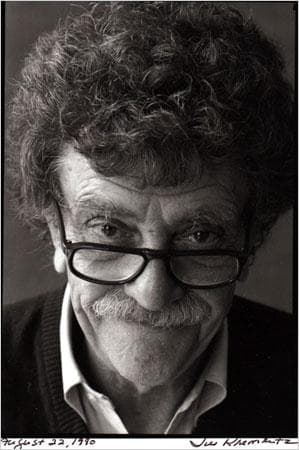
Kurt Vonnegut Jr. (1998)
Genre
Literary Fiction / Creativity / Science Fiction
Reading Time
600 min
Key Themes
See below
Sign in to track this book
An aging abstract expressionist, haunted by his past and a secret in his potato barn, confronts human creation when a persistent widow unearths his life story.
Rabo Karabekian, a seventy-one-year-old Abstract Expressionist painter, lives alone on his Long Island estate, having made a lot of money from his art. He decides to write his autobiography, prompted by Circe Berman, a beautiful and persistent widow who moves into a nearby cottage. Circe, a published author of children's books, quickly starts asking about Rabo's life, especially his past and the mysterious contents of his large potato barn, which Rabo keeps locked. Her direct and often challenging questions make Rabo tell his life story, starting from his childhood, his Armenian background, and his early art ambitions.
Rabo tells about his poor childhood in San Jose, California, as the son of Armenian immigrants. His mother worked as a maid, and his father was a baker. Rabo's art talent is found and helped by Dan Gregory, a commercial illustrator who hires Rabo as an assistant. Gregory, a kind but somewhat cynical man, teaches Rabo drawing and painting basics, stressing technical skill and making a living from art. Rabo's early experiences with Gregory show him the practical and sometimes unromantic parts of the art world, shaping his practical approach to his career despite his later Abstract Expressionism.
After serving in World War II, Rabo moves to New York City, where he joins the new Abstract Expressionist movement. He becomes friends with many important artists of the time, including Jackson Pollock, Mark Rothko, and Willem de Kooning. Rabo struggles financially during these early years, often relying on friends and patrons. He describes the lively, often chaotic, atmosphere of the New York art scene, with intense art debates, heavy drinking, and passionate relationships. Rabo's work during this time, though praised by some, is not yet financially successful, and he often questions the real value and meaning of his non-representational art.
Rabo marries Edith, a woman he loves deeply, but whose emotional fragility and mental health problems slowly worsen. Edith is a talented artist herself, making miniature paintings, but her personal struggles overshadow her art potential. Rabo describes their life together, with both deep affection and hard times with Edith's depression and unpredictable behavior. He details her eventual decline and death, which leaves a big hole in his life and affects his art and worldview. Her memory stays with him, and her presence is felt throughout his story, influencing his thoughts on love, loss, and beauty.
After Edith's death, Rabo marries Dorothy, a rich socialite who gives him financial security and a more comfortable life. Dorothy, though kind and supportive, is less connected to the bohemian art world Rabo had with Edith. Her influence shifts Rabo's focus somewhat from purely artistic struggle to a more established, though less intense, life. This time lets Rabo build his reputation and wealth, but also brings a sense of distance from the raw, passionate energy that defined his earlier art years. Dorothy's practical nature contrasts with Edith's artistic temperament, showing Rabo's changing relationships and priorities.
As Rabo tells his story, Circe Berman's interest in the locked potato barn grows. She repeatedly asks Rabo for details, guessing wildly about what is inside. Rabo avoids her questions, saying the barn holds nothing interesting, but his evasiveness only makes her more determined. Circe's persistence drives the story, creating suspense and a sense of coming revelation. She suggests it might contain a lost masterpiece, priceless artifacts, or even something bad. Rabo keeps his secret, making Circe and the reader wait for the moment of disclosure, which he promises will come at the very end of his story.
Rabo tells about his experiences in World War II, where he was a soldier. He describes the horrors and absurdities of war, stressing the senseless destruction and loss of life. These war experiences deeply affected Rabo, shaping his cynical worldview and his understanding of humanity's ability to create and destroy. He thinks about the random nature of survival and the deep psychological scars left by combat. His war memories contrast with the often self-focused world of art, placing his story in the harsh realities of human conflict and suffering.
As Rabo ages, he thinks about the deaths of many of his Abstract Expressionist friends and peers, including Jackson Pollock and Mark Rothko. He describes how they died, often with tragedy, addiction, and mental illness. These thoughts comment on how short life and fame are, and the personal cost of intense artistic pursuit. Rabo feels like one of the last witnesses to an important era in art history, carrying the memories and legacies of his dead colleagues. Their absence highlights his own death and the solitude of his later years.
After much anticipation and Circe Berman's constant questioning, Rabo finally opens the potato barn, showing its contents. Inside is not a collection of individual paintings, but one single, very large painting, 64 feet wide by 8 feet high, titled 'Satan's Private Bar and Grill'. This huge work is a very realistic depiction of every human being who ever lived, done in tiny detail. Rabo explains that it is his main work, a project he has worked on in secret for decades, using a special, non-fading paint he invented. The painting is his ultimate artistic statement, a memorial to humanity's collective existence, and a sign of the artist's vast ambition.
Rabo explains that 'Satan's Private Bar and Grill' is to be seen as a single, overwhelming image, not many individual portraits. He describes the huge technical challenge of making it, including inventing his own durable paint, 'Sateen Dura-Lube', which can last a long time. The painting is his ultimate answer to how short human life is and the destructive tendencies he saw in war and throughout history. It is a monument to every person, no matter their status or importance, showing that all lives, no matter how unknown, add to humanity. He reveals that the painting is a permanent, unchangeable record, a final, complete statement.
The Protagonist
Rabo begins as a pragmatic young artist, endures personal losses and artistic struggles, and ultimately reveals his grand, all-encompassing artistic statement as his legacy.
The Supporting
Circe starts as a curious outsider and evolves into a confidante, witnessing the profound revelation of Rabo's life's work.
The Supporting
Edith's arc is tragic, marked by her artistic talent overshadowed by mental illness, ultimately leading to her early death and leaving a lasting impact on Rabo.
The Supporting
Dorothy provides Rabo with a period of stability and financial comfort, allowing him to pursue his secret magnum opus without immediate financial pressure.
The Supporting
Gregory's arc is limited to his mentorship, providing Rabo with the initial skills and pragmatic worldview that shape his artistic journey.
The Mentioned
Pollock's arc is a tragic one, serving as a cautionary tale of genius and self-destruction within the art world.
The Supporting
Slazinger remains a loyal and steady presence, serving Rabo faithfully throughout the narrative.
The Supporting
Marilena maintains her role as a reliable and caring domestic figure, providing stability to Rabo's daily life.
Vonnegut looks at artistic creation through Rabo Karabekian. Rabo deals with the commercial side of art (taught by Dan Gregory), the abstract and often misunderstood nature of his own work, and the deep personal drive to create something lasting. The novel questions if art is for self-expression, communication, or just a way to understand a chaotic world. Rabo's main work, 'Satan's Private Bar and Grill,' becomes a sign of the artist's wish to include and remember all of humanity, suggesting art's highest purpose might be to witness.
“Make a mess, Rabo. Make an awful mess. Do something nobody's ever seen before. Don't be a copycat. Be a mess, Rabo.”
The whole novel is Rabo Karabekian's autobiography, showing how subjective and often unreliable memory is. Rabo tells his life story from his current view, often adding present-day thoughts and thinking about how his past experiences shaped him. Writing his life story, prompted by Circe Berman, makes Rabo face forgotten details and re-evaluate his relationships and art choices. The story shows how personal history is made and understood, and how remembering can be both a burden and a release.
“I will tell you my life story, from the beginning, and I will try to leave nothing out. I will tell you the truth, as I remember it, which is the only way anybody can tell the truth.”
Rabo's life is deeply affected by his relationships, especially his love for his first wife, Edith, and the grief and loneliness after her death. The novel explores the complexities of human connection, from the passionate intensity of his marriage to Edith to the practical companionship with Dorothy, and the challenging yet stimulating dynamic with Circe Berman. Rabo thinks about how fleeting love and life are, and how people cope with loss. His ultimate art project, 'Satan's Private Bar and Grill,' can be seen as an attempt to connect with and immortalize all of humanity, a response to the pain of individual loss.
“I have loved two women very much. One was Edith, who died. The other is Circe, who is still alive and making my life interesting.”
Like Vonnegut's style, the novel often touches on the absurdity of human existence, especially through Rabo's cynical thoughts and his memories of World War II. Rabo tells about the senselessness and brutality of war, which deeply shaped his worldview and his art. The idea that life is often chaotic and without inherent meaning, yet people continue to strive and create, is a central conflict. His final painting, an attempt to depict every human being, is both an absurdly ambitious project and a deep statement against the universe's indifference.
“There are plenty of good reasons for fighting, but no good reasons ever to hate anybody.”
Rabo Karabekian is very aware of his death and what he will leave behind. His decision to write his autobiography and the decades-long secret project in his potato barn are direct responses to this idea. 'Satan's Private Bar and Grill' is his ultimate attempt at immortality, a creation meant to outlast him and be a permanent record of humanity. The novel looks at how artists, and all people, try to leave a mark on the world, whether through their creations, their relationships, or their stories.
“I had made a picture so big that nobody could see it all at once. And I had made it out of a paint so durable that it would still be there for people to look at on Judgment Day.”
The entire novel is presented as Rabo Karabekian's first-person life story.
The novel is structured as Rabo Karabekian's fictional autobiography, written from his perspective in his later years. This first-person narrative allows for deep insight into Rabo's thoughts, feelings, and cynical worldview. It also permits him to jump between past and present, offering reflections and commentary on his experiences. The autobiographical format emphasizes the subjective nature of memory and how a life story is constructed and interpreted by the individual living it, with Rabo often questioning his own recollections and motives.
Circe Berman's presence prompts Rabo to tell his story.
The arrival and persistent questioning of Circe Berman act as a frame for Rabo's autobiography. Her curiosity about his past and especially the locked potato barn serves as the primary motivation for Rabo to begin recounting his life. Circe's role is not just as an audience within the story, but also as a character who challenges Rabo, pushes him for details, and provides an external perspective that helps shape the narrative. Without her, Rabo might never have revealed his full story or the secret of the barn.
A physical symbol of Rabo's hidden life's work and ultimate secret.
The locked potato barn is a central symbolic and plot device, creating suspense and driving the narrative towards its ultimate revelation. It represents Rabo's secret, his most profound artistic endeavor, and his desire for reclusion. Its mystery fuels Circe's curiosity and the reader's anticipation. When finally opened, the barn reveals not just a painting, but Rabo's entire philosophy on art, humanity, and legacy, making it a powerful symbol of hidden genius and the artist's ultimate statement.
The novel is a fictional autobiography written by a fictional character.
Kurt Vonnegut Jr. presents 'Bluebeard' as Rabo Karabekian's autobiography, blurring the lines between author and narrator. Rabo often addresses the reader directly, comments on the act of writing, and includes details about the composition of his memoir. This meta-fictional approach highlights the artificiality of storytelling while simultaneously drawing the reader into Rabo's world, making them complicit in the narrative's construction. It questions the nature of truth in fiction and the creation of a 'life story'.
Used to comment on the art world, war, and human nature.
Vonnegut employs his characteristic blend of broad humor and bitter irony throughout the novel. Rabo's cynical observations about the art market, the often-pretentious nature of critics, and the absurdities of human behavior are delivered with a sardonic wit. The novel satirizes the commercialization of art and the self-importance of artists, while also using irony to underscore the tragic aspects of war and personal loss. This pervasive irony allows Vonnegut to critique society while maintaining an engaging and often humorous tone.
“The arts are not a way to make a living. They are a very human way of making life more bearable.”
— Rabo Karabekian reflects on the purpose of art and creativity.
“We are here on Earth to fart around, and don't let anybody tell you different.”
— A humorous, philosophical statement about life's purpose.
“The most beautiful peonies I ever saw were grown in almost pure cat excrement.”
— Rabo discusses how beauty can arise from unlikely or unpleasant sources.
“I think that novels that leave out technology misrepresent life as badly as Victorians misrepresented life by leaving out sex.”
— Vonnegut's commentary on the importance of including technology in modern literature.
“The function of the artist is to make people like life better than they have before.”
— Rabo's view on the role of artists in society.
“All artists are specialized cells in a single, huge organism, which is humanity itself.”
— A metaphor for the interconnectedness of artists and human creativity.
“I have to say this is the most meaningful picture I have ever painted. It shows everything about life which truly matters, with nothing left out.”
— Rabo describes his abstract painting, which is central to the novel's themes.
“The only way I can feel good about myself is if I'm creating something.”
— Rabo expresses his personal need for creative expression.
“We are what we pretend to be, so we must be careful about what we pretend to be.”
— A famous Vonnegut line about identity and pretense, echoing from his earlier works.
“The secret of good writing is to say an old thing in a new way or to say a new thing in an old way.”
— Advice on writing and creativity within the narrative.
“I was a victim of a series of accidents, as are we all.”
— Rabo reflects on the randomness and accidents that shape life.
“The picture is a picture of how to be unable to feel anything, while at the same time being filled to bursting with emotion.”
— Description of Rabo's abstract painting, exploring emotional paradoxes.
“Science is magic that works.”
— A succinct, witty observation on the nature of science and technology.
“The universe is a big place, and we are very small.”
— A reflection on human insignificance in the grand scheme of things.
Ready to see how well you understood this book? Take our interactive quiz with 10 questions.
Biography coming soon.







