“Fatty, fatty, two-by-four, couldn't get through the kitchen door.”
— Rhyme chanted by Linda and her friends to mock Linda.

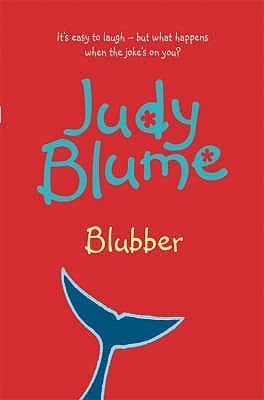
Judy Blume (1972)
Genre
Children's / Young Adult
Reading Time
120 min
Key Themes
See below
Sign in to track this book
In Judy Blume's 'Blubber,' a fifth-grade classroom's taunts against a new student named Linda escalate from whispered notes about her weight to a chilling campaign of bullying, forcing one girl to confront the dark side of peer pressure.
The story begins in Ms. Minish's fifth-grade class. Linda Fischer, an overweight new student, gives a report on whales. Her presentation is met with giggles and a note from Wendy, passed by Jill, calling Linda 'Blubber.' Despite Jill's initial reluctance, the note quickly circulates, establishing Linda as a target. Jill feels a mix of guilt and a desire to fit in with Wendy's popular group. This incident sets the stage for the escalating bullying, with Linda's weight becoming the focus of the class's cruelty.
On Halloween night, Jill and her friend Tracy go trick-or-treating. They meet Wendy, Caroline, and Rochelle. Wendy suggests they play a trick on Linda. They go to Linda's house, and Wendy dares Linda to eat a whole candy bar without chewing. Linda, wanting acceptance, tries, making a mess. The girls laugh at her. Jill feels uncomfortable but does not intervene, solidifying her role as a follower in Wendy's schemes. This event shows the group's increasing power over Linda and Jill's conflict between her conscience and her desire for social acceptance.
Wendy forms the 'Blubber Club,' an exclusive group whose main purpose is to torment Linda. The club has rules, including that members cannot be friends with Linda and must participate in the bullying. Jill, feeling pressured, joins the club along with Tracy, Caroline, and Rochelle. The club's activities include making Linda say 'Blubber is a good name for me,' and forcing her to perform demeaning acts. This marks an escalation, as the bullying becomes organized and systematic, with Jill becoming an active, if hesitant, participant.
During lunch, the 'Blubber Club' members corner Linda and force her to eat a piece of soap, claiming it is a special 'Blubber Club' cookie. Linda cries and runs away. Other students and Ms. Minish witness the incident. Linda is so upset that she stays home from school for several days. This event is a turning point, as the bullying crosses a line from verbal taunts to physical abuse, causing emotional distress to Linda and brief concern from the adults, though no lasting consequences for the bullies.
After Linda's absence, Ms. Minish tries to address the bullying in class, without naming Linda or the 'Blubber Club.' She talks about kindness and respect. However, Wendy and her followers largely ignore her efforts, continuing their behavior. Jill notes that Ms. Minish seems to miss the depth of the cruelty. The lack of effective adult intervention shows the power dynamics among the children and the limitations of general admonishments in stopping targeted bullying.
As the bullying continues, Jill's discomfort grows. She feels uneasy with Wendy's escalating demands and the group's torment of Linda. She starts to feel sympathy for Linda, remembering moments when Linda tried to be friendly. Jill's internal conflict becomes more pronounced, as she struggles with her desire to belong versus her developing sense of right and wrong. She begins to subtly resist Wendy's directives, though she still lacks the courage to openly defy her.
Tracy, who has been Jill's closest friend, gradually aligns herself more with Wendy, seeking Wendy's approval. She starts to participate more enthusiastically in the 'Blubber Club's' activities, often at Jill's expense, by tattling on Jill to Wendy. This shift leaves Jill feeling isolated and betrayed, as her main support system within the group crumbles. Tracy's defection intensifies Jill's vulnerability to Wendy's manipulation and further complicates her position within the social hierarchy.
After a disagreement, Wendy decides that Jill is no longer an acceptable member of their inner circle. Wendy, with the support of Tracy and the others, begins to turn the bullying onto Jill. They start calling her 'Blubber' and subjecting her to similar taunts and exclusion that Linda endured. Jill experiences firsthand the pain and humiliation of being the target, making her realize the full extent of the cruelty she had participated in. This marks the climax of the bullying cycle.
As Jill becomes the new target of Wendy's bullying, she gains an understanding of Linda's experience. The taunts, the exclusion, and the feeling of helplessness resonate with her. She recalls instances where she participated in tormenting Linda and feels immense guilt. This personal experience of being ostracized is a catalyst for Jill's empathy, shifting her perspective and forcing her to confront the consequences of her past actions.
When Jill is being bullied, she expects Linda to join in or gloat. However, Linda observes Jill's torment quietly, showing no signs of seeking revenge. In one instance, when Wendy demands Linda call Jill 'Blubber,' Linda hesitates and then, to Jill's surprise, does not comply with the same enthusiasm she once showed. This unexpected lack of retaliation from Linda, the former victim, offers a glimmer of hope for a different kind of interaction and suggests a quiet strength in Linda that Jill had never recognized.
With Jill now a target and Linda no longer the sole focus, the rigid social hierarchy Wendy established begins to fracture. Other students, who previously followed Wendy's lead, start to observe the new dynamic with less certainty. Wendy's power relies on having a clear, unchallenged victim, and with the target shifting and Linda's quiet resilience, her control over the entire class weakens. The once-unquestioned groupthink starts to dissipate, creating an opening for individual thought and potential change.
Towards the end of the school year, Jill finds herself sitting near Linda. There is a moment of unspoken understanding between them. Jill offers Linda a piece of gum, and Linda accepts. It is a small gesture, but significant, as it marks the first genuine interaction between them. The book ends with Jill having learned a difficult lesson about empathy and the consequences of peer pressure. While not a complete resolution, it suggests the possibility of Jill breaking free from the cycle of bullying and perhaps even forming a new, more compassionate relationship with Linda.
The Protagonist
Jill transforms from a passive participant in bullying to a victim, leading to a profound realization of empathy and the courage to break free from harmful peer pressure.
The Victim
Linda endures relentless bullying with quiet resilience, eventually emerging with a dignity that surprises her former tormentors.
The Antagonist
Wendy maintains her role as a bully, but her authority begins to fracture when her primary target shifts and her control is subtly challenged.
The Supporting
Tracy sacrifices her friendship with Jill to gain acceptance from Wendy, becoming a more active participant in the bullying.
The Supporting
Ms. Minish remains a well-meaning but ultimately limited authority figure in the face of complex social bullying.
The Supporting
Caroline remains a consistent follower of Wendy's, reinforcing the group's bullying behavior.
The Supporting
Rochelle consistently participates in the group's bullying, without significant individual development.
The novel dissects the forms and impacts of bullying, from verbal taunts ('Blubber') and social exclusion to psychological manipulation and physical torment (forcing Linda to eat soap). It shows how bullying is not just an individual act but a group phenomenon, perpetuated by leaders like Wendy, followers like Jill and Tracy, and enabled by the silence of others. The story shows the emotional toll on the victim and the corrupting influence on the bullies, particularly how it escalates when unchecked, as seen in the 'Blubber Club's' organized cruelty.
“Blubber is a good name for her, the note from Wendy says about Linda.”
A central theme is the pressure children face to conform to group norms, even when those norms are cruel. Jill's journey shows this, as she participates in bullying Linda to gain acceptance from Wendy's popular group and avoid becoming a target herself. Her internal conflict highlights the struggle between one's conscience and the desire to belong. The novel demonstrates how peer pressure can lead individuals to compromise their values and participate in actions they know are wrong, showing the difficulty of standing alone against a dominant social group, as seen when Tracy abandons Jill for Wendy's approval.
“Jill crumpled it up and left it on the corner of her desk. She didn't want to think about Linda or her dumb report on the whale just now. Jill wants to think about Halloween. But Robby grabs the note, and before Linda stops talking it has gone halfway around the room.”
Empathy is explored through Jill's transformation. She only understands the pain of bullying when she becomes a victim herself. This firsthand experience forces her to confront the cruelty she inflicted on Linda and recognize the suffering it caused. The novel argues that true empathy often comes from walking in another's shoes, showing how personal experience can be a catalyst for moral growth and a shift in perspective, leading Jill to a moment of shared understanding with Linda.
“Jill knew exactly how Linda felt. How could she have been so mean?”
The book critiques the effectiveness of adult intervention in cases of covert social bullying. Ms. Minish, the teacher, tries to address the issue with general statements about kindness, but her efforts are insufficient because she does not fully grasp the depth or specificity of the bullying. This theme suggests that adults often miss the nuances of children's social dynamics and that generic advice can fail to stop determined bullies. The lack of direct adult action allows the bullying to escalate, showing the children's isolation in their social struggles.
“Ms. Minish talked about being kind to one another. But she didn't say anything specific, and Wendy just rolled her eyes.”
A derogatory term used to dehumanize and isolate the victim.
The nickname 'Blubber' is the central plot device, serving as both a symbol and a tool of the bullying. It's the first act of cruelty, initiated by Wendy, and becomes the rallying cry for the 'Blubber Club.' By reducing Linda to this single, demeaning word, the bullies dehumanize her, making it easier to inflict further pain. The word itself creates a boundary, isolating Linda and solidifying her status as an outcast. When the nickname is turned on Jill, she experiences its full, painful impact, driving her empathetic realization.
A formal organization that institutionalizes and escalates the bullying.
The creation of the 'Blubber Club' is a significant plot device that formalizes and intensifies the bullying. It transforms individual acts of meanness into a systematic, organized campaign of torment. The club's rules and rituals (like forcing Linda to say 'Blubber is a good name for me') create a sense of shared purpose and complicity among its members, making it harder for individuals like Jill to dissent. This device demonstrates how group dynamics can amplify cruelty and provides a structure for the escalating abuse.
The narrative technique of transferring the bullying from one character to another.
The shifting victim is a crucial plot device. Initially, Linda is the sole target. However, when Wendy turns on Jill, Jill experiences firsthand the pain and humiliation she previously inflicted. This device is vital for Jill's character arc, as it provides her with the necessary experiential understanding to develop empathy. It also destabilizes the established social hierarchy, weakening Wendy's control and forcing other characters to re-evaluate their roles. This shift dramatically propels the narrative towards its resolution, highlighting the cyclical nature of bullying.
“Fatty, fatty, two-by-four, couldn't get through the kitchen door.”
— Rhyme chanted by Linda and her friends to mock Linda.
“I hate you, I hate you, I hate you!”
— Linda's internal thoughts after being repeatedly taunted.
“I'm not fat. You're fat!”
— Linda's desperate attempt to deflect an insult.
“Nobody likes a blubber.”
— Jody's cruel statement to Linda.
“It all started with the Halloween party.”
— Jill's narration setting the scene for the story's events.
“She wasn't really fat, not really. But they called her Blubber anyway.”
— Jill's observation about Linda's actual size versus the name she's given.
“You can't tell anyone. It's a secret.”
— Linda's plea to Jill, trying to confide in her.
“I wish I could just disappear.”
— Linda's feeling of wanting to escape the bullying.
“It was just a game. A joke.”
— One of the bullies' justifications for their actions.
“Sometimes I felt like I was part of it, and sometimes I just watched.”
— Jill's reflection on her role as an observer and occasional participant in the bullying.
“I don't care what you say, I'm not eating that!”
— Linda's defiance when forced to eat a specific food.
“Blubber, Blubber, Blubber!”
— Chant used by the group to torment Linda.
“Maybe if I was thin, they'd like me.”
— Linda's internal thought linking her worth to her appearance.
“It was like she had power over us. She could make us do anything.”
— Jill's realization about Wendy's manipulative influence on the group.
Ready to see how well you understood this book? Take our interactive quiz with 10 questions.

Judith Blume is an American writer of children's, young adult, and adult fiction. Blume began writing in 1959 and has published more than 25 novels. Among her best-known works are Are You There God? It's Me, Margaret. (1970), Tales of a Fourth Grade Nothing (1972), Deenie (1973), and Blubber (1974). Blume's books have significantly contributed to children's and young adult literature. She was named one of the 100 most influential people in the world by Time magazine in 2023.

Dan Gemeinhart
4.5

Kate O'Hearn
4.4

Jeanne Birdsall
4.4

Jen Wang
4.4

Wendelin Van Draanen
4.3

John Marsden
4.3

Chris Van Allsburg
4.3

Jennifer A. Nielsen
4.2