BookBrief
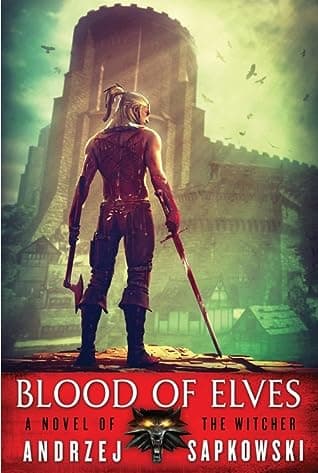
Blood of Elves cover
Archivist's Choice

Blood of Elves

Andrzej Sapkowski

Genre

Fantasy

Reading Time

700 min

Key Themes

See below

Track Your Reading

Sign in to track this book

As a continent descends into racial war, the Witcher Geralt must protect a prophesied child whose growing power could save or doom their world from those who want to use her.

Synopsis

The Northern War intensifies, raising racial tensions between humans and non-humans. Geralt of Rivia, a Witcher, brings Ciri, the Child of Prophecy, to the Witcher stronghold of Kaer Morhen for training and safety. Ciri struggles with her developing magic, attracting powerful mages and political groups. Triss Merigold arrives to help control Ciri's magic, revealing her Elder Blood heritage and a dangerous prophecy. Geralt realizes Kaer Morhen is not enough, so he takes Ciri to the Temple of Melitele under Nenneke's guidance. There, Ciri receives a traditional education alongside magic lessons from Yennefer. Meanwhile, Geralt hunts the wizard Rience, who relentlessly pursues Ciri for a powerful, unknown master. Political maneuvering grows among the Lodge of Sorceresses, who see Ciri as a tool. The Scoia'tael, an elven guerrilla force, rises against human oppression, further destabilizing the continent. As Ciri's powers and importance become clear, various parties—emperors, kings, and sorcerers—scheme to capture or control her, forcing Geralt and his allies to protect her and prevent a catastrophic future.
Reading time
700 min
Difficulty
Medium
Pacing
Moderate
Mood
Gritty, Political, Epic, Character-driven
✓ Read this if...
You enjoy epic fantasy with complex characters, political intrigue, and a focus on character development within a war-torn world.
✗ Skip this if...
You prefer standalone stories or are looking for a fast-paced, action-heavy narrative without much political depth.

Plot Summary

The Northern War and Ciri's Refuge

The novel opens with the Northern Kingdoms struggling after the Nilfgaardian invasion. Ciri, the Lion Cub of Cintra, is now under Geralt of Rivia's protection after her kingdom fell. Geralt understands the danger she faces and brings Ciri to Kaer Morhen, the Witchers' ancient home. There, she begins training in combat and survival skills with Geralt, Vesemir, Eskel, Lambert, and Coën. The Witchers are skilled fighters but are not used to raising a young girl and struggle to understand her unique, sporadic, and violent magical abilities.

Ciri's Uncontrollable Power

At Kaer Morhen, Ciri's powers begin to appear in sudden bursts, moving objects and creating strange visions. The Witchers, good at hunting monsters but new to magic, cannot handle these outbursts. They see the immense, untamed power within her and the danger it poses to Ciri and others. Realizing they cannot guide her, Geralt seeks help from someone who knows magic. He talks with Vesemir, and they agree Ciri needs a sorceress to help her understand and control her growing abilities, leading them to consider Triss Merigold.

Triss Merigold Arrives at Kaer Morhen

Geralt sends a message to Triss Merigold, a powerful sorceress and his former lover, asking for her help with Ciri. Triss arrives at Kaer Morhen, at first doubtful of the Witchers' ability to care for a young girl. She quickly notices Ciri's magical talent, seeing the raw, chaotic nature of her power, which she calls a Source. Triss also sees Ciri's developing womanhood and the Witchers' complete lack of understanding of female biology. Triss spends time connecting with Ciri, trying to understand her emotional and magical state, and confirms Ciri needs proper magic training.

The Prophecy and the Elder Blood

During her time at Kaer Morhen, Triss learns more about Ciri's family line and the old prophecy about her. She realizes Ciri is not just a powerful Source but also carries the Elder Blood, a strong magic gene passed down through generations. This lineage makes Ciri very important, a key figure in an old elven prophecy that speaks of a child who will either save or destroy the world. Triss understands the great danger Ciri is in, not only from Nilfgaard but also from those who want to use or control her unique power and destiny.

Leaving Kaer Morhen

Following Triss's advice and seeing Kaer Morhen's limits, Geralt decides Ciri needs a more structured place for both her magic training and general education. He plans to take her to the Temple of Melitele in Ellander, where Nenneke, the High Priestess, and other priestesses can teach her. This decision changes Ciri's life, moving her from the isolated, male world of the Witchers to a more feminine and academic setting, where her magic can be safely developed.

Life at the Temple of Melitele

At the Temple of Melitele, Ciri is cared for by Nenneke, who provides a full education, including history, languages, and healing. Nenneke is not a sorceress, but her wisdom and spiritual guidance help Ciri greatly. Here, Yennefer of Vengerberg, Geralt’s on-again, off-again lover and a powerful sorceress, arrives to become Ciri's main magic teacher. Yennefer is strict and demanding but also deeply committed to Ciri's well-being, teaching her to control and direct her chaotic magic, forming a strong bond with the girl.

Political Intrigue and the Lodge of Sorceresses

Meanwhile, the political situation remains unstable. The Northern Kings, including Foltest of Temeria, Vizimir of Redania, and Demavend of Aedirn, fight a desperate war against Nilfgaard. During this, the Lodge of Sorceresses, an informal but influential group of powerful female mages, meets. They discuss the war, the future of magic, and, importantly, the prophecy of Ihuarraquax and the Elder Blood. Many sorceresses, like Philippa Eilhart and Francesca Findabair, see Ciri's importance and begin to plan for control over her, believing she could be a powerful tool for their groups.

Geralt's Journey and the Hunt for Ciri

While Ciri is safe at the Temple, Geralt goes on his own journey, often caught in the ongoing war. He travels through war-torn lands, meeting refugees, soldiers, and seeing the harsh realities of conflict. During his travels, Geralt learns that various groups—Nilfgaardian agents, Northern spies, and even some sorcerers—are actively looking for Ciri. He meets Dandelion, his bard friend, and learns more about the political schemes and the growing interest in the Lion Cub of Cintra. Geralt is always watchful, understanding the great danger Ciri is in.

The Elven Uprising and Scoia'tael

As the war continues, racial tensions increase, especially between humans and non-humans. The Scoia'tael, or 'Squirrels,' an elven guerrilla unit, become more active, fighting for elven self-rule and against human oppression. Their brutal methods, often targeting human towns and supply lines, further fuel the conflict and deepen the hatred between races. Geralt meets members of the Scoia'tael and sees the complex moral issues of their fight for survival and recognition in a world that increasingly sees them as enemies.

Ciri's Escape and the End of Sanctuary

The peace at the Temple of Melitele ends when Ciri's location is discovered. The growing interest in her, from Nilfgaard and other powerful groups, means the temple is no longer safe. Yennefer, seeing the immediate danger, decides to take Ciri and flee. Their escape is urgent, ending Ciri's time of safety and formal training and sending her back into the dangerous world of political intrigue and war, with Yennefer now her only protector and guide.

The Hunt Continues

Ciri and Yennefer begin a dangerous journey, constantly on the run from those trying to capture or control Ciri. They face various threats, including Nilfgaardian patrols, bandits, and agents from the Northern Kingdoms. Yennefer uses her strong magic to protect Ciri, teaching her practical uses of her own developing abilities in dangerous situations. This time strengthens their bond, as Yennefer acts not just as a mentor but as a surrogate mother, fiercely protective of Ciri's life and destiny.

The Wizard Rience

During their flight, Ciri and Yennefer are relentlessly pursued by Rience, a dangerous and cruel mage who works for an unknown master. Rience is a persistent and brutal enemy, using torture and threats to track them. His pursuit shows the immediate and serious danger Ciri faces. Geralt, learning of Rience's actions, also begins to track the mage, realizing that Rience's master is a powerful figure very interested in Ciri's Elder Blood lineage, setting up a direct conflict.

The Crossroads

The paths of Geralt, Yennefer, and Ciri cross and separate as the war grows. While Geralt hunts Rience and tries to protect Ciri from afar, Yennefer continues to guide and train Ciri, helping her understand and control her powers. The world around them constantly changes, with battles, political moves, and racial conflicts shaping their every action. The novel ends with Ciri still a target, her future uncertain, and the forces of good and bad closing in around her, making her future precarious.

Principal Figures

Geralt of Rivia

The Protagonist

Geralt transitions from a solitary monster hunter to a fiercely protective father figure, grappling with the complexities of raising and safeguarding a child with immense power.

Ciri (Cirilla Fiona Elen Riannon)

The Protagonist

Ciri evolves from a traumatized refugee to a student of both combat and magic, beginning to grasp the magnitude of her destiny and the power within her.

Yennefer of Vengerberg

The Supporting

Yennefer fully embraces a maternal role towards Ciri, demonstrating her capacity for deep love and sacrifice beyond her relationship with Geralt.

Triss Merigold

The Supporting

Triss acts as a crucial catalyst, identifying Ciri's true magical nature and setting the stage for her further education, while maintaining her loyalty to Geralt.

Vesemir

The Supporting

Vesemir attempts to integrate Ciri into the Witcher lifestyle, highlighting the limitations of their traditional methods in dealing with unique magical powers.

Dandelion (Jaskier)

The Supporting

Dandelion continues his role as a loyal friend and chronicler, providing both levity and vital information amidst the escalating conflict.

Nenneke

The Supporting

Nenneke provides a temporary haven and foundational education for Ciri, offering stability and spiritual guidance before Ciri's magical training begins.

Rience

The Antagonist

Rience serves as a relentless antagonist, showcasing the immediate and brutal threats to Ciri's safety.

Philippa Eilhart

The Supporting

Philippa emerges as a calculating political player, beginning to orchestrate events to gain influence over Ciri's destiny.

Themes & Insights

Family and Found Family

The idea of family goes beyond blood, especially with Geralt, Ciri, and Yennefer. Geralt, a solitary Witcher, takes on a fatherly role for Ciri, first out of duty but then with deep affection. Yennefer, despite her independent nature, becomes a surrogate mother and a strict, yet loving, magic teacher to Ciri. The Witchers at Kaer Morhen, though unequipped to raise a girl, show shared concern for Ciri's well-being. This theme shows how bonds formed through shared purpose and protection can be as strong, or stronger, than biological ties. For example, Geralt's choice to bring Ciri to Kaer Morhen and later to the Temple of Melitele shows his commitment to her development and safety.

“You’re going to die, Witcher. But first I’ll tell you something. You don’t know what you’re protecting. You don’t know what you’re fighting for.”

Rience (implying Ciri's greater significance)

Destiny vs. Free Will

The prophecy of Ihuarraquax and Ciri's Elder Blood lineage hang over the story, suggesting a predetermined destiny for her. However, the characters, especially Geralt and Yennefer, actively work to protect Ciri and let her choose her own path. Ciri herself struggles with the weight of her potential and the expectations placed on her. The book constantly asks if Ciri is just a piece in a larger plan or if her choices can define her future. For instance, Yennefer's strict magic training for Ciri is an attempt to give her the tools to control her own fate, rather than be controlled by her powers or prophecy.

“There is no destiny… It’s a road. And for some, it’s a beautiful road, for others, it’s a muddy path. But it’s still a road.”

Geralt of Rivia

The Horrors and Morality of War

The Nilfgaardian War is a constant background, showing its destructive effect on common people, the land, and relations between species. The novel portrays the brutality of conflict through refugee crises, destroyed villages, and rising racial tensions, especially with the Scoia'tael. It explores the moral complexities of war, where both sides commit cruel acts, and 'good' and 'evil' blur. Geralt's travels through war-torn lands and his encounters with various groups highlight the senselessness and suffering caused by political ambition and racial hatred. The increased activity of the Scoia'tael and the human reaction to it illustrate this theme.

“War is a monster with a thousand heads, each one hungry for blood.”

Narrator

Prejudice and Racism

The book explores the prejudice and racism in the Northern Kingdoms, especially against non-human races like elves, dwarves, and gnomes. The war worsens these tensions, leading to more persecution and the rise of groups like the Scoia'tael, who fight against human oppression. The story shows how fear and ignorance fuel hatred, leading to cycles of violence and revenge. Ciri's own elven heritage hints at the complexities of racial identity in this divided world. The description of elves being hunted and the general feeling that 'the only good elf, it seems, is a dead elf' directly shows this theme.

“The only good elf, it seems, is a dead elf.”

A common saying among humans

Power and Control

This theme appears in many ways: Ciri's raw, uncontrollable magic, the political power of kings and sorceresses, and the fight for control over Ciri herself. Ciri's journey is about learning to control her innate abilities, which, if unchecked, could be disastrous. At the same time, powerful figures like Philippa Eilhart and Rience's mysterious master want to control Ciri for their own political or magical goals, seeing her as an asset rather than an individual. This constant struggle for power, both internal and external, drives much of the plot.

“Power is a strange thing. It can corrupt, it can destroy, but it can also protect and create.”

Yennefer of Vengerberg

Plot Devices & Literary Techniques

The Elder Blood (Zireael)

A powerful magical gene passed through Ciri's lineage.

The Elder Blood is a potent magical gene that flows through Ciri's veins, making her a 'Source' of immense, chaotic power. It is tied to an ancient elven prophecy, foretelling a child who will either save or destroy the world. This genetic inheritance makes Ciri a target for various factions, as controlling her means controlling a force that could reshape destiny. It serves as a central mystery and a driving force behind the political and magical intrigue, elevating Ciri's importance beyond that of a mere princess.

Prophecy of Ihuarraquax

An ancient elven prophecy foretelling a child with immense power.

This ancient elven prophecy speaks of a child of Elder Blood who will wield immense power, capable of changing the world. It is a key element that fuels the interest in Ciri from various powerful individuals and groups, including sorceresses and Nilfgaard. The prophecy creates a sense of foreboding and destiny, constantly reminding the reader of Ciri's unique and dangerous position in the world, and the immense stakes involved in her protection and training.

The Child of Surprise (Law of Surprise)

An ancient custom binding Geralt to Ciri's destiny.

The Law of Surprise is an ancient custom where a person saved by another offers them 'that which you find at home yet do not expect.' Geralt inadvertently invoked this law, binding him to Ciri. While not explicitly invoked in this book as a new event, it serves as the foundational reason for Geralt's deep commitment to Ciri's protection. It underscores the theme of destiny and highlights Geralt's moral obligation, which ultimately transforms into genuine paternal love and responsibility.

Kaer Morhen

The ancient, isolated stronghold of the Witchers.

Kaer Morhen is the dilapidated, isolated fortress where Witchers are trained. In 'Blood of Elves,' it serves as Ciri's initial sanctuary and training ground. Its isolation highlights the Witchers' detachment from the world, and their inability to cope with Ciri's magical and feminine needs underscores their limitations. It represents a fading era, a place of old traditions that struggles to adapt to the new challenges presented by Ciri's unique powers and the changing political landscape.

Critical analysis

Notable Quotes

Evil is evil, Stregobor,” said the witcher seriously. “Lesser, greater, middling, it's all the same. Proportions are negotiated, not essential. If I'm to choose between one evil and another, I'd rather not choose at all.

Geralt's philosophy on good and evil, often cited, though this specific phrasing is from a short story that predates the novels.

People like to invent monsters and monstrosities. Then they are so eager to believe in them, to believe in the truth of the atrocities they have created. Then they are so eager to find them and kill them. Or to be killed by them.

Yennefer's cynical view on humanity and their need for monsters.

To be a witcher is to be a neutralizer, a cleaner. Not a hero, not a legend. Just a cleaner.

Geralt reflecting on the true nature of his profession, dispelling romantic notions.

There's no justice, just us.

A harsh reality often faced by the characters, particularly in the political landscape.

Tolerance and the ability to live side by side with others are virtues that are learned and taught. They don't appear spontaneously. And if they aren't learned and taught, they remain alien to human nature.

A commentary on the constant conflict between different races and peoples.

The world is changing, Geralt. The time of the witchers is coming to an end. The time of the humans has begun.

Vesemir lamenting the decline of the witcher profession and the rise of human dominance.

Only a fool believes he can control the future.

A common theme in the series, highlighting the unpredictable nature of events.

If you know what you are, you know what you must do.

Geralt's internal struggle with his identity and the choices he has to make.

War is a terrible thing. It turns people into monsters, even those who fight for the right cause.

The brutal reality of war and its corrupting influence on individuals.

The truth is a whore, and she sells herself to the highest bidder.

A cynical view on how truth can be manipulated by power and wealth.

Sometimes, the only way to save someone is to let them go.

A poignant reflection on difficult choices and sacrifices in relationships.

Fear is a bad adviser, but hope is worse.

A pragmatic, almost nihilistic, perspective on human emotions and decision-making.

What is important is not what we are, but what we do.

A focus on action and deeds over inherent nature or lineage.

Every legend has a grain of truth, but it's often buried under layers of myth and exaggeration.

A common understanding of how stories and myths evolve over time.

Quiz

Test Your Knowledge

Ready to see how well you understood this book? Take our interactive quiz with 10 questions.

10
Questions
~5
Minutes
?
Best Score

Key Questions (FAQ)

The central conflict is the resurgence of racial tensions and full-scale war across the Continent, particularly between humans and non-humans, coupled with the hunt for Ciri, the Child of Elder Blood, whose power is coveted by various factions for their own political or magical ends.

About the author

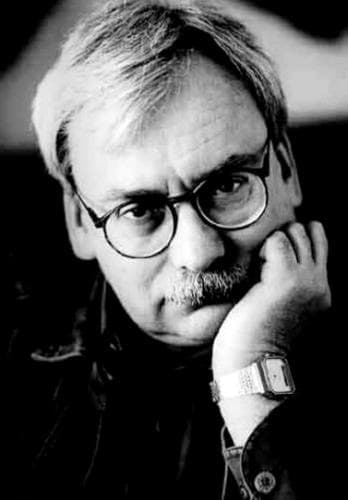
Andrzej Sapkowski

Andrzej Sapkowski is a Polish fantasy writer, best known for his "The Witcher" series, which includes "The Last Wish" and "Blood of Elves." The series gained international recognition and inspired a popular video game franchise and a Netflix television adaptation. Sapkowski's work is celebrated for its complex characters and dark, Slavic-inspired mythology.